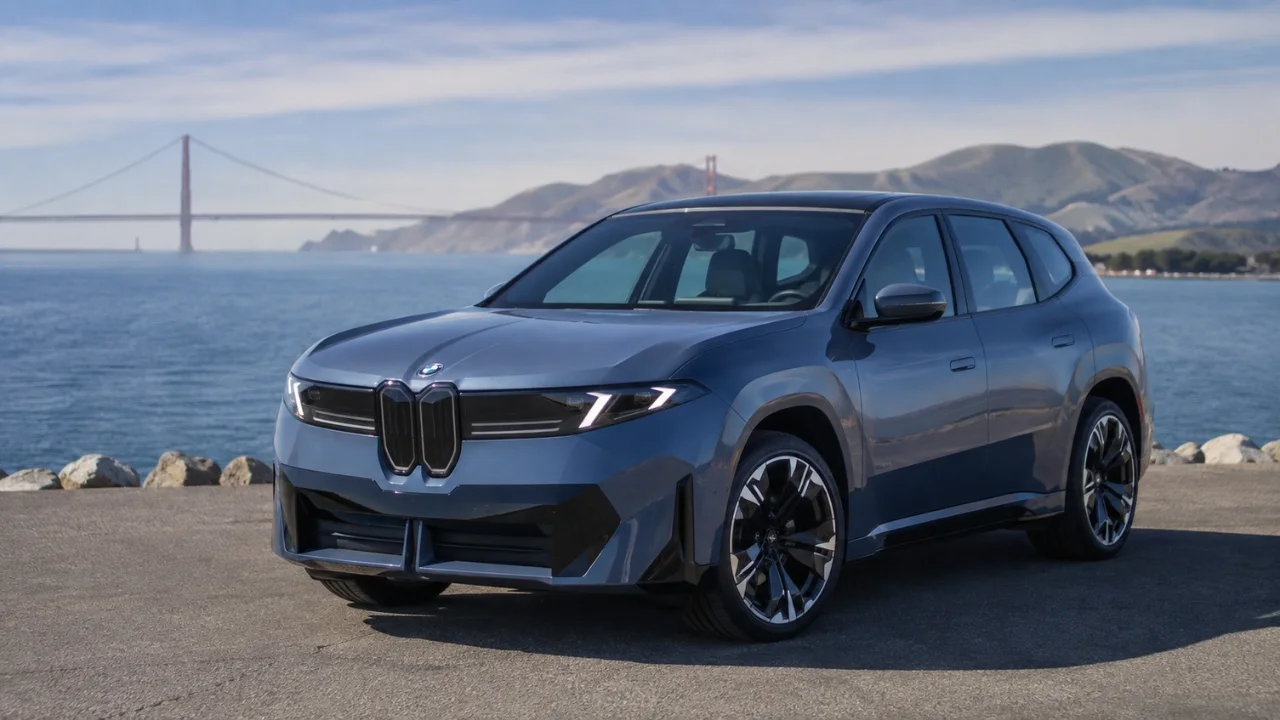
The 2026 BMW iX3 marks a major turning point for BMW. It is not simply an updated version of the previous electric SUV; it is the first series-production model built around BMW’s Neue Klasse strategy, bringing a completely new design language, sixth-generation eDrive technology, an 800-volt electrical architecture and a radically redesigned digital interior.
The first version to reach customers is the BMW iX3 50 xDrive, with dual electric motors, all-wheel drive, 469 horsepower and a 108.7-kWh usable battery. In Europe, BMW quotes up to 805 km (500 miles) of WLTP range, while the U.S. version is marketed as the 2027 BMW iX3 50 xDrive and has an official EPA-estimated range of up to 434 miles.
The distinction matters because BMW’s model-year naming and specifications vary by market. This article focuses on the new-generation iX3 itself while identifying important regional differences where they apply.
Quick Answer: What Is New About the 2026 BMW iX3?
The new BMW iX3 introduces several technologies that BMW intends to spread across its future lineup.
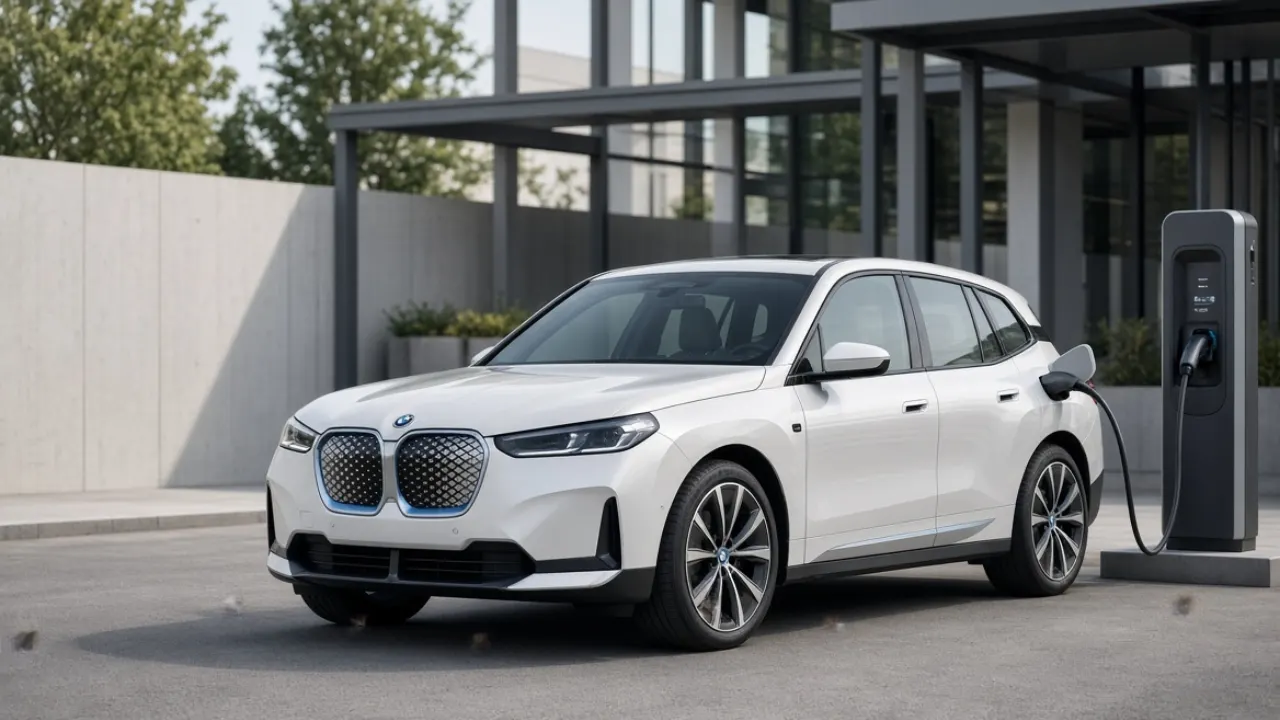
Key highlights include:
- Completely new Neue Klasse exterior and interior design
- Sixth-generation BMW eDrive technology
- 108.7-kWh usable battery in the iX3 50 xDrive
- Up to 805 km (500 miles) WLTP range in Europe
- Up to 434 miles EPA-estimated range in the U.S. 2027 model
- 800-volt electrical architecture
- Up to 400 kW DC fast-charging capability
- 10–80% charging in about 21 minutes under BMW’s stated conditions
- Up to 372 km (231 miles) of WLTP range added in 10 minutes at a suitable 800-volt charger
- 469 hp and 645 Nm in the iX3 50 xDrive
- 0–100 km/h in 4.9 seconds
- New BMW Panoramic iDrive
- BMW Operating System X
- Four high-performance “superbrain” computers
- Heart of Joy driving-dynamics computer
- New driver-assistance and automated-parking technology
- Bidirectional charging capability
- A new entry-level iX3 40 in some European markets
The BMW iX3 Is the First Neue Klasse Production Model
BMW’s Neue Klasse is more than a new styling exercise. The company is using the architecture and technologies introduced with the iX3 as the foundation for a broader transformation of its vehicles.
BMW says the technologies introduced through Neue Klasse will be incorporated into around 40 new models and model updates through 2027. The iX3 therefore serves as an important preview of the technology, software and interface strategy that will appear in other BMW models.
The new iX3 was unveiled at IAA Mobility in Munich in September 2025. Production began at BMW Group’s newly constructed Debrecen plant in Hungary, with the European market launch beginning in spring 2026. BMW announced a U.S. market launch for summer 2026, while the U.S. vehicle is officially designated the 2027 BMW iX3 50 xDrive.
That makes the iX3 one of BMW’s most important new vehicles for 2026, even though its U.S. model-year designation is 2027.
2026 BMW iX3 Design: A Completely New Look
The exterior is one of the clearest signs that the iX3 represents a new chapter for BMW.
The familiar BMW kidney grille remains, but it has been reinterpreted as part of a much cleaner front-end design. The new iX3 uses larger, more precisely defined surfaces and a simplified light signature rather than relying on the more complex detailing seen on many recent BMW models.
BMW describes the design language as bold, reduced and character-rich. The proportions remain recognizably BMW SAV proportions, but the treatment is substantially different from the outgoing iX3.
The production iX3 measures:
| Specification | BMW iX3 50 xDrive |
|---|---|
| Length | 4,782 mm |
| Width | 1,895 mm |
| Height | 1,635 mm |
| Wheelbase | 2,897 mm |
| Drag coefficient | 0.24 |
| Seating | 5 |
| Luggage capacity | 520–1,750 liters |
| Additional front storage | 58 liters |
BMW’s aerodynamic work is particularly important for an electric SUV because reducing aerodynamic drag can help improve highway efficiency and range. The new iX3 has a claimed drag coefficient of 0.24.
BMW iX3 Interior: The Biggest Change May Be Inside
The cabin represents an even more dramatic change.
At the center is BMW Panoramic iDrive, a new interface designed around the driver rather than a conventional dashboard dominated by one central touchscreen.
BMW Panoramic iDrive combines four main elements:
- BMW Panoramic Vision
- A 17.9-inch central display
- An optional BMW 3D Head-Up Display
- A multifunction steering wheel with integrated controls
Panoramic Vision projects information across the lower portion of the windshield from A-pillar to A-pillar. The central display handles touch-based functions, while the optional 3D Head-Up Display places additional information within the driver’s field of vision.
The idea is to reduce the need for the driver to look away from the road. BMW has also retained physical elements through the steering wheel and other controls, rather than moving every function onto a touchscreen.
The iX3 also runs BMW Operating System X, giving the vehicle a software-focused architecture designed to support connected services, apps and future updates.
BMW says the new system can support more than 60 third-party applications through the ConnectedDrive ecosystem, depending on market and connectivity requirements. Features such as Zoom video calls can be used through the central display while the vehicle is stationary.
BMW iX3 Technology: Four “Superbrains”
The new iX3 is built around a completely different electronic architecture.
BMW describes four high-performance computers as “superbrains,” with each responsible for a major area of the vehicle.
The functions include:
- Driving dynamics
- Automated driving and parking
- Infotainment
- Essential and comfort functions
The Heart of Joy computer is particularly important because it controls core driving dynamics functions. BMW says the system coordinates traction, electric-motor control, recuperation and braking with a high degree of software integration.
BMW says the new computing architecture can provide up to 20 times the computing power of previous BMW systems. That does not mean every function is literally 20 times faster in everyday use; it reflects the substantially greater computing capability of the new architecture.
BMW iX3 Powertrain and Performance
The initial flagship version is the BMW iX3 50 xDrive.
It uses two electric motors and electric all-wheel drive. BMW’s system produces 345 kW, equivalent to 469 hp, and 645 Nm (475 lb-ft) of torque.
| Specification | BMW iX3 50 xDrive |
|---|---|
| Power | 469 hp |
| Torque | 645 Nm |
| Drive | Dual-motor all-wheel drive |
| 0–100 km/h | 4.9 seconds |
| Top speed | 210 km/h / 130 mph |
| Battery | 108.7 kWh usable |
The rear motor is an electrically excited synchronous motor, while the front axle uses an asynchronous motor. BMW says this combination was selected to balance efficiency, packaging and cost.
The 4.9-second 0–100 km/h time puts the iX3 firmly into performance-oriented electric SUV territory. More importantly, the new electrical architecture is designed to make power delivery, regenerative braking and traction management work together through the Heart of Joy system.
2026 BMW iX3 Range
Range is one of the strongest aspects of the new iX3, but the number depends heavily on the testing standard and market.
For the European iX3 50 xDrive, BMW quotes a WLTP range of up to 805 km, or approximately 500 miles. BMW’s published European figures show a range band rather than one universal number because equipment and configuration can affect the result.
The published WLTP energy-consumption figure is 15.1–17.9 kWh/100 km, depending on configuration. These are laboratory test figures intended for comparison and should not be interpreted as a guaranteed real-world range under every driving condition.
U.S. BMW iX3 Range
The U.S. market uses a different testing standard.
BMW has officially announced the 2027 BMW iX3 50 xDrive with an EPA-estimated range of up to 434 miles. The U.S. starting MSRP is $61,500, excluding a $1,350 destination and handling charge. BMW says the U.S. market launch is scheduled for September 25, 2026.
This is why the European “500-mile” figure and the U.S. “434-mile” figure should not be treated as contradictory. WLTP and EPA testing use different methodologies.
BMW iX3 Charging: Up to 400 kW
Charging is another major area where the new iX3 moves beyond the previous generation.
The iX3 uses an 800-volt electrical architecture and supports DC charging at up to 400 kW under suitable conditions. BMW says the vehicle can charge from 10% to 80% in approximately 21 minutes.
At an appropriate 800-volt DC fast charger, BMW says the iX3 50 xDrive can add up to 372 km, or 231 miles, of WLTP range in 10 minutes.
The key phrase is “up to.” Actual charging speed depends on factors including the charger, battery temperature, battery state of charge and other conditions.
The iX3 can also charge at 400-volt DC charging stations. For AC charging, BMW specifies 11 kW as standard, with 22-kW AC charging available as an option in the relevant markets.
Bidirectional Charging Adds Another Capability
BMW has also introduced bidirectional charging with the new iX3.
In simple terms, bidirectional charging allows electricity to move not only from the grid into the vehicle but, with compatible equipment and applications, in the opposite direction as well.
BMW has highlighted bidirectional charging as one of the capabilities enabled by the Neue Klasse electrical architecture. The exact functions available to customers can depend on market-specific infrastructure, hardware and regulatory requirements.
That makes the technology more significant than simply having a faster charging peak. The iX3 is being designed as part of a broader energy ecosystem rather than solely as a vehicle that consumes electricity.
What Is BMW’s Sixth-Generation eDrive Technology?
The new iX3 introduces BMW’s sixth-generation eDrive system.
The system combines new electric motors, cylindrical battery cells and an 800-volt electrical architecture. BMW says the new drivetrain reduces energy losses by 40% compared with its fifth-generation eDrive technology, while drivetrain weight is reduced by 10%.
The battery uses cylindrical cells integrated directly into the battery pack. BMW calls this “cell-to-pack” construction.
The iX3’s usable battery energy is 108.7 kWh in the 50 xDrive. BMW says the new battery concept provides 20% higher cell-level energy density than the previous generation and contributes to faster charging capability.
Safety and Driver Assistance
The new iX3 also introduces BMW’s latest driver-assistance architecture.
BMW refers to the approach as Symbiotic Drive, reflecting the idea that the vehicle’s automated assistance systems should work together with the driver rather than operate as an unrestricted autonomous-driving system.
The new electronic architecture provides dedicated computing resources for automated driving and parking. BMW has also demonstrated automated-parking and advanced driver-assistance functions for the iX3.
The distinction between driver assistance and autonomous driving remains important. The iX3 does not turn into a fully autonomous vehicle simply because it has advanced automated-driving technology. The functions available to the driver depend on the vehicle specification, market regulations and the systems enabled in that market.
BMW iX3 40: A More Accessible European Version
The iX3 range is no longer limited to the 50 xDrive.
BMW has introduced an entry-level iX3 40 in the United Kingdom and other European markets. The UK specification lists 320 hp, 500 Nm, a 0–62 mph time of 5.9 seconds and a WLTP range of 395 miles.
The iX3 40 is rear-wheel drive rather than the dual-motor all-wheel-drive configuration used by the 50 xDrive.
This gives buyers a choice between the stronger performance and all-weather traction of the 50 xDrive and the more efficiency-focused entry point of the iX3 40, where the latter is offered.
Availability should not be assumed to be identical worldwide. BMW’s model range varies by market.
2026 BMW iX3 Price and Availability
Pricing depends heavily on the country.
United States
BMW has officially announced the U.S. iX3 as a 2027 model. The iX3 50 xDrive starts at $61,500 MSRP, before the $1,350 destination and handling charge. BMW gives an EPA-estimated range of up to 434 miles. The U.S. market launch is scheduled for September 25, 2026.
United Kingdom
BMW’s UK launch information lists the iX3 50 xDrive from £58,755 and the newer iX3 40 from £53,250. The figures and available equipment are market-specific.
Europe
The new iX3 began its European market rollout in spring 2026. Individual countries can have different on-the-road prices, taxes, equipment and incentives, so there is no single European retail price that applies everywhere.
India
BMW’s India PressClub has published information about the new iX3 and its technology, but the existence of those global/India PressClub materials should not be interpreted as confirmation of an Indian retail launch or Indian-market pricing. As of the information reviewed for this article, a specific Indian-market price and retail launch specification for the new iX3 have not been officially confirmed in the sources used here.
How Practical Is the New BMW iX3?
Despite the emphasis on technology, the iX3 remains a practical five-seat electric SAV.
BMW lists 520 liters of luggage capacity, expanding to 1,750 liters with the rear seats folded. There is also a 58-liter storage compartment under the hood.
The 2,897-mm wheelbase gives the iX3 a substantial passenger compartment, while its 4.78-meter length keeps it within the dimensions expected of a premium midsize electric SUV.
The vehicle can also tow up to 2,000 kg braked in the relevant specification, although buyers should check the exact market and equipment configuration before relying on that figure.
What Makes the 2026 BMW iX3 Different?
The biggest difference is that BMW has treated the iX3 as a technological reset rather than a conventional facelift.
The new model combines several changes at once:
- New exterior design
- New interior architecture
- New battery technology
- New electric motors
- New 800-volt charging system
- New software architecture
- New driver-assistance computing
- New infotainment system
- New driving-dynamics control system
- Bidirectional charging capability
Individually, none of these ideas is completely unprecedented in the EV market. What makes the iX3 important is how BMW has combined them into the first production Neue Klasse vehicle.
2026 BMW iX3 Pros and Limitations
Pros
- Very long official range in European WLTP testing
- Strong U.S. EPA-estimated range
- 800-volt architecture
- Up to 400-kW DC charging capability
- Large usable battery
- Strong dual-motor performance
- New driver-focused digital interface
- Spacious luggage capacity
- New software and computing architecture
- Bidirectional charging capability
Limitations
- Specifications and model availability differ significantly by market
- The 500-mile European figure is a WLTP result, not an EPA estimate
- Maximum 400-kW charging requires suitable charging infrastructure
- Real-world range will vary with temperature, speed, driving style and other conditions
- The most powerful 50 xDrive is not the only version, but lower-spec variants are not available in every market
- U.S. buyers will see the vehicle sold as a 2027 model rather than a 2026 model
Is the New BMW iX3 Worth Paying Attention To?
Yes, particularly for buyers interested in where BMW’s electric vehicles are heading.
The new iX3 combines a long-range battery with unusually high charging capability, but its importance goes beyond range numbers. It introduces BMW’s Neue Klasse design, Panoramic iDrive, Operating System X, four-computer electronic architecture and Heart of Joy driving-control system.
BMW has also already received significant recognition for the vehicle. In April 2026, the iX3 was named both 2026 World Car of the Year and 2026 World Electric Vehicle by the World Car Awards jury. The awards followed jury test drives and evaluations of the vehicle.
That does not automatically make it the best electric SUV for every buyer. Charging availability, local pricing, interior preferences and the availability of competing models will still matter.
But as a demonstration of BMW’s next-generation EV technology, the iX3 is one of the company’s most significant new vehicles in years.
Final Thoughts
The 2026 BMW iX3 is a major departure from the previous model. Its importance comes from the fact that it is the first production BMW built around the Neue Klasse strategy, bringing together a new design, new battery technology, new electric motors, an 800-volt architecture and a completely redesigned digital experience.
The iX3 50 xDrive offers 469 hp, 645 Nm of torque and a 108.7-kWh usable battery, while European WLTP range reaches as high as 805 km. Its 400-kW DC charging capability and 21-minute 10–80% charging claim also make long-distance EV use a central part of its design rather than an afterthought.
For U.S. buyers, the important distinction is that the vehicle arrives as the 2027 BMW iX3 50 xDrive, with a starting MSRP of $61,500 and an EPA-estimated range of up to 434 miles.
The result is an electric BMW that is important not only because of what it offers today, but because it establishes the technology and design direction BMW plans to use across a much wider portion of its lineup.
Frequently Asked Questions
When does the 2026 BMW iX3 launch?
The new iX3 began its European market rollout in spring 2026. BMW announced the U.S. launch for September 25, 2026, where it is sold as the 2027 BMW iX3 50 xDrive.
How much range does the BMW iX3 have?
The BMW iX3 50 xDrive has a WLTP range of up to 805 km, or about 500 miles, in Europe. The U.S. 2027 iX3 50 xDrive has an EPA-estimated range of up to 434 miles. These figures use different testing standards and should not be directly treated as equivalent.
How fast can the BMW iX3 charge?
The iX3 50 xDrive supports DC charging at up to 400 kW. BMW says a 10–80% charge can take about 21 minutes, while up to 372 km (231 miles) of WLTP range can be added in 10 minutes at an appropriate 800-volt fast charger.
How powerful is the BMW iX3 50 xDrive?
The dual-motor iX3 50 xDrive produces 469 hp and 645 Nm of torque. BMW quotes a 0–100 km/h time of 4.9 seconds and a top speed of 210 km/h.
What battery does the BMW iX3 use?
The iX3 50 xDrive uses a high-voltage battery with 108.7 kWh of usable energy. The battery uses cylindrical cells and forms part of BMW’s sixth-generation eDrive system.
What is BMW Panoramic iDrive?
BMW Panoramic iDrive is the new display and operating concept introduced with the Neue Klasse. It combines BMW Panoramic Vision, a 17.9-inch central display, an optional 3D Head-Up Display and multifunction steering-wheel controls.
Is the BMW iX3 fully electric?
Yes. The new-generation iX3 is a battery-electric SAV with no internal-combustion engine. The initial 50 xDrive version uses two electric motors and all-wheel drive.
Is the BMW iX3 coming to India?
BMW has published information about the new iX3 through its India PressClub, but a specific Indian retail launch date, Indian-market specification and Indian price were not confirmed in the sources reviewed for this article. Buyers in India should check BMW India for any subsequent official announcement.
Sources & References
- BMW Group — The All-New BMW iX3
- BMW Group — The BMW iX3 Ushers in Next-Generation Innovations at CES 2026
- BMW Group — BMW Officially Announces Pricing and Range for 2027 BMW iX3 50 xDrive
- BMW Group India — The start of a new era. The new BMW iX3
- BMW Group — New entry-level BMW iX3 added to the range
- BMW Group — Double victory: BMW iX3 named World Car of the Year and World Electric Vehicle 2026
6 thoughts on “2026 BMW iX3: New Design, Range, Charging and Technology Explained”