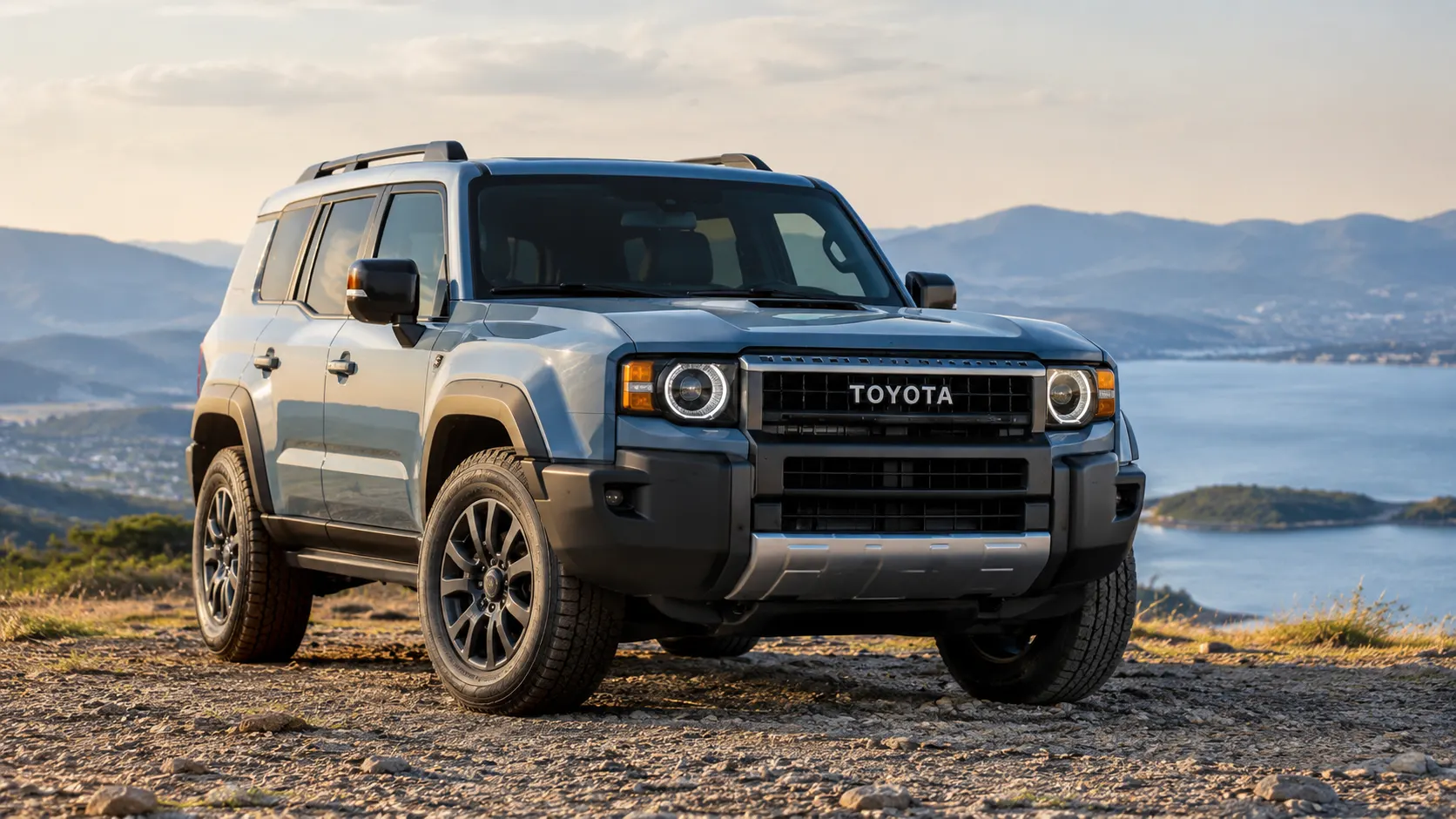
The 2026 Toyota Land Cruiser FJ brings the Land Cruiser name into a smaller, more maneuverable package without abandoning the body-on-frame construction and off-road focus associated with the family. Toyota introduced the FJ as a new addition to its Land Cruiser lineup, positioning it below the larger 250, 300 and 70 Series models in terms of size.
Unlike many compact SUVs that use a unibody platform, the Land Cruiser FJ uses a ladder-frame structure, part-time four-wheel drive and a naturally aspirated 2.7-liter gasoline engine. Toyota launched the FJ in Japan on May 14, 2026, with a starting price of ¥4,500,100 including consumption tax for the VX grade.
For shoppers outside Japan, however, availability needs to be treated separately. Toyota’s May 2026 launch announcement confirms the Japanese market launch but does not establish U.S. pricing or U.S. availability for the FJ.
Quick Answer: What Is the 2026 Toyota Land Cruiser FJ?
The Land Cruiser FJ is a new, compact member of Toyota’s Land Cruiser family designed to combine easier maneuverability with traditional off-road hardware.

Key confirmed details for the Japanese-market model include:
| Specification | 2026 Toyota Land Cruiser FJ |
|---|---|
| Market confirmed | Japan |
| Starting price | ¥4,500,100 including tax |
| Engine | 2.7-liter naturally aspirated inline-four |
| Output | 120 kW / 163 PS |
| Torque | 246 Nm |
| Transmission | 6-speed Super ECT automatic |
| Driveline | Part-time 4WD |
| Seating | 5 |
| Length | 4,575 mm |
| Width | 1,855 mm |
| Height | 1,960 mm |
| Wheelbase | 2,580 mm |
| Minimum turning radius | 5.5 m |
| Fuel economy | 8.7 km/L WLTC |
| Cargo capacity | 795 liters with rear seats in use |
| Rear differential | Electric locking differential |
| Construction | Ladder frame |
Toyota says the FJ is intended to make the Land Cruiser easier to enjoy while retaining its traditional emphasis on reliability, durability and off-road capability.
A Smaller Land Cruiser With a Ladder Frame
One of the most important characteristics of the FJ is its underlying construction.
Toyota uses a ladder-frame platform, rather than the unibody architecture common among compact crossovers. The company says the platform has been refined from the IMV series and redesigned around the FJ’s smaller dimensions.
Toyota also strengthened lateral frame rigidity and added braces beneath the floor. High-tensile-strength steel is used in the body structure, while additional spot welding is intended to improve vibration damping and ride comfort.
The result is a vehicle that follows the traditional Land Cruiser engineering philosophy rather than simply borrowing the name for a smaller crossover.
2026 Land Cruiser FJ Dimensions
The FJ measures 4,575 mm long, 1,855 mm wide and 1,960 mm tall, with a 2,580-mm wheelbase.
Toyota says the FJ is 350 mm shorter and 125 mm narrower than the Land Cruiser 250, while its wheelbase is 270 mm shorter. The shorter wheelbase contributes to a 5.5-meter minimum turning radius, which should help the vehicle maneuver through tighter trails and urban environments.

That compact footprint is one of the FJ’s defining characteristics. Toyota is attempting to preserve the capabilities expected from a Land Cruiser while making the vehicle easier to position on narrow roads and trails.
Engine and Performance
The Japanese-market Land Cruiser FJ uses a 2.7-liter 2TR-FE naturally aspirated four-cylinder gasoline engine.
Toyota lists maximum output at 120 kW, or 163 PS, with maximum torque of 246 Nm. The engine is paired with a six-speed Super ECT automatic transmission and a part-time four-wheel-drive system.
The powertrain is therefore different from the turbocharged hybrid i-FORCE MAX system used in the U.S.-market 2026 Land Cruiser 250. Toyota’s U.S. Land Cruiser produces 326 net combined horsepower and 465 lb-ft of torque, but those specifications belong to the larger 250 Series and should not be attributed to the FJ.
This market distinction is important because the Land Cruiser FJ and U.S.-market Land Cruiser 250 are different vehicles.
Fuel Economy
Toyota reports 8.7 km/L under Japan’s WLTC testing cycle for the FJ’s 2.7-liter gasoline powertrain.
WLTC figures are based on a standardized testing procedure and should not be interpreted as a guaranteed real-world fuel-economy figure. Driving conditions, terrain, traffic, weather and vehicle loading can all affect actual fuel consumption.
Off-Road Technology
Off-road ability is central to the Land Cruiser FJ’s design.
Toyota says the FJ combines its compact dimensions with ground clearance and approach and departure angles comparable to the Land Cruiser 250. The company also says wheel articulation is comparable to the 70 Series, helping the tires maintain contact with uneven terrain.
The FJ’s off-road equipment includes:
- Part-time four-wheel drive
- Electric rear differential lock
- Downhill Assist Control
- Hill Start Assist Control
- Ladder-frame construction
- High-mount double-wishbone front suspension
- Four-link rigid rear suspension
- Front skid plate
- Shorter wheelbase for maneuverability
These systems are designed to help the vehicle maintain traction and control on difficult surfaces rather than simply adding an appearance package.
Downhill Assist Control
Downhill Assist Control, or DAC, helps regulate vehicle speed during steep descents. Toyota says the system is designed to provide stable downhill movement without locking the tires.


Hill Start Assist
Hill Start Assist Control helps reduce backward movement when starting on an incline. This can be useful on steep trails as well as paved roads with significant gradients.
Rear Differential Lock
An electric rear differential lock is another important feature for off-road driving. Locking the rear differential can help distribute drive to the rear wheels when traction becomes uneven.
Suspension and Wheel Articulation
The FJ uses a double-wishbone front suspension and a four-link rigid rear suspension with a lateral rod.
Toyota selected the setup to balance on-road driving with off-road wheel movement. The ability of the suspension to keep tires in contact with uneven ground is particularly important when crossing rocks, ruts or other irregular surfaces.
Toyota says the FJ’s wheel articulation is comparable to the 70 Series, while its approach and departure capability is aligned with the 250 Series.
Exterior Design
The Land Cruiser FJ has a deliberately upright and squared-off appearance.
Toyota describes the design as a modern interpretation of the Land Cruiser’s traditional shape, with a square cabin intended to support interior space and cargo capacity. The design also includes a distinctive dice-inspired motif.
The exterior includes:
- U-shaped front and rear lighting designs
- Flared fenders
- Robust bumpers
- Rear-mounted spare tire
- Roof rails
- Side steps
- Front skid plate
- Removable segmented corner bumpers
- Low beltline for improved road-surface visibility
The segmented bumper design has a practical purpose. Toyota says damaged sections can be replaced individually, potentially improving repairability after off-road contact.
Interior and Cargo Space
The FJ uses a two-row, five-seat configuration.
Its second-row seats use a 6:4 split and can slide, recline and fold. Toyota reports 795 liters of luggage capacity with the rear seats in use under its VDA measurement method. Folding the rear seats increases the quoted capacity to 1,607 liters.
The cabin layout is designed around visibility and straightforward operation. Toyota says the horizontal dashboard and low-set cowl help drivers understand the vehicle’s position, while controls are arranged to reduce unnecessary eye movement.
The lower beltline and emphasis on forward visibility are also intended to help when navigating uneven terrain.
Technology and Safety Features
The Japanese-market FJ includes Toyota Safety Sense, with active safety functions including Pre-Collision Safety and Lane Departure Alert.
Toyota also lists the following as standard equipment:
- Panoramic View Monitor
- Blind Spot Monitor
- 12.3-inch display audio system
- Connected Navigation support
The exact equipment available on other-market versions, if and when the FJ is introduced elsewhere, should not be assumed to be identical to the Japanese specification.
Toyota Land Cruiser FJ Price
For Japan, Toyota lists the Land Cruiser FJ VX at ¥4,500,100 including consumption tax. The listed price excludes recycling fees, and Toyota notes that separate pricing applies in Okinawa.
Toyota also offers the FJ through its KINTO subscription service in Japan, with monthly fees starting at ¥38,390 including tax under the company’s specified subscription conditions.
There is currently no basis for converting the Japanese price directly into a U.S. MSRP. Taxes, equipment, regulatory requirements, distribution costs and market positioning can all affect pricing.
Is the Toyota Land Cruiser FJ Coming to the U.S.?
Toyota’s confirmed May 2026 launch information establishes the FJ’s sale in Japan, but it does not provide a confirmed U.S. launch date or U.S. MSRP in the cited announcement.
That means U.S. shoppers should be cautious with online reports that present a specific American price or arrival date as official unless Toyota confirms it for the U.S. market.
For comparison, Toyota’s U.S. lineup separately lists the 2026 Land Cruiser, which is the 250 Series and starts at $57,200 MSRP according to Toyota USA. That vehicle should not be confused with the newly launched FJ.
How the Land Cruiser FJ Fits Into Toyota’s Lineup
Toyota now describes the Land Cruiser family around several distinct roles.
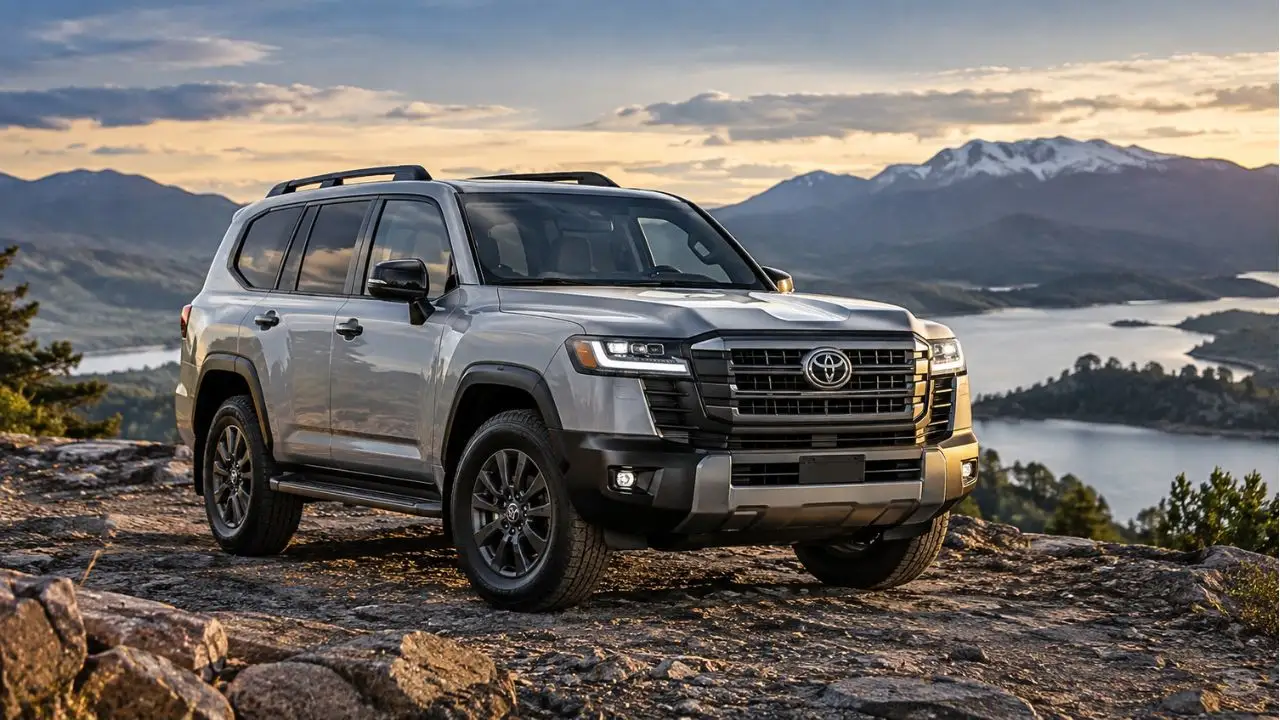
The 300 Series serves as the flagship Land Cruiser, while the 70 Series emphasizes heavy-duty durability and serviceability. The 250 Series is positioned as the core Land Cruiser model, and the new FJ adds a smaller option focused on easier maneuverability while retaining the family’s off-road fundamentals.
That positioning makes the FJ different from a conventional compact SUV.
Its compact dimensions are intended to make it easier to use, but Toyota has retained a ladder frame, four-wheel drive, substantial wheel articulation and dedicated off-road control systems.
Customization and Accessories
Toyota is also emphasizing customization.
The Japanese-market FJ can be equipped with dealer-installed options for the exterior and luggage area. Available accessories include MOLLE panels, decals and other equipment designed around outdoor use.
Toyota also lists ARB accessories such as roof racks, skid plates and rock rails among the available genuine accessories through selected Toyota dealerships.
This approach fits the FJ’s intended role as a vehicle for owners who may use it for both everyday driving and recreational off-road travel.
What Makes the 2026 Land Cruiser FJ Different?
The FJ’s main distinction is not simply its styling. It is the combination of a relatively compact footprint with traditional off-road engineering.
The vehicle is:
- Smaller than the Land Cruiser 250
- Built on a ladder frame
- Equipped with part-time 4WD
- Powered by a 2.7-liter gasoline engine in Japan
- Designed around short-wheelbase maneuverability
- Equipped with a locking rear differential
- Offered with dedicated downhill and hill-start assistance
- Designed with substantial cargo flexibility
- Supported by Toyota’s Safety Sense technology
Toyota’s stated objective is to make the Land Cruiser easier for more customers to use without abandoning the reliability, durability and off-road capability associated with the nameplate.
Final Thoughts
The 2026 Toyota Land Cruiser FJ represents a different direction for the Land Cruiser family: a smaller vehicle that retains traditional off-road hardware rather than becoming a conventional crossover.
Its Japanese-market specification combines a 2.7-liter naturally aspirated gasoline engine, six-speed automatic transmission, part-time 4WD, ladder-frame construction and a locking rear differential. Its 4,575-mm length and 2,580-mm wheelbase also give it a noticeably more compact footprint than the Land Cruiser 250.
For global shoppers, the most important point is market availability. Japan is the confirmed launch market as of 2026, while a U.S. price or U.S. launch should not be treated as official without a Toyota announcement specifically covering that market.
The FJ therefore stands out less because it is simply a smaller Land Cruiser and more because Toyota has attempted to preserve the mechanical fundamentals of an off-roader while making the vehicle easier to maneuver in everyday use.
FAQ
What is the 2026 Toyota Land Cruiser FJ?
The Land Cruiser FJ is a new compact member of Toyota’s Land Cruiser family. It uses a ladder frame, part-time four-wheel drive and a 2.7-liter gasoline engine in its Japanese-market specification.
When did the Land Cruiser FJ launch?
Toyota launched the Land Cruiser FJ in Japan on May 14, 2026.
How much does the Land Cruiser FJ cost?
The Japanese-market VX grade starts at ¥4,500,100 including consumption tax.
What engine does the Land Cruiser FJ use?
The Japanese-market FJ uses a naturally aspirated 2.7-liter 2TR-FE four-cylinder gasoline engine producing 163 PS and 246 Nm of torque.
Is the Land Cruiser FJ a 4WD vehicle?
Yes. The Japanese-market FJ uses a part-time four-wheel-drive system. It also has an electric rear differential lock and dedicated off-road assistance systems.
How many people can the Land Cruiser FJ seat?
The FJ has a five-passenger, two-row interior.
Is the Land Cruiser FJ coming to the United States?
Toyota’s May 2026 announcement confirms the FJ’s Japanese-market launch but does not establish a U.S. launch date or U.S. MSRP. U.S. shoppers should wait for Toyota USA to confirm any American-market plans.
How is the FJ different from the U.S. Land Cruiser 250?
The FJ is smaller and uses a 2.7-liter naturally aspirated gasoline engine with part-time 4WD in Japan. The U.S.-market 2026 Land Cruiser 250 uses a 2.4-liter turbocharged i-FORCE MAX hybrid system with 326 net combined horsepower and full-time 4WD.