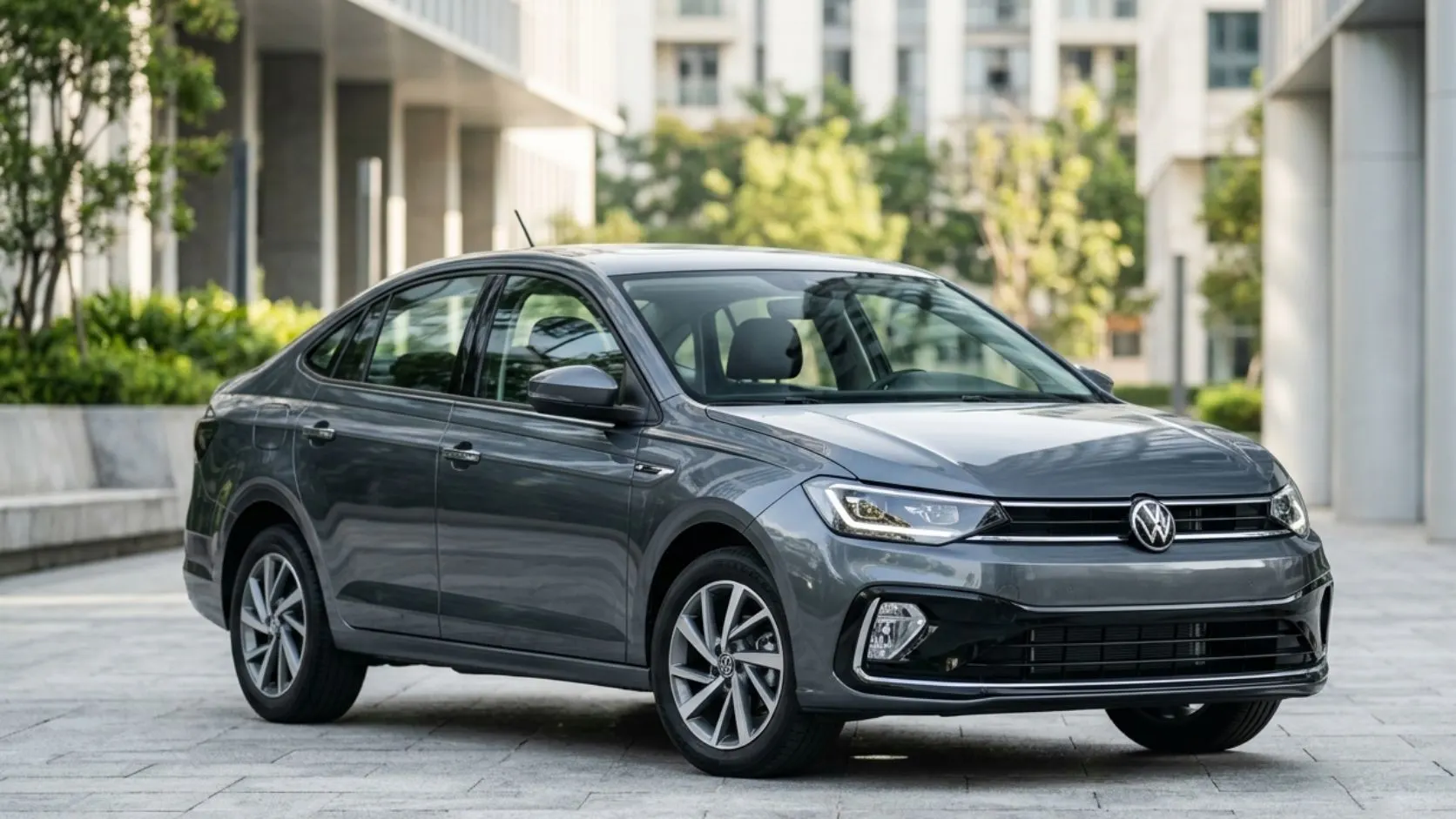
The 2026 Volkswagen Virtus remains a premium midsize sedan for Indian buyers who want turbo-petrol performance, a spacious cabin, a large trunk and a strong focus on safety. Its main strengths are its two turbocharged engine options, available automatic transmissions and a design that prioritizes a conventional sedan shape over the increasingly popular SUV body style.
For 2026, the biggest confirmed development is the introduction of a limited-run Virtus Anniversary Edition in India. Volkswagen announced the special edition in August 2026 to celebrate four years of the sedan in the market. It features an exclusive Avocado Pearl exterior finish, a contrasting black roof and black alloy wheels.
A separate facelift has also been discussed in automotive reporting, but buyers should distinguish those reports from confirmed specifications and officially announced launch details. The existing Virtus lineup and the Anniversary Edition provide a clearer basis for evaluating the car today.
This article covers the Indian-market Volkswagen Virtus, including its price, claimed mileage, engines, safety rating, cabin equipment and the updates buyers should know about before purchasing.
2026 Volkswagen Virtus: Key Specifications
| Specification | Volkswagen Virtus |
|---|---|
| Market covered | India |
| Body style | Five-seat midsize sedan |
| Petrol engine options | 1.0L TSI and 1.5L TSI |
| Maximum power | Up to 150 PS |
| Maximum torque | Up to 250 Nm |
| Transmission options | 6-speed manual, 6-speed automatic and 7-speed DSG, depending on variant |
| Fuel type | Petrol |
| Claimed fuel efficiency | Varies by engine and transmission |
| Boot capacity | 521 liters |
| Safety rating | Five stars in Global NCAP testing |
| Special 2026 edition | Limited-run Anniversary Edition |
Specifications and equipment depend on the variant. The Anniversary Edition also has its own configuration and should not be treated as representative of every Virtus model.
2026 Volkswagen Virtus Price in India
The Volkswagen Virtus starts at approximately ₹10.70 lakh ex-showroom for the entry-level variant in the published Indian lineup. The top-end limited-run Anniversary Edition is priced at approximately ₹19.20 lakh ex-showroom, according to automotive reporting published in August 2026.
The actual price depends on the variant, transmission, dealership offers and any subsequent price revisions. Ex-showroom pricing also excludes registration, insurance and other applicable on-road expenses.
Volkswagen Virtus price overview
| Model or variant category | Indicative ex-showroom price |
|---|---|
| Entry-level Virtus | ₹10.70 lakh |
| Higher-specification variants | Depends on configuration |
| Virtus Anniversary Edition | ₹19.20 lakh |
The entry-level figure is a reference price, not a complete price list for every variant. Confirm current pricing with an authorized Volkswagen dealer before booking.
What is the Volkswagen Virtus Anniversary Edition?
Limited-run special edition introduced in August 2026
The Anniversary Edition celebrates four years of the Virtus in India. Volkswagen has limited production to 150 units, making it a more exclusive option than the regular lineup.
Its key distinguishing features include:
- Exclusive Avocado Pearl exterior paint
- Contrasting black roof
- Black alloy wheels
- Red brake calipers
- Black boot-lip spoiler
- Additional accessories, including puddle lamps, a 360-degree camera system and front parking sensors
The special edition is based on the GT Plus Sport and uses the 1.5-liter TSI engine paired with a seven-speed DSG automatic transmission.
Its appeal is primarily in its exclusive styling and additional equipment. Buyers who do not need the special color or accessories should compare it with the regular GT variants before paying for a limited-run model.
2026 Volkswagen Virtus Mileage
Fuel efficiency is one of the Virtus’s important buying considerations because the sedan offers two different turbo-petrol powertrains.
The published ARAI-certified figures reported for the current lineup are:
| Engine and transmission | Claimed mileage |
|---|---|
| 1.0L TSI manual | 20.19 km/l |
| 1.0L TSI automatic | 18.70 km/l |
| 1.5L TSI DSG automatic | 19.62 km/l |
These figures are laboratory-tested efficiency claims, not guaranteed real-world results. Traffic congestion, average speed, air-conditioning use, driving style and road conditions can all affect fuel consumption.
Which Virtus engine offers the best mileage?
The 1.0-liter TSI manual has the highest claimed mileage among these configurations, at 20.19 km/l. It may appeal to buyers who want a balance of performance and fuel efficiency while retaining a manual gearbox.
The 1.0-liter automatic is worth considering for city driving, although its claimed mileage is lower than that of the manual version.
The 1.5-liter TSI DSG combines greater power with a claimed 19.62 km/l. That makes it attractive to buyers who prioritize performance without moving to a much larger engine.
What mileage can you expect in everyday driving?
Actual mileage can be lower than certified figures, particularly in heavy traffic or during frequent short journeys. Highway driving at a steady speed may improve efficiency, but results still depend on the conditions.
For a realistic ownership budget, calculate fuel costs using a conservative estimate based on your daily route and local petrol prices. Do not assume that every Virtus owner will achieve the same fuel economy.
Volkswagen Virtus Engine and Performance
Volkswagen offers two turbocharged petrol engines in the Indian-market Virtus. Both use the TSI engine family, but they serve slightly different driving requirements.
1.0-liter TSI turbo-petrol
The three-cylinder 1.0-liter TSI engine produces 115 PS and 178 Nm of torque. It is available with a six-speed manual gearbox or a six-speed torque-converter automatic, depending on the variant.
This engine is suitable for buyers who want responsive performance for city commutes, highway journeys and everyday family use.
Its smaller displacement does not mean it is a conventional low-powered entry-level engine. Turbocharging helps it produce useful torque at relatively low engine speeds, reducing the need for constant high-rev driving under normal conditions.
The manual version may suit drivers who prefer greater control over gear selection. The automatic is more convenient in stop-and-go traffic.
1.5-liter TSI turbo-petrol
The four-cylinder 1.5-liter TSI engine produces 150 PS and 250 Nm of torque. In the current configuration discussed here, it is paired with a seven-speed DSG dual-clutch automatic transmission.
This is the more performance-focused option in the lineup. Its additional power makes it attractive to buyers who frequently use highways or want stronger acceleration.
The DSG transmission uses two clutches to prepare gear changes, allowing rapid shifts under suitable driving conditions. Its behavior differs from that of the six-speed torque-converter automatic paired with the 1.0-liter engine.
The 1.5-liter engine is also used in the Anniversary Edition, giving the limited-run model the performance-oriented powertrain rather than the smaller engine.
Engine comparison
| Specification | 1.0L TSI | 1.5L TSI |
|---|---|---|
| Engine configuration | Three-cylinder turbo-petrol | Four-cylinder turbo-petrol |
| Maximum power | 115 PS | 150 PS |
| Maximum torque | 178 Nm | 250 Nm |
| Transmission options | 6-speed manual / 6-speed automatic | 7-speed DSG automatic |
| Main appeal | Everyday efficiency and usability | Stronger performance |
For most buyers, the choice comes down to driving priorities. The 1.0-liter engine offers adequate performance for ordinary commuting, while the 1.5-liter version is better suited to those who place greater emphasis on acceleration and a more performance-oriented driving experience.
2026 Volkswagen Virtus Exterior Design
The Virtus follows a conventional three-box sedan design, with a separate-looking bonnet, passenger cabin and trunk. Its relatively long body gives it a more formal appearance than a compact hatchback or crossover.
The styling is characterized by a broad front grille, clean body lines, a defined shoulder line and a relatively long wheelbase. Depending on the trim, the exterior equipment includes LED lighting, alloy wheels and sportier design elements.
Volkswagen offers the Virtus through Chrome and Sport styling structures. The exact appearance varies by variant, so buyers should compare the actual vehicle rather than assume all trims have the same bumpers, wheels or lighting details.
Dimensions and everyday practicality
| Dimension | Volkswagen Virtus |
|---|---|
| Length | 4,561 mm |
| Width | 1,752 mm |
| Height | 1,507 mm |
| Wheelbase | 2,651 mm |
| Ground clearance, unladen | 179 mm |
| Boot capacity | 521 liters |
The 521-liter trunk is a useful advantage for families who regularly carry suitcases, shopping or other luggage. The sedan’s long wheelbase also helps create a spacious cabin for its class.
Its overall length, however, can make parking in tight spaces less convenient than with a smaller car. Buyers who regularly use narrow streets or crowded parking facilities should assess manoeuvrability during a test drive.
Volkswagen Virtus Interior and Features
The Virtus combines a straightforward dashboard layout with modern infotainment and convenience equipment. Its cabin is designed to serve both daily commuting and longer journeys, with the precise equipment depending on the chosen trim.
Higher-specification variants offer a stronger set of comfort features than entry-level models. Buyers should focus on the features they will actually use rather than assuming that the entire lineup is equipped identically.
Infotainment and connectivity
The equipment available across the range includes touchscreen infotainment, smartphone connectivity and a digital instrument display on selected variants.
Depending on the trim, buyers can also find wireless phone charging, a premium audio system, connected-car functions and steering-wheel controls.
The Anniversary Edition’s equipment includes a 10-inch infotainment touchscreen and an 8-inch digital driver’s display, alongside an eight-speaker audio system.
When comparing variants, check smartphone compatibility, navigation requirements and whether the particular connected functions require an active service or subscription.
Comfort and convenience features
Depending on the configuration, the Virtus can include:
- Electric sunroof
- Automatic climate control
- Ventilated front seats
- Electrically adjustable driver’s seat on selected variants
- Keyless entry and push-button start
- Cruise control
- Rear air-conditioning vents
- Split-folding rear seatbacks
- Paddle shifters on applicable automatic variants
Not every feature is standard across the range. Ventilated front seats, for example, are more relevant to buyers in hot climates, while an electric sunroof may be a preference rather than an essential purchase requirement.
The rear cabin has three rear head restraints, and the trunk offers substantial luggage capacity. Families should still test rear-seat comfort with their usual passengers, especially if they frequently travel long distances.
2026 Volkswagen Virtus Safety Rating and Equipment
Safety is a major consideration for buyers comparing premium midsize sedans. The Volkswagen Virtus has earned a five-star Global NCAP rating for adult occupant protection and a five-star rating for child occupant protection under the updated assessment associated with the model.
The rating provides useful evidence about crash protection under the applicable test protocol. It should not be interpreted as a guarantee that injuries cannot occur or as a direct comparison with vehicles assessed under different protocols.
Important safety features
Depending on the variant, the Virtus offers equipment such as:
- Six airbags
- Electronic stability control
- Anti-lock braking system with electronic brakeforce distribution
- Multi-collision braking
- Hill-hold control
- Tyre-pressure deflation warning
- ISOFIX child-seat mounting points
- Rear parking sensors and a reversing camera
- Three rear head restraints
These systems serve different purposes. Electronic stability control can help the driver maintain control in certain situations, while hill-hold control helps prevent rollback when starting on an incline.
The presence and configuration of individual features should be checked against the specific variant’s equipment list.
Does the 2026 Volkswagen Virtus have ADAS?
Buyers should not assume that the Virtus includes a full advanced driver-assistance systems package simply because it is a modern sedan.
The established feature list includes conventional electronic safety systems and parking assistance, but the exact availability of newer driver-assistance technologies should be verified against an official specification sheet for the model and variant being purchased.
Features such as adaptive cruise control, automatic emergency braking and lane-keeping assistance should not be treated as standard equipment unless Volkswagen confirms them for that specific version.
2026 Volkswagen Virtus Feature Updates: What Has Changed?
The clearest confirmed update for 2026 is the Anniversary Edition, introduced in August. It adds a distinctive appearance and additional equipment while retaining the established GT Plus Sport powertrain.
The main changes associated with the special edition are its exclusive paint finish, contrasting roof, black alloy wheels, red brake calipers, puddle lamps and 360-degree camera system.
It is important to separate this limited-run edition from reports about a possible broader facelift.
Is a Volkswagen Virtus facelift coming in 2026?
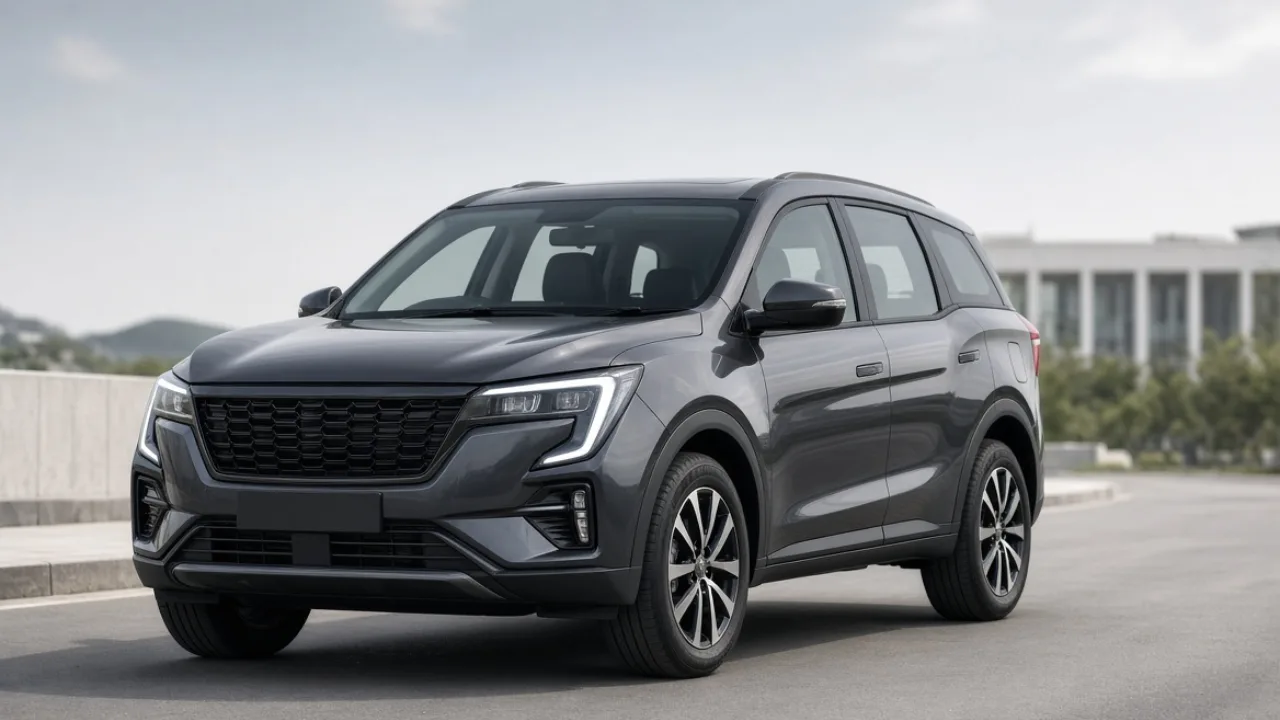
Automotive reports published in June 2026 described a test vehicle believed to be an updated Virtus. The reports pointed toward possible exterior revisions and a refreshed model, but test-vehicle sightings alone do not establish the final production specification, price or launch date.
As of October 14, 2026, a complete facelift specification and confirmed market-launch date have not been established by the official information used for this article.
Potential changes discussed in media reports should therefore be treated as unconfirmed. Buyers considering an immediate purchase should compare the currently listed model with any official announcement that Volkswagen may issue, rather than making a decision based on speculative equipment or timing.
Volkswagen Virtus vs Skoda Slavia and Hyundai Verna
The Virtus competes with other midsize sedans, particularly the Skoda Slavia and Hyundai Verna. All three target buyers who want a conventional sedan with modern features, useful passenger space and petrol-engine options.
| Buying consideration | Volkswagen Virtus | Skoda Slavia | Hyundai Verna |
|---|---|---|---|
| Main appeal | Driving-focused character and sedan styling | Turbo-petrol performance and practicality | Feature-rich cabin and modern design |
| Body style | Midsize sedan | Midsize sedan | Midsize sedan |
| Engine choices | 1.0L and 1.5L turbo-petrol | Turbo-petrol options | Naturally aspirated and turbo-petrol options, depending on variant |
| Automatic options | Torque-converter automatic and DSG | Automatic options vary by engine | Automatic options vary by engine |
| Safety | Five-star Global NCAP rating | Check the applicable tested version and protocol | Check the applicable tested version and protocol |
| Best reason to shortlist | Strong turbo-petrol options and large trunk | An alternative for buyers comparing the Volkswagen Group’s sedan offerings | Buyers prioritizing its particular feature package and cabin design |
Exact specifications, prices and equipment depend on the model year and variant. A fair comparison should use current Indian-market prices and equivalent transmission and powertrain configurations.
The Virtus makes sense for buyers who like its styling, driving character and 1.5-liter engine. The Slavia is a natural alternative for those comparing closely related sedan offerings, while the Verna deserves consideration for buyers who prioritize its available equipment and design.
A test drive of all three is more useful than choosing solely on the basis of brochure specifications.
Who Should Buy the 2026 Volkswagen Virtus?
The Virtus may suit several types of buyers.
Daily commuters: The 1.0-liter TSI is worth considering for regular city and highway use, particularly if you want a turbo-petrol sedan without moving to the more powerful engine.
Highway drivers: The 1.5-liter TSI offers greater power and torque, making it an appealing option for buyers who regularly travel on faster roads.
Families: The 521-liter trunk and five-seat cabin make the Virtus practical for family trips, although rear-seat comfort should be assessed with your usual passengers.
Automatic-transmission buyers: The six-speed torque-converter automatic and seven-speed DSG serve different preferences. Try both if you are uncertain which transmission best suits your driving conditions.
Style-conscious buyers: The Anniversary Edition may appeal to those who want its exclusive paint and additional equipment. Its limited production also makes availability an important consideration.
The Virtus may be less suitable for buyers who need SUV-like ground clearance, frequently drive on badly damaged roads or prioritize a hybrid powertrain. It is a petrol-only sedan in the Indian lineup covered here.
Final Verdict
The 2026 Volkswagen Virtus remains a compelling option in India’s midsize sedan segment because it combines turbocharged petrol engines, a practical trunk, modern cabin equipment and a strong crash-test record.
Its two engine options give buyers a meaningful choice. The 1.0-liter TSI is suited to everyday driving, while the 1.5-liter TSI offers stronger performance for those who want more power. Claimed fuel efficiency varies by transmission, with the 1.0-liter manual delivering the highest published figure among the configurations discussed.
The limited-run Anniversary Edition is the most distinctive confirmed 2026 update, adding exclusive styling and extra equipment. Reports of a possible facelift should be treated separately until the manufacturer confirms the details.
For prospective buyers, the best approach is to compare the exact variant prices, equipment and transmission behavior before booking. The Virtus is most attractive to drivers who want a well-equipped petrol sedan and value performance, passenger space and a substantial luggage compartment.
Frequently Asked Questions
What is the price of the 2026 Volkswagen Virtus in India?
The published starting price is approximately ₹10.70 lakh ex-showroom. The limited-run Anniversary Edition is priced at approximately ₹19.20 lakh ex-showroom. Prices may change, and the final on-road amount depends on location, insurance and registration charges.
What is the mileage of the Volkswagen Virtus?
Published ARAI-certified figures are 20.19 km/l for the 1.0-liter manual, 18.70 km/l for the 1.0-liter automatic and 19.62 km/l for the 1.5-liter DSG automatic. Actual fuel economy varies with driving conditions.
Which engine is available in the Volkswagen Virtus?
The Indian lineup offers a 1.0-liter three-cylinder TSI turbo-petrol engine producing 115 PS and 178 Nm, and a 1.5-liter four-cylinder TSI turbo-petrol engine producing 150 PS and 250 Nm.
Does the Volkswagen Virtus have an automatic transmission?
Yes. The 1.0-liter engine is available with a six-speed torque-converter automatic, while the 1.5-liter engine is paired with a seven-speed DSG automatic in the configuration discussed here.
Is the Volkswagen Virtus safe?
The Virtus has received five stars for both adult and child occupant protection in Global NCAP testing under the applicable updated protocol. Individual safety features vary by trim.
What is new in the 2026 Volkswagen Virtus?
The most clearly confirmed update is the limited-run Anniversary Edition, introduced in August 2026. It adds exclusive Avocado Pearl paint, a contrasting black roof, black alloy wheels and additional equipment.
Is the 2026 Volkswagen Virtus facelift officially confirmed?
A possible facelift has been discussed in automotive reporting following sightings of a test vehicle. However, the complete production specification and a confirmed launch date have not been established by the official information used for this article.
How much boot space does the Volkswagen Virtus offer?
The Virtus offers 521 liters of boot space, making it suitable for carrying family luggage and shopping.
Is the Volkswagen Virtus available in the United States?
This article covers the Indian-market Virtus. Official U.S. availability has not been established by the sources used here, so U.S. buyers should not assume that the car is available through Volkswagen’s official American retail network.