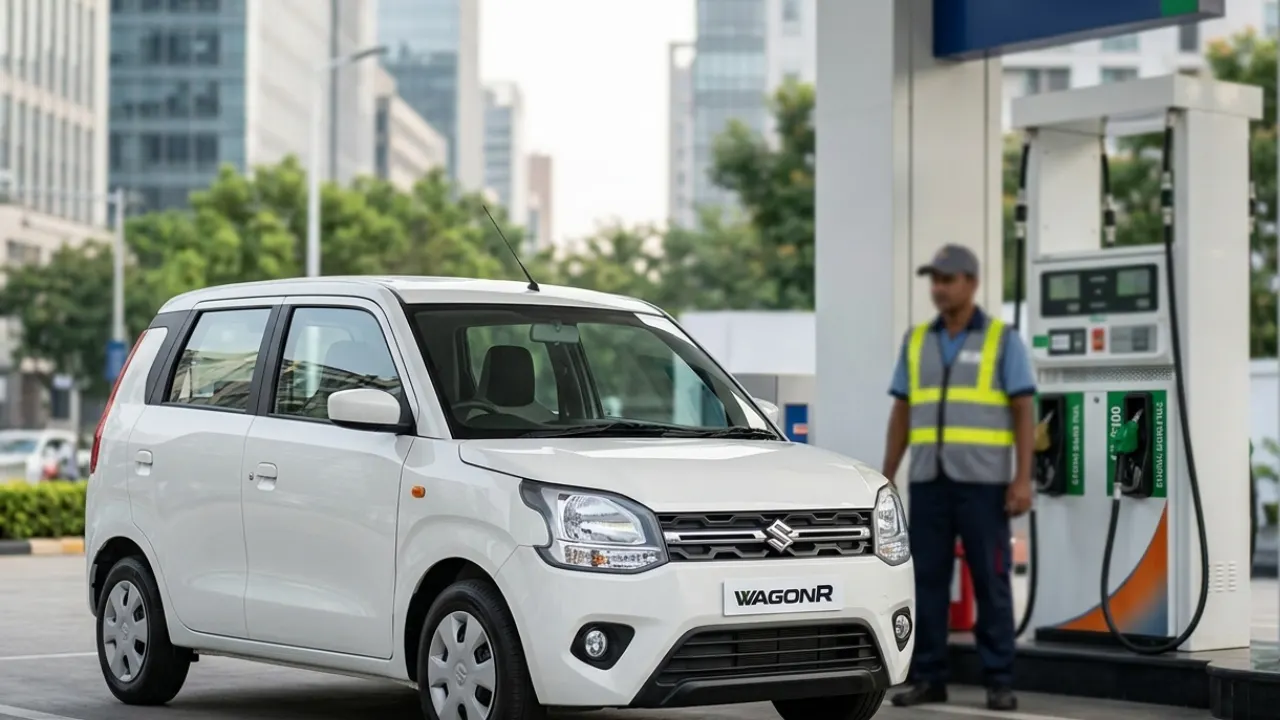
The Maruti Suzuki Wagon R Flex Fuel, also sold as the Wagon R Bioflex, marks a significant change in how ethanol-blended fuel can be used in a mainstream Indian hatchback. Maruti Suzuki introduced the production-spec flex-fuel Wagon R in India in June 2026, making it the country’s first flex-fuel passenger car. The vehicle is engineered to operate across ethanol-petrol blends from E20 through E100, although its Indian homologation is currently based on E85 under the applicable regulatory framework.
That distinction matters. The Wagon R Bioflex can technically handle E100 fuel, but that does not mean E100 is the fuel standard against which the vehicle is currently homologated in India. Maruti’s own documentation makes the difference clear.
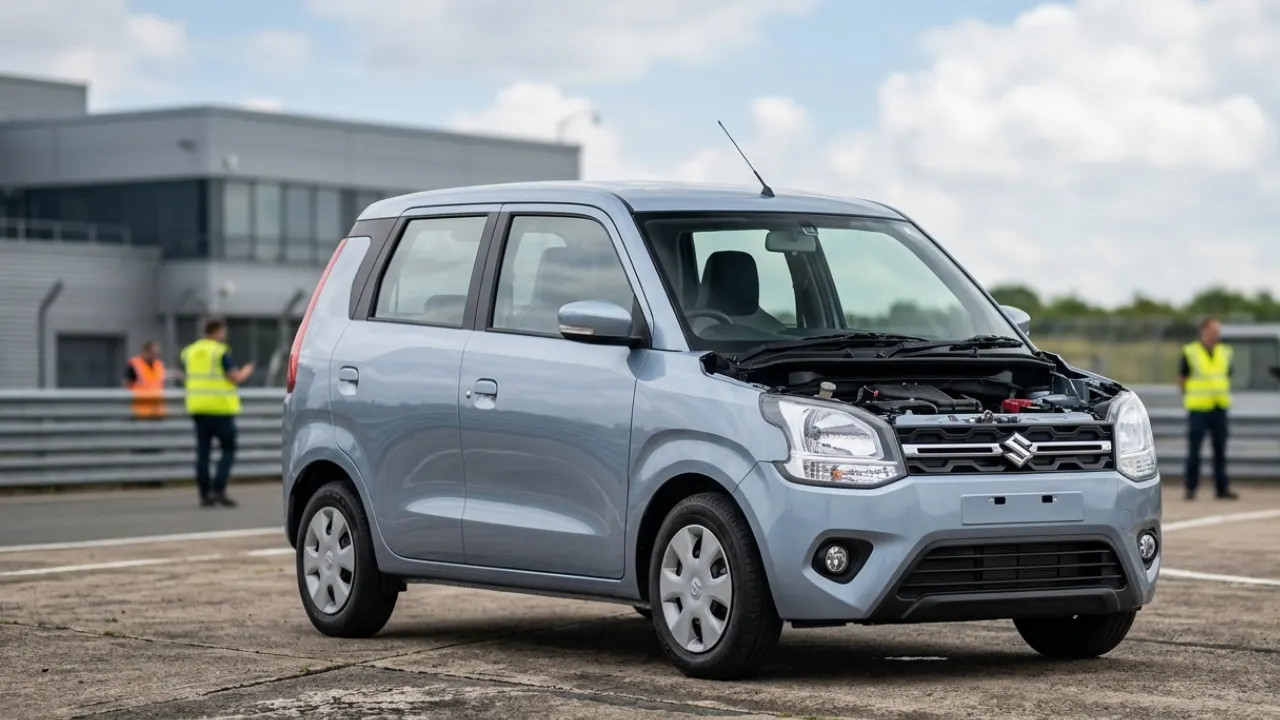
The flex-fuel Wagon R uses a modified 1.2-liter K12N four-cylinder petrol engine and a 5-speed manual transmission. It is based on the top-spec ZXi+ version of the regular Wagon R and retains most of the familiar design, cabin and equipment. Its biggest change is underneath the body, where the powertrain has been adapted for higher ethanol concentrations.
Quick Answer: What Is the Wagon R Flex Fuel?
The Wagon R Flex Fuel is an India-specific flex-fuel version of the Maruti Suzuki Wagon R that can adapt to ethanol-petrol blends ranging from E20 to E100.
However, there are two separate points to understand:
- E20: The fuel contains 20% ethanol and 80% petrol.
- E85: The fuel contains up to 85% ethanol.
- E100: The fuel is ethanol as defined by the relevant Indian standard.
- Technical compatibility: Maruti says the Wagon R Flex Fuel is compatible with E100.
- Homologation: The vehicle is homologated for E85 because India’s current flex-fuel regulatory definition covers E20 to E85.
The car was launched in India in June 2026 at ₹7.24 lakh ex-showroom. Maruti’s current configurator lists the Wagon R Bioflex as a 1.2-liter manual flex-fuel variant.
E20 vs E85 vs E100: What Do These Numbers Mean?
The “E” in E20, E85 and E100 refers to ethanol content in the fuel.
| Fuel | Approximate ethanol content | What it means |
|---|---|---|
| E20 | 20% | Petrol containing 20% ethanol |
| E85 | Up to 85% | High-ethanol flex fuel |
| E100 | 100% ethanol under the applicable standard | Ethanol fuel without petrol as the blending component |
A conventional petrol vehicle needs to be designed and calibrated for the fuel it is intended to use. Higher ethanol concentrations can require changes to fuel-system components, engine calibration and other parts because ethanol has different chemical and combustion characteristics from petrol.
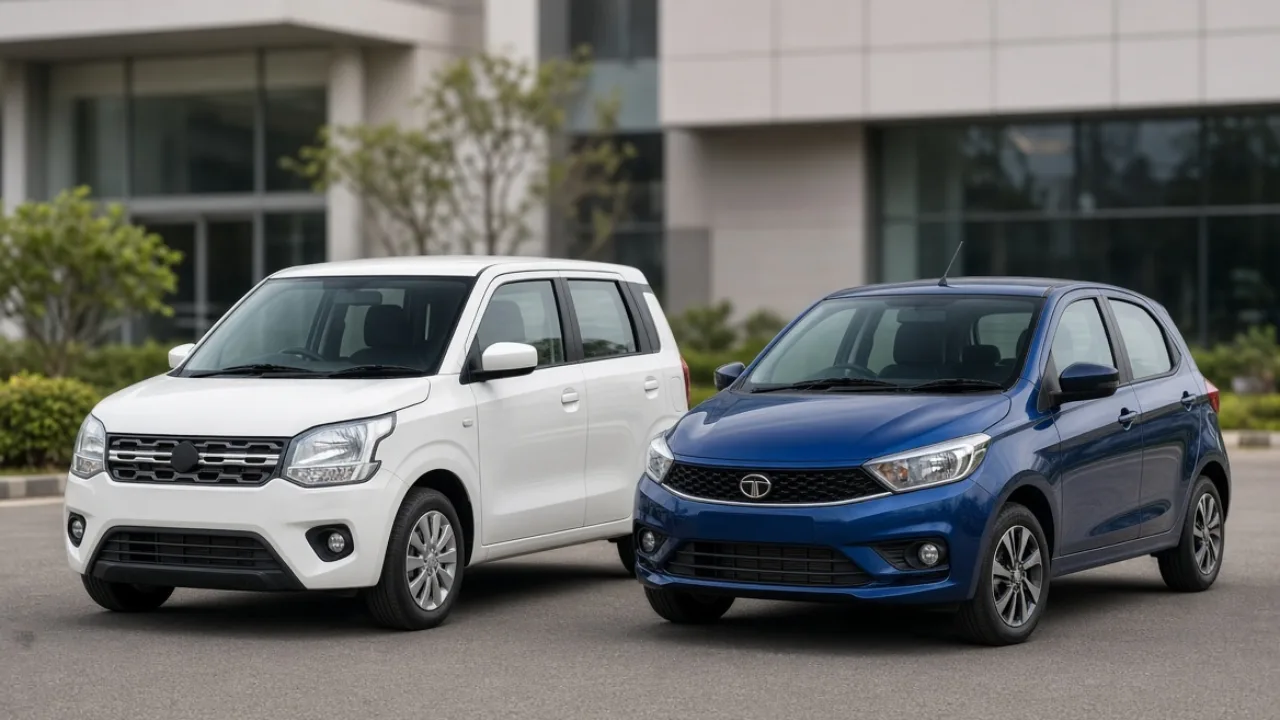
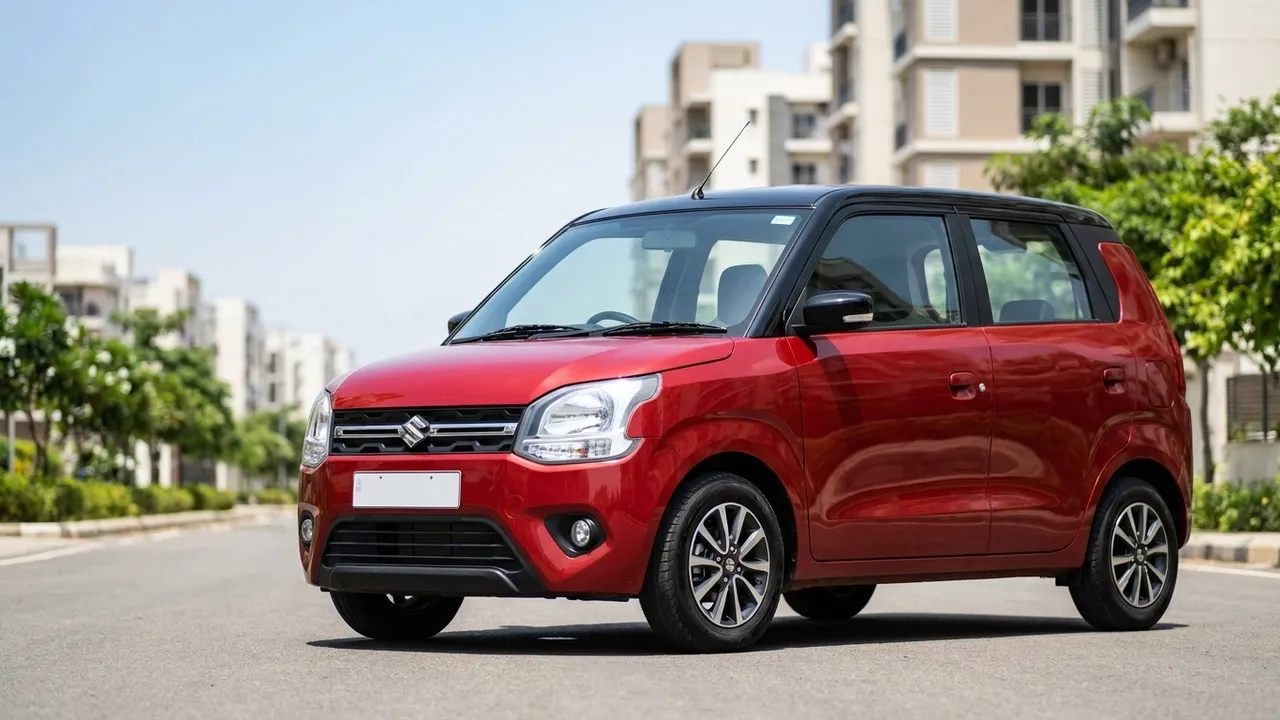
A flex-fuel vehicle is designed to accommodate this wider range.
For the Wagon R Bioflex, Maruti says its ECU calibration can adapt to ethanol blends between E20 and E100. The company also notes that the vehicle’s E100 compatibility is based on the IS17821:2022 definition, while its homologation is for E85 under the current Indian rules.
Why Is the Wagon R Flex Fuel Important?
The significance of the Wagon R Bioflex is less about a dramatic change in the car itself and more about the fuel technology it brings to a mass-market model.
India has been increasing the use of ethanol in petrol as part of its broader effort to reduce petroleum dependence. A flex-fuel vehicle allows the engine to work with substantially higher ethanol concentrations than an ordinary E20-compatible petrol car.
Maruti Suzuki says its flex-fuel strategy is part of a broader approach that includes battery-electric vehicles, hybrids, CNG/CBG and ethanol-based technologies. The company has also linked flex fuel with reduced oil-import dependence and greater domestic use of ethanol.
For consumers, however, there is a practical question: is high-ethanol fuel actually available where they live?
That is currently one of the biggest limitations.
Wagon R Flex Fuel Engine and Powertrain
The Wagon R Bioflex uses a 1.2-liter, four-cylinder K12N petrol engine that has been adapted for higher ethanol blends.
The engine remains naturally aspirated and is paired with a 5-speed manual transmission. Maruti’s current Wagon R configurator identifies the Bioflex version as a 1.2-liter manual flex-fuel model.
Published specifications for the flex-fuel version put output at approximately 90.9 PS and 113.7 Nm, matching the standard 1.2-liter Wagon R’s published output rather than adding extra power simply because of the flex-fuel system.
| Specification | Wagon R Bioflex |
|---|---|
| Market | India |
| Fuel type | Flex fuel |
| Engine | 1.2-liter K12N, 4-cylinder petrol |
| Flex-fuel compatibility | E20 to E100 |
| Current homologation | E85 |
| Maximum power | 90.9 PS |
| Maximum torque | 113.7 Nm |
| Transmission | 5-speed manual |
| Drive type | Front-wheel drive |
| Seating capacity | 5 |
| Price | ₹7.24 lakh ex-showroom |
The important point is that the flex-fuel conversion is primarily about fuel compatibility, not increasing engine performance.
How Does the Wagon R Adapt to Different Ethanol Blends?
A flex-fuel engine needs to recognize changes in the fuel mixture and adjust engine operation accordingly.
Maruti says the Wagon R Flex Fuel uses an advanced ECU calibration that allows the engine to adapt to ethanol blends between E20 and E100.
In simple terms, the engine management system needs to account for the different characteristics of fuels containing different proportions of ethanol.
The hardware also has to be suitable for exposure to higher ethanol concentrations. The exact engineering changes are not all publicly detailed by Maruti in its launch announcement, so it is better not to attribute a specific list of upgraded injectors, pumps or fuel lines to the manufacturer unless those details are officially documented.
The key confirmed change is that the engine and fuel system have been engineered for higher ethanol-blend compatibility, with ECU calibration allowing operation across the stated range.
Does the Wagon R Flex Fuel Really Run on E100?
Yes, in terms of technical compatibility, Maruti says the vehicle can run on E100.
But this needs to be explained carefully.
Maruti’s official June 2026 announcement says the vehicle is compatible with E100 fuel as defined by IS17821:2022. The same announcement states that the car is homologated with E85, because the relevant Central Motor Vehicle Rules definition of flex fuel covers E20 to E85.
So these two statements are not contradictory:
E100 compatibility: Yes.
Current E100 homologation: No; the vehicle is homologated for E85.
For buyers, this distinction is more important than simply seeing “E100” in the headline.
What Is the Wagon R Bioflex Price?
The Maruti Suzuki Wagon R Bioflex is priced at ₹7.24 lakh ex-showroom in India.
Maruti’s current configurator lists the Bioflex model at approximately ₹7.239 lakh, while automotive reports have rounded the price to ₹7.24 lakh. It is offered as the Wagon R ZXi+ MT FFV/Bioflex.
The Bioflex version carries a premium of about ₹86,000 over the regular ZXi+ petrol manual version based on the prices reported when the flex-fuel model was introduced.
These are ex-showroom India prices, not on-road prices. Registration, insurance, taxes and other charges can change the final amount paid by the buyer.
Is the Wagon R Flex Fuel Available to Private Buyers?
Yes.
The initial production-spec announcement suggested a commercial-sector focus, but Maruti subsequently began deliveries and made the Wagon R Bioflex available to private buyers. Autocar India reported the first deliveries in New Delhi in June 2026, including vehicles handed over to private customers and members of the Indian Sugar & Bio-energy Manufacturers Association.
Maruti’s current online configurator also lists the Wagon R Bioflex as an available Wagon R variant.
Wagon R Flex Fuel Features
Because the Bioflex is based on the upper-spec Wagon R ZXi+ configuration, much of the cabin equipment is familiar.
Confirmed equipment includes:
- 7-inch touchscreen infotainment system
- Wired Android Auto and Apple CarPlay
- Four-speaker audio system
- Steering-mounted controls
- Manual air conditioning
- Rear AC vents
- Four power windows
- Rear parking sensors
- Rear wiper and washer
- Front fog lamps
- ORVM-mounted turn indicators
- Six airbags
- Electronic Stability Program/Control
- SmartPlay Studio infotainment system
Maruti’s current Wagon R information also lists features such as six airbags, ESP, hill-hold assist on applicable variants and a 17.78-cm SmartPlay Studio display.
The important takeaway is that the flex-fuel system does not turn the Wagon R into a radically different car inside. The main engineering change is related to its fuel capability.
Wagon R Flex Fuel Design: What Has Changed?
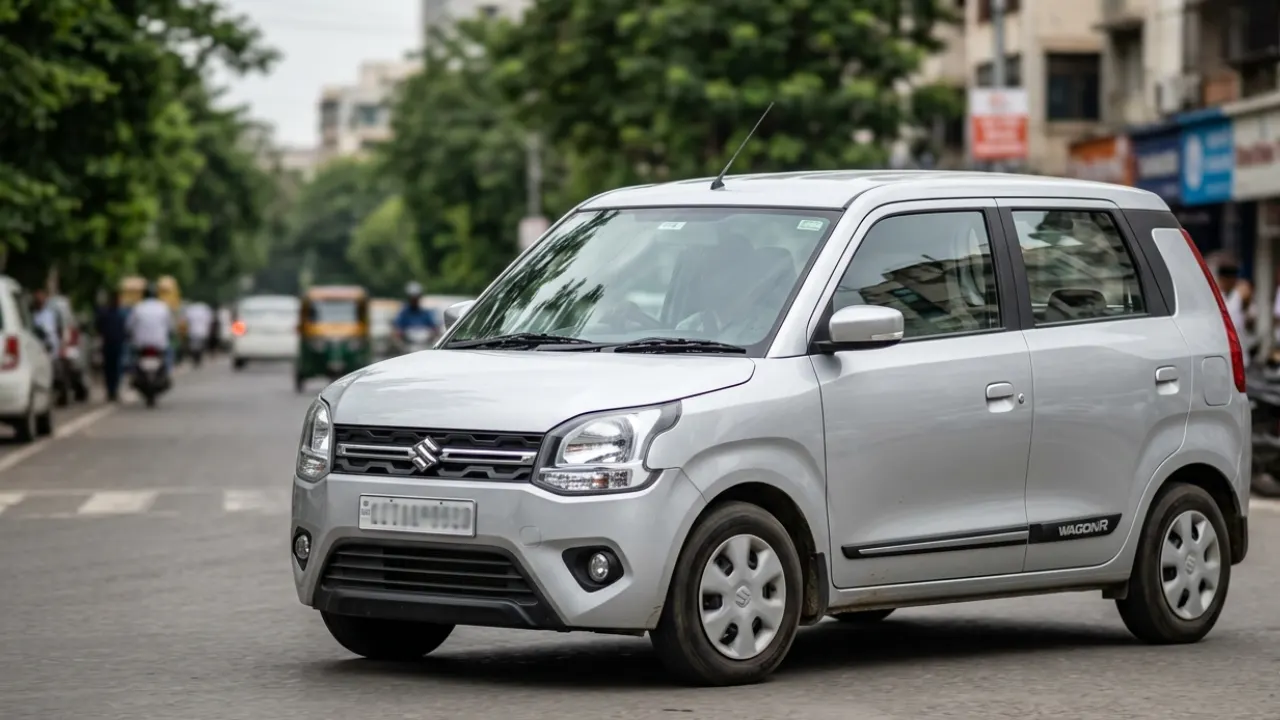
Visually, the Wagon R Bioflex remains very close to the standard Wagon R.
The tall-boy body, upright proportions and familiar exterior design are retained. The most obvious identifiers are the “Flex Fuel” decals on the sides and “Bioflex” badging at the rear.
The interior is similarly familiar, with the standard Wagon R’s cabin layout and equipment carried over to the flex-fuel model.
That is useful from a buyer’s perspective because the Bioflex is not intended to be a separate high-performance model. It is essentially a Wagon R adapted to work with a wider range of ethanol concentrations.
What About Wagon R Flex Fuel Mileage?
This is one area where buyers should be careful.
Maruti has not published a separate official fuel-efficiency figure for the Wagon R Bioflex across its different ethanol blends. Automotive reports have therefore compared it with the standard Wagon R, but those figures should not be presented as the Bioflex’s official E85 or E100 mileage.
Ethanol contains less energy per unit of volume than petrol, so fuel consumption can increase as ethanol concentration rises. The actual difference depends on the vehicle, calibration, driving conditions and fuel blend.
Therefore, the standard Wagon R’s petrol mileage figure should not be used as an E85 or E100 mileage claim for the Bioflex.
This is particularly important for anyone calculating running costs.
Does E85 Give Better Running Costs?
Not automatically.
The price per liter of a high-ethanol fuel can be lower than petrol in markets where it is available, but higher ethanol content also generally means more fuel is required to cover the same distance because ethanol has lower energy density than petrol.
The final running-cost calculation therefore depends on:
fuel price + ethanol blend + actual fuel consumption + availability.
At present, the bigger issue in India is availability. High-ethanol fuel infrastructure is still developing, which limits the practical advantage of owning a flex-fuel vehicle in areas where E85 or other high-ethanol blends are difficult to find.
Where Can You Get E85 or E100 Fuel?
This is arguably the biggest practical question surrounding the Wagon R Bioflex.
E20 petrol has become much more widespread in India, but high-ethanol blends such as E85 are not yet available as widely as conventional petrol. Reporting in 2026 has highlighted that India’s E85 dispensing network remains limited and concentrated in selected areas.
That means the technology can support a much wider fuel range than the infrastructure currently provides.
For a buyer, there is little point in choosing the vehicle specifically for E85 capability if there is no convenient E85 supply nearby.
Before purchasing, it makes sense to check local fuel availability rather than assuming every petrol station will offer E85 or E100.
Does E20 Fuel Work in the Wagon R Bioflex?
Yes.
E20 is at the lower end of the Wagon R Bioflex’s stated compatibility range. The car is designed to work with ethanol-petrol blends from E20 upward.
This means the vehicle does not require E85 or E100 fuel to operate.
That is important because E20 remains far more relevant to today’s Indian fuel network than very high ethanol blends.
The advantage of a flex-fuel vehicle is the ability to accommodate higher ethanol concentrations as those fuels become more available.
Is the Wagon R Bioflex Better Than the Regular Wagon R?
The answer depends on what the buyer needs.
The regular Wagon R is available with petrol and CNG powertrains, along with manual and AGS automatic options on applicable variants. The Bioflex is currently a 1.2-liter manual-only flex-fuel model.
The Bioflex therefore offers something the regular petrol Wagon R does not: compatibility with substantially higher ethanol blends.
However, that benefit is closely connected to local fuel infrastructure.
For a buyer who mainly wants an automatic transmission, the regular Wagon R offers an AGS option that the Bioflex does not. For someone specifically interested in higher ethanol compatibility, the Bioflex provides the relevant technology.
What Does the Wagon R Flex Fuel Mean for Indian Car Buyers?
The Wagon R Bioflex is an important demonstration that flex-fuel technology can be applied to a mainstream hatchback rather than remaining limited to prototypes.
Maruti had already demonstrated a Wagon R flex-fuel prototype in 2022. That earlier prototype was designed around E20 to E85 compatibility. The production vehicle introduced in 2026 takes the concept further, with Maruti confirming technical compatibility with E100 while retaining E85 homologation.
The development also highlights an important reality about alternative-fuel vehicles:
Vehicle technology and fuel infrastructure have to develop together.
The Wagon R Bioflex can accommodate high ethanol concentrations, but widespread consumer adoption will depend partly on whether suitable fuel becomes easy to find.
Wagon R Flex Fuel: Key Advantages
Wider fuel compatibility
The biggest advantage is the ability to use ethanol-petrol blends across a much broader range than an ordinary E20-only petrol vehicle.
Familiar Wagon R package
The Bioflex retains the Wagon R’s established hatchback layout, spacious cabin and practical design rather than requiring buyers to move to an entirely different type of vehicle.
No performance-focused compromise
The 1.2-liter engine retains approximately the same published power and torque as the conventional 1.2-liter Wagon R rather than being detuned solely because of its flex-fuel capability.
Six airbags and stability control
The Bioflex carries safety equipment including six airbags and ESP/ESC, according to published equipment information.
Future fuel flexibility
If high-ethanol fuel infrastructure expands, the vehicle is already designed around a wider range of ethanol blends.
Wagon R Flex Fuel: Limitations to Know
E100 compatibility is not the same as E100 homologation
This is the most important technical distinction. Maruti confirms E100 compatibility but states that the vehicle is homologated with E85 under the current regulatory definition.
High-ethanol fuel is not widely available everywhere
The usefulness of E85 capability depends heavily on local fuel availability.
No separate official high-ethanol mileage figure
Maruti has not published a specific fuel-efficiency figure that should be treated as the official E85 or E100 consumption figure.
Manual transmission only
The Bioflex is currently offered with a 5-speed manual gearbox rather than the Wagon R’s AGS automatic option.
Higher purchase price than the equivalent petrol ZXi+
The Bioflex was introduced at about ₹86,000 above the regular ZXi+ petrol-manual variant.
What Should Buyers Check Before Buying?
The most important question is not simply whether the Wagon R Bioflex supports E100.
It is whether the fuel you intend to use is available and economically useful in your area.
Before buying, check:
- Whether E85 is available at convenient fuel stations.
- The current price difference between E20 petrol and E85 where you live.
- Expected fuel consumption with the available blend.
- Whether you actually need flex-fuel capability.
- Whether a regular petrol or CNG Wagon R better matches your daily driving.
- Whether you prefer a manual transmission, since the Bioflex is currently manual-only.
For many buyers, E20 compatibility is already the most relevant day-to-day requirement. The additional value of the Bioflex becomes clearer for people who have reliable access to higher ethanol blends or want a vehicle prepared for a broader ethanol-fuel ecosystem.
What Does E100 Compatibility Mean for the Future?
The Wagon R Bioflex demonstrates that a mainstream internal-combustion engine can be engineered to accommodate a very wide range of ethanol concentrations.
That does not mean India is immediately moving to E100 as the standard fuel for passenger cars.
Instead, the technology gives manufacturers and consumers more flexibility as fuel infrastructure and regulations develop.
Maruti itself describes India’s ethanol ecosystem as being in its early stages.
The Wagon R is therefore best understood as an early production example of a technology that could become more relevant if high-ethanol fuel distribution expands.
Final Thoughts
The Maruti Suzuki Wagon R Flex Fuel is less about a new look or extra performance and more about changing what fuel the car can accept.
Its modified 1.2-liter K12N engine, ECU calibration and flex-fuel engineering allow it to work with ethanol-petrol blends from E20 to E100, according to Maruti. At the same time, the vehicle is currently homologated for E85, which is an important regulatory distinction.
At ₹7.24 lakh ex-showroom, the Bioflex sits above the equivalent regular petrol Wagon R ZXi+ manual. It also remains a relatively conventional Wagon R in terms of design, cabin and equipment.
The bigger question is fuel availability. The car can accept high ethanol blends, but India’s E85 infrastructure is still developing. For buyers, that means the Wagon R Bioflex makes the most sense when its fuel flexibility matches the fuels actually available in their region.
The technology is ready for a wider ethanol range. The infrastructure now has to catch up.
Frequently Asked Questions
Is the Maruti Wagon R Flex Fuel compatible with E100?
Yes. Maruti Suzuki says the Wagon R Flex Fuel is technically compatible with E100 fuel as defined by IS17821:2022. However, it is currently homologated with E85 under India’s applicable flex-fuel regulations.
What is the price of the Wagon R Bioflex?
The Maruti Suzuki Wagon R Bioflex is priced at ₹7.24 lakh ex-showroom in India. Maruti’s current configurator lists the Bioflex variant at approximately ₹7.239 lakh.
What engine does the Wagon R Flex Fuel use?
It uses a modified 1.2-liter four-cylinder K12N petrol engine adapted for higher ethanol blends. Published specifications list approximately 90.9 PS and 113.7 Nm.
Does the Wagon R Bioflex have an automatic transmission?
No. The current Bioflex version is offered with a 5-speed manual transmission.
Does the Wagon R Bioflex use E20 petrol?
Yes. E20 is within its stated E20-to-E100 compatibility range.
Does the Wagon R Bioflex get better mileage on E85?
There is no separate official E85 mileage figure from Maruti that should be treated as the definitive consumption number. Higher ethanol concentrations generally contain less energy per liter than petrol, so fuel consumption can change with the blend and driving conditions.
Is the Wagon R Bioflex available to private buyers?
Yes. After its initial commercial-sector positioning, Maruti began deliveries and made the Bioflex available to private buyers in June 2026.
Is E85 fuel available throughout India?
No. High-ethanol fuel availability remains limited compared with conventional petrol and E20. Buyers should check the availability of E85 in their area before purchasing the vehicle specifically for its high-ethanol capability.
Sources & References
- Maruti Suzuki — India Goes Flex: Wagon R Flex Fuel launch announcement
- Maruti Suzuki — WagonR official model page
- Maruti Suzuki — WagonR official price/configurator page
- Autocar India — Wagon R Bioflex price and specifications
- Autocar India — Wagon R Bioflex deliveries and private-buyer availability
- Moneycontrol — India’s ethanol fuel infrastructure and E85 availability