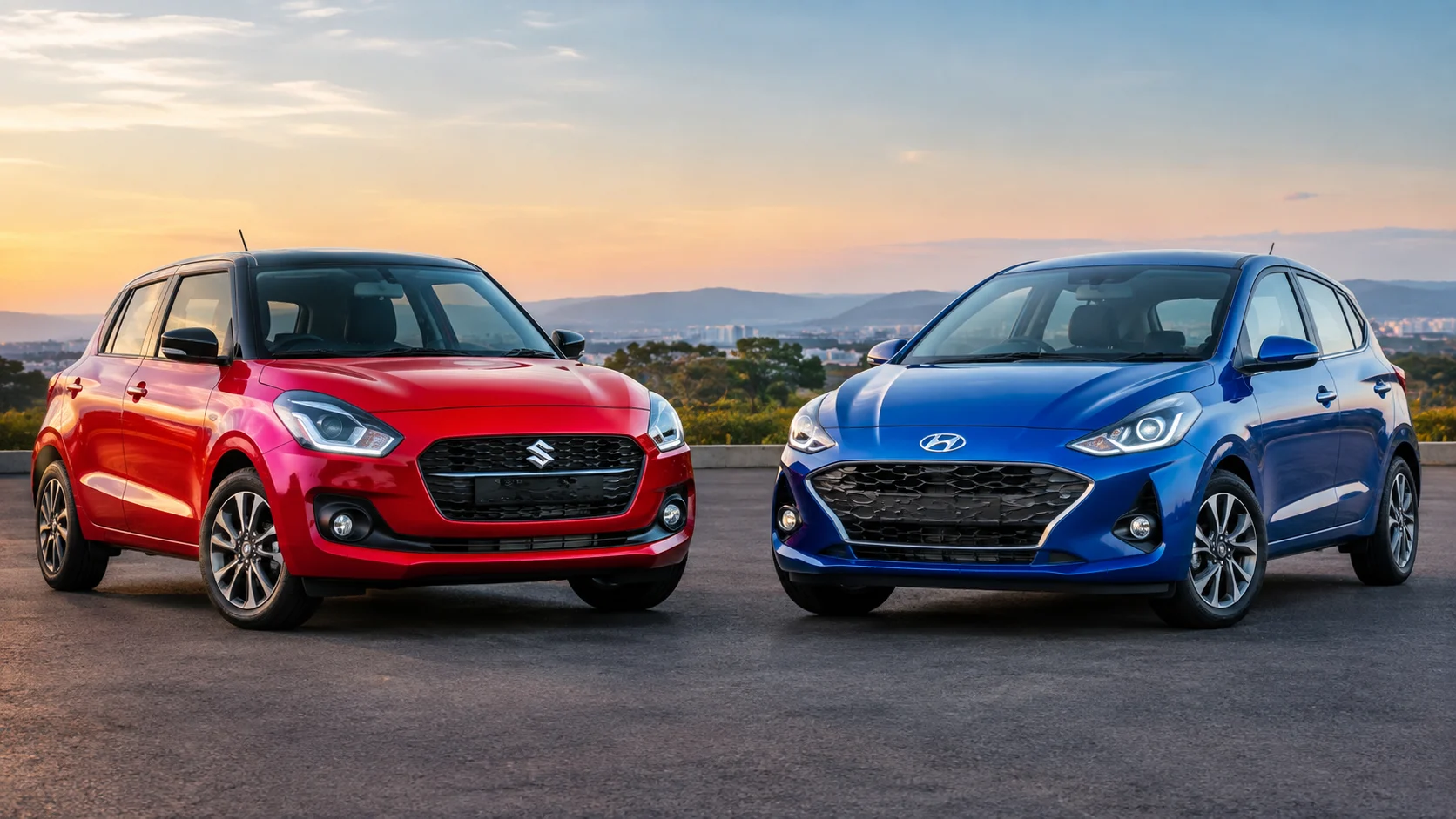
The Maruti Suzuki Swift and Hyundai Grand i10 Nios remain two important choices for buyers looking for a compact petrol hatchback in India. Both use 1.2-litre petrol engines, offer manual and automated-manual transmissions, and are available with CNG options, but they approach the segment differently.
For September 2026, the Grand i10 Nios starts at ₹5.59 lakh ex-showroom, while the Swift starts at ₹5.83 lakh. The Swift also has a higher claimed petrol efficiency figure, while the Grand i10 Nios offers a broader range of convenience and trim-level features.
Here is how the two hatchbacks compare on price, mileage, engines, features, safety and everyday practicality.
Maruti Swift vs Hyundai Grand i10 Nios: Quick Comparison
| Specification | Maruti Suzuki Swift | Hyundai Grand i10 Nios |
|---|---|---|
| Starting price | ₹5.83 lakh | ₹5.59 lakh |
| Engine | 1.2-litre Z-Series petrol | 1.2-litre Kappa petrol |
| Petrol power | 81.58 PS | 83 PS |
| Petrol torque | 111.7 Nm | 113.8 Nm |
| Petrol manual efficiency | 24.8 km/l | 18 km/l |
| Petrol AMT efficiency | 25.75 km/l | 16 km/l |
| CNG option | Yes | Yes |
| CNG efficiency | 32.85 km/kg | 27 km/kg |
| Seating | 5 | 5 |
| Drive type | Front-wheel drive | Front-wheel drive |
Swift figures are based on Maruti Suzuki’s published specifications, while Grand i10 Nios figures are based on Hyundai and current automotive reference data.
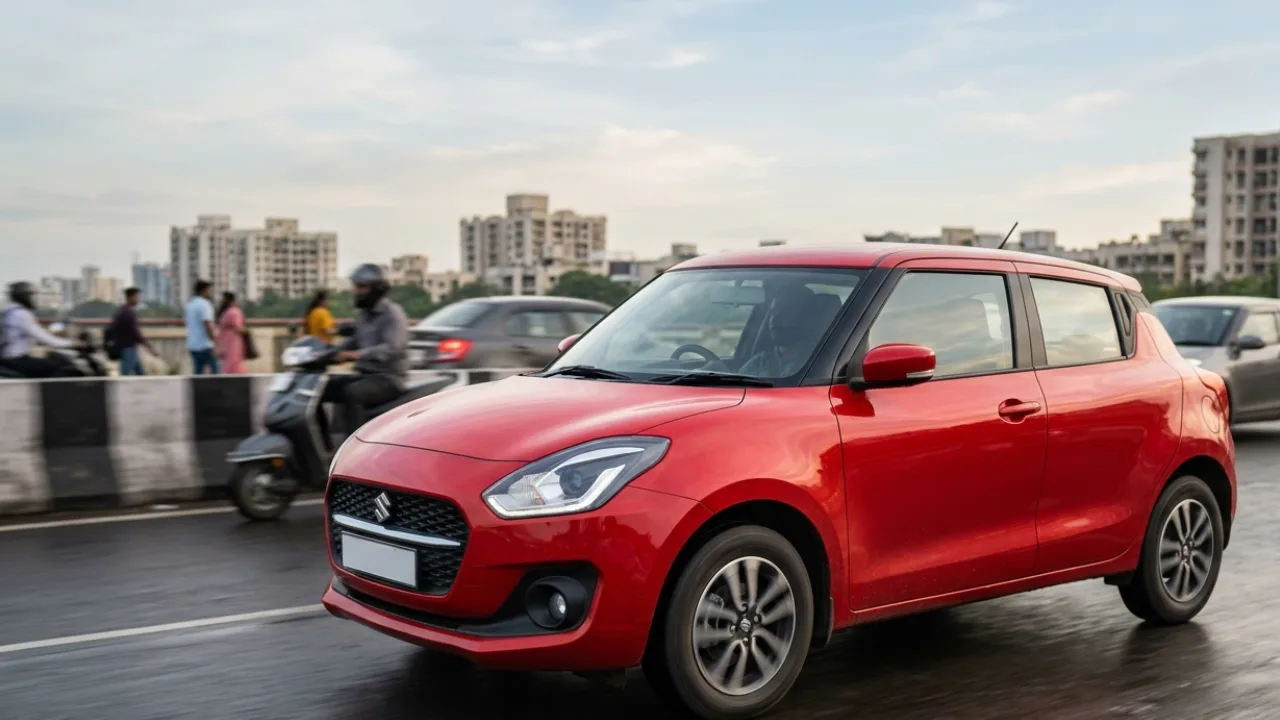
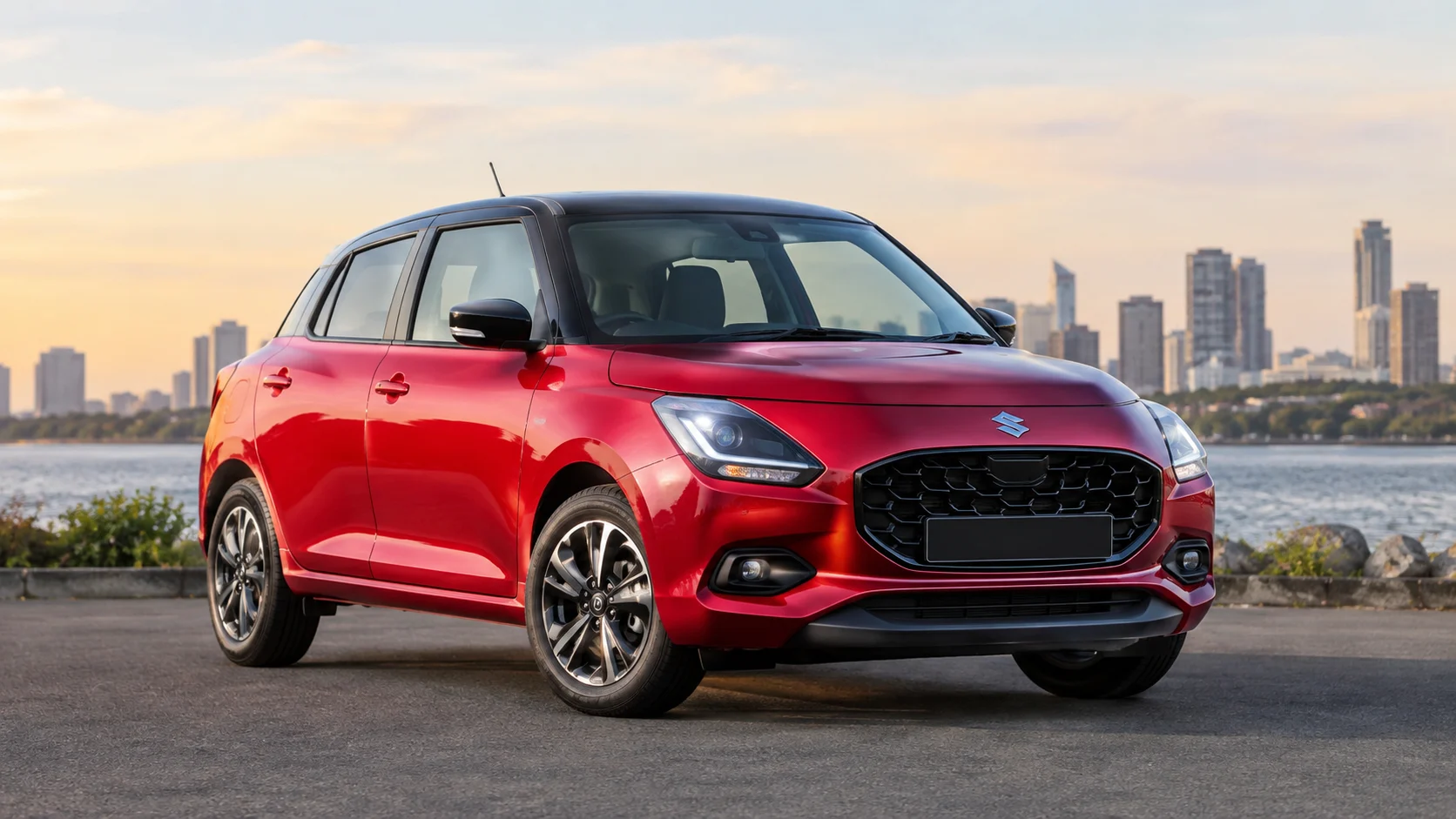
Price: Swift vs Grand i10 Nios
The Hyundai Grand i10 Nios has the lower starting price. Hyundai currently lists the hatchback from ₹5,59,700 ex-showroom, while Maruti Suzuki lists the Swift LXi MT from ₹5,83,900.
That gives the Grand i10 Nios a starting-price advantage of about ₹24,200.
The price gap changes as buyers move through the variants. The Swift’s current petrol lineup includes manual and AMT versions, while its CNG range has also expanded to include AGS automated-manual transmission versions. Maruti’s current price listing shows the Swift ZXi+ AMT at ₹8,88,900 ex-showroom.
Hyundai’s Grand i10 Nios lineup runs from the Era through Magna, Corporate, Sportz, Sportz VIBE, Sportz (O), Sportz (O) VIBE and Asta variants, with petrol, AMT and CNG configurations depending on the trim. Hyundai lists the range up to ₹8.04 lakh ex-showroom.
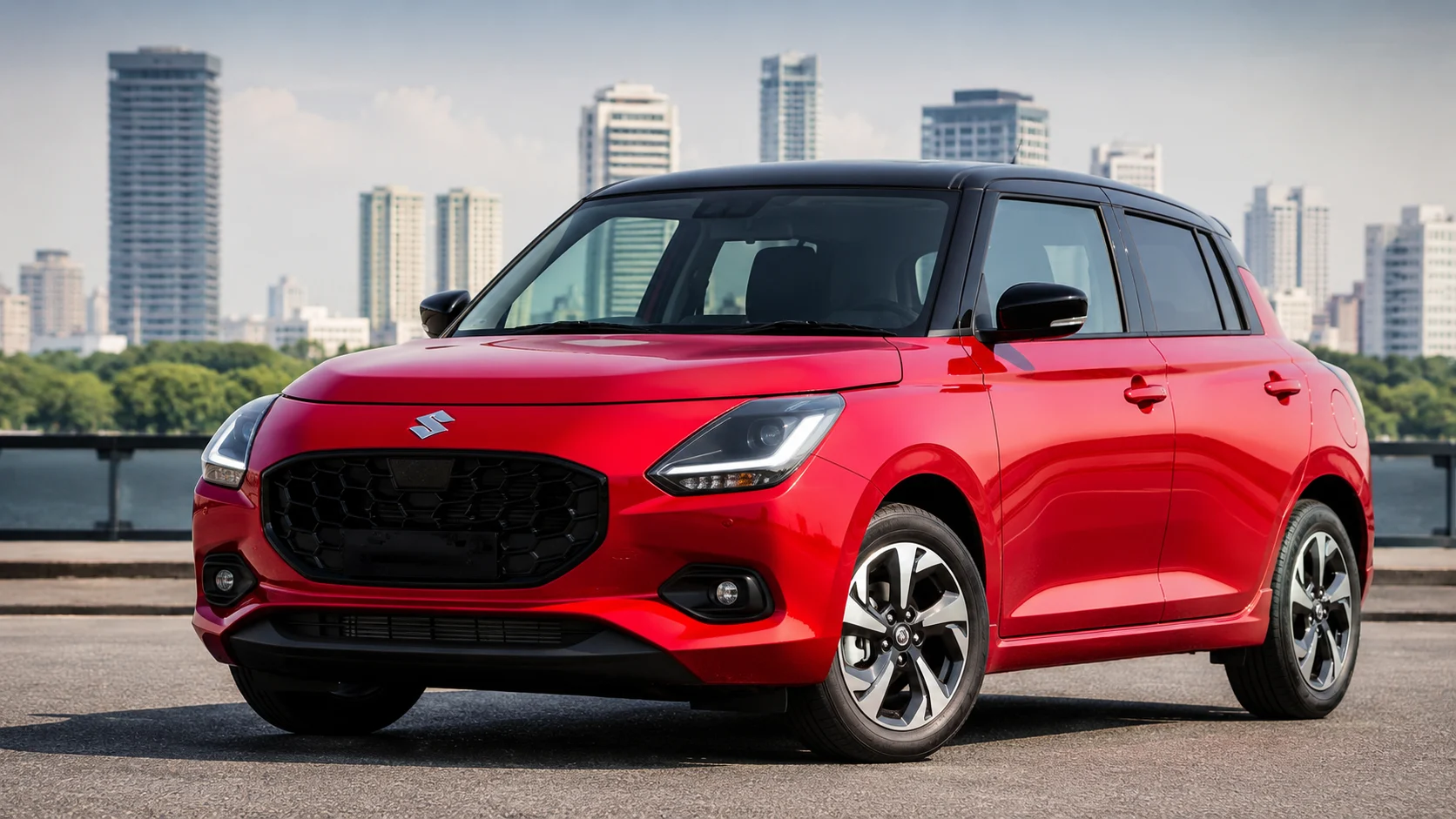
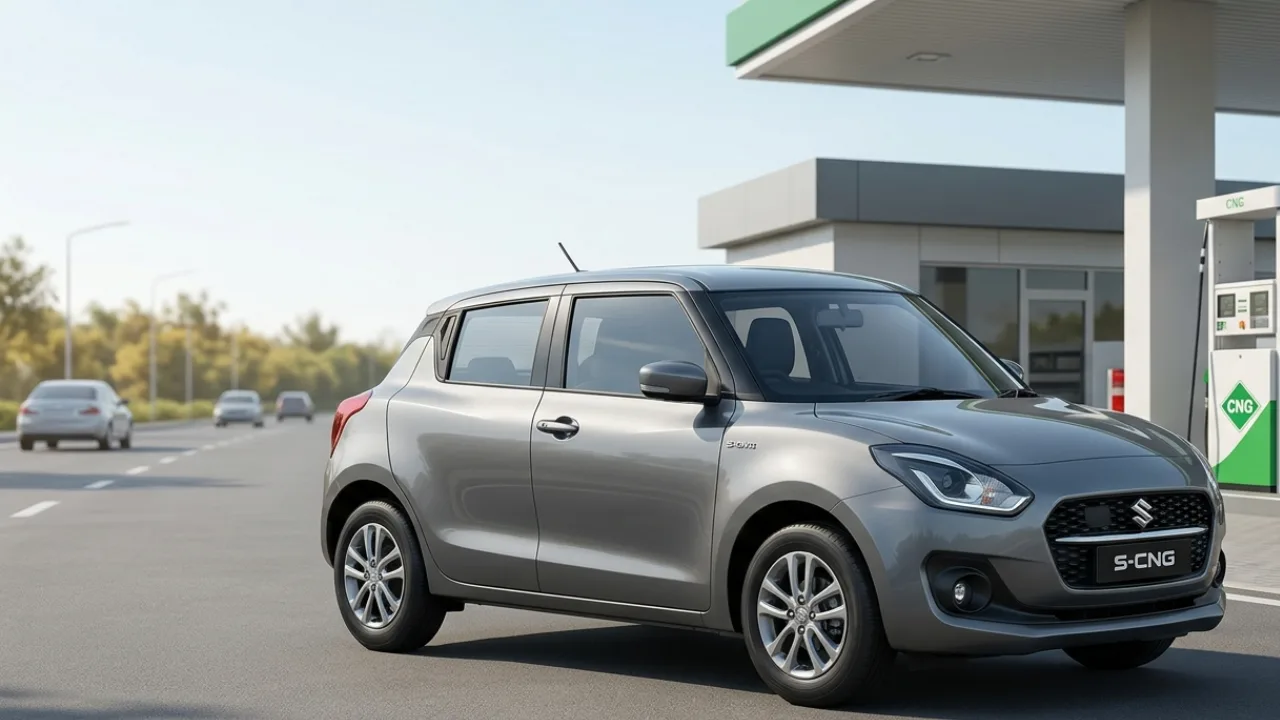
Price takeaway: The Grand i10 Nios has the lower entry price, while the Swift’s pricing rises to a similar territory at the upper end.
Mileage: Which One Is More Efficient?
Mileage is one of the clearest differences between the two hatchbacks.
Maruti Suzuki quotes 24.8 km/l for the Swift petrol manual and 25.75 km/l for the petrol AMT. Its S-CNG version is rated at 32.85 km/kg.
The Grand i10 Nios petrol manual is rated at 18 km/l, while the petrol AMT is rated at 16 km/l. Its CNG versions are listed at 27 km/kg.
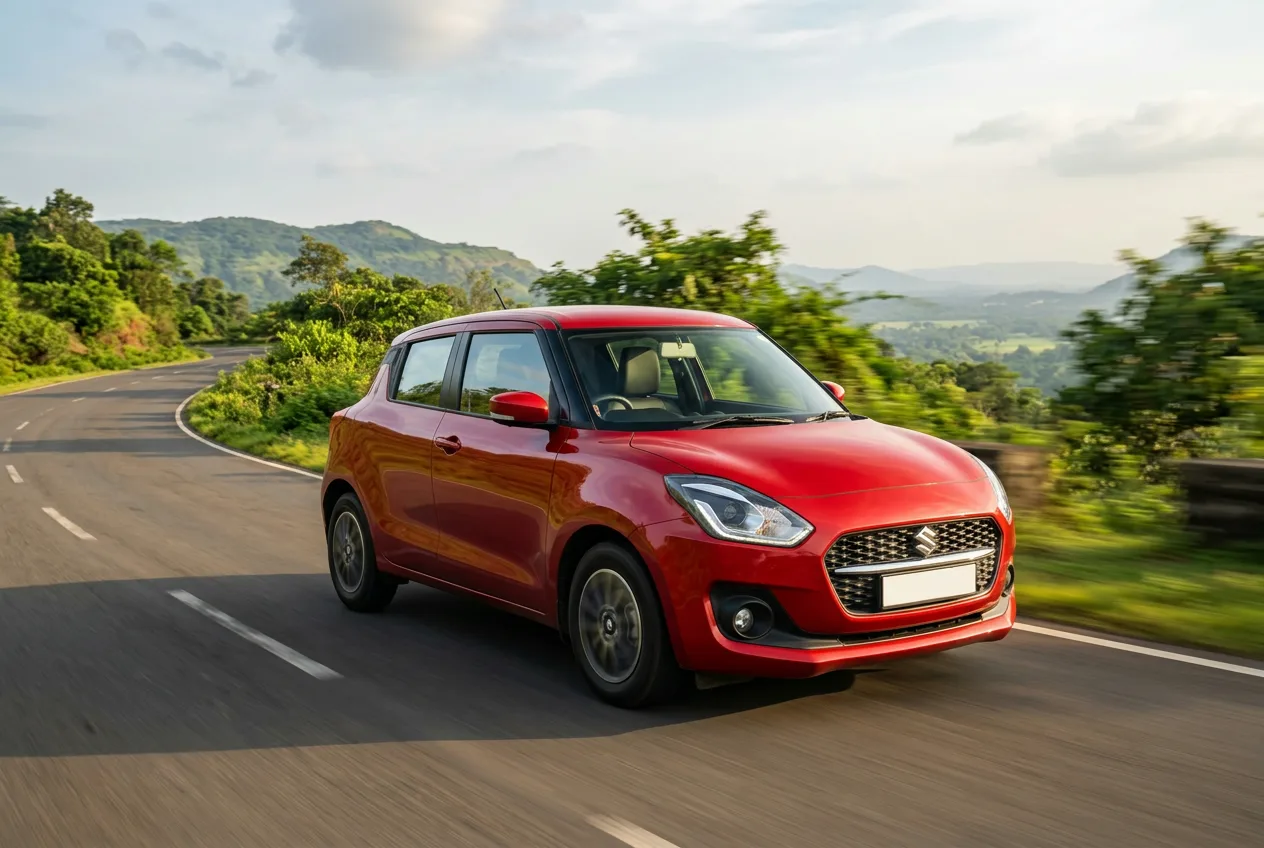
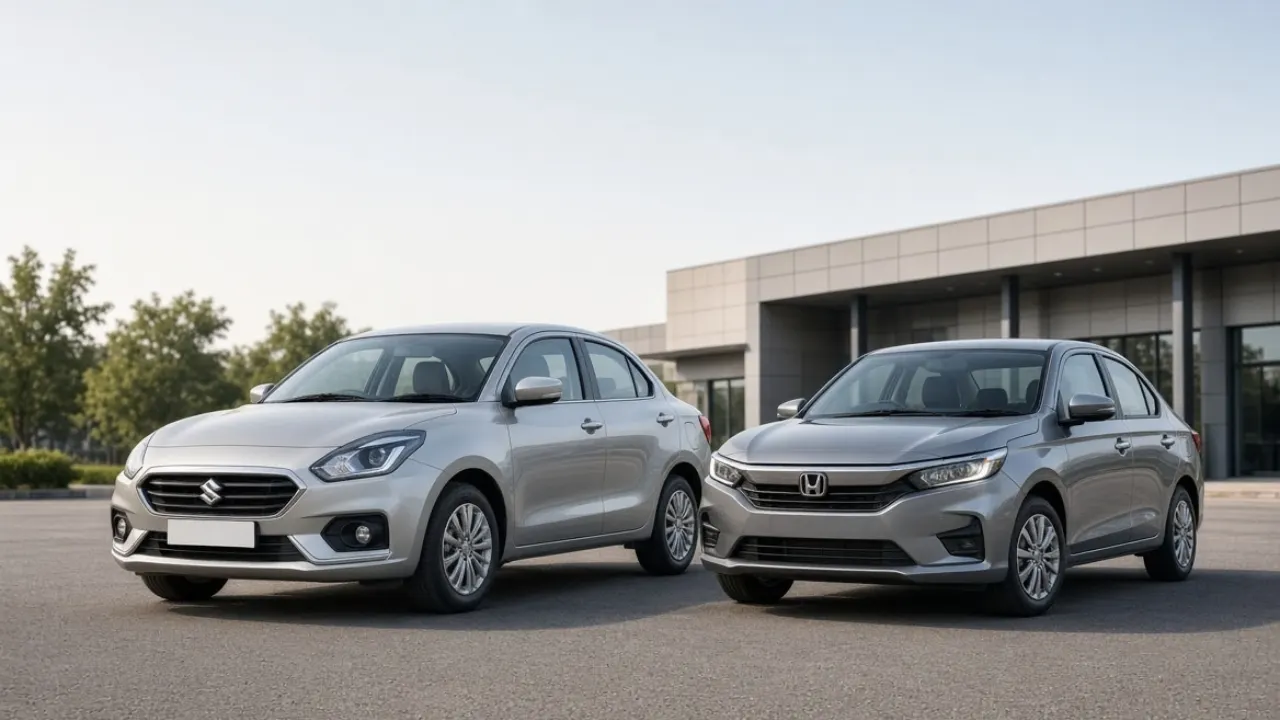
Claimed efficiency comparison
| Powertrain | Swift | Grand i10 Nios |
|---|---|---|
| Petrol MT | 24.8 km/l | 18 km/l |
| Petrol AMT | 25.75 km/l | 16 km/l |
| CNG MT | 32.85 km/kg | 27 km/kg |
These are certified/claimed figures rather than guarantees of real-world consumption. Traffic, air-conditioning use, driving style, road conditions and vehicle load can all affect actual efficiency.
Mileage takeaway: On the published efficiency figures, the Swift has a substantial advantage in both petrol and CNG configurations.
Engine and Performance
Both cars use naturally aspirated 1.2-litre four-cylinder petrol engines, but their outputs are slightly different.
The Swift’s 1,197cc Z-Series petrol engine produces 60 kW, or 81.58 PS, at 5,700 rpm and 111.7 Nm at 4,300 rpm. It is offered with a five-speed manual or five-speed AMT.

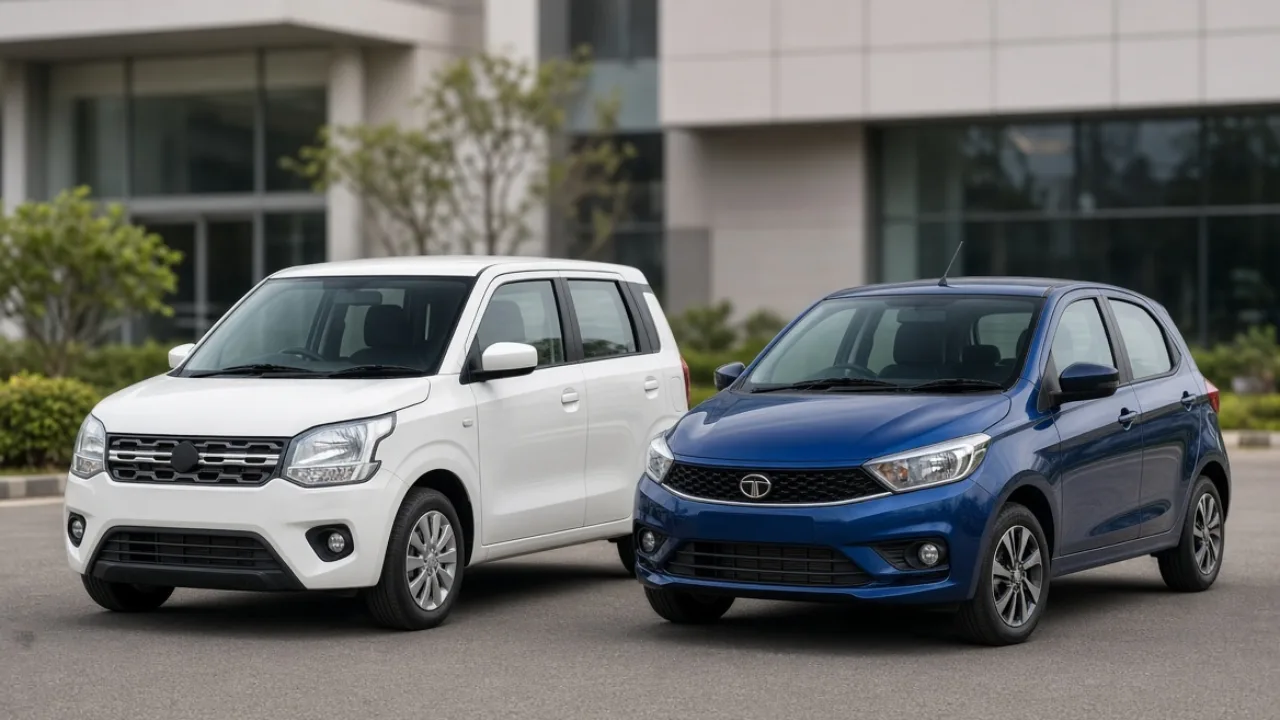
The Grand i10 Nios uses Hyundai’s 1.2-litre Kappa petrol engine, which produces 61 kW, or 83 PS, at 6,000 rpm. Hyundai also offers the 1.2-litre engine in a bi-fuel CNG configuration, producing 69 PS.
The power difference is small on paper. The more noticeable distinction for buyers is likely to be the efficiency figures and the way each car’s powertrain is paired with its transmission.
Neither model is designed as a performance hatchback. Both are primarily aimed at urban driving and everyday family use.
Transmission Options
The Swift is available with a five-speed manual and five-speed AMT for petrol versions. Maruti has also added automated-manual transmission availability to selected S-CNG variants, with its current price list showing VXi CNG AGS, VXi (O) CNG AGS and ZXi CNG AGS versions.
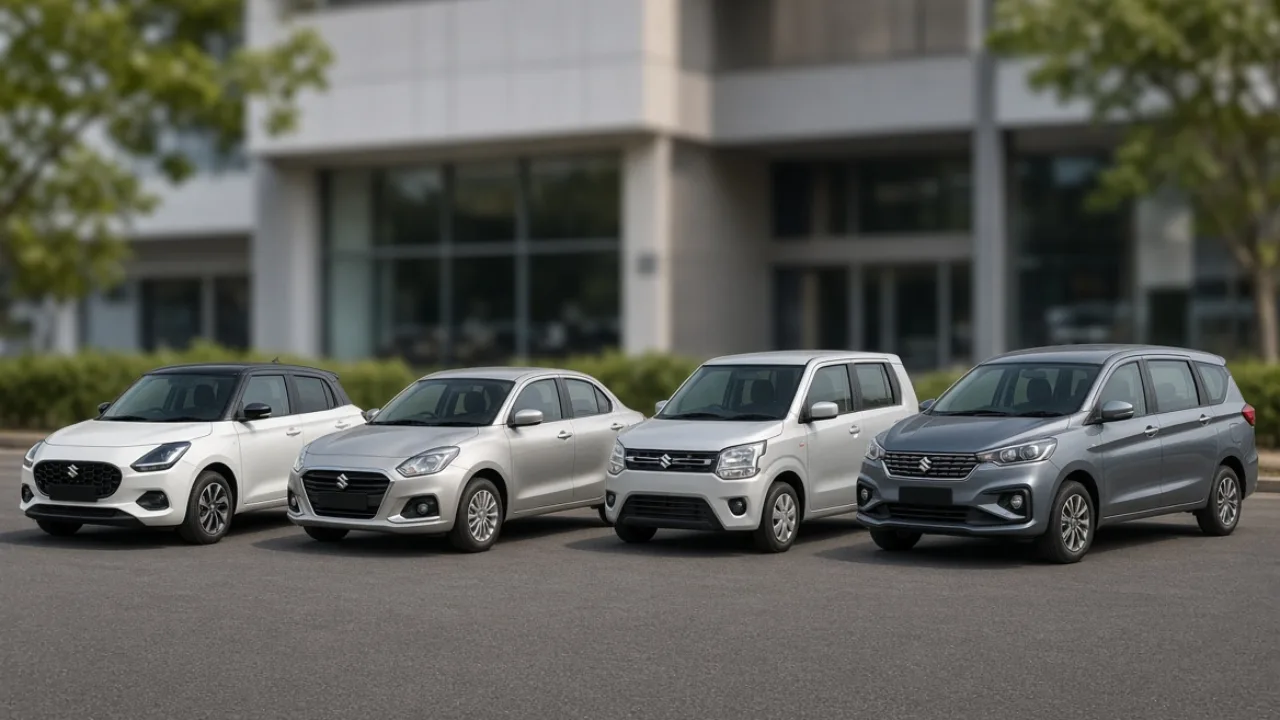
The Grand i10 Nios offers a five-speed manual and Smart Auto AMT with its petrol powertrain. CNG is offered with a manual transmission.
For buyers who spend most of their time in congested city traffic, an AMT can reduce the need to operate a clutch pedal manually. It is still different from a conventional torque-converter automatic or a continuously variable transmission.
Features: Swift vs Grand i10 Nios
Both hatchbacks offer modern equipment, but their feature packages differ by variant.
The Swift includes features such as a SmartPlay Pro+ touchscreen system on applicable variants, six airbags, electronic stability program, hill-hold assist, reverse camera and ISOFIX. Maruti also offers rear AC vents, automatic climate control and 60:40 split rear seats depending on variant.
The Grand i10 Nios offers features including a wireless phone charger, rear AC vents, touchscreen infotainment and steering-mounted controls on applicable variants. Hyundai’s current feature list also includes a VIBE edition and multiple Sportz and Sportz (O) configurations.
One notable 2026 update is the Grand i10 Nios VIBE edition, introduced by Hyundai in April 2026. Hyundai says the VIBE edition adds distinctive styling and enhanced equipment, while a dashcam was added to the VIBE edition and Asta variant.
Feature comparison
| Feature area | Maruti Swift | Hyundai Grand i10 Nios |
|---|---|---|
| Touchscreen infotainment | Available | Available |
| Rear AC vents | Available | Available |
| Automatic climate control | Available | Available |
| Wireless phone charger | — | Available |
| 6 airbags | Yes | Yes |
| Electronic stability control | Yes | Yes |
| Hill-hold assist | Yes | Yes |
| CNG | Yes | Yes |
| AMT | Yes | Yes |
Exact equipment varies by variant, so buyers should check the equipment list for the specific trim before booking.
Safety Features
Safety equipment is another area where the two cars have a substantial amount in common.
Maruti lists six airbags, ABS with electronic brake distribution, electronic stability program, hill-hold assist and ISOFIX among the Swift’s safety equipment. Equipment availability can vary by variant.
Hyundai states that the Grand i10 Nios has six airbags as standard, along with electronic stability control, vehicle stability management, hill-start assist and a driver rear-view monitor.
Neither car should be judged on the number of features alone. Buyers should also consider independently published crash-test information where available and verify the exact safety equipment of the variant they intend to purchase.
Dimensions and Practicality
The Grand i10 Nios measures 3,815 mm long, 1,680 mm wide and 1,520 mm high, according to Hyundai’s current specifications. It is a five-door, five-seat hatchback with front-wheel drive.
The two cars occupy the same broad urban-hatchback space, so the practical differences are more relevant to individual use than the basic body configuration.
For buyers who regularly carry passengers or luggage, it is worth sitting in both cars and checking rear-seat comfort and boot usability rather than relying solely on dimensions.
Swift vs Grand i10 Nios: Which One Makes More Sense?
The answer depends on what matters most to the buyer.
The Swift may make more sense if you prioritize:
- Higher claimed petrol efficiency
- Higher claimed CNG efficiency
- A wide range of manual, AMT and CNG configurations
- Maruti’s established compact-hatchback lineup
- A relatively efficiency-focused powertrain
The Swift’s official figures give it a clear advantage on claimed fuel efficiency.
The Grand i10 Nios may make more sense if you prioritize:
- A lower starting ex-showroom price
- Hyundai’s feature packaging
- Multiple petrol and CNG variants
- A broad range of trims
- VIBE edition styling and equipment
- Features such as the available wireless phone charger
Hyundai currently lists the Grand i10 Nios from ₹5.59 lakh and offers the model with petrol, CNG, manual and AMT configurations.
Swift vs Grand i10 Nios: Key Differences at a Glance
The comparison becomes straightforward when reduced to the main buying factors:
Price: Grand i10 Nios has the lower starting price.
Petrol mileage: Swift has the higher claimed efficiency.
CNG mileage: Swift also has the higher claimed CNG efficiency.
Engine output: Grand i10 Nios has a small power advantage on the published petrol figures.
Transmission: Both offer manual and AMT petrol versions, while Swift now also offers AGS on selected CNG variants.
Features: Both offer a strong equipment list, with exact availability depending on variant.
Safety: Both offer six airbags and electronic stability-related safety equipment, although the detailed feature packages differ.
Final Thoughts
The Maruti Suzuki Swift vs Hyundai Grand i10 Nios comparison is less about one car being universally better and more about different priorities.
The Swift’s biggest measurable advantage is its published fuel-efficiency figures, including 24.8 km/l for the manual petrol, 25.75 km/l for the petrol AMT and 32.85 km/kg for S-CNG.
The Grand i10 Nios counters with a lower starting price of ₹5.59 lakh, a broad variant lineup, petrol and CNG powertrains, AMT availability and a feature-rich equipment strategy.
For buyers focused heavily on claimed fuel economy, the Swift’s figures are significant. For those who place greater emphasis on the initial purchase price, feature packaging or Hyundai’s available variants, the Grand i10 Nios deserves a close look.
Prices and equipment can change, so buyers should verify the final variant price and features with Maruti Suzuki or Hyundai before booking.
Frequently Asked Questions
Which is cheaper, the Maruti Swift or Hyundai Grand i10 Nios?
The Hyundai Grand i10 Nios currently has the lower starting ex-showroom price. Hyundai lists it from ₹5,59,700, compared with ₹5,83,900 for the Swift LXi MT.
Which has better claimed mileage, Swift or Grand i10 Nios?
The Maruti Suzuki Swift has the higher published efficiency figures. Its petrol manual is rated at 24.8 km/l and petrol AMT at 25.75 km/l, while the Grand i10 Nios is rated at 18 km/l for petrol manual and 16 km/l for petrol AMT.
Does the Swift come with CNG?
Yes. The Swift is available with Maruti Suzuki’s S-CNG powertrain, and the current lineup includes manual and selected AGS CNG variants. Maruti quotes 32.85 km/kg for the S-CNG version.
Does the Grand i10 Nios have a CNG version?
Yes. Hyundai offers the Grand i10 Nios with a factory-fitted bi-fuel petrol-CNG powertrain. Current listings show a claimed CNG efficiency of 27 km/kg.
Which has more power, Swift or Grand i10 Nios?
The Grand i10 Nios has a small published power advantage. Hyundai quotes 83 PS from its 1.2-litre Kappa petrol engine, while Maruti quotes 81.58 PS for the Swift’s 1.2-litre Z-Series petrol engine.
Do both cars have six airbags?
Yes. Maruti lists six airbags for the Swift, while Hyundai states that six airbags are standard on the Grand i10 Nios. Exact safety equipment should still be checked against the selected variant.
Sources & References
- Maruti Suzuki Swift — Official Price and Variants
- Maruti Suzuki Swift — Official Model Page
- Hyundai Grand i10 NIOS — Official Price Page
- Hyundai Grand i10 NIOS — Official Features and Variants
- Hyundai Grand i10 NIOS — Official Safety Features
- Hyundai Grand i10 NIOS VIBE Edition — Official Press Release
- Autocar India — Swift vs Grand i10 Nios Comparison