
The 2026 Hyundai Tucson is a compact SUV offered with different powertrain options depending on the market. In the United States, the lineup includes gasoline, hybrid, and plug-in hybrid versions, giving buyers a choice between conventional driving and greater electrification. However, prices, equipment, fuel economy, and availability vary by trim and powertrain.
For buyers researching the 2026 Hyundai Tucson, the key questions are straightforward: How much does it cost, how efficient are the hybrid models, what safety technology is available, and which version makes the most sense for everyday driving?
This guide focuses primarily on the U.S.-market 2026 Hyundai Tucson. Specifications from other countries should not be treated as interchangeable with the U.S. version.
2026 Hyundai Tucson: Quick Overview
The Tucson competes in the compact SUV segment, where it faces established alternatives such as the Toyota RAV4, Honda CR-V, Kia Sportage, and Mazda CX-5. Its main appeal is the availability of multiple powertrains within the same model family, along with a practical cabin and a broad range of driver-assistance technologies.
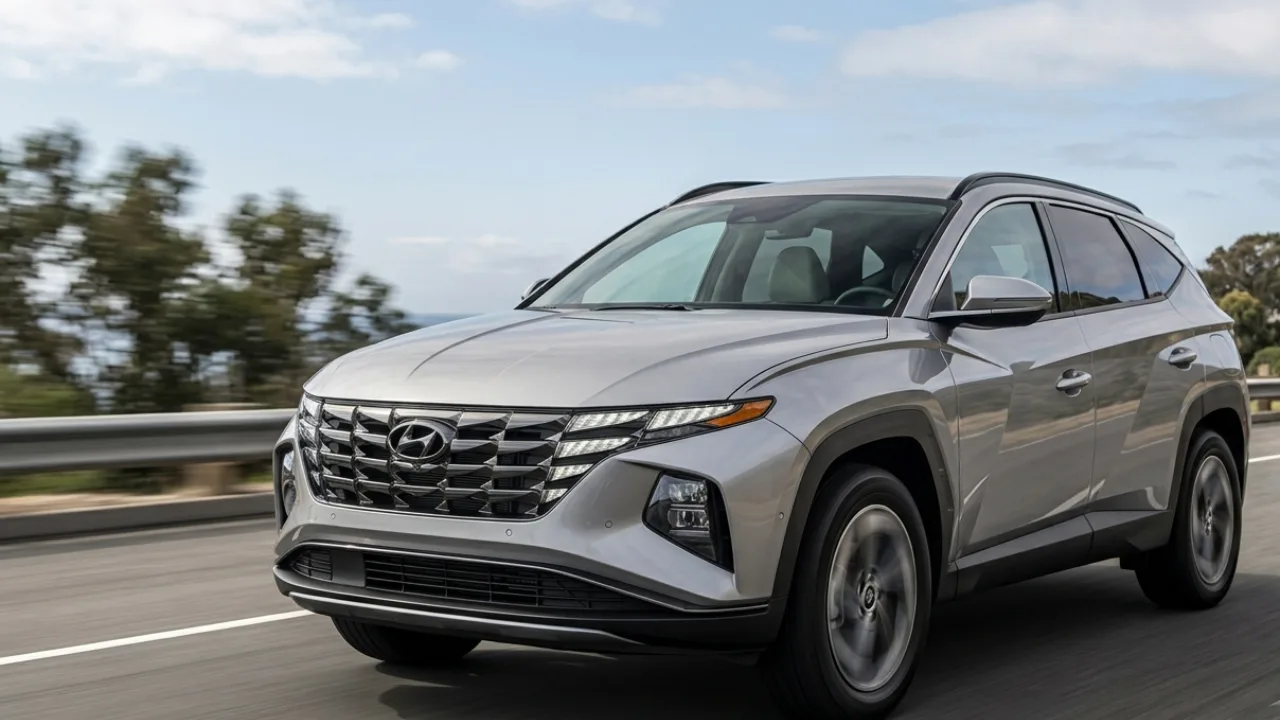
The conventional gasoline model is suited to buyers who prefer a familiar powertrain. The Tucson Hybrid adds electric-motor assistance to improve efficiency, while the plug-in hybrid offers the ability to drive on electricity for shorter trips when its battery is charged.
The right choice depends on purchase price, driving habits, fuel costs, charging access, and the equipment offered on each trim.
2026 Hyundai Tucson Price in the U.S.
The 2026 Hyundai Tucson has a starting manufacturer’s suggested retail price (MSRP) of $29,700 in the United States. The hybrid and plug-in hybrid versions cost more, reflecting their additional electrified powertrain technology.
The following prices include destination charges where specified by Hyundai, but exclude taxes, title, registration, dealer fees, and other applicable costs.
| 2026 Tucson version or trim | Starting U.S. MSRP |
|---|---|
| Tucson SE (gasoline) | $29,700 |
| Tucson SEL (gasoline) | $31,050 |
| Tucson SEL Plus (gasoline) | $31,550 |
| Tucson XRT (gasoline) | $33,725 |
| Tucson SEL Premium (gasoline) | $34,050 |
| Tucson Limited (gasoline) | $39,675 |
| Tucson Hybrid SE | $31,300 |
| Tucson Plug-in Hybrid SEL | $40,675 |
The hybrid and plug-in hybrid lineups have their own trim structures. Their starting prices should not be confused with the prices of the conventional gasoline model.
For shoppers comparing the range, the gasoline Tucson SE has the lowest entry price. The Tucson Hybrid SE costs more initially but can reduce fuel consumption, particularly for drivers who cover substantial distances. The plug-in hybrid is the most relevant option for buyers who can charge regularly and want some electric-only driving capability.
Actual dealer prices and vehicle availability can vary. Check Hyundai’s current pricing and local inventory before making a purchase.
Engine and Powertrain Options
Hyundai offers three distinct powertrain approaches for the 2026 U.S.-market Tucson: gasoline, conventional hybrid, and plug-in hybrid.
Gasoline engine
The standard gasoline Tucson uses a 2.5-liter four-cylinder engine producing 187 horsepower. It is paired with an eight-speed automatic transmission.
Front-wheel drive is available on applicable trims, while Hyundai’s HTRAC all-wheel-drive system is offered on selected configurations. All-wheel drive can help distribute power between the axles when traction conditions require it, although it does not replace appropriate tires or careful driving.
For buyers who want a conventional SUV without needing to charge a battery, this is the most straightforward option.
Tucson Hybrid
The 2026 Tucson Hybrid combines a 1.6-liter turbocharged four-cylinder gasoline engine with an electric motor and a small battery pack.
Combined system output
231 hp
Combined system torque
271 lb-ft
Transmission
6-speed automatic
Battery capacity
1.49 kWh
The electric motor can assist the gasoline engine during acceleration and support more efficient operation in suitable driving conditions. The system manages the engine and motor automatically, so drivers do not need to plug in the regular hybrid.
Compared with the gasoline version, the hybrid provides more combined system power and is designed to use less fuel. It may be a particularly sensible choice for drivers who want improved efficiency without changing their refueling routine.
Tucson Plug-in Hybrid
The Tucson Plug-in Hybrid, commonly called the Tucson PHEV, also combines a gasoline engine and electric motor but uses a rechargeable battery that supports a meaningful amount of electric-only driving.
For the 2026 U.S. model, Hyundai lists an EPA-estimated 32 miles of all-electric range and 80 MPGe combined. Once the battery’s electric driving capability is depleted, the vehicle can continue operating using gasoline.
Hyundai also lists a combined gasoline fuel economy rating of 35 mpg for this model.
The PHEV can be useful for drivers whose regular journeys fit within its electric range and who have access to convenient charging. Drivers who rarely charge it may not get the full efficiency benefit that the plug-in system is designed to deliver.
2026 Hyundai Tucson Fuel Economy
Fuel economy is one of the most important differences between the gasoline, hybrid, and plug-in hybrid versions. The following figures are U.S. EPA estimates, not guaranteed real-world results.
| Powertrain and drivetrain | City | Highway | Combined |
|---|---|---|---|
| Gasoline Tucson, FWD | 25 mpg | 33 mpg | 28 mpg |
| Gasoline Tucson, AWD | 24 mpg | 30 mpg | 26 mpg |
| Tucson Hybrid SE, FWD | 40 mpg | 35 mpg | 38 mpg |
| Tucson Hybrid SE, AWD | 38 mpg | 38 mpg | 38 mpg |
| Tucson Hybrid SEL, FWD | 40 mpg | 35 mpg | 38 mpg |
| Tucson Hybrid SEL, AWD | 36 mpg | 37 mpg | 36 mpg |
| Tucson Plug-in Hybrid, gasoline operation | — | — | 35 mpg |
The plug-in hybrid’s gasoline rating does not tell the full story because it can also travel on battery power. Its MPGe rating accounts for electric operation using the EPA’s gasoline-equivalent measurement.
Which Tucson is the most fuel-efficient?
Among the listed conventional gasoline and hybrid configurations, the front-wheel-drive Tucson Hybrid SE and SEL have the highest combined EPA rating at 38 mpg. The SE all-wheel-drive model is also rated at 38 mpg combined.
The conventional gasoline Tucson is less efficient on paper, although its lower starting price may appeal to buyers who do not drive enough miles to justify paying extra for a hybrid.
Actual fuel economy depends on traffic, temperature, terrain, tire pressure, vehicle load, driving style, and other conditions. Cold weather and frequent short trips can also affect hybrid efficiency.
Exterior Design and Interior Features
The 2026 Tucson sold in the U.S. continues with the design generation introduced before the newly unveiled next-generation model. Its exterior styling features angular bodywork and a distinctive front-end design intended to give the compact SUV a more assertive appearance.
The cabin is designed around everyday usability, with seating for five and a cargo area suitable for groceries, luggage, and routine family needs. Exact upholstery, seat adjustment, lighting, and convenience equipment depend on the selected trim.
Infotainment and connectivity
A 12.3-inch touchscreen is available in the 2026 Tucson lineup, and Hyundai lists wireless Apple CarPlay and Android Auto support on relevant configurations. These systems allow compatible phones to connect for navigation, calls, messages, and audio.
Other available equipment varies by trim and can include features such as:
- A digital instrument cluster
- Built-in navigation
- A premium Bose audio system
- Wireless device charging
- Heated front seats
- A power-adjustable driver’s seat
- A hands-free power liftgate on selected configurations
Buyers should check the equipment list for the exact trim they are considering. Features shown in promotional material or fitted to higher trims are not necessarily included in the entry-level model.
2026 Hyundai Tucson Safety Features
Safety equipment is a key consideration in a family-oriented SUV. The 2026 Tucson offers Hyundai SmartSense driver-assistance technologies, with availability depending on the model and trim.
Relevant systems include the following:
Forward collision-avoidance assistance
This technology can warn the driver about certain potential frontal collisions and may apply braking assistance when its operating conditions are met. Its capabilities depend on the specific system and configuration.
Lane-keeping and lane-following assistance
Lane-keeping assistance can help correct the vehicle’s path when it detects unintended lane departure. Lane-following assistance is designed to help keep the vehicle centered within detected lane markings under suitable conditions.
These are driver-assistance systems, not autonomous driving. Drivers must remain attentive and ready to steer or brake.
Blind-spot and rear cross-traffic assistance
Blind-spot monitoring can alert drivers to vehicles detected in adjacent areas that may be difficult to see in the mirrors. Rear cross-traffic collision-avoidance assistance can help when reversing out of a parking space and another vehicle is approaching from the side.
Equipment and functionality can vary by trim.
Safe Exit Warning
Safe Exit Warning can alert occupants to certain approaching traffic when they are preparing to exit the vehicle. This can be helpful when parking alongside a busy street, although occupants still need to check their surroundings before opening a door.
Parking and visibility technology
Higher equipment levels may offer additional assistance such as a Surround View Monitor, which combines camera views to help drivers judge the vehicle’s surroundings, and a Blind-Spot View Monitor that displays a camera view of the relevant side when activated.
These features can make parking and lane changes easier, but they do not eliminate blind spots or replace direct observation.
What about crash-test ratings?
A crash-test rating should be tied to the exact model year, vehicle configuration, and testing organization. A rating for a previous Tucson model should not automatically be treated as a rating for every 2026 version.
Before buying, check the latest results from the National Highway Traffic Safety Administration (NHTSA) and the Insurance Institute for Highway Safety (IIHS). A specific 2026 Tucson rating should only be quoted after verifying the relevant official result.
2026 Hyundai Tucson Dimensions and Practicality
The 2026 U.S.-market Tucson has a wheelbase of 108.5 inches and an overall length of 182.7 inches. Its width, excluding mirrors, is 73.4 inches, while height is approximately 66.3 inches for the listed hybrid configurations.
The Tucson Hybrid specifications list 38.7 cubic feet of cargo space behind the rear seats under the SAE measurement, increasing to 74.5 cubic feet with the rear seats folded. Cargo measurements can differ depending on the measurement method, so comparisons should use equivalent figures.
The five-seat layout makes the Tucson a practical option for small families, couples, and drivers who need more cargo flexibility than a sedan offers. Buyers carrying bulky items should still check the cargo opening and load-floor dimensions in person.
2026 Hyundai Tucson vs. Tucson Hybrid vs. Plug-in Hybrid
The three powertrain options serve different needs rather than offering a single best answer for every driver.
| Consideration | Gasoline Tucson | Tucson Hybrid | Tucson Plug-in Hybrid |
|---|---|---|---|
| Starting price | Lowest | Higher | Highest |
| Powertrain | 2.5L gasoline engine | 1.6L turbo hybrid | Gasoline-electric plug-in hybrid |
| Combined system power | 187 hp engine output | 231 hp | Varies by specification; verify current trim details |
| External charging | Not required | Not required | Required to maximize electric-only use |
| EPA combined gasoline rating | 26–28 mpg, depending on drivetrain | Up to 38 mpg | 35 mpg in gasoline operation |
| Electric-only driving | No | Limited hybrid operation; not a plug-in EV | EPA-estimated 32 miles |
| Best suited to | Buyers prioritizing purchase price | Drivers seeking efficiency without charging | Drivers who can charge regularly |
The hybrid is a strong middle ground for many buyers because it improves fuel economy without requiring a home charger. The plug-in hybrid can make more sense when charging is easy and a substantial portion of regular journeys can be completed using electricity.
Is the 2026 Hyundai Tucson Coming to India?
The U.S. specifications and prices in this article should not be applied to India. Hyundai sells vehicles with different equipment, powertrains, and pricing structures in different countries.
Indian buyers should consult Hyundai Motor India’s official Tucson listing and dealer information for local availability, variant details, fuel options, and current ex-showroom prices. U.S. EPA mileage figures are not directly comparable with Indian certified fuel-economy figures.
The Next-Generation Hyundai Tucson: What Has Been Confirmed?
Hyundai unveiled a redesigned, next-generation Tucson on October 1, 2026. The company described it as an all-new model with a new design direction, updated in-cabin technology, and a next-generation hybrid system.
Hyundai announced a target of up to 42 mpg for a North American two-wheel-drive hybrid configuration with 17-inch wheels. The company also described a plug-in hybrid with an estimated 81 km of electric-only range, equivalent to about 50 miles, and a 7.2-kW onboard charger. These are figures for the newly unveiled model, not the existing 2026 U.S. Tucson described in the earlier sections.
The manufacturer said the new model’s global rollout was planned from 2027. Availability and final specifications may differ by market, and the announced targets should not be treated as confirmed EPA ratings for a U.S. production vehicle unless the relevant certification is published.
This distinction matters for shoppers: the 2026 model-year Tucson currently listed by Hyundai USA and the newly unveiled next-generation Tucson are not interchangeable when comparing prices, features, or efficiency.
Pros and Limitations
What works in the Tucson’s favor
- A choice of gasoline, hybrid, and plug-in hybrid powertrains in the U.S. lineup.
- Competitive EPA-estimated fuel economy from the conventional hybrid.
- A practical five-seat cabin and flexible cargo area.
- Available driver-assistance and parking technologies.
- Wireless smartphone connectivity on applicable configurations.
What buyers should consider
- Hybrid and plug-in hybrid models cost more upfront than the entry-level gasoline version.
- The plug-in hybrid delivers its strongest efficiency benefits when charged regularly.
- Higher-end technology and comfort features may require a more expensive trim.
- Real-world fuel economy can differ from EPA estimates.
- The newly unveiled next-generation Tucson may affect decisions for shoppers who can wait for the subsequent model rollout.
Final Thoughts
The 2026 Hyundai Tucson offers a practical compact SUV package with three powertrain choices in the U.S. market. The gasoline version starts at $29,700, while the Tucson Hybrid starts at $31,300 and offers up to 38 mpg combined in the listed front-wheel-drive configurations. The plug-in hybrid adds an EPA-estimated 32 miles of electric-only range for drivers who can charge at home or elsewhere.
For buyers who want better fuel economy without changing how they refuel, the Tucson Hybrid is a particularly compelling option to investigate. The gasoline model remains worth considering when the purchase price is the priority, while the plug-in hybrid is better suited to drivers who can make regular use of its charging capability.
Shoppers should also keep the next-generation Tucson in mind. Hyundai has unveiled a redesigned model planned for global rollout from 2027, but its final pricing, availability, and specifications must be checked for the buyer’s market before making a decision.
Prices and specifications can change, and equipment varies by trim and country. Confirm the exact vehicle configuration and current pricing with Hyundai or an authorized dealer before purchase.
Frequently Asked Questions
How much does the 2026 Hyundai Tucson cost?
The 2026 Hyundai Tucson starts at $29,700 in the United States for the gasoline SE trim. The Tucson Hybrid starts at $31,300, while the Tucson Plug-in Hybrid starts at $40,675. These are U.S. starting MSRPs and exclude taxes and other applicable charges.
What is the fuel economy of the 2026 Hyundai Tucson?
The gasoline Tucson is EPA-rated at 28 mpg combined with front-wheel drive and 26 mpg combined with all-wheel drive. The Tucson Hybrid SE and SEL with front-wheel drive are rated at 38 mpg combined.
Does the 2026 Hyundai Tucson have a hybrid option?
Yes. The U.S. lineup includes a conventional Tucson Hybrid with a 1.6-liter turbocharged engine and electric motor, producing 231 horsepower combined. It does not need to be plugged in.
What is the electric range of the 2026 Tucson Plug-in Hybrid?
Hyundai lists an EPA-estimated 32 miles of all-electric range for the 2026 U.S. Tucson Plug-in Hybrid. Actual range can vary with weather, driving conditions, and vehicle use.
Is the 2026 Hyundai Tucson safe?
The Tucson offers Hyundai SmartSense driver-assistance features, with equipment varying by trim. Buyers should consult NHTSA and IIHS for the latest model-year-specific crash-test results rather than assuming an older rating applies to every 2026 configuration.
Is the redesigned Hyundai Tucson a 2026 model?
Hyundai unveiled the next-generation Tucson in October 2026 and announced a planned global rollout from 2027. It is important to distinguish that newly unveiled vehicle from the existing 2026 model-year Tucson listed for sale in the United States.
Is the 2026 Hyundai Tucson available in India?
Availability and specifications in India may differ from those in the United States. Indian buyers should verify current local offerings and pricing through Hyundai Motor India or an authorized dealer.