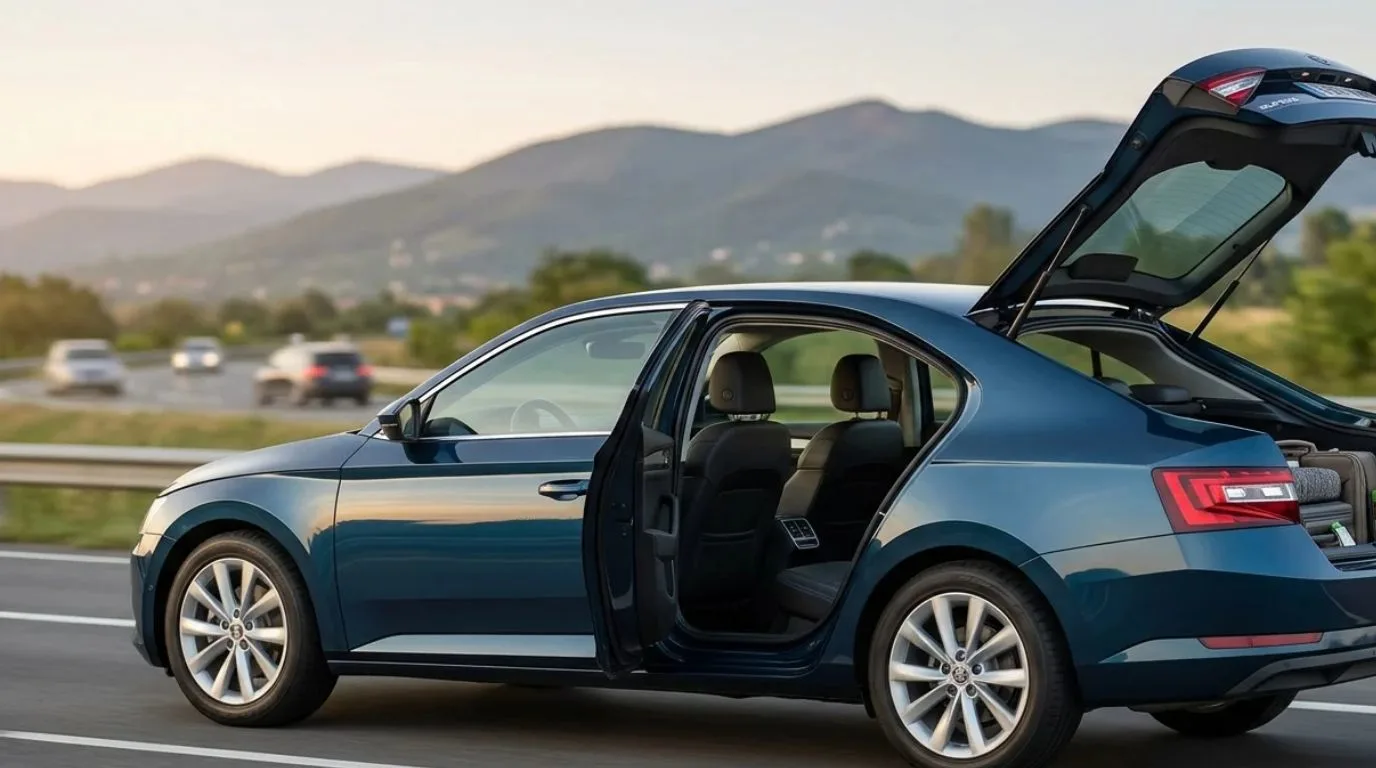
he Skoda Superb is designed around the needs of drivers who want executive-car levels of passenger space and comfort without necessarily moving to a premium luxury brand. Its strongest practical qualities are a spacious rear cabin, a large luggage compartment and a range of petrol, diesel and plug-in hybrid powertrains in markets where those versions are offered.
The fourth-generation Superb, introduced in Europe as a liftback and estate, continues this practical approach with updated technology, revised interior controls and a choice of engines. However, equipment, powertrain availability and body styles differ by country, so buyers should check the specifications for their own market rather than assume every version is sold everywhere.
Quick Answer: Is the Skoda Superb Spacious and Comfortable?
Yes. The fourth-generation Skoda Superb is particularly appealing to buyers who prioritise rear-seat comfort, luggage capacity and long-distance practicality.
Its key space figures for the European-market model are:
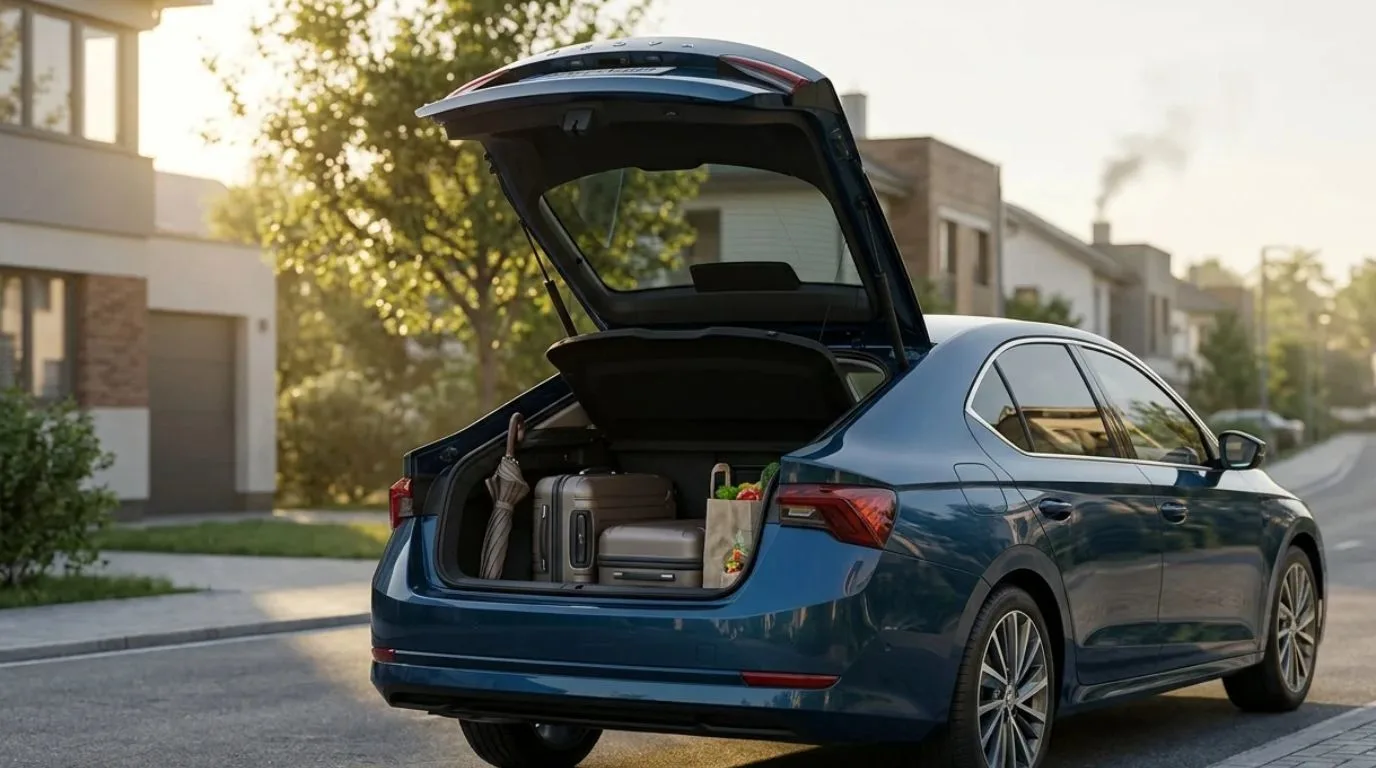
- Liftback boot capacity: 645 litres, increasing to 1,795 litres with the rear seats folded.
- Estate boot capacity: 690 litres, increasing to 1,920 litres with the rear seats folded.
- Rear headroom: 986 mm in the liftback and 1,008 mm in the estate.
- Wheelbase: 2,841 mm for both body styles.
The engine range includes turbocharged petrol and diesel options, a 48-volt mild-hybrid petrol engine and plug-in hybrid versions. Availability depends on the market and body style.
Rear-Seat Space: A Major Strength of the Superb
Rear passenger accommodation has traditionally been one of the Superb’s biggest selling points. The fourth-generation model continues that approach with a long wheelbase and a cabin designed to give passengers plenty of room.
The European liftback and estate versions share a 2,841 mm wheelbase. Their rear headroom figures are 986 mm and 1,008 mm respectively, giving passengers useful space above their heads.
Legroom is especially important in an executive sedan because buyers may regularly travel with adults in the back. The Superb’s spacious cabin makes it a practical choice for families, business users and people who frequently undertake longer journeys.

Rear-seat comfort and convenience
Depending on the trim level and equipment package, the Superb can offer several features intended to make the rear cabin more useful:
- A rear centre armrest with integrated cupholders.
- A tablet holder in selected configurations.
- Rear USB-C charging connections.
- Rear window sun blinds in selected packages.
- A through-loading opening for carrying longer objects.
- An optional Sleep Package with special headrests and a blanket.
The rear armrest and storage arrangements are particularly useful on long journeys. They give passengers convenient places to keep drinks and small personal items.
However, equipment varies by market and trim. Buyers should check the local specification rather than assume every feature is included as standard.
Skoda Superb Boot Capacity: How Much Luggage Can It Carry?
The Superb offers two body styles in its European range: a liftback and a Combi estate. Both have substantial luggage compartments, but the estate provides additional capacity.

| Boot specification | Liftback | Combi estate |
|---|---|---|
| Seats upright | 645 litres | 690 litres |
| Rear seats folded | 1,795 litres | 1,920 litres |
| Rear-seat configuration | 60:40 split | 60:40 split |
Figures refer to the European fourth-generation model.
Liftback boot space
The liftback provides 645 litres of luggage capacity with the rear seats in their normal position. That is enough space for everyday shopping, suitcases and luggage for family holidays.
Its large tailgate opening also makes it easier to load bulky items than a conventional saloon with a smaller boot lid.
When additional space is needed, the rear seatbacks can be folded down to increase capacity to 1,795 litres. This gives the liftback more flexibility for transporting larger objects.


Combi estate boot space
The Superb Combi is the more practical choice for buyers who regularly carry large amounts of luggage.
Its boot holds 690 litres with all seats in place and expands to 1,920 litres when the rear seatbacks are folded. The additional capacity is useful for holidays, outdoor equipment, larger shopping loads and family travel.
Škoda also offers practical luggage-area details, depending on specification. These include cargo elements, hooks, storage compartments and an electrically operated load cover on selected versions.
For buyers who prioritise luggage space above all else, the Combi estate is the stronger option. The liftback, however, already offers a generous amount of room without requiring the longer-roof estate body style.
Engine Options: Petrol, Diesel and Plug-In Hybrid
The Superb’s powertrain range is designed to cover different driving requirements. European specifications include petrol, diesel, mild-hybrid and plug-in hybrid options.
The available engines and outputs vary by country, trim and model-year updates.
1.5 TSI mild-hybrid petrol
The 1.5 TSI e-TEC is a turbocharged petrol engine paired with 48-volt mild-hybrid technology.
In the European specification announced by Škoda, it produces 150 hp and 250 Nm of torque. It uses a seven-speed DSG dual-clutch automatic transmission and front-wheel drive.

The mild-hybrid system uses a small electrical system to support the petrol engine. It can recover energy during braking and provide assistance during certain driving conditions.
It is not a conventional plug-in hybrid. Drivers do not need to connect the car to an external charger, and the system cannot provide the same electric-only driving capability as a plug-in hybrid.
This engine is aimed at buyers who want petrol performance with additional efficiency-focused technology.
2.0 TSI petrol
The 2.0 TSI is available in different output levels in European markets.
The 204 hp version produces 320 Nm of torque and uses a seven-speed DSG transmission with front-wheel drive.
A more powerful 265 hp version produces 400 Nm and comes with all-wheel drive in the European specification.
The stronger engine is better suited to buyers who want quicker acceleration and additional performance for motorway driving. The 204 hp version provides a middle ground between everyday usability and stronger performance.
2.0 TDI diesel
The 2.0 TDI diesel is an important option for drivers who regularly cover long distances.

The European range includes a 150 hp front-wheel-drive version producing 360 Nm and a 193 hp all-wheel-drive version producing 400 Nm.
Both use a seven-speed DSG automatic transmission.
Diesel engines are often attractive to high-mileage drivers because of their torque delivery and suitability for sustained motorway journeys. Actual fuel consumption depends on driving conditions, vehicle configuration and traffic.
Plug-in hybrid powertrain
The Superb iV combines a 1.5 TSI petrol engine with an electric motor and a rechargeable battery.
The original 150 kW European version produces a combined 204 hp and 350 Nm. Its battery has a gross capacity of 25.7 kWh, and Škoda quotes an electric driving range of up to 120 km under the WLTP testing cycle for the relevant configuration.
It supports AC charging at up to 11 kW and DC charging at up to 50 kW. Škoda’s published figures include approximately 25 minutes for a 10-to-80% DC charge under the stated conditions.
In February 2026, Škoda also announced a more powerful 200 kW plug-in hybrid for the Superb Hatch. This version combines a 130 kW 1.5 TSI petrol engine with an 85 kW electric motor, producing a combined 200 kW and 400 Nm.
The 200 kW version is offered for selected Hatch trims, while the 150 kW system remains available in other configurations. Buyers should check the latest local range before choosing a version.
European engine specifications at a glance
| Powertrain | Power | Torque | Transmission | Drive |
|---|---|---|---|---|
| 1.5 TSI mild hybrid | 150 hp | 250 Nm | 7-speed DSG | FWD |
| 2.0 TSI petrol | 204 hp | 320 Nm | 7-speed DSG | FWD |
| 2.0 TSI petrol | 265 hp | 400 Nm | 7-speed DSG | AWD |
| 2.0 TDI diesel | 150 hp | 360 Nm | 7-speed DSG | FWD |
| 2.0 TDI diesel | 193 hp | 400 Nm | 7-speed DSG | AWD |
| 1.5 TSI plug-in hybrid | 204 hp | 350 Nm | 6-speed DSG | FWD |
| 1.5 TSI plug-in hybrid | 272 hp | 400 Nm | 6-speed DSG | FWD |
These figures describe the published European powertrain configurations. The 272 hp plug-in hybrid is the 200 kW Hatch version announced in February 2026. Not every engine is available with every body style or trim.
Long-Distance Comfort: What Makes the Superb Suitable for Touring?
The Superb’s combination of cabin space, seating equipment and suspension technology makes it well suited to long-distance travel.
A comfortable touring car needs more than a powerful engine. It should provide supportive seats, a relaxed driving position, good passenger accommodation and enough luggage capacity for extended journeys.
The Superb addresses these requirements through several features.
Supportive seats and massage functions
Depending on the selected interior configuration, the Superb offers different front-seat designs.
Higher-specification seats can include electric adjustment, memory settings, ventilation and massage functions. Some ergonomic seats use ten pneumatically controlled air cushions to provide more advanced massage support.
These features can help reduce discomfort during extended journeys, although the exact seat equipment depends on the trim and options selected.
Adaptive suspension
The Superb is available with Dynamic Chassis Control Plus, also known as DCC+.
This adaptive suspension system adjusts the damping response of the shock absorbers to suit different driving conditions and selected settings.
It uses independently controlled valves to manage compression and rebound. In simple terms, the system can adjust how the suspension reacts when the wheels move over uneven surfaces.
The aim is to balance ride comfort with body control. This is particularly useful for a large car expected to handle both motorway journeys and everyday driving.
DCC+ availability depends on the market and specification. It is standard on certain higher-specification European versions.
Cabin climate and passenger comfort
The Superb’s interior equipment can include multi-zone climate control, heated seats and ventilated front seats.
Three-zone climate control allows occupants in different areas of the cabin to adjust temperatures independently, depending on the version.
The availability of rear heating and other comfort functions varies by market and trim.
Interior technology for easier journeys
The fourth-generation Superb features a redesigned dashboard with a central infotainment screen measuring up to 13 inches in selected configurations.

It also includes a 10-inch Virtual Cockpit digital instrument display.
One of the more distinctive interior features is the Škoda Smart Dials system. These rotary controls combine physical operation with small digital displays, allowing drivers to adjust functions such as temperature, seat heating, ventilation and infotainment volume.
The gear selector has also been moved to the steering column in automatic versions, freeing up additional space on the centre console.
An optional head-up display is available in selected European specifications. It projects useful information, including speed and navigation instructions, into the driver’s field of vision.


Together, these features are intended to make the cabin easier to use during everyday driving and longer trips.
Design and Interior Practicality
The Superb follows a restrained executive-car design approach rather than adopting an aggressively sporty appearance.
The fourth-generation model has a long body, a distinctive grille and a streamlined roofline. The liftback has a more traditional executive-sedan profile, while the Combi estate adds a longer roof and a more practical rear section.
Inside, the layout combines a large central screen with physical controls and a relatively uncluttered centre console.
The use of Smart Dials is particularly relevant because it gives drivers access to frequently used functions without relying entirely on touchscreen menus.
Interior materials, upholstery and equipment differ between Design Selections and trim levels. Higher-specification versions offer more premium seating materials and additional comfort equipment.
The Superb is therefore not simply about providing a large cabin. Its interior is designed to make that space practical and comfortable for both drivers and passengers.
Skoda Superb in India: What Buyers Should Know
The Indian market has a different availability picture from Europe.
Škoda Auto India officially announced the return of the fourth-generation Superb TDI on August 18, 2026. The car was presented as the brand’s flagship luxury sedan, with expressions of interest invited from prospective buyers.
The company stated that deliveries are scheduled to begin at the end of the second quarter of 2027.
The Indian model is being presented with a diesel powertrain and a luxury-focused equipment package. The official Indian product page lists a 2.0 TDI engine producing 110 kW, or approximately 150 hp, with 360 Nm of torque. It is paired with a seven-speed DSG automatic transmission and front-wheel drive.
Expected equipment and comfort features for India
Škoda Auto India’s announcement highlighted several features for the returning Superb:
- LED Matrix headlights.
- Cognac leather interior.
- Electrically adjustable front seats.
- Heated and ventilated front seats.
- Front-seat massage function.
- Rear Sleep Package.
- Dynamic Chassis Control.
- Advanced driver-assistance systems.
These features reinforce the Superb’s positioning as a spacious executive sedan rather than a conventional family car.
However, Škoda has stated that final performance, power, measurement and dimension information will be published after homologation. Buyers should therefore wait for the final India-specific specifications before relying on every global figure.
India launch timeline and pricing
The company has announced deliveries for the end of Q2 2027. It has not provided a confirmed Indian launch price in the announcement.
A final price should not be assumed from European pricing or estimates published before the official announcement.
Indian buyers should also remember that the India-specification model may not have the same engine choices, boot figures, equipment combinations or body-style options as the European range.
Who Should Consider the Skoda Superb?
The Superb is aimed at buyers who need a comfortable, spacious car with executive-sedan proportions.
It may be particularly suitable for:
- Families: The spacious rear cabin and large boot make it practical for family use.
- Business users: Its executive-car positioning and passenger comfort suit chauffeur-driven requirements.
- Frequent highway drivers: The available diesel and petrol engines offer different approaches to long-distance driving.
- Buyers who carry luggage: The liftback and estate body styles provide substantial cargo capacity.
- Plug-in hybrid buyers: Available iV versions offer the option of electric driving for suitable daily journeys, provided charging is convenient.
The best version depends on the buyer’s usage. Drivers who regularly travel long distances may prefer a diesel where available, while those with access to home charging may find a plug-in hybrid more suitable.
Advantages and Limitations
Key advantages
- Generous rear-seat space.
- Large boot in both liftback and estate versions.
- Multiple petrol, diesel and plug-in hybrid powertrain choices in Europe.
- Available adaptive suspension technology.
- Supportive front seats with optional massage and ventilation.
- Practical interior controls and storage solutions.
- Strong focus on long-distance passenger comfort.
Points to consider
- Engine and trim availability varies significantly by market.
- Some comfort features are optional or restricted to higher trims.
- The plug-in hybrid makes the most sense when regular charging is practical.
- The estate is more spacious for luggage but may not be offered in every country.
- India-specific specifications and pricing should be checked against the final homologated model.
Final Thoughts
The Skoda Superb remains a compelling option for buyers who value space and comfort over SUV styling. Its generous rear cabin, large luggage compartment and broad European engine range make it suitable for family travel, business use and long-distance driving.
The liftback is already highly practical, while the Combi estate offers even greater luggage capacity for buyers who regularly carry bulky items. Its available adaptive suspension, supportive seats and modern cabin technology also strengthen its touring credentials.
For Indian buyers, the fourth-generation Superb’s return is an important development. Škoda has confirmed a diesel-powered model with deliveries planned for the end of Q2 2027, but final homologated specifications and pricing remain to be confirmed.
The most important consideration is choosing the correct market-specific version. The Superb’s strengths are clear, but its engine options, equipment and availability depend on where it is sold.
Frequently Asked Questions
1. How much rear-seat space does the Skoda Superb offer?
The fourth-generation Superb offers a spacious rear cabin. The European liftback has 986 mm of rear headroom, while the Combi estate offers 1,008 mm. Both versions have a 2,841 mm wheelbase.
2. What is the boot capacity of the Skoda Superb?
The European liftback has 645 litres of boot space, increasing to 1,795 litres with the rear seats folded. The Combi estate offers 690 litres, rising to 1,920 litres.
3. Is the Skoda Superb available with a diesel engine?
Yes. European versions include 2.0 TDI diesel engines with outputs of 150 hp and 193 hp. Škoda has also confirmed a 2.0 TDI-powered Superb for India, with deliveries planned for the end of Q2 2027.
4. What petrol engines are available in the Skoda Superb?
European engine options include a 1.5 TSI mild-hybrid petrol engine producing 150 hp and 2.0 TSI petrol versions producing 204 hp or 265 hp. Availability varies by body style and market.
5. Does the Skoda Superb have a plug-in hybrid version?
Yes. The European Superb iV combines a 1.5 TSI petrol engine with an electric motor. The range includes a 150 kW version and a more powerful 200 kW Hatch version announced in February 2026.
6. Is the Skoda Superb comfortable for long-distance driving?
The Superb is designed with long-distance comfort in mind. Its spacious cabin, available ergonomic seats, adaptive suspension and large luggage compartment make it suitable for extended journeys.
7. Does the Skoda Superb offer massage seats?
Yes. Selected European configurations offer front seats with massage functions, including advanced versions with ten pneumatic air cushions. Škoda Auto India has also highlighted massage-enabled front seats for the returning Indian model.
8. When will the new Skoda Superb launch in India?
Škoda Auto India has announced that deliveries of the new Superb TDI are scheduled to begin at the end of Q2 2027. A confirmed Indian price has not yet been announced.
9. Is the Skoda Superb available as an estate?
Yes. In Europe, the fourth-generation Superb is available as a liftback and a Combi estate. The estate offers 690 litres of boot capacity, compared with 645 litres in the liftback.
10. Which Skoda Superb engine is best for long-distance travel?
The 2.0 TDI diesel is a relevant choice for drivers who regularly cover long distances, thanks to its torque output and diesel powertrain characteristics. However, the best engine depends on local availability, annual mileage, driving conditions and personal preference.