The Škoda Octavia has built its reputation around a straightforward combination: the comfort of a family car, the driving feel of a conventional passenger car and the luggage space of a much larger vehicle. Its spacious cabin, large boot and choice of petrol, diesel and mild-hybrid powertrains make it a practical option for buyers who need more room than a typical compact car offers.
The current fourth-generation Octavia, updated in 2024, is sold in different configurations depending on the country. European markets offer a wider range of petrol and diesel engines, while Australia has a 1.5-litre mild-hybrid version. India’s recent availability has centred on the limited-run Octavia RS rather than the regular range.
This means engine specifications and fuel-economy figures should always be read in their market context. The boot capacity is one of the model’s more consistent strengths, although the exact figure also depends on whether you choose the liftback or Estate.
Škoda Octavia at a Glance
| Feature | Current model information |
|---|---|
| Body styles | Liftback and Estate, depending on market |
| Petrol engines | 1.5-litre TSI and 2.0-litre TSI, depending on market |
| Diesel engines | 2.0-litre TDI in selected European markets |
| Hybrid technology | 1.5-litre e-TEC or mild-hybrid versions in selected markets |
| Performance version | Octavia RS / vRS |
| Liftback boot capacity | Around 600 litres |
| Estate boot capacity | Around 640 litres |
| Fuel economy | Varies by engine, body style, transmission and market |
| Main strengths | Luggage space, cabin room, engine choice and everyday usability |
The figures above are not one universal specification sheet. They describe the current model family, with exact equipment and powertrain availability varying by country.
Engine Options: Petrol, Diesel and Mild Hybrid
The Octavia’s engine range is one of its most market-dependent features. Škoda offers different combinations of petrol, diesel and mild-hybrid technology, rather than selling the same powertrain line-up worldwide.
1.5-litre TSI petrol
The 1.5 TSI is a key engine in several European and Australian versions. It is a turbocharged four-cylinder petrol engine designed to balance everyday performance with fuel efficiency.
In the European technical specifications published by Škoda in June 2025, the standard 1.5 TSI is available with outputs of 85 kW and 110 kW. These are approximately 116 PS and 150 PS respectively.
Depending on the version, it can be paired with a six-speed manual gearbox or a seven-speed DSG automatic transmission. Selected automatic versions use mild-hybrid technology.


The 150 PS version offers a useful middle ground for drivers who want stronger acceleration without moving to the more powerful RS model.
1.5-litre e-TEC mild hybrid
Some Octavia versions use a 1.5 TSI e-TEC mild-hybrid system. This combines the petrol engine with a small electrical assistance system.
A mild hybrid is different from a full hybrid. It cannot normally drive the car for extended distances using electric power alone. Instead, its electrical system supports the engine in certain driving situations and helps improve efficiency.
The UK range includes 116 PS and 150 PS 1.5 TSI e-TEC versions with DSG automatic transmissions. Australia’s current Octavia range also includes a 1.5 TSI mild-hybrid version with a seven-speed automatic gearbox.
2.0-litre TDI diesel
The 2.0 TDI diesel remains an option in selected European markets. It is particularly relevant to drivers who regularly cover long distances and want the efficiency and low-speed pulling power associated with a modern diesel engine.
Škoda’s June 2025 European technical data lists two outputs:
- 85 kW, approximately 116 PS
- 110 kW, approximately 150 PS
The lower-output version is paired with a manual gearbox in the listed specification, while the 150 PS version uses a DSG automatic transmission.
Diesel availability is not universal. Buyers should check the local Škoda range rather than assume that a TDI version is offered in every country.


2.0-litre TSI petrol and Octavia RS
The 2.0 TSI petrol engine is used in higher-performance versions. In the European technical data, a 150 kW version with four-wheel drive produces approximately 204 PS.
The Octavia RS sits higher in the performance range. Its 2.0-litre turbocharged petrol engine produces 195 kW, or 265 PS, and 370 Nm of torque in the current European specification.
The RS uses a seven-speed DSG automatic transmission. Škoda quotes a 0–100 km/h time of 6.4 seconds for the European liftback version.
India’s limited-run Octavia RS also uses the 265 PS, 370 Nm 2.0 TSI engine and seven-speed DSG. Its equipment and availability are specific to the Indian batch and should not be confused with the regular Octavia range.

Škoda Octavia Fuel Economy: How Efficient Is It?
Fuel economy depends on the engine, gearbox, wheels, body style and local testing procedure. The most useful comparison is therefore between official figures for specific versions, not a single mileage claim for the entire Octavia range.
Official European WLTP figures
Škoda’s June 2025 European technical data gives the following combined WLTP consumption figures for the liftback:
| Engine | Official combined fuel consumption |
|---|---|
| 1.5 TSI 116 PS, manual | 5.2–5.7 L/100 km |
| 1.5 TSI 116 PS, mild hybrid DSG | 4.9–5.4 L/100 km |
| 1.5 TSI 150 PS, manual | 5.3–5.8 L/100 km |
| 1.5 TSI 150 PS, mild hybrid DSG | 4.9–5.4 L/100 km |
| 2.0 TSI 204 PS, 4×4 DSG | 6.7–7.2 L/100 km |
| 2.0 TDI 116 PS, manual | 4.3–4.7 L/100 km |
| 2.0 TDI 150 PS, DSG | 4.4–4.9 L/100 km |
| 2.0 TSI RS 265 PS, DSG | 6.7–7.1 L/100 km |
These are laboratory-tested WLTP figures, not guaranteed real-world results. Driving speed, traffic, temperature, road conditions, tyre choice and vehicle load can all affect consumption. The Estate and RS Estate have their own figures, so the liftback table should not be applied to them. cdn.skoda-storyboard.com+1
UK fuel-economy figures
Škoda UK’s current Octavia Hatch range lists combined WLTP consumption between 40.4 and 65.7 mpg. The range covers different petrol, mild-hybrid, diesel and vRS versions, rather than one engine achieving the full spread.
For the Estate, the official combined range is 39.8–64.2 mpg. These are UK mpg figures and should not be directly compared with US mpg figures, which use a different gallon measurement. Škoda UK+1
What should buyers expect in everyday use?
The 1.5 TSI mild hybrid is worth considering if most journeys involve a mixture of urban and open-road driving. The diesel may make more sense for drivers who regularly cover longer motorway distances, provided it is available in their market and suits their usage.
The RS is designed to deliver stronger performance, so its fuel consumption should not be compared with the lower-powered efficiency-focused versions as if they served the same purpose.
For any used Octavia, check the engine code, model year and transmission before comparing claimed mileage. Different generations and regional specifications can have significantly different official figures.

Boot Capacity: One of the Octavia’s Biggest Advantages
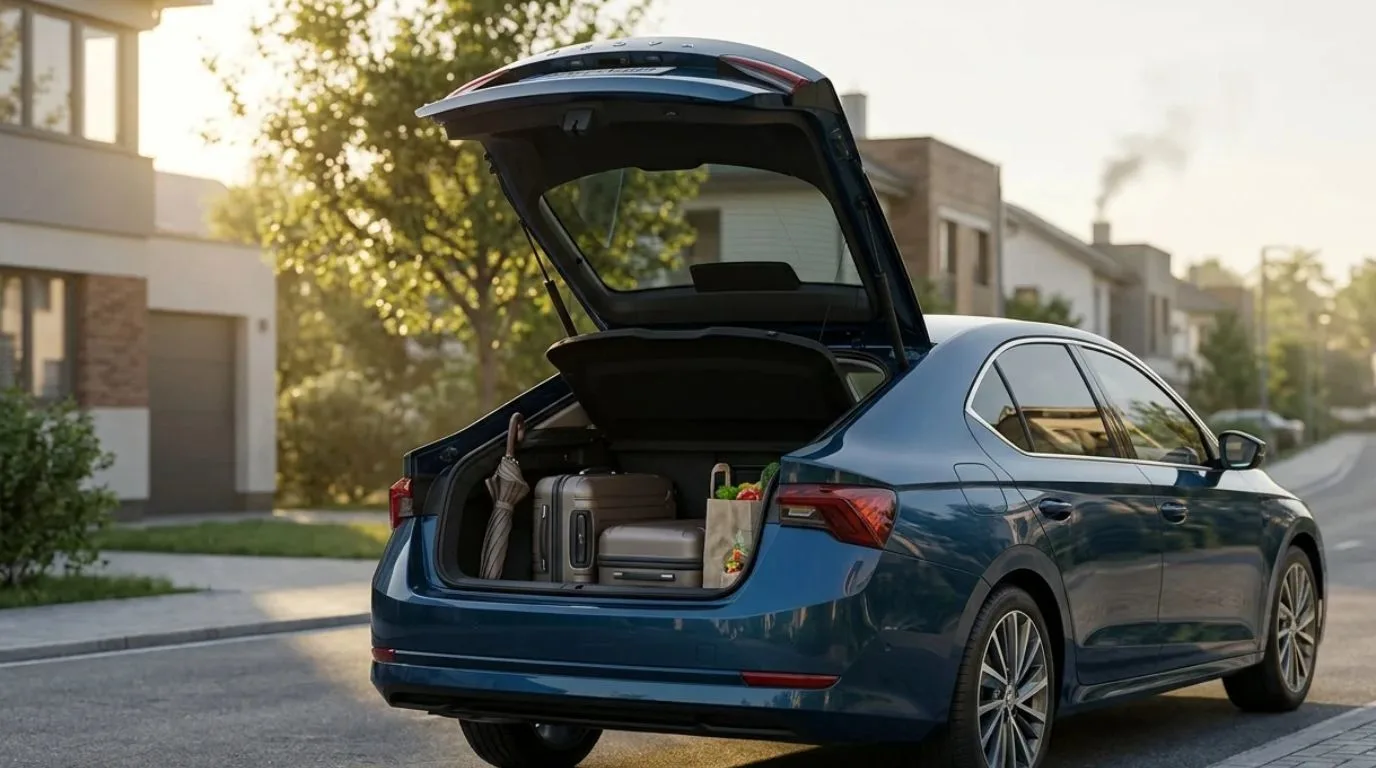
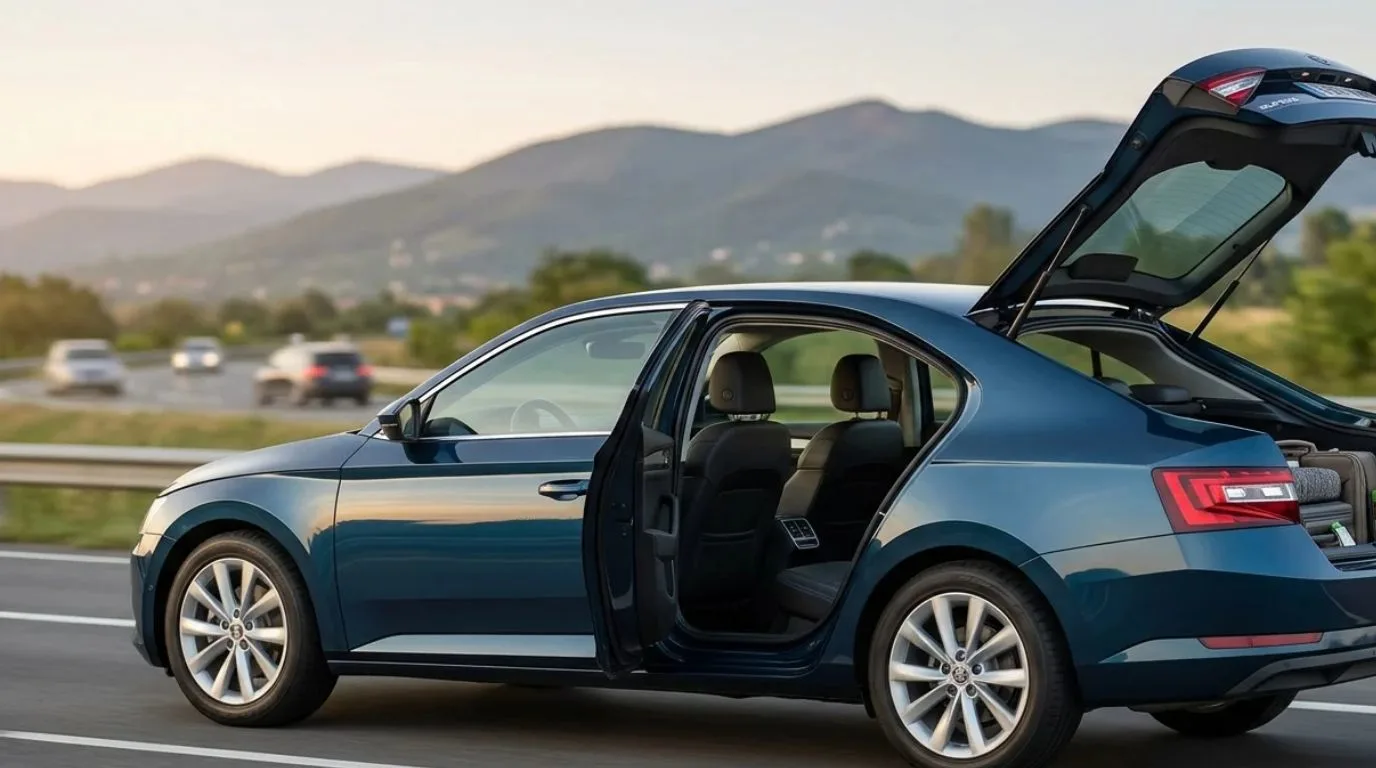
The Octavia’s luggage space is a major reason it appeals to families and frequent travellers. Its liftback design gives it a wide-opening rear door, making the luggage compartment easier to access than the conventional boot lid of many saloons.
Octavia liftback boot space
The current European liftback has a quoted luggage capacity of 600 litres with the rear seats in place. Folding the rear seatbacks increases the capacity to 1,555 litres.
That is substantial space for a family car. It can accommodate everyday shopping, several travel bags and larger items that might be difficult to fit into a smaller hatchback. The wide opening also makes loading bulky luggage more convenient.
The Indian Octavia RS specification published by Škoda also quotes 600 litres, expanding to 1,555 litres with the rear seatbacks folded. cdn.skoda-storyboard.com+1
Octavia Estate boot space
The Octavia Estate is the more cargo-focused version. In Škoda’s European technical data, it offers:
- 640 litres with the rear seats upright
- 1,700 litres with the rear seatbacks folded
The extra capacity makes the Estate particularly useful for families who carry pushchairs, sports equipment, holiday luggage or other bulky items regularly. It is also a practical choice for drivers who need a large load area without moving to an SUV. cdn.skoda-storyboard.com+1
Liftback vs Estate: Which offers more room?
| Practical detail | Octavia liftback | Octavia Estate |
|---|---|---|
| Boot with rear seats upright | 600 litres | 640 litres |
| Boot with rear seats folded | 1,555 litres | 1,700 litres |
| Rear opening | Large liftback tailgate | Estate tailgate |
| Main advantage | Family-car versatility | Greater luggage capacity |
The liftback should be spacious enough for many households. The Estate is the better choice when maximum cargo room is a priority, especially for regular long-distance travel or carrying larger equipment.
Interior Space and Passenger Comfort
The Octavia is designed to provide generous passenger space without the size and bulk of a large SUV. Its long wheelbase and relatively wide cabin help make it suitable for everyday family use.
Front-seat comfort
The front seats provide a conventional, car-like driving position, with adjustment and equipment varying by trim. Higher-specification versions can include electrically adjustable seats, heating and other comfort features.
Some European configurations offer optional ergonomic seats with ventilation and massage functions. These are market- and trim-dependent features, not standard equipment across the entire range. Škoda Storyboard
Rear-seat room
Rear passengers benefit from the Octavia’s spacious cabin layout. Škoda’s European technical data lists 970 mm of rear headroom for the liftback, although the available space can vary with the roofline, seat design and optional equipment.
The car is suitable for adults travelling in the back, particularly on longer journeys. As with most cars in this class, carrying three adults across the rear bench may be less comfortable than carrying two because of the centre seating position and transmission tunnel.
Cabin storage and everyday details
Škoda’s Simply Clever approach adds practical touches intended to make daily use easier. Depending on the market and trim, these can include:
- Storage compartments and door pockets
- Rear-seat armrest with cupholders
- USB-C charging connections
- Wireless smartphone charging
- Flexible luggage-compartment accessories
- Hooks and nets for securing items
The exact equipment list varies by version. Buyers should check the specification of the individual car rather than assume every feature is included.
Practicality: How Well Does the Octavia Work as a Family Car?
The Octavia’s strongest argument is the balance between passenger comfort, luggage capacity and manageable everyday dimensions.
Its liftback body combines the appearance of a conventional saloon with the loading convenience of a large rear hatch. The Estate takes that approach further by offering additional cargo space and a longer load area.

For families, the 600-litre liftback boot is already generous. The Estate’s 640-litre capacity provides an extra margin for holidays and bulky equipment. Folding the rear seats creates a much larger space, although the final load area and usable dimensions depend on the shape of the items being carried.
The Octavia also avoids some of the compromises associated with choosing a larger SUV. Its lower passenger-car body can make loading luggage and getting in and out feel different from a taller vehicle. Buyers who specifically want a high seating position or greater ground clearance may still prefer an SUV.
Is the Octavia practical for long journeys?
Yes, its spacious cabin, large luggage area and range of petrol and diesel engines make it well suited to longer trips. The diesel versions may appeal to high-mileage drivers in markets where they remain available, while the petrol and mild-hybrid options provide alternatives for buyers with different driving patterns.
The Estate is especially appealing for regular holiday travel, while the liftback remains a strong all-rounder for households that want substantial luggage space without choosing a larger body style.

Octavia Liftback vs Octavia Estate: Which Should You Choose?
The decision largely comes down to how much luggage space you need and which body style is available in your country.
Choose the Octavia liftback if:
- You want a spacious family car for everyday use.
- A 600-litre boot is sufficient for your luggage.
- You prefer its more traditional passenger-car shape.
- You want a balance between passenger comfort and cargo capacity.
Choose the Octavia Estate if:
- You regularly carry bulky luggage or equipment.
- You want the larger 640-litre boot.
- You frequently travel with a full family and luggage.
- You value maximum load space more than the liftback’s styling.
Both versions offer substantial practicality. The Estate simply provides more flexibility when carrying larger loads.
Škoda Octavia Availability in Different Markets
The Octavia is not sold with an identical engine range or body-style selection worldwide. Regional differences are important when researching a new or used example.
Europe and the UK
European markets offer a broad range of powertrains, including 1.5 TSI petrol engines, mild-hybrid versions, 2.0 TDI diesels and higher-performance 2.0 TSI models. The RS is available for buyers seeking stronger performance.
The UK range includes petrol, mild-hybrid and diesel versions, with both liftback and Estate body styles. Trim and engine combinations can change over time. Škoda UK+2
Australia
Australia’s current Octavia range includes a 1.5 TSI mild-hybrid version with a seven-speed automatic transmission. Škoda Australia lists a 600-litre luggage compartment for the model.
The local range and equipment should be checked through the Australian manufacturer website because its specifications and grades are not necessarily identical to European versions. skoda.com.au
India
India’s Octavia history is different from its current European and Australian line-ups. The regular Octavia was discontinued from the Indian market in 2023. Škoda subsequently brought back the performance-focused Octavia RS in limited numbers.
In September 2026, Škoda Auto India announced a second batch of 50 Octavia RS units. The Indian RS uses a 2.0-litre TSI petrol engine producing 265 PS and 370 Nm, paired with a seven-speed DSG. The company quoted a 600-litre boot, expandable to 1,555 litres. This limited RS offering should not be treated as confirmation that the full regular Octavia engine range is available in India. CarWale+1
What Buyers Should Check Before Choosing an Octavia
The Octavia’s specifications can change substantially by model year and market. Before buying, check the following details:
- Engine and gearbox: Confirm whether the car has a 1.5 TSI, mild-hybrid, 2.0 TDI or 2.0 TSI engine, and whether it uses a manual or DSG transmission.
- Body style: Make sure you are comparing the liftback with the liftback, or the Estate with the Estate. Their luggage capacities differ.
- Fuel economy: Use the official figure for the exact engine and model year. WLTP figures are not a promise of real-world consumption.
- Equipment: Check the actual trim specification for features such as powered seats, driver assistance, infotainment and parking equipment.
- Used-car history: For a pre-owned example, review its service records, mileage, transmission maintenance and accident history.
A car advertised simply as an Octavia may have very different specifications from another vehicle carrying the same model name.
Final Thoughts
The Škoda Octavia remains a compelling choice for buyers who value space and everyday usability. Its 600-litre liftback boot is large enough for many family needs, while the Estate increases capacity to 640 litres and provides up to 1,700 litres with the rear seats folded.
Its engine range also gives buyers several different priorities to consider. The 1.5 TSI is a sensible all-round petrol option, mild-hybrid versions add an efficiency-focused alternative, and the 2.0 TDI remains relevant for long-distance drivers in markets where it is offered. The 265 PS RS is aimed at those who want substantially stronger performance without giving up the Octavia’s everyday practicality.
The best version depends on local availability and how the car will be used. For many households, the liftback provides more than enough space. Drivers who regularly carry bulky loads may find the Estate’s additional luggage capacity worth choosing.

Frequently Asked Questions
What is the boot capacity of the Škoda Octavia?
The current European Octavia liftback offers 600 litres of boot space with the rear seats upright and up to 1,555 litres with them folded. The Estate offers 640 litres, increasing to 1,700 litres with the rear seats folded.
Which engines are available in the Škoda Octavia?
Depending on the market, the Octavia is available with 1.5-litre TSI petrol engines, 1.5-litre mild-hybrid versions, 2.0-litre TDI diesel engines and 2.0-litre TSI petrol engines. The RS uses a higher-output 2.0-litre TSI engine.
Is the Škoda Octavia fuel-efficient?
The Octavia can be fuel-efficient, particularly with selected 1.5 TSI mild-hybrid and 2.0 TDI versions. Official European WLTP figures vary by engine, with some listed versions returning between 4.3 and 5.4 L/100 km. Actual consumption depends on driving conditions and vehicle specification.
Does the Škoda Octavia have a diesel engine?
Yes, selected European-market versions offer a 2.0-litre TDI diesel engine. Diesel availability differs by country, and it is not offered across every Octavia market.
Is the Škoda Octavia available with a mild-hybrid engine?
Yes. Selected markets offer a 1.5 TSI mild-hybrid powertrain. It uses electrical assistance to support the petrol engine but is not a full hybrid that can routinely drive on electric power alone.
Is the Octavia liftback or Estate more practical?
Both are practical, but the Estate offers more luggage space. Its 640-litre boot is larger than the liftback’s 600-litre compartment, and it provides up to 1,700 litres when the rear seats are folded.
Is the Škoda Octavia available in India?
Škoda discontinued the regular Octavia in India in 2023 but later reintroduced the performance-focused Octavia RS in limited batches. In September 2026, the company announced a second batch of 50 RS units. This does not mean the full European Octavia range is available in India.
Is the Škoda Octavia suitable for a family?
Yes. Its spacious cabin, large luggage compartment and choice of engines make it suitable for family use. Buyers who need even more cargo capacity can consider the Estate where it is sold.