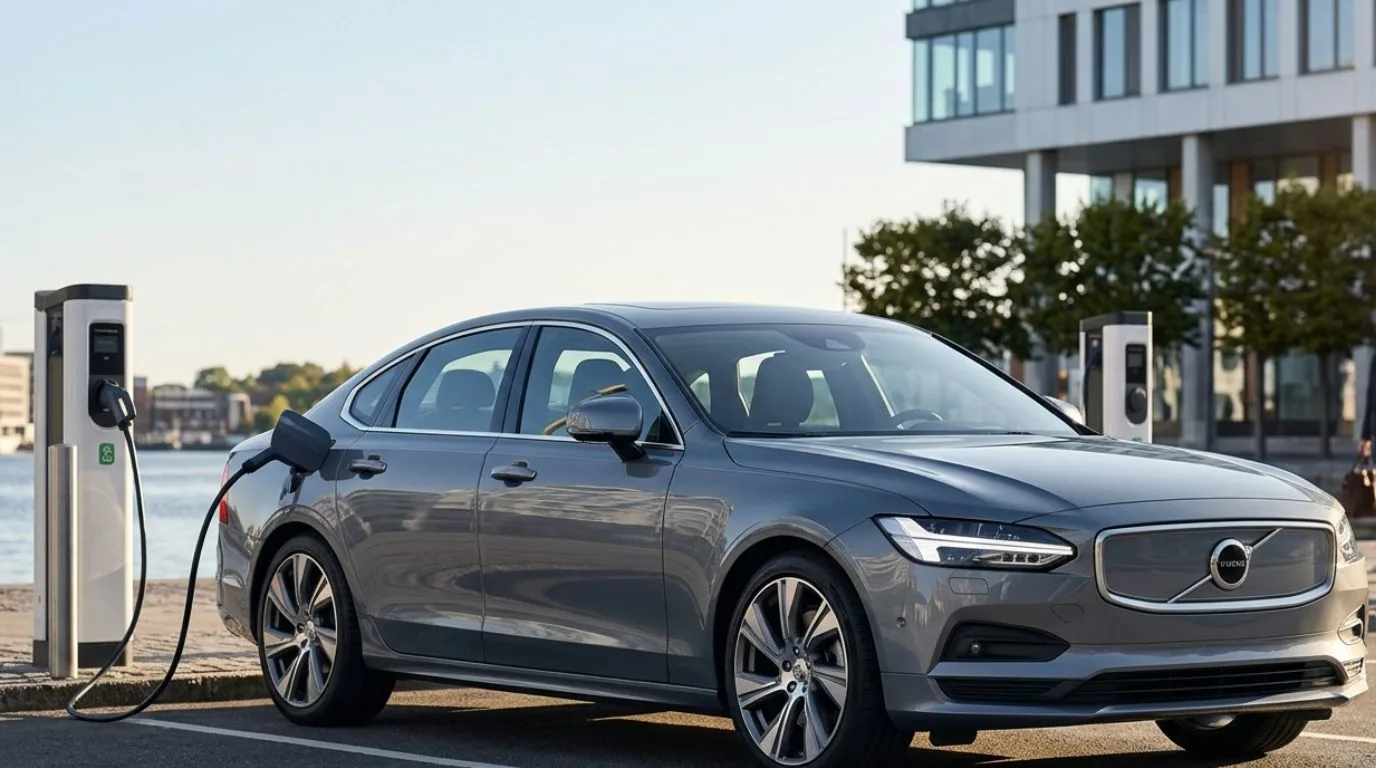
The 2026 Volvo ES90 is an all-electric luxury sedan designed around long-distance driving, advanced safety technology and high-speed charging. It combines the traditional comfort of a premium Volvo sedan with an 800-volt electrical architecture, modern driver-assistance systems and a software-based vehicle platform.
Revealed globally on March 5, 2025, the ES90 is positioned as Volvo’s electric flagship sedan. It uses the SPA2 platform and the company’s Superset technology architecture, which also underpins the EX90 electric SUV.
Its biggest technical highlights include a choice of 92 kWh and 106 kWh nominal battery packs in international markets, a claimed maximum WLTP range of up to 700 km, and DC fast charging that can take the battery from 10% to 80% in approximately 22 minutes under compatible charging conditions.
The ES90 also puts considerable emphasis on safety. Its sensor-based driver assistance systems, advanced computing hardware, occupant monitoring and over-the-air software updates are intended to help the car respond to changing road conditions and improve throughout its ownership life.

For buyers considering a premium electric sedan, the important questions are how far the ES90 can travel, how quickly it charges, what safety equipment it offers and which markets will receive each version.
2026 Volvo ES90: Key Specifications
The ES90 is available internationally with three main powertrain configurations. Battery capacity, range and performance depend on the selected version and market.
| Specification | Single Motor Extended Range | Twin Motor | Twin Motor Performance |
|---|---|---|---|
| Battery capacity (nominal) | 92 kWh | 106 kWh | 106 kWh |
| Battery capacity (usable) | 88 kWh | 102 kWh | 102 kWh |
| Power | 333 hp | 456 hp | 680 hp |
| Torque | 480 Nm | 670 Nm | 870 Nm |
| Drivetrain | RWD | AWD | AWD |
| 0–100 km/h | 6.6 seconds | 5.4 seconds | 4.0 seconds |
| Maximum WLTP range | Up to 664 km | Up to 696 km | Up to 696 km |
| DC charging (10–80%) | 22 minutes | 22 minutes | 22 minutes |
| Electrical architecture | 800V | 800V | 800V |
Specifications are based on Volvo’s published European technical information. Figures can vary with market, wheels and equipment.
Volvo ES90 Electric Range and Battery Technology
The Volvo ES90 is designed to provide the driving range expected from a premium long-distance electric vehicle.
Its international lineup includes two nominal battery capacities: 92 kWh and 106 kWh.
The smaller battery is paired with a single rear-mounted electric motor, while the larger battery is used in the all-wheel-drive versions.
92 kWh Single Motor Battery
The Single Motor Extended Range version produces 333 hp and 480 Nm of torque.
It uses a rear-wheel-drive configuration and has a maximum official WLTP range of up to 664 km in the Irish-market specification.

This version is intended for buyers who prioritize efficiency and long-distance driving rather than maximum acceleration.
106 kWh Twin Motor Battery
The larger battery is available with two electric motors.
The standard Twin Motor version produces 456 hp and 670 Nm, while the Twin Motor Performance increases output to 680 hp and 870 Nm.
Both versions use all-wheel drive.
The Twin Motor configuration offers a maximum WLTP range of up to 696 km in the published Irish specifications.
What Affects the Volvo ES90’s Real-World Range?
Official WLTP figures provide a useful comparison between electric vehicles, but they do not guarantee the same distance in everyday driving.
Several factors influence the actual range:
- Highway speed and acceleration.
- Outside temperature.
- Air-conditioning and heating requirements.
- Tire and wheel selection.
- Road gradients.
- Passenger and luggage weight.
- Battery temperature.
- Driving mode.
Cold weather can reduce battery efficiency because the vehicle requires additional energy to maintain a comfortable cabin temperature and manage battery conditions.

For long-distance journeys, buyers should consider the available charging network rather than relying exclusively on the maximum advertised range.
Volvo ES90 800V Charging Technology
The ES90’s 800-volt electrical architecture is one of its most important engineering features.
Many electric vehicles use 400V systems. Volvo’s higher-voltage arrangement is designed to support greater charging power while reducing electrical losses and heat generation under comparable operating conditions.
The system works alongside the battery management software to control charging performance.

DC Fast Charging Speed
Volvo has announced DC fast-charging capability of up to 350 kW for compatible ES90 configurations.
The manufacturer quotes approximately 22 minutes for charging from 10% to 80% using a suitable high-power charging station.
| Charging Detail | Volvo ES90 |
|---|---|
| Electrical architecture | 800V |
| Maximum DC charging power | Up to 350 kW |
| Charging from 10% to 80% | Approximately 22 minutes |
| Battery options | 92 kWh and 106 kWh |
| Charging connector | Market-dependent |
The maximum charging power is not maintained throughout the charging session. Battery temperature, starting charge level, charger capability and charging conditions affect the actual result.
Volvo has also advertised the ability to add up to 300 km of range in 10 minutes under suitable 350 kW charging conditions. This is a manufacturer claim, not a guaranteed result at every charging station.

Why Does 800V Technology Matter?
An 800V system offers several practical advantages.
Higher charging potential: It allows the vehicle to accept high charging power when connected to a compatible DC station.
Improved electrical efficiency: Higher voltage can reduce current for a given power level, helping limit electrical losses.
Thermal management: Lower current for equivalent power can reduce resistive heating in electrical components.
Long-distance convenience: Faster charging can reduce the time required for planned charging stops.
However, the benefits depend on the charging infrastructure available to the owner. A vehicle with 350 kW capability cannot achieve that speed when connected to a lower-powered station.
Volvo ES90 Home Charging
DC fast charging is useful during longer journeys, but home charging is likely to be more convenient for everyday ownership.
The ES90 has an 11 kW onboard AC charger in the published European specification.
With a suitable three-phase 16A installation, Volvo quotes approximately 10 hours for a full charge on the Single Motor version.
The larger battery versions have a similar quoted charging time in the same specification.
Actual home charging performance depends on the electrical installation, charger, battery condition and available supply.
Plug & Charge Technology
The ES90 also lists Plug & Charge capability in its European equipment information.


This technology is designed to simplify compatible public charging sessions by allowing the vehicle and charging station to communicate and authenticate automatically.
Availability depends on supported charging networks and regional services.
Volvo ES90 Safety Technology
Safety is a central part of the ES90’s engineering.
Volvo has developed the sedan around its Safe Space Technology approach, which combines vehicle structure, restraint systems, sensors, driver monitoring and collision-avoidance technology.
The objective is to help the car identify potential hazards and provide assistance before or during dangerous situations.
Advanced Sensor System
The ES90 uses an extensive sensor arrangement to monitor its surroundings.
Volvo’s original global launch information describes a configuration incorporating:
- LiDAR.
- Radar sensors.
- Exterior cameras.
- Ultrasonic sensors.
- An interior driver-understanding system.
The original sensor specification included five radars, seven cameras, twelve ultrasonic sensors and a LiDAR unit.

However, Volvo has also confirmed that some 2026 ES90 vehicles are produced without LiDAR because of hardware supply constraints.
The company states that vehicles with and without LiDAR meet its safety standards and provide a high level of driver support.
This distinction matters because buyers should not assume that every ES90 in every market has identical sensor hardware.
LiDAR Technology
LiDAR stands for Light Detection and Ranging.
It uses laser pulses to measure distances and help create a detailed understanding of the vehicle’s surroundings.
In a car, this technology can help identify objects, vehicles and obstacles.
Its ability to measure distance independently of visible-light camera images makes it a useful additional sensing technology.
However, LiDAR is not a replacement for the driver. It works as part of a wider safety system that combines information from several sensors.

Radar and Camera Systems
Radar sensors use radio waves to detect the distance and movement of surrounding objects.
Cameras provide visual information that helps the vehicle recognize road markings, traffic signs, pedestrians and other road users.
Ultrasonic sensors are commonly used for close-range detection, particularly during parking and low-speed maneuvering.
Combining these technologies gives the vehicle multiple sources of information rather than depending on one type of sensor.
Driver Understanding System
The Volvo ES90 includes an interior driver-understanding system.
It monitors driver attention and can identify signs that the driver is distracted, inattentive or potentially unable to continue driving safely.
Depending on the situation, the system can provide warnings and assistance.
This is particularly useful during long journeys when fatigue and reduced concentration can become safety concerns.
The system is designed to support the driver, not replace the responsibility to remain alert.
Collision Avoidance and Driver Assistance
The ES90 offers a collection of driver-assistance and active safety functions.
Depending on market and equipment, these include:
- Collision avoidance and mitigation.
- Blind Spot Information System.
- Cross Traffic Alert.
- Pilot Assist.
- Lane-related assistance.
- Intersection braking assistance.
- Run-off-road mitigation.
- Pedestrian and cyclist detection.
- Door-opening alerts.
- Parking assistance.
- Road-sign information.
- Driver monitoring.
These systems have different functions.
For example, Blind Spot Information System helps monitor areas beside and behind the vehicle that may not be easily visible in the mirrors.
Cross Traffic Alert is designed to help identify approaching traffic when reversing out of a parking space.
Pilot Assist provides steering assistance and helps maintain a selected distance from traffic ahead under supported conditions.
The exact operation and availability of these features depend on the market, vehicle configuration and software version.
None of these systems makes the ES90 a fully autonomous vehicle. The driver remains responsible for controlling the car.
Occupant Sensing and Door-Opening Safety
Volvo has also focused on safety when the ES90 is stationary.
Its occupant-sensing technology is designed to help detect movement inside the cabin.
This is particularly relevant when passengers, including children, remain in the vehicle after the driver has exited.

The system is designed to help reduce the risk of occupants being unintentionally left inside.
The door-opening alert also helps identify approaching cyclists and pedestrians when someone is about to open a door.
These features extend the safety focus beyond conventional driving assistance.
Volvo ES90 Interior and Technology
The ES90 combines a minimalist Scandinavian cabin design with a digital-first interface.
Its interior focuses on passenger comfort, practical storage and connected technology.
The published European specification includes seating for five passengers and a long 3,102 mm wheelbase.
This provides a substantial cabin footprint for a luxury electric sedan.
Digital Displays
The ES90’s digital cockpit includes:
- 14.5-inch central touchscreen.
- 9-inch driver display.
- Available head-up display.
- Google-based infotainment features.
- Connected vehicle services.
- Over-the-air software updates.
The central screen provides access to navigation, media, climate settings and vehicle functions.
The driver display presents essential information such as speed, driving assistance status and navigation details.
The head-up display can project selected information into the driver’s forward field of vision.
Google-Based Infotainment
The ES90 uses Volvo’s connected infotainment environment with Google-based services.
Depending on market and subscription availability, features can include Google Maps, Google Assistant and compatible applications through Google Play.
The system is designed to provide navigation, voice interaction and access to connected services.
Over-the-Air Software Updates
The ES90 is built around Volvo’s Superset technology architecture.
This approach uses shared hardware and software systems across Volvo’s newer electric vehicles.
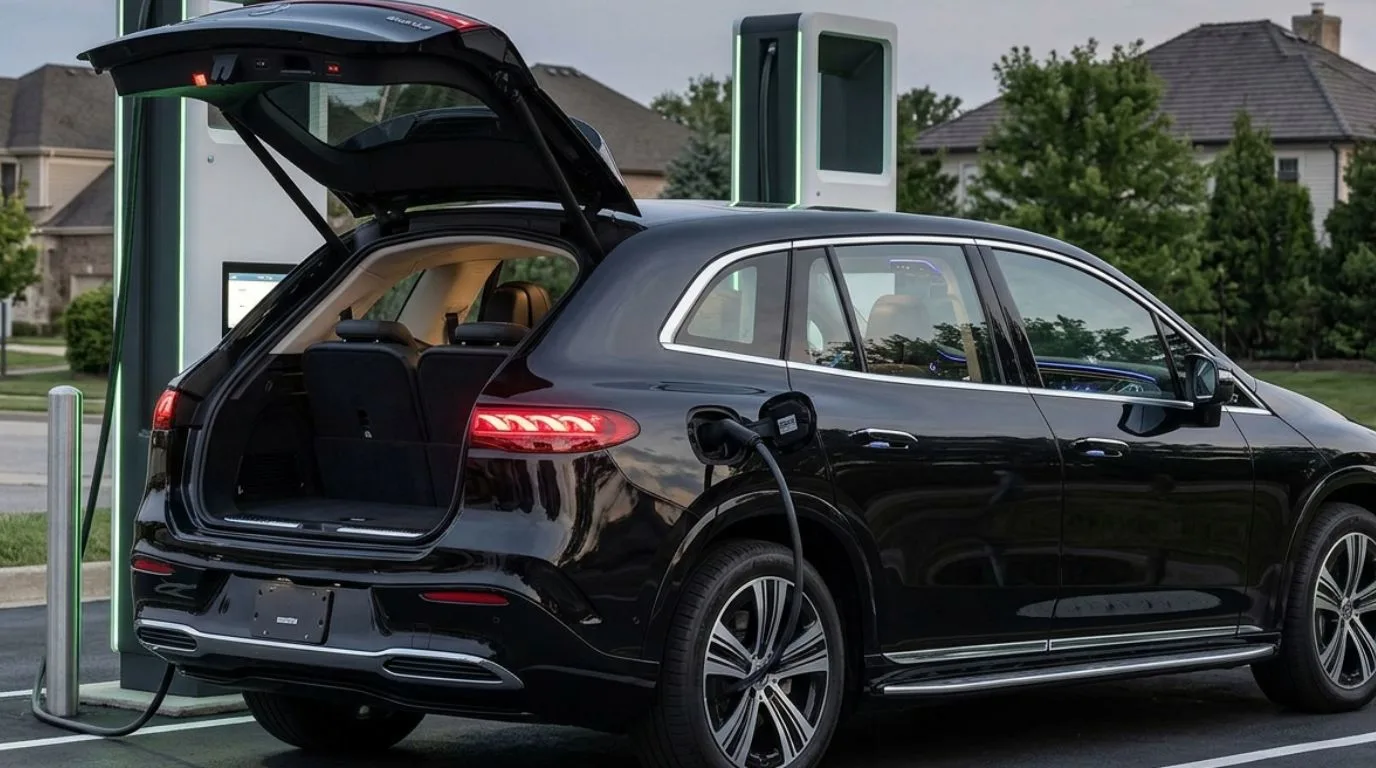
Over-the-air updates allow compatible software improvements to be delivered without requiring a conventional workshop visit for every update.
These updates can cover infotainment, vehicle functions, driver assistance and other supported systems.
However, not every software improvement is available in every market or for every vehicle configuration.
Volvo ES90 Exterior Design and Aerodynamics
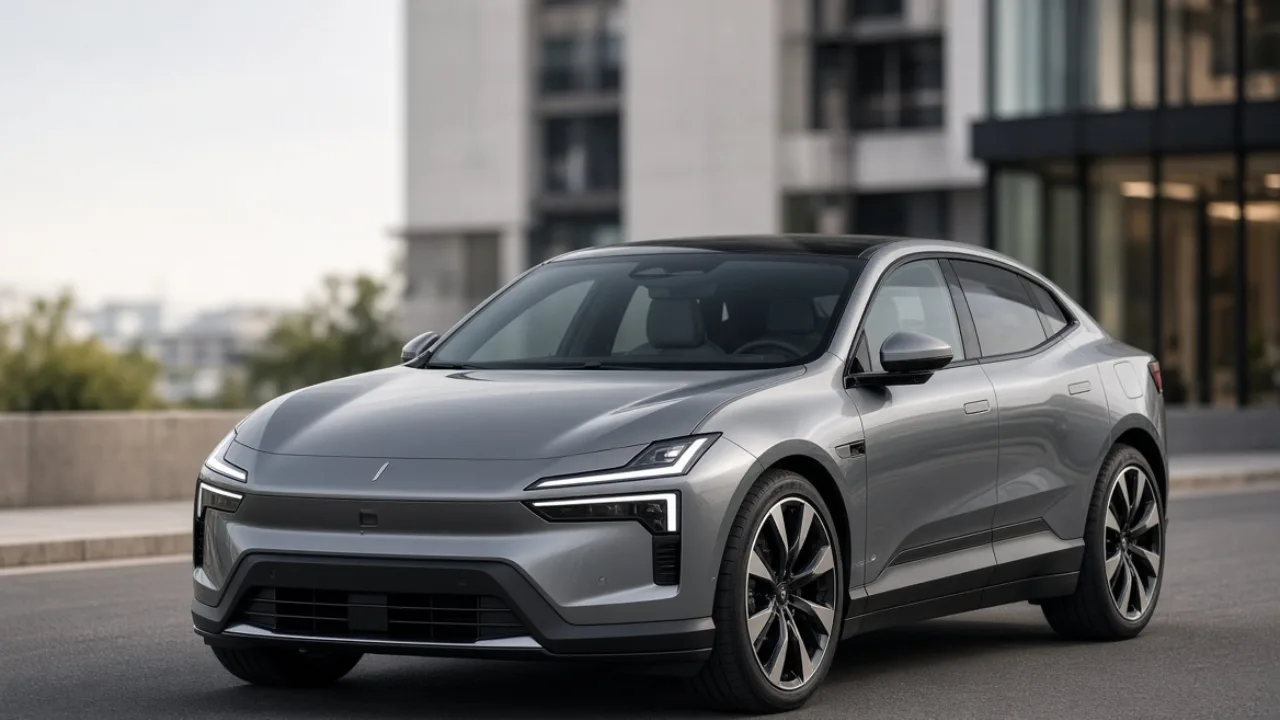
The ES90 combines the proportions of a luxury sedan with a gently sloping roofline.
Its design is intended to balance cabin space, aerodynamic efficiency and Volvo’s familiar exterior styling.
The front features a closed-off grille area, reflecting the requirements of an electric powertrain.
Thor’s Hammer-inspired lighting gives the car a recognizable Volvo appearance.
At the rear, the vertical and horizontal lighting elements contribute to its distinctive design.
Aerodynamic Efficiency
Aerodynamics plays an important role in electric vehicle efficiency.
Air resistance increases as speed rises, which can have a noticeable effect on highway driving range.
The ES90’s smooth body surfaces and sloping roofline are designed to help manage airflow.
Volvo has quoted a drag coefficient of 0.25 for the ES90.
This aerodynamic approach supports the car’s long-distance efficiency objectives.
Volvo ES90 Dimensions and Practicality
The ES90 is a large luxury sedan, with dimensions designed to provide substantial passenger space.
| Dimension | Volvo ES90 |
|---|---|
| Length | 5,000 mm |
| Width (excluding mirrors) | 1,942 mm |
| Height | 1,549 mm |
| Wheelbase | 3,102 mm |
| Seating capacity | 5 |
| Rear legroom | 899 mm |
| Luggage capacity | 442 litres |
These figures are from the published European technical specification.
The ES90 also offers additional luggage capacity when the rear seats are folded.

Its large footprint should provide a comfortable cabin environment, although maneuvering and parking in narrow urban spaces may require additional attention.
Volvo ES90 Performance and Driving Characteristics
The ES90 offers three international powertrain configurations.
The Single Motor Extended Range version uses rear-wheel drive, while the Twin Motor models use all-wheel drive.
The performance differences are significant.
Single Motor Extended Range
The entry-level electric configuration produces 333 hp and 480 Nm.
Its rear-wheel-drive layout and 6.6-second acceleration time from 0–100 km/h make it the more efficiency-oriented option in the range.
Twin Motor
The standard Twin Motor version develops 456 hp and 670 Nm.
Its all-wheel-drive system provides power to both axles, while the additional motor improves acceleration.
Volvo quotes 5.4 seconds for the 0–100 km/h sprint.
Twin Motor Performance
The Performance version produces 680 hp and 870 Nm.
It can accelerate from 0–100 km/h in approximately four seconds.
This version is aimed at buyers who want stronger performance without moving away from the ES90’s luxury-focused design.
All three configurations have a manufacturer-stated top speed of 180 km/h in the published European specifications.
Volvo ES90 Suspension and Ride Comfort
A luxury sedan needs to deliver more than acceleration and digital technology.
Ride comfort, cabin refinement and stability are equally important.
The ES90’s available equipment includes active air suspension and an active chassis system, depending on the version and market.
Air suspension can adjust the vehicle’s suspension characteristics and ride height to help balance comfort and stability.
An active chassis system can respond to changing driving conditions and vehicle movements.
These systems are intended to improve passenger comfort and handling.
Actual ride quality will depend on the wheel and tire combination, road surface and selected configuration.

This article is based on manufacturer specifications and published technical information rather than independent firsthand driving tests.
Volvo ES90 Price and Availability
The ES90 has been introduced in several international markets, with pricing and equipment varying by country.
For example, the published UK specification lists the Single Motor Extended Range from £65,060 and the Twin Motor Performance from £83,560.
In Ireland, the published starting price for the Single Motor Extended Range is €79,995.
These prices are market-specific and should not be used as estimates for other countries.
Is the Volvo ES90 Coming to India?
Volvo has listed the ES90 on its Indian website, but the product page currently describes the vehicle as coming soon.
Although Indian automotive reports have discussed its planned market introduction, a final India-specific price and complete retail specification should not be assumed from international figures.
The Indian version’s battery configuration, range, charging capability, equipment and delivery schedule should be confirmed through Volvo Cars India.
Buyers should wait for the official Indian price announcement before comparing the ES90 directly with other luxury EVs on an on-road price basis.
Volvo ES90: Main Advantages and Limitations
| Advantages | Limitations |
|---|---|
| Up to 696 km WLTP range in published European specifications | Actual range varies with driving conditions |
| 800V electrical architecture | Requires compatible high-power charging for maximum speed |
| Up to 350 kW DC charging | Maximum charging power is not constant |
| Multiple battery and motor configurations | Availability varies by country |
| Extensive driver-assistance technology | Sensor equipment can differ between vehicles |
| Over-the-air software updates | Some connected services require subscriptions |
| Spacious five-seat cabin | Large exterior dimensions can make parking difficult |
Who Should Consider the Volvo ES90?
The ES90 may appeal to several types of luxury EV buyers.
Long-distance EV drivers: The larger battery and high-power DC charging capability make the ES90 relevant for buyers who regularly travel between cities.
Safety-focused buyers: Its combination of driver monitoring, radar, camera-based assistance and collision-avoidance technology provides a strong safety-focused equipment package.
Luxury sedan customers: Buyers moving from traditional premium sedans may appreciate the five-seat cabin, spacious interior and digital features.
Performance-oriented drivers: The 680 hp Twin Motor Performance version provides substantially more power than the standard Single Motor model.
Technology-focused owners: Its connected infotainment, computing architecture and over-the-air update capability make it an interesting option for buyers who value software-based vehicle technology.
The most suitable version depends on driving requirements, charging access, budget and local equipment availability.
Final Thoughts
The 2026 Volvo ES90 is an important addition to the premium electric sedan segment.
Its 800V electrical architecture, battery options up to 106 kWh and maximum published European WLTP range of 696 km give it the technical foundation for long-distance electric driving.
The 350 kW DC charging capability and approximately 22-minute 10–80% charging claim also make it an interesting option for buyers who want shorter charging stops.
However, its safety technology is just as important as its electric powertrain. Volvo has combined advanced sensors, driver monitoring, collision-avoidance systems and software-based vehicle development to make safety a central part of the ES90 experience.
The car’s final appeal will depend on the version available in each country, the local charging network and its pricing against competing luxury electric sedans.
For buyers considering a premium electric vehicle with a strong focus on safety, range and charging technology, the Volvo ES90 deserves attention.
Frequently Asked Questions About the 2026 Volvo ES90
1. What is the range of the 2026 Volvo ES90?
The Volvo ES90 offers a maximum published WLTP range of up to 696 km for the Twin Motor versions in the Irish-market specification. The Single Motor Extended Range version is rated at up to 664 km.
2. What battery options are available in the Volvo ES90?
The international lineup includes nominal battery capacities of 92 kWh and 106 kWh. The 92 kWh battery is used in the Single Motor Extended Range version, while the 106 kWh battery is used in the Twin Motor versions.
3. How fast can the Volvo ES90 charge?
The ES90 supports DC fast charging at up to 350 kW in compatible configurations. Volvo quotes approximately 22 minutes for a 10–80% charge under suitable conditions.
4. Does the Volvo ES90 use 800V technology?
Yes. The ES90 uses an 800V electrical architecture designed to improve charging performance, electrical efficiency and powertrain operation.
5. Is the Volvo ES90 available with all-wheel drive?
Yes. The international Twin Motor and Twin Motor Performance versions feature all-wheel drive. The Single Motor Extended Range version uses rear-wheel drive.
6. What is the power output of the Volvo ES90?
Power depends on the version. The Single Motor produces 333 hp, the Twin Motor produces 456 hp and the Twin Motor Performance produces 680 hp.
7. Does the Volvo ES90 have LiDAR?
Volvo has offered ES90 configurations with LiDAR, but it has also confirmed production of certain 2026 vehicles without this hardware because of supply constraints. Equipment depends on the vehicle and market.
8. What safety features does the Volvo ES90 offer?
Its available safety technology includes collision avoidance, blind-spot monitoring, cross-traffic alerts, driver monitoring, occupant sensing, Pilot Assist and parking assistance.
9. Does the Volvo ES90 support over-the-air updates?
Yes. Its software-based architecture supports over-the-air updates for compatible vehicle systems and connected features.
10. Is the Volvo ES90 launching in India?
Volvo India has listed the ES90 on its website with a coming-soon status. The final Indian retail price and complete market-specific specification should be confirmed through an official Volvo India announcement.
11. What is the top speed of the Volvo ES90?
The published European specifications list a maximum speed of 180 km/h across the three main powertrain configurations.
12. Is the Volvo ES90 a fully electric car?
Yes. The ES90 is a battery-electric luxury sedan. It does not use a conventional petrol or diesel engine.