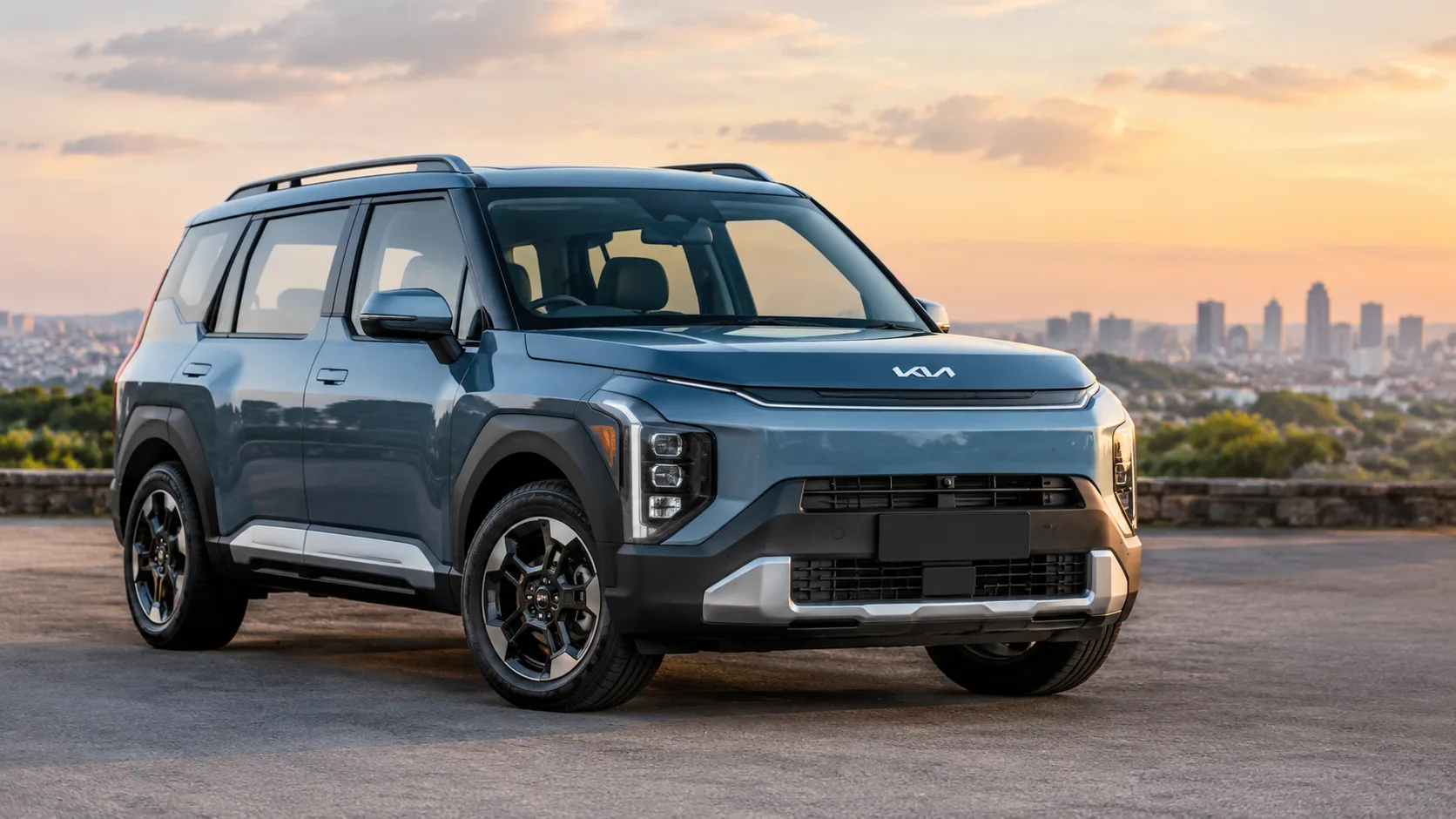
The 2026 Kia Syros is a compact SUV sold in India that focuses on cabin space, modern technology, passenger comfort and everyday practicality. Its upright design, sliding and reclining second-row seats, available panoramic sunroof and large digital displays help distinguish it from conventional compact SUVs.
For Indian buyers, the Syros offers a choice of turbo-petrol and turbo-diesel engines, with manual and automatic transmissions available depending on the variant. Its equipment list includes features such as a touchscreen infotainment system, wireless smartphone connectivity, rear air-conditioning vents and multiple airbags. Higher trims add more comfort and convenience equipment.
One important consideration is fuel economy. Kia does not provide a single mileage figure that applies to every Syros variant on its consumer-facing model page. Buyers should therefore compare the official efficiency information for the specific engine and transmission rather than rely on an unverified mileage claim.
This guide covers the India-specification 2026 Kia Syros, including its price, engines, features, safety rating, expected ownership considerations and suitability for different types of buyers.
2026 Kia Syros: Key Specifications
| Specification | Kia Syros (India) |
|---|---|
| Vehicle type | Compact SUV |
| Petrol engine | 1.0-liter turbo-petrol |
| Diesel engine | 1.5-liter turbo-diesel |
| Petrol power | 120 PS |
| Petrol torque | 172 Nm |
| Diesel power | 116 PS |
| Diesel torque | 250 Nm |
| Manual transmission | 6-speed, depending on variant |
| Automatic transmission | 7-speed DCT petrol; 6-speed automatic diesel on selected trims |
| Seating | 5 passengers |
| Safety rating | 5 stars for adult and child occupant protection in Bharat NCAP’s 2025 assessment of applicable petrol variants |
| Market covered | India |
Specifications and equipment depend on the selected variant. The figures above describe the established Indian-market powertrain lineup rather than guaranteeing that every feature is available across all 2026 trims.
2026 Kia Syros Price in India
The Kia Syros sits in India’s compact SUV segment, offering a feature-focused alternative for buyers who want a modern cabin and flexible rear seating.
Kia’s published pricing lists the entry-level HTE at approximately ₹8.42 lakh ex-showroom. The price of higher trims varies according to the engine, transmission and equipment package. Updated variants and pricing revisions mean buyers should confirm the current quotation before making a booking.
Kia Syros variant lineup
The established range includes the following trims:
| Variant | Position in the lineup |
|---|---|
| HTE | Entry-level variant |
| HTE(O) | Additional convenience features |
| HTK(EX) | Upgraded equipment |
| HTK+ | Additional comfort and technology |
| HTK+(O) | More premium equipment |
| HTX | Higher-specification trim |
| HTX(O) | Top-end trim in the published lineup |
Powertrain availability varies by trim. The petrol manual is offered across several variants, while the petrol DCT and diesel automatic are available on selected higher trims.
Ex-showroom prices exclude expenses such as registration, insurance and other applicable charges. Your on-road price will depend on the city and the vehicle configuration.
Kia Syros Mileage: Petrol vs. Diesel
Mileage is a significant consideration for buyers comparing the Syros with other compact SUVs.
Published ARAI-certified figures reported for the established Indian-market range are approximately 17.65–20.75 kmpl for the diesel versions and 17.68–18.20 kmpl for the turbo-petrol versions. The exact figure depends on the engine and transmission.
| Powertrain | Reported certified mileage |
|---|---|
| 1.0L turbo-petrol manual | 18.20 kmpl |
| 1.0L turbo-petrol DCT | 17.68 kmpl |
| 1.5L turbo-diesel manual | 17.65 kmpl |
| 1.5L turbo-diesel automatic | 20.75 kmpl |
These figures are certified test-cycle results, not guaranteed real-world fuel economy. Buyers should verify the applicable figure for the exact model and variant they are purchasing.
What mileage can you expect in daily driving?
Real-world fuel economy depends on traffic, driving style, road conditions, air-conditioning use and vehicle load. Frequent stops and short journeys can reduce efficiency compared with steady highway driving.
For example, a buyer who drives mostly in heavy city traffic should not assume that the vehicle will consistently achieve its certified mileage. Highway journeys may produce different results depending on speed and conditions.
Which engine is better for fuel economy?
The diesel version is worth considering for buyers who travel long distances regularly. However, the overall cost advantage depends on the purchase price, fuel prices, maintenance and annual distance driven.
The petrol version may be a sensible alternative for buyers who prefer a turbocharged petrol engine and do not cover enough kilometres to justify a diesel powertrain.
Kia Syros Engine and Performance
The Syros uses two established turbocharged engine options. Neither is an electric or hybrid powertrain in the standard petrol and diesel lineup discussed here.
1.0-liter turbo-petrol engine
The Smartstream G1.0 T-GDi engine produces 120 PS and 172 Nm of torque.
It is paired with a six-speed manual transmission or a seven-speed dual-clutch automatic transmission, depending on the trim.
The petrol engine should appeal to buyers who want a compact SUV with responsive acceleration for everyday commuting and highway driving. The dual-clutch transmission is an option for those who prefer automatic gear changes.
1.5-liter turbo-diesel engine
The 1.5-liter CRDi VGT diesel engine produces 116 PS and 250 Nm of torque.
It is available with a six-speed manual transmission and, on selected variants, a six-speed torque-converter automatic.
The diesel engine’s higher torque output is useful when accelerating from lower speeds or carrying passengers and luggage. Buyers who frequently drive on highways may appreciate its characteristics, although actual performance and efficiency depend on the conditions.

Engine comparison
| Specification | Turbo-petrol | Turbo-diesel |
|---|---|---|
| Displacement | 998 cc | 1,493 cc |
| Maximum power | 120 PS | 116 PS |
| Maximum torque | 172 Nm | 250 Nm |
| Manual transmission | 6-speed | 6-speed |
| Automatic transmission | 7-speed DCT | 6-speed torque converter |
| Best suited to | Buyers preferring petrol performance | Buyers prioritizing torque and long-distance use |
The petrol engine produces more peak power, while the diesel engine offers more peak torque. These numbers alone do not establish which version is faster or more enjoyable to drive; gearing, vehicle load and driving conditions also matter.
Kia Syros Exterior Design
The Kia Syros adopts a tall, upright design that differs from the rounded proportions of many compact SUVs.
Its squared-off body, distinctive front lighting, sculpted surfaces and upright rear section give it a recognizable appearance. The design also supports its focus on passenger access and interior packaging.
Exterior features vary by trim and can include:
- LED daytime running lights
- LED headlamps on selected variants
- LED rear lighting
- Alloy wheels
- Roof rails
- A sunroof or panoramic sunroof, depending on the trim
- Rear window wiper and washer on equipped versions
Lower variants use more basic equipment in certain areas, while higher trims receive additional styling and convenience features.
The Syros is designed primarily for urban and family use. Its upright body provides a different visual character from sportier, lower-roofed compact SUVs, but buyers should assess visibility and parking convenience during a test drive.
Kia Syros Interior and Comfort Features
The cabin is one of the Syros’s main selling points. Kia has emphasized rear-seat flexibility, digital displays and comfort features that are not always available on entry-level versions of compact SUVs.
Dashboard and infotainment
Depending on the trim, the Syros features a 10.25-inch touchscreen or a larger 12.3-inch infotainment display. Selected versions also have a 12-inch digital instrument cluster and a separate 5-inch touchscreen for climate controls.

Wireless Android Auto and Apple CarPlay are available on equipped versions, allowing compatible smartphones to connect without a conventional wired connection.
Higher trims add equipment such as a premium Harman Kardon audio system, wireless phone charging and connected-car functions. Buyers should check the specific feature list because screen sizes and audio equipment are not identical across the lineup.
Rear-seat comfort
The Syros has a five-seat, two-row layout. Its second row is a key part of the vehicle’s design, with sliding and reclining functions available on specified trims.
These adjustments allow passengers to alter their seating position and help owners balance rear legroom against luggage space.
Selected higher variants also offer rear-seat ventilation. This feature ventilates the seat surface rather than replacing the vehicle’s air-conditioning system.
For families who frequently carry adults in the rear, the ability to adjust the seats can be more useful than an exterior styling feature. A test drive should still include a check of headroom, knee room and seat comfort for the people who will use the vehicle regularly.
Sunroof and other convenience features
A sunroof is available on selected variants, with a dual-pane panoramic sunroof offered on higher trims.
Other available equipment includes:

- Automatic climate control on selected variants
- Rear air-conditioning vents
- Cruise control
- Push-button start
- Electric parking brake with auto hold on equipped automatic versions
- A powered driver’s seat on selected higher trims
- Kia Connect features on compatible versions
The exact combination depends on the variant and transmission. Buyers should compare equipment lists carefully rather than assume the most prominent features are standard across the range.
Kia Syros Safety Features and Bharat NCAP Rating
The Kia Syros received a five-star Bharat NCAP rating for adult occupant protection and a five-star rating for child occupant protection in the 2025 assessment of applicable petrol variants.
The published Bharat NCAP fact sheet records scores of 30.21 out of 32 for adult occupant protection and 44.42 out of 49 for child occupant protection.
The result applies to the tested and listed variants under the relevant assessment. It should not automatically be treated as proof that every possible configuration has been tested separately or that a vehicle can prevent every type of collision.
Standard safety equipment
Kia lists a range of safety features across the Syros lineup, including:
- Six airbags
- Anti-lock braking system (ABS) with electronic brakeforce distribution (EBD)
- Electronic stability control (ESC)
- Vehicle stability management
- Hill-start assist
- Emergency stop signal
- Rear parking sensors
- Three-point seatbelts with reminders
- ISOFIX child-seat anchors
- Tyre-pressure monitoring on equipped variants
The standard equipment package includes several features intended to support occupant protection and vehicle control. Their exact operation differs: airbags provide restraint protection in certain collisions, while ESC helps maintain control when the vehicle begins to lose directional stability.
Does the Kia Syros offer ADAS?
Advanced driver-assistance features depend on the variant and equipment package. Buyers should verify the exact ADAS functions offered on the vehicle they intend to purchase rather than assume every Syros includes the same system.
Where available, driver-assistance technology can provide warnings or braking and steering support in specified circumstances. These systems have operating limitations and do not replace attentive driving.
Kia Syros Dimensions and Boot Space
The Syros is designed around compact exterior dimensions and a relatively upright cabin.
| Dimension or specification | Kia Syros |
|---|---|
| Overall length | 3,995 mm |
| Overall width | 1,805 mm |
| Overall height | Approximately 1,680 mm, depending on specification |
| Wheelbase | 2,550 mm |
| Seating capacity | 5 |
| Fuel tank capacity | 45 liters |
| Published boot capacity | Up to 465 liters, subject to measurement configuration |
Dimensions and luggage capacity should be checked against the relevant brochure and vehicle configuration. Published boot measurements can depend on the seat position and measurement method.
The sliding second row is useful because it lets occupants adjust the balance between passenger space and luggage room. Buyers should check whether the boot meets their needs with the rear seats in their preferred position.
Kia Syros vs. Other Compact SUVs
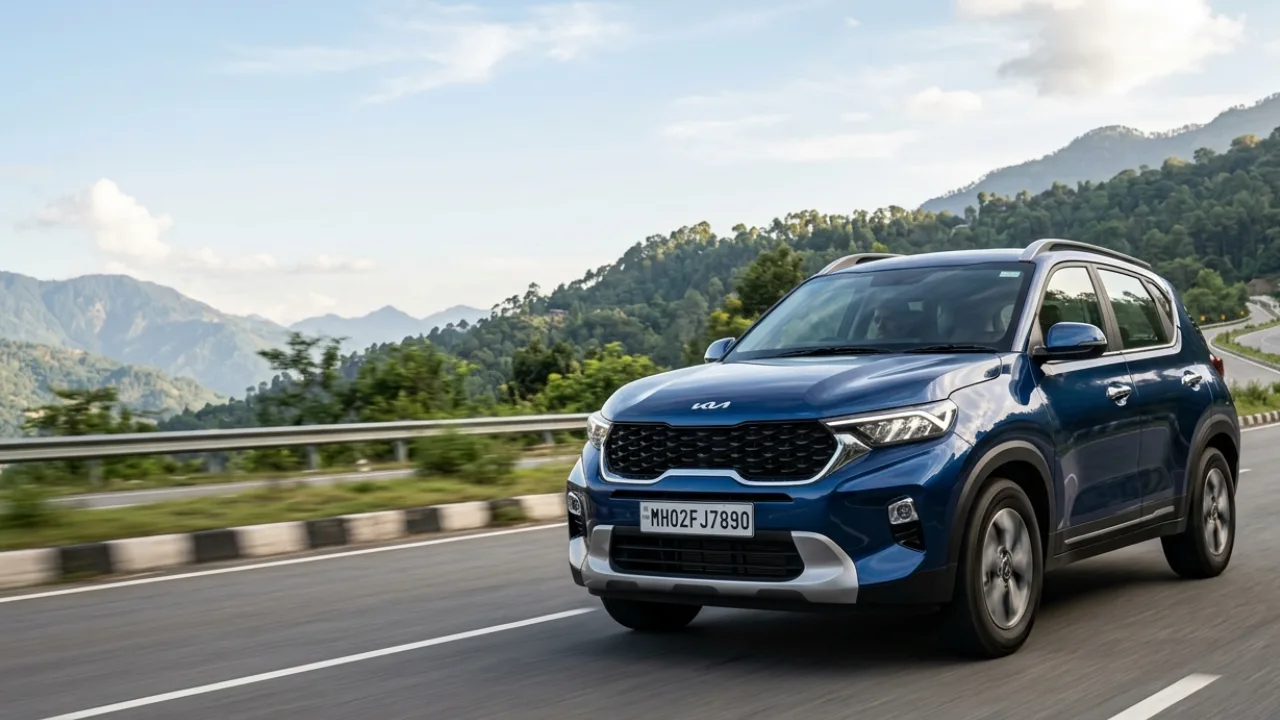
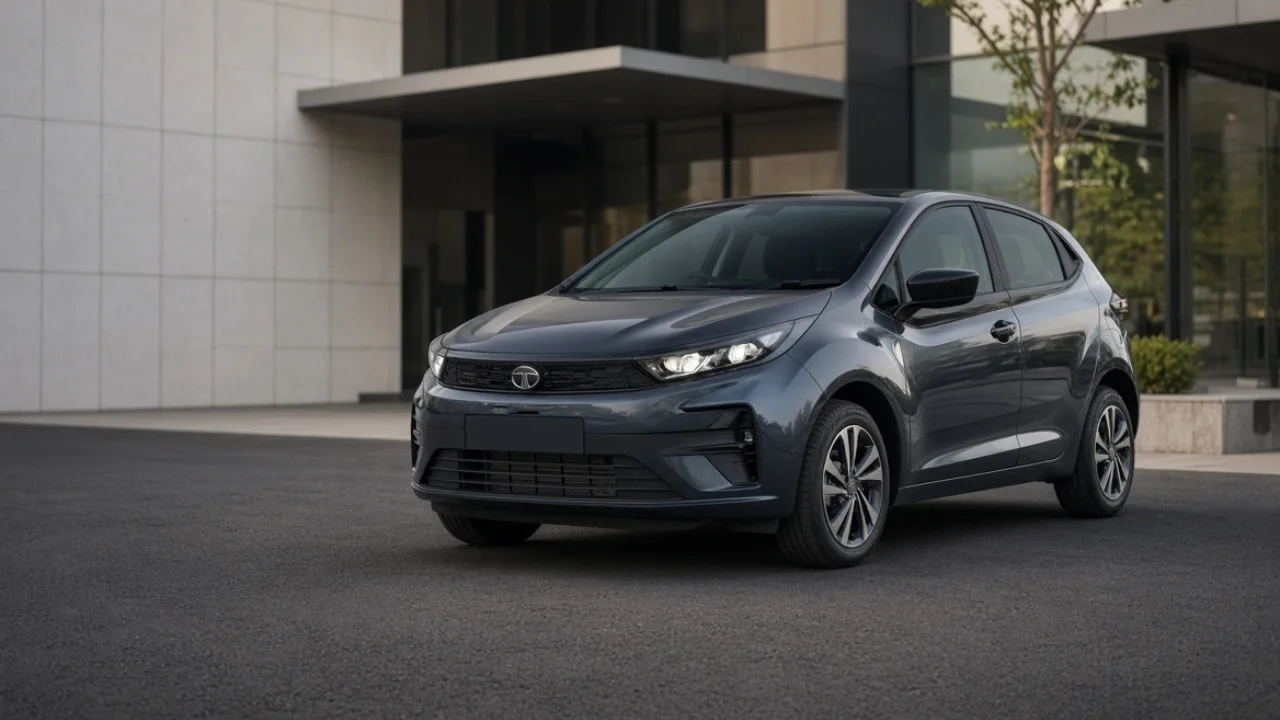
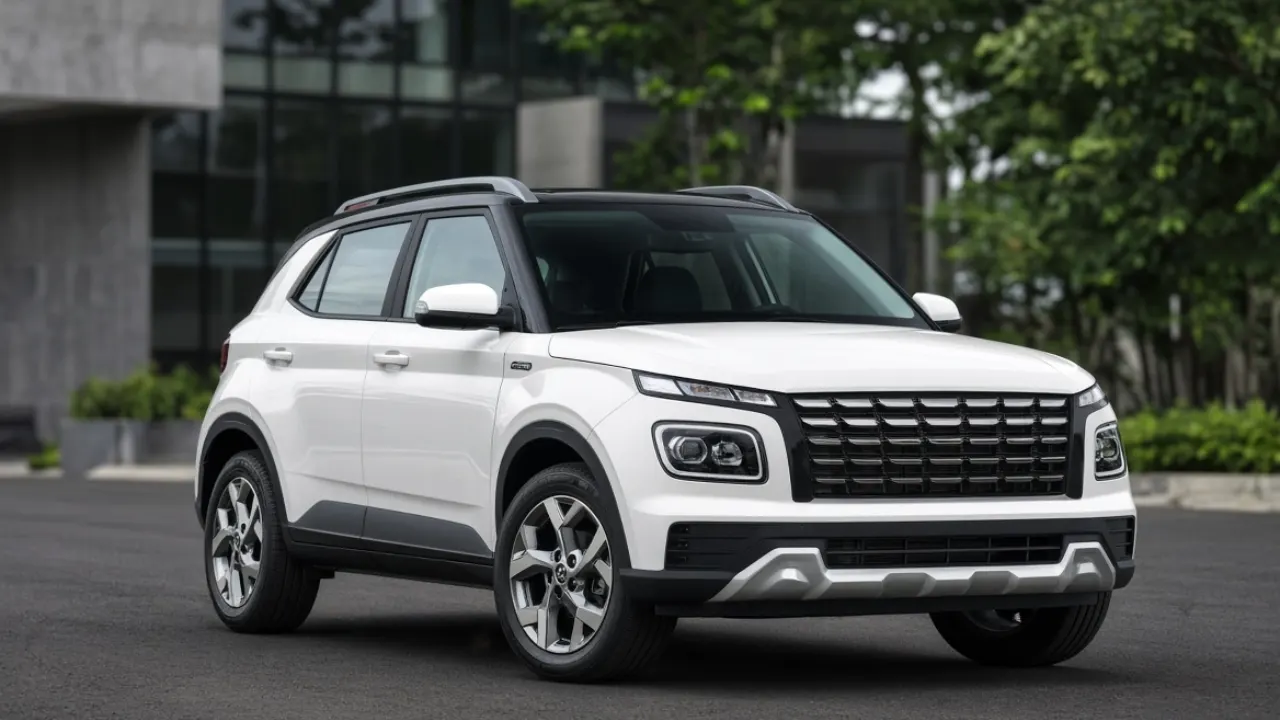
The Syros competes in a crowded Indian market that includes models such as the Tata Nexon, Hyundai Venue and Kia Sonet.
Each vehicle approaches the segment differently, so the right choice depends on priorities rather than a single headline specification.
| Buyer priority | What to compare |
|---|---|
| Rear-seat comfort | Seat adjustment, knee room and ventilation |
| Fuel economy | Certified mileage and realistic running costs |
| Automatic driving | Transmission type and city-driving behavior |
| Safety | Applicable crash-test ratings and variant equipment |
| Technology | Screen sizes, connectivity and driver assistance |
| Practicality | Boot space, seat flexibility and parking ease |
| Ownership costs | Price, service expenses, warranty and insurance |
The Syros is particularly worth examining if rear-seat comfort and cabin technology are high priorities. The Nexon and Venue should also be considered based on their current equipment and pricing, while the Sonet is a natural alternative for buyers comparing Kia’s compact SUV offerings.
A fair comparison should use current prices and equivalent variants. A base model from one manufacturer should not be compared directly with a fully equipped version from another without accounting for the equipment difference.
Pros and Cons of the 2026 Kia Syros
Advantages
- Choice of turbo-petrol and turbo-diesel engines.
- Manual and automatic transmission options.
- Flexible second-row seating on equipped variants.
- Available rear-seat ventilation.
- Modern infotainment and digital display options.
- Five-star Bharat NCAP adult and child occupant protection results for applicable tested petrol variants.
- Available panoramic sunroof and premium cabin equipment.
Limitations
- Important comfort features are restricted to selected trims.
- Actual fuel economy can differ significantly from certified figures.
- The upright exterior design may not appeal to every buyer.
- The price rises with higher trims and automatic transmissions.
- Buyers must compare variant-specific safety and technology equipment carefully.
Should You Buy the 2026 Kia Syros?
The Kia Syros makes a strong case for buyers who want a compact SUV with a practical cabin, flexible rear seating and modern technology. Its turbo-petrol and turbo-diesel engines give buyers different powertrain choices, while the availability of automatic transmissions broadens its appeal.

The rear-seat layout is a particularly useful feature for families who regularly carry passengers. Higher trims add conveniences such as ventilated seats, a panoramic sunroof and larger digital displays, although these upgrades increase the purchase price.
The main buying decision should come down to the variant, engine and total ownership cost. Buyers who mainly drive in cities should compare petrol and automatic options, while frequent long-distance drivers may want to investigate the diesel version.
Before booking, confirm the current ex-showroom price, on-road quotation, applicable mileage figure, safety equipment and warranty terms with an authorized Kia dealer.
Frequently Asked Questions
1. What is the price of the 2026 Kia Syros?
The published starting price for the Indian-market Kia Syros is approximately ₹8.42 lakh ex-showroom for the entry-level HTE. Higher variants cost more depending on equipment, engine and transmission.
2. What is the mileage of the Kia Syros?
Reported certified figures range from approximately 17.65 kmpl to 20.75 kmpl across the established petrol and diesel lineup. The exact figure depends on the powertrain and transmission, and real-world results can be lower.
3. Which engines are available in the Kia Syros?
The Syros offers a 1.0-liter turbo-petrol engine producing 120 PS and 172 Nm, and a 1.5-liter turbo-diesel producing 116 PS and 250 Nm.
4. Does the Kia Syros have an automatic transmission?
Yes. Selected petrol variants offer a seven-speed DCT, while selected diesel variants offer a six-speed torque-converter automatic.
5. Is the Kia Syros a five-seater or seven-seater?
The Kia Syros is a five-seat SUV with two rows of seats. It is not a seven-seat model.
6. What is the Bharat NCAP safety rating of the Kia Syros?
Applicable petrol variants received five stars for adult occupant protection and five stars for child occupant protection in the 2025 Bharat NCAP assessment.
7. Does the Kia Syros have a panoramic sunroof?
Yes, a dual-pane panoramic sunroof is available on selected higher variants. Lower trims may have a smaller sunroof or no sunroof, depending on the configuration.
8. Is the Kia Syros suitable for long-distance driving?
It can suit long-distance use, particularly for buyers who value its seating flexibility, comfort equipment and available diesel engine. A test drive is recommended to assess seat comfort, highway refinement and luggage capacity.
9. Is the Kia Syros available in the United States?
This article covers the Indian-market Kia Syros. Official U.S. availability has not been established by the sources used for this article, so buyers should not assume that it is sold through Kia’s U.S. retail network.
10. Which Kia Syros variant is best?
The best variant depends on the buyer’s priorities. The entry-level trim may suit budget-conscious buyers, while higher trims offer additional comfort and technology. Buyers who want an automatic transmission should compare the specific petrol DCT and diesel automatic variants before deciding.