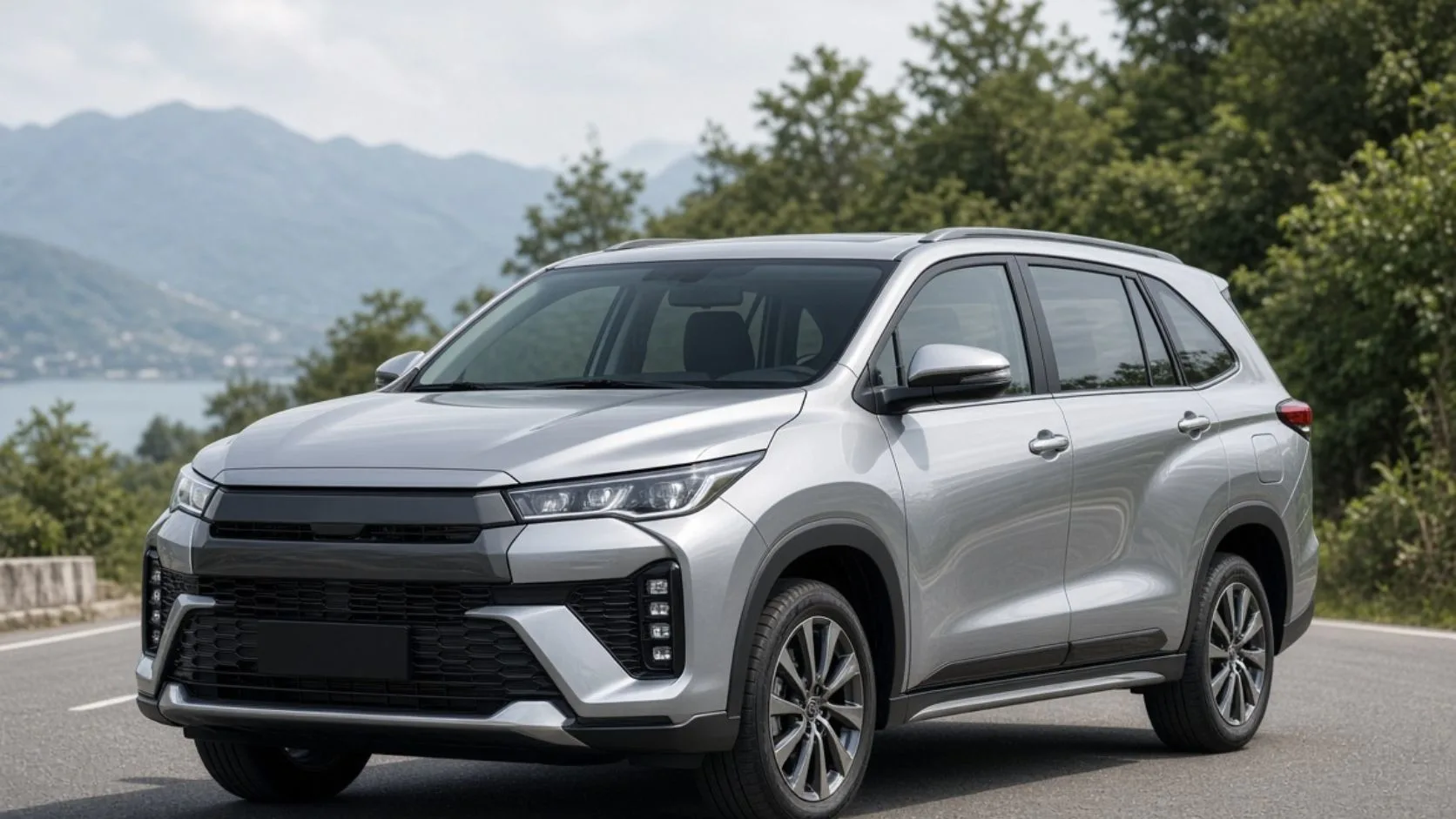
The 2026 Toyota Innova Hycross is a premium three-row MPV designed for families who want generous passenger space, modern features and better fuel efficiency without switching to a fully electric vehicle. In India, it is available with a conventional 2.0-liter petrol engine and a 2.0-liter strong-hybrid powertrain.
The biggest difference between the two versions is their approach to efficiency. The regular petrol model uses a continuously variable transmission (CVT), while the strong-hybrid version combines a gasoline engine with an electric motor and an e-CVT transmission. The hybrid can operate using electric power in suitable conditions, helping reduce petrol consumption, particularly in city traffic.
The Hycross also differs from the older Innova Crysta in its underlying construction. It uses a car-like monocoque platform and front-wheel drive rather than the Crysta’s traditional body-on-frame, rear-wheel-drive layout. This gives the Hycross a different balance of road manners, packaging and everyday usability.
This guide focuses on the Indian-market 2026 Toyota Innova Hycross, including its claimed mileage, hybrid technology, cabin features, seating arrangements, safety equipment and practical considerations for family buyers.
2026 Toyota Innova Hycross: Key Specifications
| Specification | Toyota Innova Hycross |
|---|---|
| Market covered | India |
| Body style | Three-row MPV |
| Engine | 1,987cc, four-cylinder petrol |
| Powertrain options | Petrol and strong hybrid |
| Petrol engine output | Approximately 174 PS |
| Hybrid system output | Approximately 186 PS |
| Petrol transmission | Direct Shift CVT |
| Hybrid transmission | e-CVT |
| Drive type | Front-wheel drive |
| Seating capacity | 7 or 8, depending on variant |
| Length | 4,755 mm |
| Wheelbase | 2,850 mm |
| Fuel tank | 52 liters |
| Claimed hybrid mileage | 23.24 km/l |
| Claimed petrol mileage | 16.3 km/l |
Specifications and equipment can vary by variant. The mileage figures are certified figures, not guaranteed real-world results. Buyers should verify the current model-year specifications before placing an order.
Toyota Innova Hycross Mileage: Petrol vs. Hybrid
Fuel efficiency is one of the main reasons buyers consider the Hycross hybrid instead of the regular petrol model. Both versions use a 2.0-liter engine, but the hybrid adds an electric motor and a battery to improve efficiency during suitable driving conditions.
The officially reported mileage figures are:
| Powertrain | Claimed mileage |
|---|---|
| 2.0L petrol CVT | 16.3 km/l |
| 2.0L strong hybrid e-CVT | 23.24 km/l |
These figures are based on the applicable certified testing figures reported for the Indian-market model. Actual fuel economy depends on traffic, driving style, road conditions, passenger load and air-conditioning use.
How much mileage can the hybrid deliver in real-world driving?
Real-world results can differ from certified figures. Published road-test results have recorded approximately 13.1 km/l in city driving and 16.1 km/l on highways for the hybrid under the specific test conditions.
These figures should be treated as individual test results, not a guarantee for every owner. Traffic congestion, trip length, speed and driving habits can produce different outcomes.
The hybrid’s advantage is particularly relevant in urban driving, where frequent slowing and acceleration give the electric motor more opportunities to assist the petrol engine.
Is the hybrid worth the extra cost?
The answer depends on how much you drive and how long you intend to keep the vehicle.
A buyer who regularly travels long distances or spends considerable time in city traffic may benefit more from the hybrid’s lower fuel consumption. Someone who drives relatively few kilometers each year may find it harder to recover the initial price difference through fuel savings alone.
Before choosing, compare the actual on-road prices of equivalent variants and estimate annual fuel costs using your expected mileage and local petrol price.
How the Toyota Innova Hycross Hybrid System Works
The Hycross uses Toyota’s fifth-generation self-charging strong-hybrid system. It combines a 2.0-liter gasoline engine, an electric motor, a hybrid battery and an electronically controlled power-split system.
Unlike a plug-in hybrid, the Hycross does not require an external charging connection. The system manages the battery automatically while the vehicle is being driven.
1. Electric assistance in city traffic
At low speeds and under suitable conditions, the vehicle can move using electric power alone. The petrol engine starts when additional power is required or when the system determines that it needs to run.
This is useful in slow-moving traffic, where conventional petrol engines may otherwise spend considerable time idling or operating inefficiently.
The vehicle does not remain in electric-only mode at all times. Battery charge, acceleration demand, temperature and operating conditions influence when the petrol engine runs.
2. Petrol engine and electric motor working together
During acceleration, the electric motor can assist the gasoline engine. This helps deliver responsive performance without relying exclusively on engine speed.
Toyota reports a combined hybrid-system output of approximately 186 PS. The electric motor also contributes 206 Nm of torque.
The petrol-only version produces approximately 174 PS and uses a conventional CVT automatic transmission.
3. Regenerative braking
When the driver slows down, the hybrid system can recover some of the vehicle’s kinetic energy and use it to recharge the battery.
This process is called regenerative braking. It helps reduce energy losses that would otherwise occur as heat during braking.
Regenerative braking does not eliminate fuel consumption, but it can improve overall efficiency by recovering energy during deceleration.
4. Why the hybrid does not need a charging cable
The Hycross hybrid is designed to manage its own battery charge through the engine and regenerative braking. Owners do not need a home charger or public charging station.
That makes it convenient for buyers who want hybrid technology without changing their refueling routine. The vehicle still requires petrol, and its electric driving capability is limited compared with a fully electric vehicle.
Toyota Innova Hycross Engine and Performance
The Hycross offers two powertrain choices, both based on a 1,987cc four-cylinder petrol engine.
Regular petrol engine
The petrol-only version develops approximately 174 PS and uses a Direct Shift CVT automatic transmission.
It provides a conventional petrol driving experience with automatic operation. Buyers who want the Hycross’s space and practicality without paying the hybrid premium may find this configuration suitable.
The main consideration is fuel consumption. Published road testing has found that the petrol version can use considerably more fuel than the hybrid, especially in urban traffic.
Strong-hybrid powertrain
The hybrid combines the petrol engine with an electric motor and an e-CVT transmission. Toyota quotes approximately 186 PS for the combined system.
The additional electric assistance can make the vehicle feel responsive at lower speeds, while the system automatically switches between available power sources.
An e-CVT is different from a conventional stepped automatic transmission. It manages engine and motor power electronically, so acceleration may not feel like a traditional gearbox shifting through fixed ratios.
Under hard acceleration, engine speed can rise noticeably. Buyers should test-drive both powertrains if they are uncertain which driving character they prefer.
2026 Toyota Innova Hycross Exterior Design
The Innova Hycross combines the proportions of a family MPV with SUV-inspired styling. Its large front grille, raised bonnet line, sculpted bodywork and prominent wheel arches give it a more upright appearance than a conventional low-roof people carrier.
Its overall length of 4,755 mm and wheelbase of 2,850 mm provide the footprint needed for a three-row cabin.
Exterior equipment depends on the variant and can include:
- LED headlamps and daytime running lights
- Alloy wheels in different sizes
- Electrically adjustable exterior mirrors
- Roof-mounted rear air-conditioning vents
- A power back door on selected higher variants
The top variants offer larger 18-inch alloy wheels, while other versions use smaller wheel-and-tyre configurations.
The Hycross’s styling may appeal to buyers who want an MPV that looks more substantial than a conventional family van. However, its size also means that drivers should pay attention to parking space, turning room and visibility in narrow urban streets.
Toyota Innova Hycross Interior and Cabin Features
The interior is designed around family comfort, passenger access and everyday convenience. Depending on the variant, the Hycross offers a combination of touchscreen infotainment, automatic climate control, connected-car functions and premium seating equipment.
The range is not uniformly equipped. Entry-level models focus on essential functions, while higher variants offer more comfort and technology.
Infotainment and connectivity
Depending on the trim, equipment includes a touchscreen infotainment system with Apple CarPlay and Android Auto support.
These features allow compatible smartphones to provide navigation, music, calls and other supported applications through the vehicle’s display.
Higher variants offer additional convenience equipment and a more premium cabin specification. Buyers should check the exact screen size, connected services and audio equipment for the variant they are considering.
Panoramic sunroof
A panoramic sunroof is available on higher-specification variants. It allows more natural light into the cabin and can make the interior feel more open.
It is a comfort feature rather than a direct improvement in passenger space. Buyers should also check how the sunroof affects their preferred seating position and headroom.
Ventilated front seats
Ventilated front seats are available on selected variants. The system circulates air through the seat to help occupants stay comfortable in warm conditions.
This feature can be particularly useful in hot Indian weather, although its effectiveness depends on cabin temperature, clothing and the ventilation settings.
Powered driver’s seat and ottoman seats
Higher-specification versions offer an eight-way power-adjustable driver’s seat with memory functionality.
Selected hybrid variants also feature powered ottoman seats in the second row. These seats provide additional leg support and are intended to improve comfort for rear passengers.
Their availability is trim-specific, so buyers should not assume that every seven-seat Hycross includes this equipment.
Toyota Innova Hycross Space and Seating
Space is central to the Hycross’s appeal. It is available in seven-seat and eight-seat layouts, depending on the variant.
The seven-seat configuration typically uses separate captain’s chairs in the second row, while eight-seat versions provide a second-row bench for an additional passenger.
First-row comfort
The front seats offer a relatively elevated driving position and the controls are arranged for conventional everyday use. The driver’s seat adjustment options vary by trim.
During a test drive, check the steering-wheel adjustment, seat support, pedal position and forward visibility. These factors can have a significant effect on comfort during longer journeys.
Second-row space
The second row is particularly important for families who regularly travel with adults in the back.
Captain’s chairs in the seven-seat configuration offer individual seating positions, while the bench arrangement in eight-seat versions prioritizes the ability to carry an additional passenger.
Higher variants with ottoman seats place greater emphasis on rear-seat comfort. However, buyers should assess the actual seating position and legroom in person rather than selecting a configuration based solely on its feature list.
Third-row practicality
The third row provides additional passenger capacity, making the Hycross useful for larger families and group travel.
As with other three-row vehicles, comfort depends on passenger height, how the middle row is positioned and the duration of the journey.
If you expect to carry seven people regularly, take the entire family along for a test drive. Check the ease of getting into the rear seats, knee room, headroom and access to the seat belts.
Boot space with all seats in use
Luggage capacity is an important consideration when travelling with a full passenger load.
The amount of usable space depends on the seating configuration and how the third row is positioned. Large suitcases may require careful packing when every seat is occupied.
For families who regularly travel with seven passengers and substantial luggage, check the actual boot space at a dealership. A vehicle can have generous cabin room while still requiring compromises in luggage capacity when all three rows are being used.
Toyota Innova Hycross Safety Features
The Hycross includes a range of passive and active safety equipment, with additional technology available on selected variants.
The model has received a five-star Bharat New Car Assessment Programme (Bharat NCAP) rating, according to published automotive assessment information. Buyers should confirm the applicable test report and the precise vehicle configuration covered by the rating.
Standard safety equipment
The published Indian-market specifications list six airbags, anti-lock braking with electronic brakeforce distribution, vehicle stability control, hill-start assistance and ISOFIX child-seat mounting points.
These features address different safety needs. Airbags provide additional protection in certain collisions, while stability control helps the driver maintain directional control in situations where a vehicle might otherwise skid.
ISOFIX mounting points help secure compatible child seats. Parents should use a suitable child restraint and follow its installation instructions.
Toyota Safety Sense
Selected higher-specification versions offer Toyota Safety Sense driver-assistance technology.
Depending on the equipment specification, this package can include:
- Dynamic radar cruise control
- Lane-tracing assistance
- Pre-collision system
- Automatic high-beam assistance
The purpose of these systems is to assist the driver, not replace attention or judgement. Their operation may depend on road markings, traffic conditions, visibility and other environmental factors.
A reversing camera and parking assistance equipment are also available according to variant.
Before purchasing, compare the complete safety equipment list for the exact trim. The presence of a feature on a top-specification model does not mean it is included throughout the range.
Toyota Innova Hycross Price in India
The Hycross is positioned as a premium family MPV. Published Indian-market prices have placed the entry-level petrol version at approximately ₹18.70 lakh ex-showroom, with the range-topping hybrid ZX (O) listed at approximately ₹31.84 lakh ex-showroom in the cited lineup.
These figures are reference prices, not a guaranteed quotation for every 2026 model or location. Toyota can revise prices, and availability may differ by variant and dealership.
The main factors affecting the price include:
- Petrol or strong-hybrid powertrain
- Seven-seat or eight-seat configuration
- Infotainment and comfort equipment
- Driver-assistance features
- Wheel and exterior equipment
- Variant-specific convenience features
The on-road price will generally be higher than the ex-showroom price because it can include registration, insurance and other applicable charges.
Check the latest Toyota price list and request a written quotation from an authorized dealer before making a purchase decision.
Toyota Innova Hycross vs. Innova Crysta
The Hycross and Crysta serve a similar broad purpose, but their engineering and powertrain approaches differ.
| Feature | Innova Hycross | Innova Crysta |
|---|---|---|
| Construction | Monocoque | Body-on-frame |
| Main powertrain focus | Petrol and strong hybrid | Diesel |
| Drive layout | Front-wheel drive | Rear-wheel drive |
| Transmission | CVT or e-CVT, depending on engine | Manual, depending on variant |
| Main appeal | Hybrid efficiency and family comfort | Traditional diesel MPV character |
The Hycross is the more relevant choice for buyers who want a petrol-hybrid option, modern cabin technology and a car-like platform.
The Crysta may appeal to buyers who prefer a diesel powertrain and traditional body-on-frame construction. The right choice depends on availability, usage, passenger requirements and ownership costs.
These differences matter more than simply comparing the two vehicles by their names or exterior appearance.
Pros and Limitations of the 2026 Toyota Innova Hycross
Advantages
- Strong-hybrid powertrain with a certified mileage figure of 23.24 km/l.
- No external charging required for the hybrid battery.
- Seven-seat and eight-seat configurations, depending on variant.
- Spacious three-row layout suited to family use.
- Premium comfort features on higher trims.
- Six airbags listed in the Indian-market specifications.
- Available driver-assistance technology on selected variants.
Limitations
- Hybrid variants cost more than comparable entry-level petrol versions.
- Actual fuel economy can differ from certified figures.
- Premium features are restricted to selected trims.
- Third-row luggage capacity needs careful consideration when all seats are occupied.
- The vehicle’s overall dimensions can make tight parking spaces challenging.
- The petrol-only version may be less attractive to buyers prioritizing fuel economy.
Is the 2026 Toyota Innova Hycross Worth Buying?
The Innova Hycross is worth considering if your priorities include family space, automatic transmission, modern comfort features and the option of a fuel-efficient hybrid powertrain.
The strong hybrid is particularly appealing for buyers who spend substantial time in city traffic and want to reduce petrol consumption without needing to plug in a vehicle. The petrol version remains an alternative for buyers who want the same broad MPV format at a lower initial price.
The seven-seat configuration may be more suitable for families who prioritize second-row comfort, while the eight-seat layout can be useful when carrying an additional passenger matters more than having separate second-row captain’s chairs.
Before deciding, compare the real price difference between equivalent variants, estimate your annual fuel expenditure and inspect the cabin with the number of passengers you expect to carry.
The best version is the one that fits your passenger, luggage and driving requirements—not necessarily the most expensive trim.
Frequently Asked Questions
1. What is the mileage of the 2026 Toyota Innova Hycross?
The published certified mileage figures for the Indian-market model are 16.3 km/l for the petrol CVT and 23.24 km/l for the strong-hybrid e-CVT. Actual results vary with driving conditions and usage.
2. Does the Toyota Innova Hycross have a diesel engine?
The Hycross lineup discussed in this article offers petrol and petrol-strong-hybrid powertrains. It does not offer the diesel engine associated with the Innova Crysta.
3. Does the Innova Hycross hybrid need charging?
No. Its self-charging strong-hybrid system replenishes the battery through the engine and regenerative braking. It does not require a plug-in charging connection.
4. How much power does the Innova Hycross produce?
The regular petrol engine produces approximately 174 PS, while the strong-hybrid system has a combined output of approximately 186 PS.
5. Is the Toyota Innova Hycross available with an automatic transmission?
Yes. The petrol model uses a CVT automatic, while the strong-hybrid model uses an e-CVT transmission.
6. Is the Innova Hycross a seven-seater or an eight-seater?
Both seating configurations are available, depending on the variant. Higher-specification versions are offered with seven seats, while selected variants offer seven- or eight-seat layouts.
7. Does the Innova Hycross have a panoramic sunroof?
Yes. A panoramic sunroof is available on selected higher-specification variants.
8. Is the Toyota Innova Hycross safe?
The model has received a five-star Bharat NCAP rating according to published assessment information. Equipment varies by variant, so buyers should check the applicable rating report and safety features before purchase.
9. What is the price of the 2026 Toyota Innova Hycross?
Published ex-showroom reference prices have ranged from approximately ₹18.70 lakh for the entry-level petrol version to approximately ₹31.84 lakh for the top-specification hybrid in the cited lineup. Current prices should be confirmed with Toyota because they can change.
10. Is the Innova Hycross suitable for long family trips?
Its three-row cabin, available automatic transmissions and family-oriented comfort equipment make it a relevant choice for long journeys. Buyers should test the third-row seating and luggage capacity with their expected passenger load.