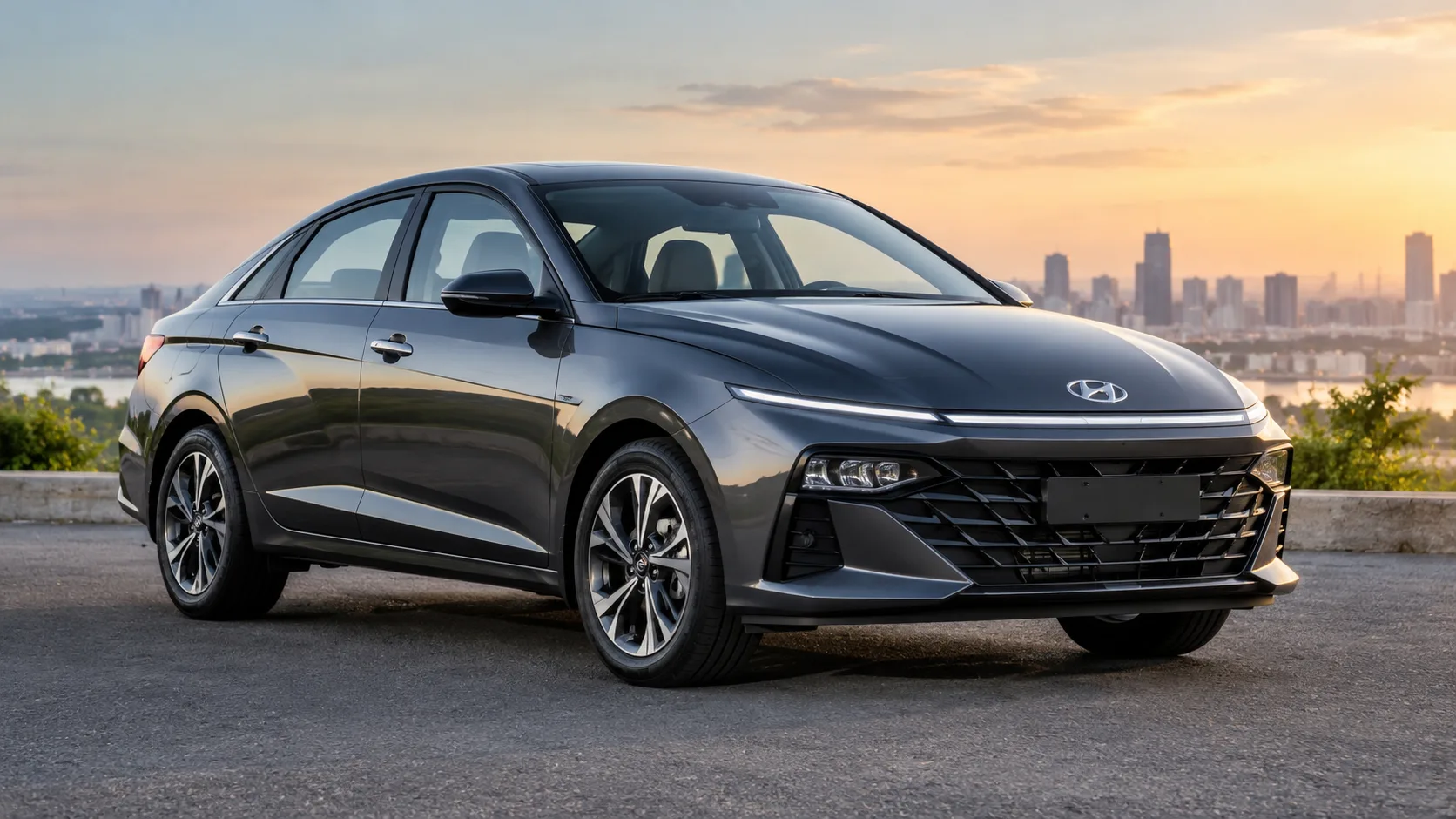
The 2026 Hyundai Verna is a midsize sedan aimed at buyers who want a comfortable family car with modern technology, strong turbo-petrol performance and a spacious cabin. In India, the Verna competes with sedans such as the Honda City, Volkswagen Virtus and Skoda Slavia.
The current-generation Verna introduced a more distinctive exterior design, a wide dashboard display layout and a choice of naturally aspirated and turbocharged petrol engines. Its appeal comes from the combination of everyday practicality, premium features and the option of a more powerful engine in higher variants.
For buyers considering the 2026 model, the main questions are straightforward: How much does it cost, what mileage can you expect, which safety features are available, and which variant offers the best balance of equipment and value?
This guide focuses on the Indian-market Hyundai Verna. Prices, equipment and availability can vary by variant and may change during the model year, so the latest dealer quotation should be confirmed before booking.
2026 Hyundai Verna: Key Details
| Specification | Details |
|---|---|
| Market | India |
| Body style | Midsize sedan |
| Seating capacity | 5 |
| Petrol engine options | 1.5-liter naturally aspirated and 1.5-liter turbo-petrol |
| Maximum power | 115 PS / 160 PS |
| Maximum torque | 143.8 Nm / 253 Nm |
| Transmission options | 6-speed manual, IVT and 7-speed DCT, depending on engine and variant |
| Fuel type | Petrol |
| Length | 4,535 mm |
| Width | 1,765 mm |
| Wheelbase | 2,670 mm |
| Boot capacity | 528 liters |
| Drive layout | Front-wheel drive |
The specifications above describe the established Indian-market Verna range. Equipment and powertrain availability should be checked against the precise 2026 variant being sold.
2026 Hyundai Verna Price in India
Hyundai introduced the updated 2026 Verna in India on March 9, 2026, with changes to the exterior design, cabin equipment and safety technology. The sedan retains its two petrol engine options while adopting the HX2, HX4, HX6, HX6+, HX8 and HX10 variant naming system.
The official starting ex-showroom price is ₹10,99,200. The final price depends on the selected variant, transmission and optional equipment.
Variant-wise ex-showroom prices
| Variant | Petrol manual | Petrol automatic (IVT) | Turbo-petrol manual | Turbo-petrol automatic (DCT) |
|---|---|---|---|---|
| HX2 | ₹10.99 lakh | — | — | — |
| HX4 | ₹12.25 lakh | — | — | — |
| HX6 | ₹13.19 lakh | ₹14.40 lakh | — | — |
| HX6+ | ₹13.81 lakh | ₹15.02 lakh | — | — |
| HX8 | ₹14.88 lakh | ₹16.09 lakh | ₹16.28 lakh | ₹17.62 lakh |
| HX10 | — | ₹17.15 lakh | — | ₹18.25 lakh |
Prices are rounded and based on the manufacturer’s published launch price list. Dual-tone paint options and subsequent price revisions can change the amount payable.
Ex-showroom prices exclude registration, insurance and other applicable charges. The on-road price will therefore be higher and will vary by city.
2026 Hyundai Verna Mileage
The Verna offers two petrol engines, and their fuel efficiency varies according to the transmission.
Published ARAI-certified figures for the established powertrain lineup are approximately 18.6 kmpl for the naturally aspirated petrol manual, 19.6 kmpl for the naturally aspirated petrol IVT and up to 20.6 kmpl for the turbo-petrol DCT.
| Engine and transmission | Claimed mileage |
|---|---|
| 1.5L MPi petrol manual | Approximately 18.6 kmpl |
| 1.5L MPi petrol IVT | Approximately 19.6 kmpl |
| 1.5L Turbo GDi petrol manual | Approximately 20.0 kmpl |
| 1.5L Turbo GDi petrol 7-speed DCT | Up to 20.6 kmpl |
These are certified figures, not guaranteed real-world results. Actual fuel economy depends on traffic, road conditions, driving style, air-conditioning use and vehicle load.
Which Verna engine offers better mileage?
The naturally aspirated petrol engine is a sensible option for buyers who prioritize everyday usability and predictable running costs. Its manual transmission may suit drivers who prefer greater control, while the IVT automatic can make stop-and-go traffic less tiring.
The turbo-petrol engine offers more power, but it is worth choosing primarily for its stronger performance rather than assuming it will always consume less fuel.
If your daily commute involves heavy congestion, test-drive the IVT and consider how it responds in slow traffic. For regular highway driving, compare the engine’s flexibility, overtaking performance and actual fuel costs before deciding.
2026 Hyundai Verna Engine and Performance
The sedan’s two engines cater to different driving preferences. Both are four-cylinder petrol units, but their power delivery is noticeably different.
1.5-liter MPi naturally aspirated petrol
The standard 1.5-liter MPi engine produces 115 PS and 143.8 Nm of torque.
It is designed for everyday driving, including commuting, family trips and highway journeys at legal speeds. Because it does not use a turbocharger, its power delivery is more straightforward than that of the turbocharged engine.
Transmission options include a six-speed manual and an intelligent variable transmission (IVT), depending on the variant.
The IVT is an automatic transmission designed to deliver smooth acceleration without conventional fixed gear changes. It can be particularly convenient for drivers who regularly encounter traffic congestion.
1.5-liter Turbo GDi petrol
The 1.5-liter Turbo GDi engine produces 160 PS and 253 Nm of torque. It is the more performance-oriented option in the range.
Its turbocharger helps generate substantial torque at relatively low engine speeds, which can make acceleration and highway overtaking more responsive.
The engine is available with a six-speed manual transmission or a seven-speed dual-clutch transmission (DCT), depending on the variant.
A DCT uses two clutches to manage gear changes, allowing rapid shifts under suitable conditions. It offers a sportier driving character than a conventional continuously variable transmission, although low-speed behavior and long-term running costs should be considered as part of the ownership decision.
Engine specifications compared
| Specification | 1.5L MPi petrol | 1.5L Turbo GDi petrol |
|---|---|---|
| Displacement | 1,497 cc | 1,482 cc |
| Maximum power | 115 PS | 160 PS |
| Maximum torque | 143.8 Nm | 253 Nm |
| Manual transmission | 6-speed | 6-speed |
| Automatic transmission | IVT | 7-speed DCT |
| Best suited to | Everyday driving | Buyers prioritizing performance |
The standard petrol engine is adequate for ordinary commuting and family use. The turbo version is more appealing if you frequently drive on highways or want stronger acceleration.
2026 Hyundai Verna Exterior Design
The 2026 update gives the Verna a revised appearance without replacing the underlying generation.
The front end features a black chrome radiator grille, dual LED projector headlamps and redesigned bumper styling. New 16-inch diamond-cut alloy wheels add to the sedan’s visual appeal, while the overall shape retains its long bonnet, sloping roofline and connected lighting elements.
The updated model is 4,565 mm long, 1,765 mm wide and 1,475 mm tall, with a 2,670 mm wheelbase.
These dimensions contribute to its spacious cabin and substantial road presence. The long wheelbase is particularly relevant to rear-seat comfort, although seating comfort also depends on seat design and passenger proportions.
The available exterior colors include Atlas White, Titanium Black, Titan Grey, Starry Night, Classy Blue and Titan Grey Matte, with a white-and-black dual-tone option on selected variants.
Feature availability and color choices can differ by trim.
2026 Hyundai Verna Interior and Comfort
The cabin combines a contemporary dashboard layout with technology and comfort features intended to make the sedan suitable for daily use and longer journeys.
A key feature is the integrated dual-display setup, comprising a 10.25-inch infotainment screen and a 10.25-inch digital instrument display on equipped variants.
The infotainment screen handles compatible media, navigation and smartphone functions, while the instrument display presents driving information. The layout gives the dashboard a more modern appearance without removing the familiar steering wheel and conventional driving controls.
Interior features
Depending on the variant, the Verna offers equipment such as:
- Dual 10.25-inch displays
- Automatic climate control
- Wireless phone charging
- Push-button start and smart key
- Leatherette seat upholstery
- Rear AC vents
- Rear window sunshade
- Electrically adjustable driver’s seat on selected trims
- Ventilated front seats on selected trims
- Bose eight-speaker premium audio system
- Ambient lighting
- Rear center armrest with cupholders
The exact combination of features varies by trim. Buyers should compare the HX6, HX6+, HX8 and HX10 equipment lists carefully before paying extra for a higher variant.
Rear-seat comfort and boot space
The Verna’s 2,670 mm wheelbase supports a spacious cabin, making the sedan relevant for families who frequently carry rear passengers.
Rear AC vents and a center armrest improve convenience on longer trips. The rear window sunshade can also help reduce direct sunlight entering the cabin.
The boot capacity is listed at 528 liters in the established Verna specifications, providing useful room for suitcases and everyday luggage. Buyers who regularly travel with several passengers should still check how easily their luggage fits, particularly when carrying bulky items.
The low sedan body can make loading large objects less convenient than in an SUV, even when the total luggage capacity is generous.
2026 Hyundai Verna Safety Features
Safety is one of the major areas addressed in the 2026 update. Hyundai added further equipment to the Verna’s existing safety package, including a center-side airbag, dashcam and advanced driver-assistance functions on applicable variants.
The updated model’s safety equipment includes:
- Six airbags as standard
- Seven airbags on equipped variants
- Electronic stability control
- Vehicle stability management
- Anti-lock braking system with electronic brakeforce distribution
- Hill-start assist control
- ISOFIX child-seat mounting points
- Three-point seatbelts and reminders for all seats
- Rear parking sensors
- Tyre-pressure monitoring on selected variants
- Rain-sensing wipers on equipped variants
- Electronic parking brake with auto hold on selected variants
- Dashcam on applicable variants
- Surround-view camera and blind-view monitoring on equipped variants
These features are not all standard across the lineup. The specific equipment should be verified against the variant being purchased.
What does the seven-airbag system add?
The seven-airbag configuration includes driver and passenger airbags, side and curtain airbags, and a center-side airbag.
The center-side airbag is designed to help reduce contact between front occupants during certain side-impact crashes. It complements the other airbags rather than replacing seatbelts or the vehicle’s structural safety systems.
Airbag count alone does not establish how well a vehicle protects occupants in every type of crash. Crash-test performance, restraint systems and structural integrity all matter.
Does the 2026 Hyundai Verna have ADAS?
Yes. Selected variants offer Hyundai SmartSense Level 2 advanced driver-assistance systems, with a package advertised as including 20 functions.
Depending on the configuration, these can include forward collision warning, forward collision-avoidance assistance, lane-keeping assistance, lane-departure warning, adaptive cruise control and other driver-support functions.
A surround-view monitor and blind-view monitor are also available on equipped versions. These camera systems help the driver assess nearby obstacles and traffic, particularly when parking or changing lanes.
ADAS does not make the vehicle self-driving. Drivers must remain attentive, keep their hands and attention appropriately engaged, and be ready to intervene when the system cannot respond safely.
What is the Verna’s safety rating?
The previous-generation Verna received a five-star Global NCAP rating under the protocol used for its 2023 assessment. However, that result should not automatically be treated as a separate crash-test rating for the updated 2026 model.
The addition of airbags and driver-assistance features is relevant to the safety package, but it is not a substitute for a fresh crash-test result under the applicable assessment protocol.
Buyers should distinguish between a manufacturer’s safety-equipment list and an independently verified crash-test rating.
2026 Hyundai Verna Technology and Convenience
Beyond its engine and safety equipment, the Verna offers features aimed at making daily driving more convenient.
Infotainment and smartphone connectivity
The touchscreen infotainment system supports compatible smartphone integration. Depending on the variant and setup, users can access supported navigation, music, calls and other applications.
Wireless connectivity availability can differ by trim and may require a compatible phone or adapter. Buyers should verify the exact configuration rather than assume every version offers the same wireless functionality.
Surround-view camera
The surround-view monitor combines images from multiple cameras to provide a view of the area around the vehicle. This can help when maneuvering into tight parking spaces or moving through confined areas.
It is a driver aid rather than a replacement for mirrors, direct observation or parking sensors.
Dashcam
The integrated dashcam can record driving footage, depending on the installed system and its configuration. Such footage may be useful for reviewing incidents, although recording functionality, storage and operating requirements should be checked in the vehicle documentation.
Comfort and driving modes
Selected variants offer drive modes such as Normal, Eco and Sport. These adjust aspects of the car’s response to suit different driving preferences.
Eco mode prioritizes efficiency-oriented responses, while Sport mode sharpens the driving character. Neither mode can guarantee a particular fuel economy or performance result under all conditions.
2026 Hyundai Verna vs Honda City, Volkswagen Virtus and Skoda Slavia
The Verna competes in a segment where buyers can choose between comfort-focused family sedans and models with a stronger emphasis on driving engagement.
| Model | Main consideration |
|---|---|
| Hyundai Verna | Broad feature list, two petrol engines and strong turbo-petrol output |
| Honda City | A family-oriented sedan with a naturally aspirated petrol engine and hybrid availability in selected versions |
| Volkswagen Virtus | A sedan with turbo-petrol powertrains and a more European-style driving character |
| Skoda Slavia | A turbo-petrol sedan emphasizing performance and everyday practicality |
The comparison depends on the exact variants and model years being considered. Prices, safety equipment, warranty terms and transmission availability should be compared within the same market and at the same point in time.
The Verna may suit buyers who prioritize a long equipment list and the choice between naturally aspirated and turbo-petrol engines. The City may appeal to buyers interested in its hybrid option, while the Virtus and Slavia are worth considering for those who place particular emphasis on turbo-petrol driving characteristics.
A test drive in each shortlisted model is more useful than choosing on specifications alone.
Which 2026 Hyundai Verna Variant Should You Buy?
The best variant depends on your budget, driving pattern and the equipment you genuinely need.
HX2: The entry-level option is worth considering if you want the Verna’s core sedan package without paying for premium features.
HX4: This variant may suit buyers who want a step up from the base model while retaining the naturally aspirated petrol manual powertrain.
HX6: A useful starting point for buyers who want more convenience equipment and the option of the IVT automatic.
HX6+: Worth examining if you value additional cabin comfort and premium equipment over the lower trims.
HX8: The most relevant choice for buyers who want access to the turbo-petrol engine, along with a broader selection of comfort and technology features.
HX10: The range-topping choice for buyers who prioritize additional equipment and want the highest-specification configuration available with the applicable powertrain.
Before choosing, compare the exact feature list, transmission and on-road price. Some features, particularly those associated with the turbo-petrol powertrain and advanced safety package, are restricted to selected variants.
Pros and Limitations of the 2026 Hyundai Verna
Advantages
- Two petrol engines to suit different driving preferences.
- Turbo-petrol engine producing 160 PS and 253 Nm.
- Manual and automatic transmission choices.
- Spacious five-seat cabin and 528-liter boot in established specifications.
- Dual 10.25-inch displays on equipped variants.
- Seven-airbag configuration available on selected trims.
- Level 2 ADAS available on applicable variants.
- Useful comfort and parking technologies on higher trims.
Limitations
- No diesel or factory-fitted CNG option in the described lineup.
- Turbo-petrol and premium safety features require higher-specification variants.
- Real-world mileage can be substantially lower than certified figures.
- A sedan’s low body can be less convenient than an SUV on severely damaged roads.
- Feature availability and prices can vary across variants and model updates.
Is the 2026 Hyundai Verna Worth Buying?
The 2026 Hyundai Verna is a strong option for buyers who want a feature-rich petrol sedan with a spacious cabin, modern infotainment and the choice of a comfortable naturally aspirated engine or a more powerful turbo-petrol unit.
Its updated safety equipment, including available seven airbags and Level 2 ADAS, strengthens the case for considering higher-specification variants. The 528-liter boot and rear-seat amenities also make it practical for family travel.
The main decision is which powertrain and trim best suit your use. The naturally aspirated petrol version is the more straightforward choice for daily commuting, while the turbo-petrol engine is better suited to buyers who prioritize acceleration and overtaking performance.
Compare the latest ex-showroom and on-road prices, verify the equipment on the exact variant, and take a test drive before making a final decision.
Frequently Asked Questions
1. What is the price of the 2026 Hyundai Verna in India?
The updated Verna’s published starting ex-showroom price is ₹10,99,200. The price rises with higher variants, automatic transmissions and additional equipment.
2. What is the mileage of the 2026 Hyundai Verna?
Published certified figures for the established range are approximately 18.6 kmpl for the naturally aspirated petrol manual, 19.6 kmpl for the IVT and up to 20.6 kmpl for the turbo-petrol DCT. Actual mileage depends on driving conditions.
3. How many engine options does the Verna offer?
The Indian-market Verna offers two petrol engines: a 1.5-liter naturally aspirated MPi engine and a 1.5-liter Turbo GDi engine.
4. How much power does the turbo-petrol Verna produce?
The 1.5-liter Turbo GDi engine produces 160 PS and 253 Nm of torque.
5. Does the 2026 Verna have an automatic transmission?
Yes. The naturally aspirated petrol engine is available with an IVT automatic, while the turbo-petrol engine is available with a seven-speed DCT automatic on selected variants.
6. Is the Hyundai Verna a safe car?
The 2026 model offers six airbags as standard and a seven-airbag configuration on equipped variants, along with electronic stability systems and other safety technologies. Its ADAS package is available on selected trims. The previous-generation Global NCAP rating should not be treated as a new crash-test rating for the 2026 update.
7. Does the 2026 Verna offer ADAS?
Yes. Selected variants include Hyundai SmartSense Level 2 ADAS, with functions designed to assist with collision avoidance, lane guidance and adaptive cruise control. The driver must remain responsible for the vehicle at all times.
8. What is the boot space of the Hyundai Verna?
The established Verna specifications list a boot capacity of 528 liters, making it useful for everyday luggage and family trips.
9. Is the 2026 Hyundai Verna available with a diesel engine?
No diesel engine is included in the Indian-market lineup described here. The sedan is offered with naturally aspirated and turbocharged petrol engines.
10. Which is the best 2026 Hyundai Verna variant?
The right variant depends on your needs. HX2 is the entry-level option, HX6 offers access to the IVT automatic, and HX8 or HX10 are worth considering if you want the turbo-petrol engine or more premium equipment.