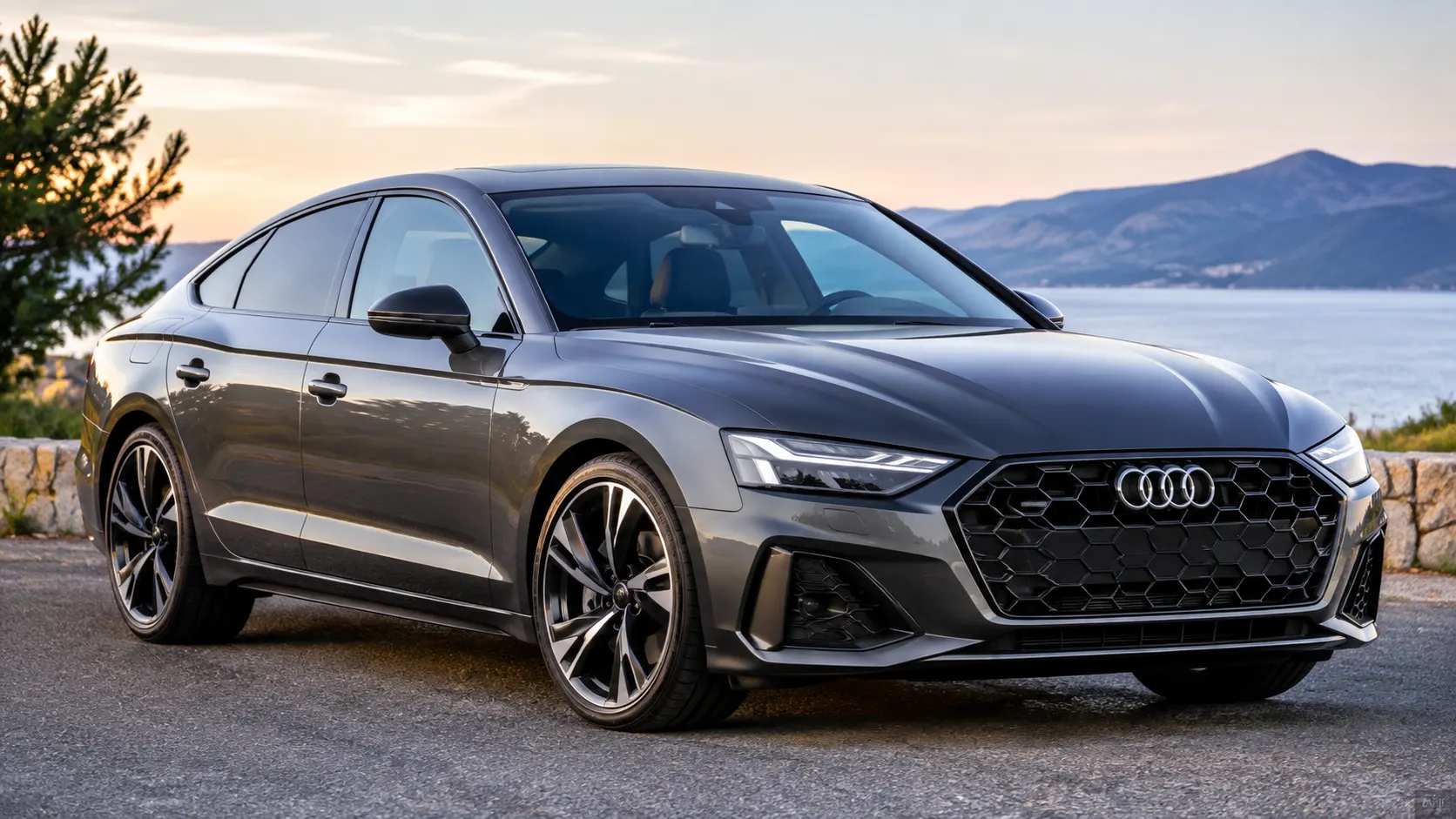
The latest Audi A5 brings a significant change to Audi’s midsize car lineup. The new-generation model takes over the role previously occupied by the A4, combining a sleek sedan-style body with a liftback tailgate, a technology-focused cabin, and a choice of turbocharged petrol and diesel engines in selected markets.
For buyers, the A5’s appeal goes beyond its styling. Engine availability, fuel economy, mild-hybrid assistance, plug-in hybrid options, and luggage space all depend on the country and body style. The European lineup, for example, is different from the version sold in the United States.
This guide focuses on the latest-generation Audi A5 and explains its powertrain choices, official fuel-consumption figures, cabin technology, and everyday practicality. It also distinguishes the standard A5 from the more powerful S5 and identifies where specifications vary by market.
Audi A5 at a Glance
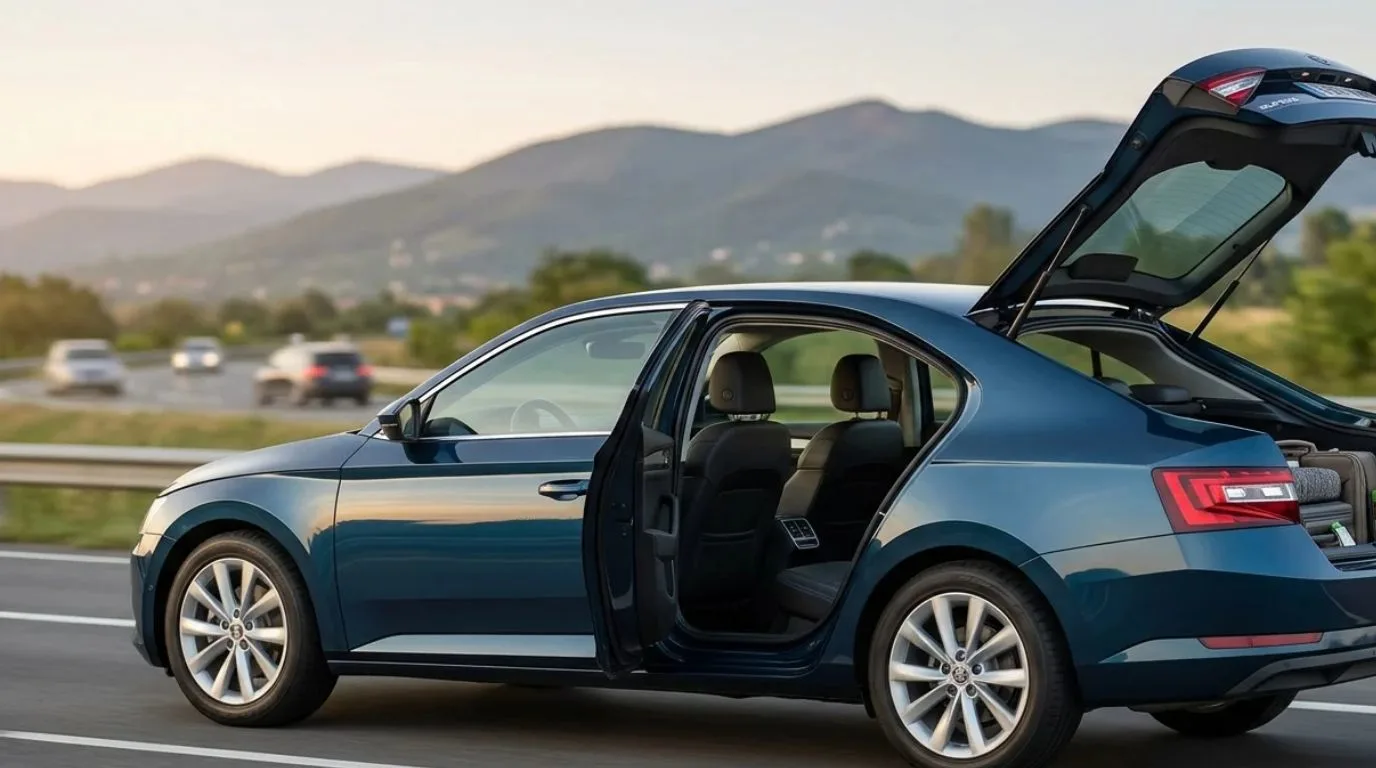
The current-generation A5 is available as a Sedan and Avant in major European markets. Despite the Sedan name, its rear hatch opens together with the rear window, giving it a more useful luggage opening than a conventional sedan with a separate trunk lid. The Avant is the estate version, designed for buyers who need additional load-carrying flexibility.

Audi introduced this generation in July 2024. It also changed its naming strategy: the combustion-engine successor to the A4 now carries the A5 badge.
Audi A5 Engine Options: Petrol, Diesel and Plug-In Hybrid
The engine range depends heavily on the market. In Europe, Audi offers several turbocharged four-cylinder petrol and diesel options, while selected versions use mild-hybrid technology. Plug-in hybrid A5 models are also available. The US-market 2026 A5, by contrast, uses a 2.0-liter turbocharged gasoline engine with standard quattro all-wheel drive.
Petrol engines
European A5 buyers can find 2.0-liter TFSI turbocharged petrol engines in different power outputs. Audi’s published technical data includes versions producing 110 kW (150 PS) and 150 kW (204 PS), with some higher-output quattro configurations also offered.
The 150 kW version produces 340 Nm of torque in the specifications published by Audi. Depending on the configuration, power is sent to the front wheels or through Audi’s quattro all-wheel-drive system, using a seven-speed S tronic dual-clutch transmission.
In the United States, the 2026 A5 uses a 2.0-liter turbocharged four-cylinder engine producing 268 hp and 295 lb-ft of torque. It is paired with a seven-speed automatic transmission and quattro all-wheel drive. These figures apply to the US model and should not be confused with European engine outputs.
Diesel engines
Diesel remains an important part of the A5 range in Europe, particularly for drivers who cover long distances. Audi lists a 2.0-liter TDI four-cylinder engine with 150 kW (204 PS) and 400 Nm of torque.
Depending on the version, the diesel A5 is available with front-wheel drive or quattro all-wheel drive. The seven-speed S tronic transmission is used in the configurations listed in Audi’s technical data.
Diesel availability is market-dependent. Buyers in countries where diesel passenger-car demand is lower should check the local Audi range rather than assume the TDI will be offered.


Mild-hybrid technology
Some A5 engines use Audi’s MHEV plus system. This is a mild-hybrid arrangement designed to support the combustion engine and improve efficiency in certain driving situations.
It can assist during acceleration and allow some low-speed or maneuvering functions to be carried out electrically. It does not turn the regular mild-hybrid A5 into a full electric car, and it is not designed to provide the same electric-only driving capability as a plug-in hybrid.
The system’s operation and availability vary by engine and market.
Plug-in hybrid A5
Audi has also introduced the A5 e-hybrid quattro in selected markets. It combines a 2.0-liter TFSI petrol engine with an electric motor and a rechargeable battery.

Audi quotes an electric driving range of up to 110 km under the WLTP test procedure for the A5 e-hybrid family. The exact figure depends on the body style and specification. This version is intended for buyers who can charge regularly and want to complete shorter journeys using electric power while retaining a petrol engine for longer trips.
The plug-in hybrid is a different proposition from the mild-hybrid petrol and diesel models: it can drive on electric power alone for a limited distance, but its official fuel-consumption figures depend heavily on battery charge and how the vehicle is used.
Audi A5 Fuel Economy: How Efficient Is It?
Fuel economy depends on the engine, drivetrain, body style, wheel and tire specification, and market. European figures are generally published under the WLTP testing procedure, while US ratings use the EPA test cycle. These figures should not be compared directly because the testing methods are different.
European fuel-consumption figures
Audi’s published technical data for the A5 Sedan gives the following combined WLTP fuel-consumption ranges for selected petrol and diesel configurations:

| Engine and configuration | Combined fuel consumption |
|---|---|
| 2.0 TFSI, 110 kW, S tronic | 6.6–7.6 L/100 km |
| 2.0 TFSI, 150 kW, S tronic | 6.6–7.5 L/100 km |
| 2.0 TFSI quattro, 150 kW | 6.9–7.7 L/100 km |
| 2.0 TDI, 150 kW, S tronic | 4.7–5.5 L/100 km |
| 2.0 TDI quattro, 150 kW | 5.1–5.8 L/100 km |
These are official test-cycle ranges, not guaranteed real-world results. The Avant and other engine configurations have their own figures. Equipment, tires, traffic, temperature, driving style, and vehicle load can all affect consumption.
The diesel versions have the lowest published fuel-consumption figures among these conventional engine options. Petrol buyers get a wider choice of power outputs and drivetrain configurations, but should expect consumption to vary with the selected engine and specification.
US EPA fuel economy
For the 2026 US-market Audi A5 quattro, the EPA lists:
| EPA rating | Fuel economy |
|---|---|
| City | 22 mpg |
| Highway | 32 mpg |
| Combined | 26 mpg |
The US model uses a 2.0-liter turbocharged gasoline engine and requires premium gasoline. These are EPA estimates, not European WLTP figures. Actual mileage will depend on driving conditions and individual use.
Is the plug-in hybrid more economical?
The A5 e-hybrid can be particularly efficient when it is charged regularly and used for journeys that fit within its electric driving range. Audi publishes weighted combined fuel-consumption figures of approximately 1.7–2.6 L/100 km for selected Sedan e-hybrid configurations.
That figure needs context. Plug-in hybrid testing combines electric energy use with fuel consumption under a prescribed test procedure. When the battery is discharged, Audi lists combined fuel consumption of approximately 6.1–7.3 L/100 km for the relevant Sedan configurations.
A buyer who rarely charges the battery may not achieve the same efficiency as someone who regularly uses the car’s electric-driving capability.
Audi A5 Interior and Cabin Technology
The latest A5 has a more digital cabin than its predecessor. Audi describes the layout as a “Digital Stage,” with a curved display arrangement positioned across the dashboard.

The design combines a driver-focused cockpit with a large central touchscreen. Physical controls have a more limited role than in some older Audi models, so buyers should spend time with the infotainment system before choosing a specification.
Curved digital display
The main panoramic display combines two screens:
- 11.9-inch Audi virtual cockpit: Displays driving information, vehicle data, and navigation-related information.
- 14.5-inch MMI touch display: Handles infotainment, vehicle settings, and connected functions.
Both screens use OLED technology in Audi’s described panoramic display arrangement. The curved design gives the dashboard a continuous appearance while keeping the main controls within reach of the driver.
Optional passenger display
Selected versions can be equipped with an optional 10.9-inch MMI passenger display. It allows the front passenger to access supported entertainment, navigation, and other infotainment functions.

Audi’s Active Privacy Mode is designed to prevent the driver from seeing distracting passenger-screen content while the vehicle is moving. Availability and functionality can vary by market and equipment package.
Voice control and connected services
The A5’s electronic architecture supports Audi’s updated infotainment and connectivity functions. The Audi assistant provides voice-based control for supported vehicle, climate, and infotainment functions. Audi has also announced ChatGPT integration into the assistant.
Other available technology includes an integrated app store, connected services, and over-the-air updates for supported infotainment functions. Access to online services depends on the country, subscription arrangements, connectivity, and vehicle specification.
Optional sound system and head-up display
Audi offers a range of audio and driver-information equipment depending on the market and trim. One available upgrade is a Bang & Olufsen Premium Sound System with 20 speakers in specified configurations.
An optional head-up display can project selected driving and infotainment information into the driver’s field of view. This allows drivers to check certain information without looking down at the central screen.
Not every feature is standard across the A5 range. Buyers should check the equipment list for their exact trim and country.
Exterior Design and Body Styles
The current-generation A5 is offered in two main body styles in Europe: Sedan and Avant.
The Sedan has a sloping roofline and a large rear hatch that opens together with the rear window. This gives it a coupe-like profile while providing easier access to the luggage compartment than a conventional sedan boot.

The Avant is the estate version. It retains the same general design language but has a longer, more practical rear roof section, making it the more suitable choice for buyers who regularly carry luggage or larger items.
Audi lists a length of 4,829 mm and a wheelbase of approximately 2,897 mm for the new A5 family. The longer wheelbase compared with the previous generation helps create a more spacious cabin.
Audi A5 Practicality: Boot Space, Seating and Everyday Use
The A5 is designed to combine premium-car comfort with everyday usability. Its rear hatch, folding rear seats, and available Avant body style make it more versatile than its sporty appearance might suggest.
Boot space
Audi publishes the following luggage capacities for the new-generation European A5:

| Body style | Rear seats in use | Rear seats folded |
|---|---|---|
| A5 Sedan | Up to 445 liters | Up to 1,299 liters |
| A5 Avant | Up to 476 liters | Up to 1,424 liters |
The figures show why the body style matters. The Sedan’s hatchback-style opening makes loading easier than in a traditional saloon, but the Avant offers more maximum luggage capacity.
These figures apply to the configurations covered by Audi’s published data. Plug-in hybrid versions and specific equipment configurations can have different luggage capacities, so buyers should confirm the exact vehicle specification.
Passenger space
The A5’s longer wheelbase and wider body are intended to improve cabin space. Front passengers benefit from increased shoulder and elbow room, while the rear seats provide space for adult passengers on everyday journeys.
However, the sloping roofline of the Sedan can affect headroom for taller rear passengers. Buyers who regularly travel with adults in the back should check the seating position in person.
The Avant’s roofline gives it a more conventional estate-car shape, which may be more useful for passengers and luggage.
Is the A5 suitable for families?
The A5 can work as a premium family car for households that want a comfortable five-seat vehicle without moving to an SUV. The large rear hatch is useful for loading shopping, travel bags, and everyday equipment.
The Avant is the more practical option for families who frequently carry bulky luggage. The Sedan remains a reasonable choice for buyers who prefer its styling and do not regularly need maximum cargo space.
Driving Technology and Safety Features
The A5 combines its engine and transmission systems with electronic driver-assistance and vehicle-control technologies. Depending on the specification, available equipment can include adaptive cruise assistance, lane-related assistance, parking assistance, and a head-up display.
Audi’s driver-assistance systems are intended to support the driver, not replace the driver’s responsibility. Their availability and operating limits depend on the selected equipment, road conditions, and local regulations.
The A5’s digital cockpit can also display information from its driver-assistance systems. This helps the driver understand which functions are active and what the vehicle’s sensors are detecting.
Buyers should check the safety and assistance package for their specific market. A feature offered as standard in one country may be optional or unavailable in another.
Audi A5 vs S5: What Is the Difference?
The A5 and S5 share the same general model family, but they target different buyers.


The standard A5 offers a selection of four-cylinder petrol and diesel engines in markets where those powertrains are available. It focuses on a balance of performance, comfort, efficiency, and everyday usability.
The S5 is the more performance-oriented version. In the European range, it uses a 3.0-liter V6 TFSI petrol engine with mild-hybrid technology and quattro all-wheel drive. Audi lists output of 270 kW (367 PS) and 550 Nm of torque for the relevant S5 configuration.
The S5 also receives more performance-focused styling and equipment. It is worth considering for buyers who want stronger acceleration and a sportier driving character, while the regular A5 is the more varied range for everyday use.
Which Audi A5 Engine Should You Choose?
The right engine depends on where you live, how far you drive, and whether you can charge a plug-in hybrid.
- For lower fuel consumption on long journeys: The 2.0 TDI diesel is worth considering in European markets where it is available.
- For a conventional petrol option: The 2.0 TFSI offers a choice of power outputs and drivetrain configurations, depending on the market.
- For regular short journeys with home charging: The A5 e-hybrid can make sense if you can use its electric range frequently.
- For the US market: The 2026 A5 quattro uses a 268-hp 2.0-liter turbocharged petrol engine, with an EPA combined rating of 26 mpg.
- For higher performance: The S5 is the more powerful alternative, although it is a separate performance-focused model.
Before ordering, check the exact engine, drivetrain, fuel-consumption rating, and standard equipment offered in your country. The name Audi A5 does not represent one identical specification worldwide.
Final Thoughts
The latest Audi A5 is a substantial evolution of Audi’s midsize combustion-engine car. Its new name reflects the manufacturer’s revised model strategy, while the car itself brings a more digital interior, a practical rear hatch, and a broad selection of powertrains in markets where the full range is offered.
The European lineup gives buyers a choice of petrol, diesel, mild-hybrid, and plug-in hybrid configurations. The US version takes a simpler approach with a turbocharged 2.0-liter petrol engine and standard quattro all-wheel drive.
For everyday use, the Sedan’s large rear opening and useful luggage capacity make it more practical than its coupe-inspired design might suggest. The Avant is the better option for buyers who need additional cargo flexibility.
The A5’s strongest appeal is its combination of premium cabin technology, multiple powertrain choices, and usable everyday space. The best version will depend on local availability and how the car is expected to be used.
Frequently Asked Questions
What engines are available in the Audi A5?
The latest European Audi A5 range includes 2.0-liter TFSI petrol and 2.0-liter TDI diesel engines, with selected mild-hybrid and plug-in hybrid configurations. The US-market 2026 A5 uses a 2.0-liter turbocharged four-cylinder petrol engine.
What is the fuel economy of the 2026 Audi A5?
The US-market 2026 Audi A5 quattro has an EPA rating of 22 mpg city, 32 mpg highway, and 26 mpg combined. European figures vary by engine and drivetrain, with selected diesel Sedan configurations listed at approximately 4.7–5.5 L/100 km under WLTP testing.
Does the Audi A5 have a hybrid engine?
Yes. Selected markets offer mild-hybrid versions, while the A5 e-hybrid is a plug-in hybrid that can travel on electric power alone for a limited distance. These are different systems and should not be confused with each other.
What is the electric range of the Audi A5 e-hybrid?
Audi quotes up to 110 km of electric driving range for the A5 e-hybrid family under the WLTP procedure. The exact range depends on body style and configuration.
How much boot space does the Audi A5 offer?
Audi lists up to 445 liters of luggage capacity for the A5 Sedan and up to 476 liters for the Avant with the rear seats in use. With the rear seats folded, the published figures increase to 1,299 liters and 1,424 liters respectively.
Does the Audi A5 have a passenger touchscreen?
An optional 10.9-inch MMI passenger display is available in selected configurations. The main dashboard display combines an 11.9-inch virtual cockpit and a 14.5-inch MMI touchscreen.
Is the Audi A5 the same as the Audi A4?
The latest-generation A5 takes over the role previously occupied by the A4 in Audi’s midsize combustion-engine lineup. Audi changed the naming strategy with this generation, and the new A5 is offered as a Sedan and Avant in major European markets.
Is the Audi A5 available as an estate car?
Yes. The estate version is called the Audi A5 Avant in European markets. It offers more luggage capacity than the Sedan and is aimed at buyers who need additional practicality.