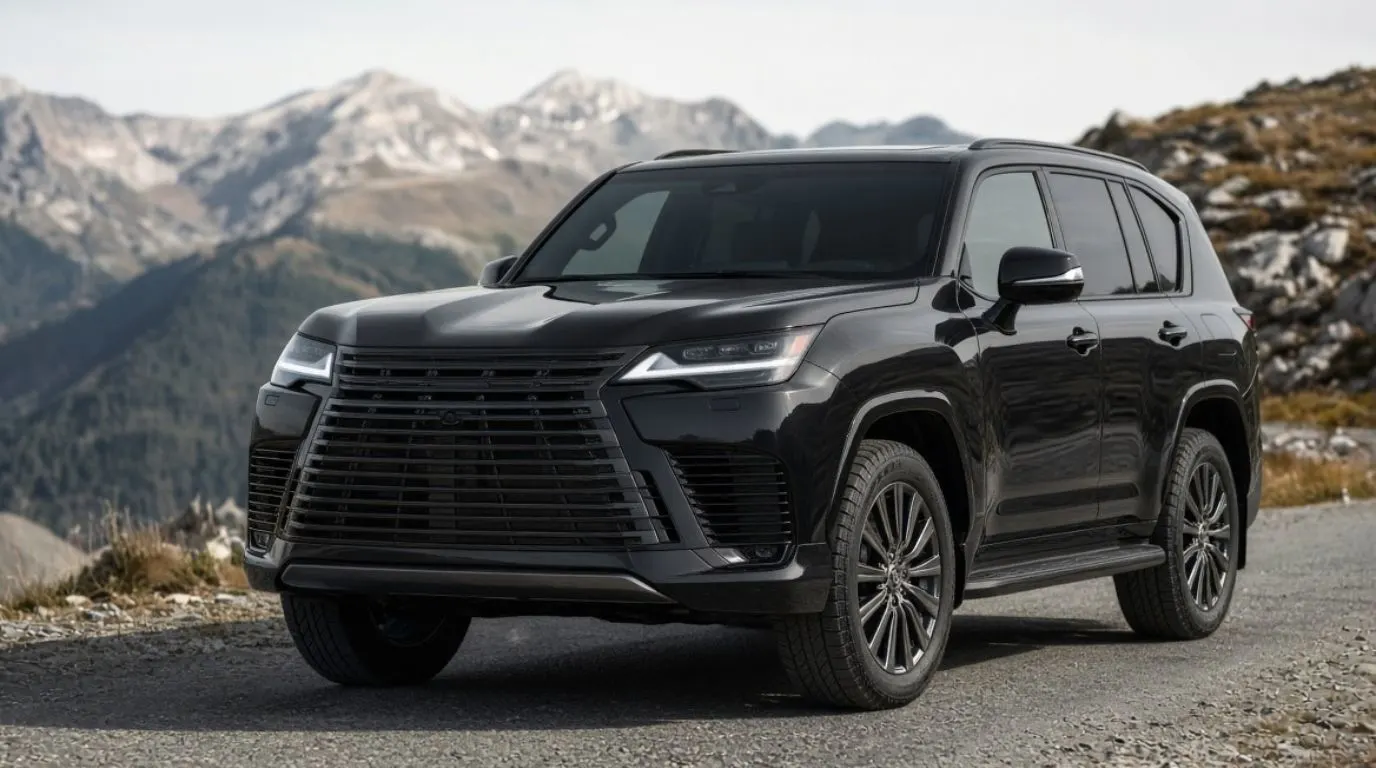
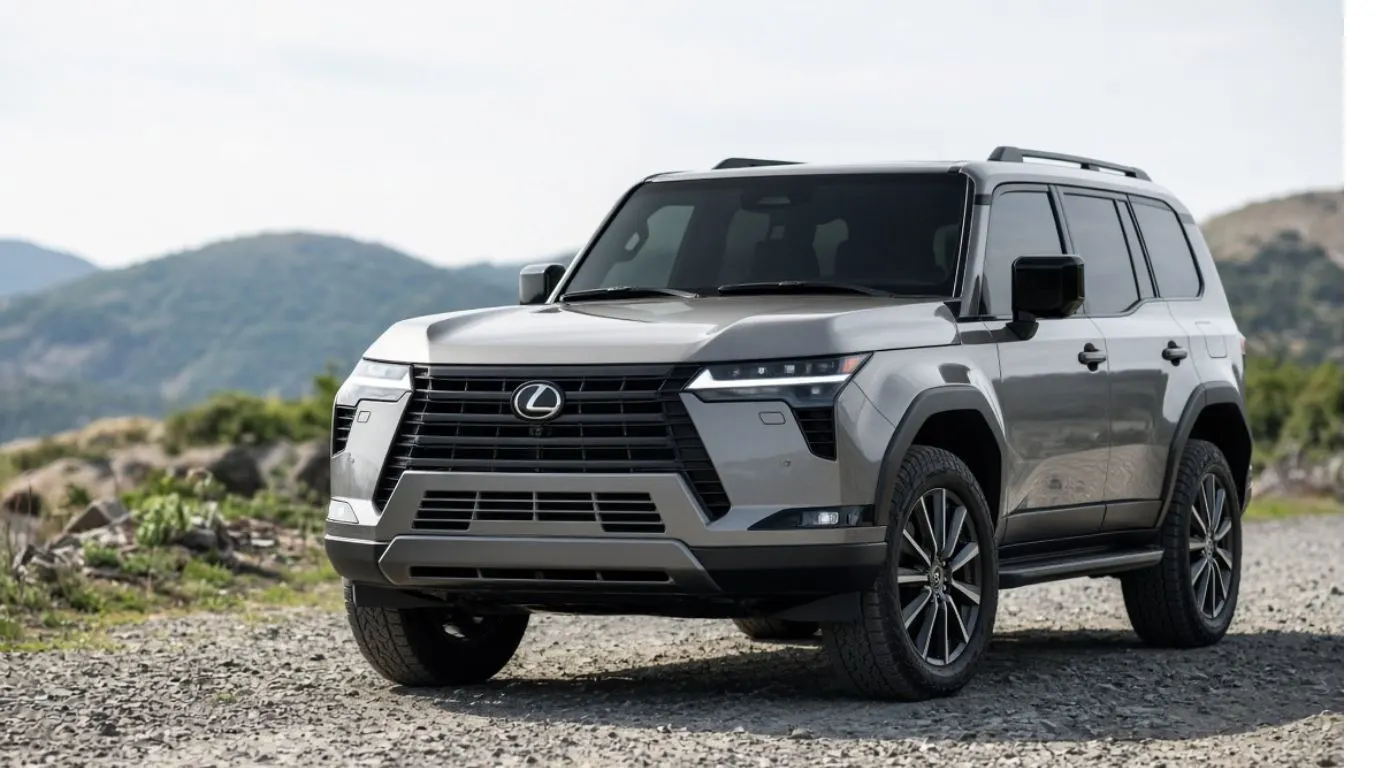
The Lexus LX is a full-size luxury SUV built to combine premium passenger comfort with serious off-road capability. Unlike many luxury SUVs that prioritize road performance, the LX retains a body-on-frame construction, a low-range four-wheel-drive system and hardware designed for demanding terrain.
Its character varies by market. The latest U.S.-market LX uses a twin-turbocharged V6, while other regions have offered different powertrain and equipment combinations. Buyers also need to consider its size, fuel consumption, tire costs and maintenance expenses—not just the purchase price.
This overview focuses mainly on the current-generation LX sold in the United States, with regional differences identified where relevant. It is based on published specifications and manufacturer information rather than a firsthand road or off-road test.
2027 Lexus LX: Key Specifications
The 2027 U.S.-market Lexus LX is available with two powertrain choices: the gasoline LX 600 and the hybrid LX 700h. Both use a twin-turbocharged 3.4-liter V6, a 10-speed automatic transmission and full-time four-wheel drive.

| Specification | LX 600 | LX 700h |
|---|---|---|
| Engine | 3.4L twin-turbo V6 | 3.4L twin-turbo V6 hybrid |
| Maximum output | 409 hp | 457 hp combined |
| Maximum torque | 479 lb-ft | 583 lb-ft |
| Transmission | 10-speed automatic | 10-speed automatic |
| Drivetrain | Full-time 4WD | Full-time 4WD |
| EPA-estimated combined fuel economy | 19 mpg | 20 mpg |
| Maximum towing capacity | 8,000 lb | 8,000 lb |
The hybrid system adds power and improves the official combined fuel-economy estimate modestly. It is not a plug-in hybrid, so the battery is charged through the vehicle’s hybrid system rather than an external charging connection. lexus.com+3
Lexus LX Engine Performance: V6 Power or Hybrid Assistance?
The LX has moved away from the naturally aspirated V8 used in earlier generations. Its current U.S. lineup uses a twin-turbocharged V6, with the LX 700h adding an electric motor to the powertrain.
LX 600: Twin-turbocharged V6
The LX 600’s 3.4-liter twin-turbo V6 produces 409 horsepower and 479 lb-ft of torque. It is paired with a 10-speed automatic transmission.
The important figure for everyday driving and off-road use is torque. The engine produces its maximum 479 lb-ft from 2,000 rpm, giving the large SUV substantial pulling power without needing to reach high engine speeds.


The 10-speed transmission provides a broad spread of ratios. Lower gears help the vehicle move away under load, while higher gears allow more relaxed cruising. Full-time four-wheel drive is standard in the U.S. lineup.
For buyers who want a conventional gasoline powertrain and do not need the additional output of the hybrid, the LX 600 is the straightforward choice.
LX 700h: Hybrid V6 with more torque
The LX 700h combines the same basic 3.4-liter twin-turbo V6 architecture with an electric motor and hybrid battery system. Lexus quotes 457 net combined horsepower and 583 lb-ft of combined torque.
The electric motor can contribute torque during acceleration and help the powertrain respond smoothly at low speeds. This is useful in a heavy SUV, particularly when pulling away, climbing or maneuvering at low speed.

The LX 700h remains a conventional self-charging hybrid rather than a plug-in model. Owners do not need to connect it to a home charger, and the vehicle manages its battery through the hybrid system.
The hybrid’s fuel-economy advantage is relatively small in the U.S. EPA estimates: 20 mpg combined compared with 19 mpg for the LX 600. Buyers should therefore choose it primarily for its extra performance and available Overtrail equipment, not on the assumption that it will dramatically reduce fuel bills. lexus.com+2
Lexus LX Off-Road Capability: More Than a Luxury SUV
Off-road ability is a defining part of the LX’s identity. Its body-on-frame construction, full-time four-wheel drive and low-range gearing give it a different starting point from luxury crossovers designed mainly for paved roads.
The 2027 U.S. model continues to offer off-road systems including Multi-Terrain Select and Crawl Control with Turn Assist. The manufacturer lists five terrain settings: Mud, Sand, Deep Snow, Dirt and Auto. lexus.com+1


Full-time four-wheel drive and low range
Full-time 4WD sends drive to all four wheels during normal operation. This can help maintain traction on loose surfaces, wet roads and uneven trails.
Low-range gearing provides additional control when driving slowly over difficult terrain. It allows the vehicle to move at a controlled pace without relying entirely on the brakes or excessive accelerator input.
A locking center differential helps manage the speed difference between the front and rear axles when extra traction is needed. This is particularly useful when one axle has less grip than the other.
Multi-Terrain Select
Multi-Terrain Select lets the driver choose a setting suited to the surface. The system adjusts aspects of throttle response, braking and traction control to help the SUV maintain movement.


Its settings are intended for different conditions:
- Mud: Helps manage wheelspin on muddy surfaces.
- Sand: Adjusts traction responses for loose, soft ground.
- Deep Snow: Supports progress on snow-covered surfaces.
- Dirt: Provides a setting for unpaved tracks and dirt roads.
- Auto: Allows the vehicle to manage the system’s response automatically.
These modes assist the driver, but they do not remove the need to choose a suitable route, maintain safe speed or understand the terrain.
Crawl Control and Turn Assist
Crawl Control is designed for very low-speed driving over difficult surfaces. It automatically manages engine output and braking to help maintain a controlled pace, allowing the driver to concentrate more on steering and wheel placement.
Turn Assist can help reduce the turning radius during certain low-speed off-road maneuvers. This can be useful on narrow trails where a conventional turn may require several adjustments.


LX 700h Overtrail: The most trail-focused version
The LX 700h Overtrail is the most clearly off-road-oriented model in the U.S. range. Its equipment includes electronically controlled front and rear locking differentials, 18-inch wheels with 33-inch all-terrain tires and a protective skid plate.
The locking differentials can help maintain traction when wheels on an axle have different levels of grip. The all-terrain tires are also more appropriate for rough surfaces than large, road-focused luxury SUV wheels.
The Overtrail is available with a two-row seating configuration, which provides a practical alternative for buyers who prefer cargo space over a third row. lexus.com+2
Is the Lexus LX suitable for serious off-roading?
The LX has genuine off-road hardware, not just a rugged appearance package. Its low range, terrain-management systems and available locking differentials give it the equipment needed for demanding trails.


However, its size and weight still matter. Narrow tracks, tight switchbacks and deep ruts can be more difficult to negotiate in a full-size luxury SUV than in a smaller off-roader. Expensive bodywork and large wheels also make careful driving sensible.
For buyers who want a vehicle that can handle remote routes while retaining a premium cabin, the LX is a credible option. The Overtrail is the version to investigate first if challenging terrain is a regular part of the plan.
Lexus LX Interior: Luxury, Technology and Passenger Comfort
The LX is designed to feel like a flagship luxury vehicle inside, even though its engineering also supports off-road use. The cabin combines large digital displays, premium upholstery, adjustable seating and physical controls for functions that drivers may need while moving over rough surfaces.
Dashboard and infotainment
The dashboard uses a layered layout with a central touchscreen and a separate digital instrument display. Lexus Interface provides access to navigation, media, vehicle settings and connected functions. Wireless Apple CarPlay and Android Auto compatibility are included in the U.S. lineup.
The arrangement is more conventional than the single-screen interiors found in some newer luxury SUVs. That can make the cabin feel familiar to drivers moving from another Lexus or Toyota model.
Seating and cabin configurations
Seating depends on the grade and powertrain. Many LX versions offer three rows and seating for seven, while the LX 700h Ultra Luxury uses a four-seat layout with a more comfort-focused rear compartment. The Overtrail can be ordered in a two-row configuration.
The Ultra Luxury version is aimed at buyers who place a high priority on rear-passenger comfort. Its second-row captain’s chairs offer features such as massage functions, individual temperature controls and power-retractable ottomans, depending on specification.
The three-row arrangement is more flexible for families, but the third row is not as spacious as the main seating area. Adults may find it less suitable for extended journeys, and luggage space is limited when all seats are occupied. Buyers who regularly travel with seven people should check the seating and cargo layout in person.
Materials and comfort features
Depending on grade, the LX can be equipped with semi-aniline leather, open-pore wood trim, heated and ventilated seats, massage functions and premium audio equipment.
The F SPORT Handling grade takes a different approach, adding sportier interior details and chassis tuning rather than focusing exclusively on rear-seat luxury. The Overtrail combines premium cabin appointments with more rugged exterior and chassis equipment.
Ride quality and road manners
The LX uses a body-on-frame platform, but its suspension systems are designed to make it comfortable on paved roads as well as capable away from them. Lexus lists Active Height Control and Adaptive Variable Suspension across the U.S. lineup.
The suspension can adjust ride height and damping to suit driving conditions. This helps the vehicle balance passenger comfort with ground clearance and wheel control, although its high-riding, heavy-duty structure does not make it feel like a low-slung luxury crossover.
The F SPORT Handling grade has its own performance-focused suspension tuning, including performance dampers and a rear stabilizer bar. It is intended to sharpen road response rather than maximize off-road equipment. Lexus USA Newsroom+2
Lexus LX Safety and Driver Assistance
The 2027 U.S.-market LX includes Lexus Safety System+ 3.0. This package brings together driver-assistance functions intended to help the driver monitor traffic and respond to potential hazards.
Depending on the system and operating conditions, features include:
- Pre-Collision System with pedestrian detection.
- Dynamic Radar Cruise Control.
- Lane Tracing Assist.
- Lane Departure Alert with Steering Assist.
- Road Sign Assist.
- Automatic High Beams.
- Proactive Driving Assist.
These systems are designed to assist the driver, not replace attention or control. Their operation can be affected by road markings, weather, visibility and other conditions. Equipment and feature availability should be checked against the exact market and grade. Cars.com+1

Lexus LX Fuel Economy: What Does It Cost to Run?
Fuel consumption is one of the main ownership considerations for the LX. It is a large, heavy SUV with a twin-turbocharged V6, and it requires premium gasoline in the U.S. market.
For the 2027 U.S. models, Lexus lists these EPA-estimated figures:
| Fuel economy | LX 600 | LX 700h |
|---|---|---|
| City | 17 mpg | 19 mpg |
| Highway | 22 mpg | 22 mpg |
| Combined | 19 mpg | 20 mpg |
These are estimates for comparison, not a promise of what every driver will achieve. Traffic, speed, temperature, terrain, tire choice, load and driving style can all change fuel consumption. lexus.com+1
Does the LX 700h save much fuel?
The hybrid LX has a one-mpg advantage in the combined EPA estimate. That is a relatively small difference, particularly when compared with the higher purchase price of some hybrid grades.
For someone covering a high annual mileage, the difference may contribute to lower fuel spending over time. But the financial benefit depends on local fuel prices, driving conditions and the price difference between the versions being compared.
The LX 700h makes a stronger case through its additional torque and the availability of the Overtrail grade than through fuel savings alone.
Lexus LX Ownership Costs: Fuel, Insurance, Maintenance and Repairs
The purchase price is only one part of owning a flagship SUV. Fuel, insurance, scheduled servicing, tires, brakes, repairs and depreciation can all add significantly to the total cost.
Because these expenses vary by country, the following discussion uses the U.S. market as its reference point.


1. Fuel expenses
The LX requires premium gasoline in the U.S. market. Its EPA-estimated combined economy of 19 mpg for the LX 600 and 20 mpg for the LX 700h means fuel spending can be substantial for owners who cover long distances.
A simple way to estimate your likely fuel budget is:
Annual fuel cost = Annual miles driven ÷ Expected real-world mpg × Local price per gallon
For example, an owner covering 12,000 miles annually should calculate the budget using their own fuel price and realistic driving economy, rather than assuming the official combined figure will always be achieved.

2. Insurance
Insurance premiums can be significant because the LX is an expensive vehicle with costly components, advanced electronics and substantial replacement values.
The actual premium depends on the driver’s location, age, driving history, coverage limits, deductible, claims record and insurer. A quote for the exact trim and model year is more useful than a generic national average.
3. Maintenance and servicing
Routine maintenance includes oil and filter changes, inspections, fluid checks, brake servicing and tire replacement. The twin-turbocharged engine and full-time four-wheel-drive system also make it important to follow the manufacturer’s service schedule.
Owners who frequently drive off-road may need more frequent inspections of the tires, underbody protection, suspension components and brakes. Mud, sand, water and rough surfaces can increase wear compared with ordinary road use.

Lexus publishes maintenance requirements for the vehicle, but service pricing varies between dealerships and regions. Buyers should request a maintenance schedule and cost estimate from a local authorized service center before purchase.
4. Tires and brakes
Tire costs deserve particular attention. The LX is a heavy SUV, and replacement prices can vary considerably according to wheel size and tire type.
Large road-focused wheels may cost more to replace than smaller alternatives. All-terrain tires on the Overtrail are designed for a different balance of road comfort, grip and off-road durability, and their replacement costs should be checked separately.
Brake wear depends on driving style, load, terrain and traffic. Regular highway use may produce a different wear pattern from repeated urban driving or steep off-road descents.
5. Repairs and depreciation
The LX is a complex luxury SUV, so repairs outside the warranty period can be expensive. Turbochargers, electronic suspension components, sensors, cameras and infotainment equipment are examples of systems that may involve higher repair costs than simpler vehicles.
Depreciation is another major ownership expense. The resale value of an LX will depend on mileage, condition, service history, market demand, fuel prices and the availability of newer models. No fixed resale value can be guaranteed.
What does a five-year ownership estimate look like?
Kelley Blue Book’s published estimate for a 2026 Lexus LX puts its five-year cost to own at approximately $117,341. Its estimate includes depreciation and projected out-of-pocket expenses such as fuel, insurance, financing, state fees, maintenance and repairs.
This is a U.S.-based estimate, not a guaranteed bill or a universal figure for every owner. It relates to the 2026 model and uses assumptions that may differ from an individual driver’s location, financing arrangement and usage. It should be treated as a planning reference rather than a precise forecast for the 2027 model. Kelley Blue Book


2027 Lexus LX Price and Available Grades
For buyers in the United States, Lexus lists the 2027 LX with a starting MSRP of $109,050, including the $1,550 Delivery, Processing and Handling fee. The higher grades cost considerably more, particularly the four-seat Ultra Luxury version.
| U.S. model and grade | Starting MSRP including DPH |
|---|---|
| LX 600 Premium | $109,050 |
| LX 600 F SPORT Handling | $116,910 |
| LX 600 Luxury | $117,850 |
| LX 700h Overtrail | $118,055 |
| LX 700h F SPORT Handling | $120,910 |
| LX 700h Luxury | $121,850 |
| LX 700h Ultra Luxury | $143,350 |
These are manufacturer-listed starting prices. Optional equipment, taxes, registration, dealer charges and other costs can increase the final purchase price. The 2027 model-year updates include darker-finish 20-inch wheels and a digital rearview mirror on the Premium grade, along with additional convenience and appearance changes on selected versions. Lexus USA Newsroom+1
Is the Lexus LX available in India?
Lexus offers the LX in selected international markets, but specifications and availability are not identical everywhere. The U.S. 2027 lineup and its prices should not be used as a guide to Indian-market availability or pricing.
Indian buyers should check the current Lexus India model range and authorized dealer information for the exact version, equipment, price and delivery status. Importing a vehicle or buying through a different market can also affect warranty coverage, servicing and parts availability.

Lexus LX: Main Advantages and Limitations
Advantages
- Powerful twin-turbocharged V6 engine.
- Hybrid option with higher combined power and torque.
- Full-time four-wheel drive and low-range capability.
- Advanced off-road systems, including Crawl Control.
- Overtrail grade with locking differentials and all-terrain tires.
- Premium cabin materials and available rear-seat luxury features.
- Strong towing capability, rated at up to 8,000 pounds in the U.S. lineup.
Limitations
- High purchase price, especially for the top hybrid grade.
- Fuel consumption remains substantial for a large SUV.
- Premium gasoline adds to running expenses in the U.S.
- Large dimensions can make city parking and narrow roads difficult.
- Third-row space is less accommodating than the main seating area.
- Luxury equipment and complex systems can increase out-of-warranty repair costs.
Final Thoughts
The Lexus LX occupies a particular place in the luxury SUV market. It offers the comfort and equipment expected of a flagship Lexus while retaining the mechanical features needed for serious off-road driving.
The LX 600 is a strong choice for buyers who prefer a conventional gasoline powertrain. The LX 700h adds more power and torque, while the Overtrail version brings the most specialized off-road hardware in the U.S. range. The Ultra Luxury grade takes the opposite approach, prioritizing rear-passenger comfort.


Ownership costs need careful consideration. Fuel, insurance, tires, servicing and depreciation can make the LX expensive to run, even if its purchase price is manageable. The hybrid version offers only a modest improvement in official fuel economy, so its additional performance and equipment are more compelling reasons to choose it.
For buyers who want a premium SUV that can handle demanding terrain without giving up a refined cabin, the LX remains a distinctive option. Those who mainly drive in cities and on highways may find a luxury crossover more economical and easier to maneuver.
Frequently Asked Questions
Is the Lexus LX a good off-road SUV?
Yes. The LX has body-on-frame construction, full-time four-wheel drive, low-range gearing, Multi-Terrain Select and Crawl Control. The LX 700h Overtrail adds front and rear locking differentials, all-terrain tires and a skid plate for more demanding terrain.
What engine does the Lexus LX use?
The U.S.-market 2027 LX 600 uses a 3.4-liter twin-turbocharged V6 producing 409 horsepower and 479 lb-ft of torque. The LX 700h uses a hybrid version of the twin-turbo V6 powertrain.

How much horsepower does the Lexus LX 700h produce?
The U.S.-market LX 700h produces 457 net combined horsepower and 583 lb-ft of combined torque.
Is the Lexus LX 700h a plug-in hybrid?
No. It is a conventional hybrid. Its battery is managed and recharged by the vehicle’s hybrid system, so owners do not need to plug it into an external charger.
What is the fuel economy of the Lexus LX?
For the 2027 U.S. lineup, the EPA-estimated combined fuel economy is 19 mpg for the LX 600 and 20 mpg for the LX 700h. Actual results depend on driving conditions and usage.
How much can the Lexus LX tow?
The 2027 U.S.-market LX lineup has a maximum rated towing capacity of 8,000 pounds when properly equipped. Towing limits and requirements should be checked for the specific vehicle and market.


Which Lexus LX is best for off-roading?
The LX 700h Overtrail is the most off-road-focused U.S. version. Its front and rear locking differentials, 33-inch all-terrain tires, 18-inch wheels and skid plate make it better equipped for challenging terrain than the more road-focused grades.
Is the Lexus LX expensive to maintain?
It can be expensive to maintain compared with mainstream SUVs. Premium fuel, large tires, insurance and the cost of servicing a complex luxury vehicle all contribute to ownership expenses. Local dealer service estimates are the best way to calculate a realistic budget.
Does the Lexus LX have seven seats?
Many U.S.-market LX grades offer three-row seating for up to seven people. The LX 700h Ultra Luxury uses a four-seat layout, while the Overtrail is available with two rows. Seating depends on the selected grade and configuration.
How much does the 2027 Lexus LX cost?
The 2027 U.S.-market LX starts at $109,050 including the Delivery, Processing and Handling fee. The LX 700h Ultra Luxury is listed at $143,350. Prices vary by market and can change with options and other charges.