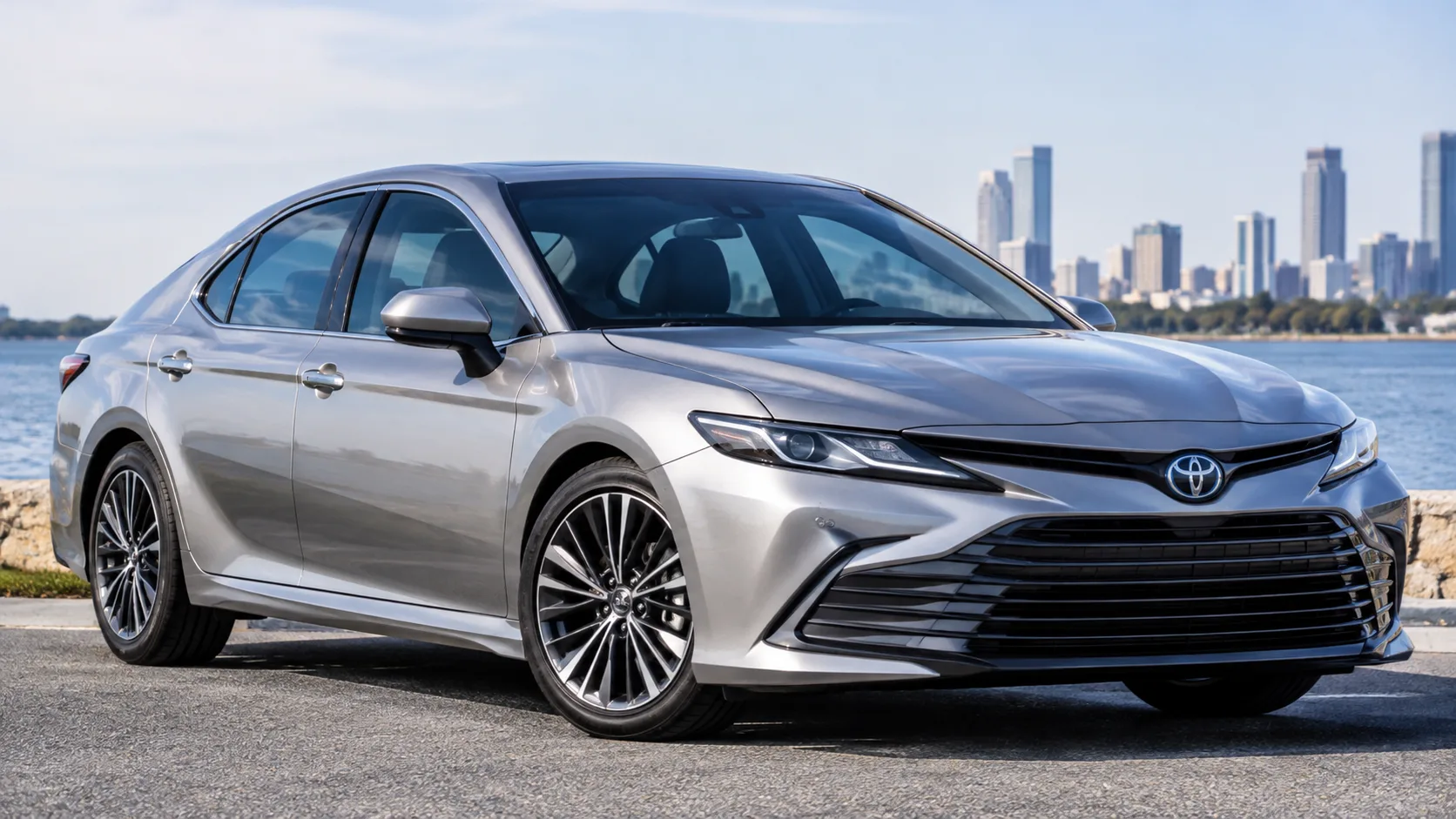
The 2026 Toyota Camry continues to focus on what midsize sedan buyers often value most: fuel efficiency, everyday comfort, modern safety technology, and the convenience of a hybrid powertrain. For the U.S. market, the current-generation Camry carries forward its hybrid-only powertrain strategy, replacing the traditional gasoline-only engine option offered by earlier versions.
For buyers considering the 2026 Toyota Camry, the key questions are how much it costs, how efficiently it uses fuel, what its hybrid system offers, and which features are available across the lineup. These details depend on the trim level and market, so this article focuses primarily on the U.S.-specification 2026 Toyota Camry rather than treating its pricing and equipment as universal.
2026 Toyota Camry: Quick Overview
The 2026 Camry is a midsize sedan powered by a Toyota hybrid system that combines a gasoline engine with electric motor assistance. Its main appeal is efficient daily driving without the need to plug the vehicle into an external charger.
The Camry is designed for drivers who want a practical commuter car with a comfortable cabin, contemporary infotainment, and driver-assistance technology. It may also appeal to households looking to reduce fuel consumption without moving to a fully electric vehicle.
The exact purchase price, equipment, and fuel-economy rating depend on the selected trim and drivetrain configuration. Buyers should use Toyota’s official U.S. configurator for current pricing and specifications before placing an order.
2026 Toyota Camry Price in the U.S.
The 2026 Toyota Camry has a starting manufacturer’s suggested retail price (MSRP) of $29,600 for the front-wheel-drive LE trim. Higher trims add sportier styling, additional comfort equipment, and upgraded technology.
The following prices are Toyota’s published U.S. base MSRPs. They exclude applicable taxes, registration, dealer charges, and optional equipment.
| 2026 Toyota Camry trim | Base MSRP (U.S.) |
|---|---|
| LE FWD | $29,600 |
| LE AWD | $31,125 |
| SE FWD | $32,100 |
| SE AWD | $33,625 |
| Nightshade FWD | $33,100 |
| Nightshade AWD | $34,625 |
| XLE FWD | $34,800 |
| XLE AWD | $36,325 |
| XSE FWD | $36,000 |
| XSE AWD | $37,525 |
FWD stands for front-wheel drive, while AWD means all-wheel drive. Toyota offers both configurations across the U.S. Camry lineup.

Actual transaction prices may differ depending on dealer inventory, regional offers, destination and processing charges, and optional packages. Confirm the final price with a Toyota dealer before purchasing.
2026 Toyota Camry Fuel Economy
Fuel efficiency is one of the Camry’s main selling points. Toyota estimates up to 51 mpg combined for the LE with front-wheel drive, making it the most fuel-efficient configuration in the lineup.
The EPA-estimated fuel economy varies by trim and drivetrain.
| Trim and drivetrain | City MPG | Highway MPG | Combined MPG |
|---|---|---|---|
| LE FWD | 52 | 49 | 51 |
| LE AWD | 50 | 49 | 50 |
| SE FWD | 47 | 45 | 46 |
| SE AWD | 46 | 46 | 46 |
| Nightshade FWD | 47 | 45 | 46 |
| Nightshade AWD | 46 | 46 | 46 |
| XLE FWD | 47 | 45 | 46 |
| XLE AWD | 46 | 46 | 46 |
| XSE FWD | 47 | 45 | 46 |
| XSE AWD | 43 | 43 | 43 |
These are EPA-estimated figures, not guaranteed real-world results. Actual fuel economy depends on driving style, traffic, weather, road conditions, tire pressure, vehicle load, and maintenance.

The LE’s smaller wheels and efficiency-focused setup help it achieve a higher rating than some sport-oriented versions. The XSE AWD, with its larger wheels and different configuration, has the lowest combined rating in the lineup.
For commuters who spend considerable time in city traffic, the LE FWD is particularly attractive. Buyers who prioritize styling or all-weather traction may prefer another trim, although those choices can involve a modest fuel-economy trade-off.
Hybrid Engine and Performance
Every U.S.-specification 2026 Toyota Camry uses a hybrid powertrain built around a 2.5-liter four-cylinder gasoline engine and Toyota’s fifth-generation Hybrid System.
Instead of relying solely on the gasoline engine, the system combines engine power with electric motor assistance. It can use electric propulsion in certain driving conditions and recovers some energy during deceleration and braking.

The hybrid system does not require plugging the car into a charging station. Its battery is charged through the vehicle’s hybrid system, including regenerative braking.
Engine and powertrain specifications
| Specification | 2026 Toyota Camry |
|---|---|
| Gasoline engine | 2.5-liter four-cylinder |
| Hybrid system | Fifth-generation Toyota Hybrid System |
| FWD net combined output | 225 hp |
| AWD net combined output | 232 hp |
| Transmission | Electronically controlled continuously variable transmission (eCVT) |
| Fuel type | Gasoline |
| Drivetrain | Front-wheel drive or electronic on-demand all-wheel drive |
| Plug-in charging | Not required |
Toyota quotes combined system output rather than simply adding the engine’s horsepower to the electric motor’s output. The 225-hp FWD and 232-hp AWD figures represent the overall hybrid powertrain ratings.
How the hybrid system works
At low speeds and in suitable conditions, the electric motor can help move the car while reducing the amount of work required from the gasoline engine. During acceleration, the engine and electric motors work together to provide power.
Regenerative braking helps recover energy that would otherwise be lost as heat during deceleration. That recovered energy is stored in the hybrid battery and can be used again by the electric motor.
The system is designed to balance efficiency and performance without requiring the driver to manage charging. It is different from a plug-in hybrid, which has a larger rechargeable battery and can be connected to an external power source.
Is the 2026 Camry available with AWD?
Yes. Toyota offers electronic on-demand AWD across the U.S. Camry lineup.
Unlike a conventional mechanical AWD system, this setup uses a dedicated electric motor to drive the rear wheels when additional traction is needed. It can help during acceleration and on slippery surfaces, although it does not make the Camry an off-road vehicle.
AWD versions also produce 232 net combined horsepower, compared with 225 hp for FWD models. Buyers should weigh the extra traction and power against the higher starting price and, depending on trim, lower fuel economy.
Exterior Design: What Is New for 2026?
The 2026 Camry continues the design introduced with the ninth-generation model. Its exterior features a low, wide stance, a sculpted front end, slim lighting elements, and a sloping roofline.
The overall design aims to give the sedan a more modern appearance without abandoning its conventional four-door layout.
New Dark Cosmos exterior color
One of the notable updates for the 2026 model year is the addition of Dark Cosmos, a blue exterior color offered on the SE, XLE, and XSE trims.
Availability can vary with trim and regional inventory, so buyers should check the current configurator for the colors offered on a particular vehicle.
Nightshade Edition
The Nightshade trim adds a darker visual treatment to the Camry. Its equipment includes black-finished exterior details, a gloss-black sport mesh grille, black badging, and unique 19-inch satin-black wheels.
It is aimed at buyers who want a sportier appearance without stepping into a different performance model.
Sport-oriented XSE styling
The XSE adds more aggressive exterior details, including 19-inch wheels and a sport-tuned suspension. It also features a distinctive grille and sport-inspired design elements.
The SE and XSE are the more style-focused choices, while the LE places greater emphasis on value and efficiency. The XLE takes a more comfort-oriented approach.
Interior, Comfort, and Practicality
The Camry’s cabin combines a modern dashboard layout with conventional controls and seating for five. Toyota offers different upholstery materials, display configurations, and comfort equipment depending on the trim.
The LE provides the essentials, while the upper trims add more premium materials and convenience features.
Interior features by trim
The LE includes an 8-inch Toyota Audio Multimedia touchscreen, six speakers, dual-zone automatic climate control, and rear-seat air vents.
The SE adds sport-oriented seating materials, an eight-way power-adjustable driver’s seat, and a more distinctive interior and exterior treatment.
The Nightshade builds on the sportier appearance with details such as aluminum sport pedals and its unique exterior styling.
The XLE moves toward a more premium cabin, including a 12.3-inch Toyota Audio Multimedia touchscreen and heated front seats with leather- and microfiber-trimmed upholstery. Ventilated front seats are available.
The XSE combines sport-oriented styling with a sport-tuned suspension and its own wheel and trim details.
Feature availability can vary by equipment package, so the trim description should be checked against the specific vehicle being purchased.
Infotainment and connectivity
The standard 8-inch touchscreen provides access to the Camry’s multimedia system. Higher trims offer a larger 12.3-inch display, while selected equipment includes a premium JBL audio system.
The cabin also offers wireless charging on equipped versions and USB ports for powering compatible devices. The exact connectivity functions and subscription services depend on equipment, phone compatibility, and the selected Toyota connected-services plan.
Buyers who frequently use navigation, music streaming, or smartphone integration should verify the features on their preferred trim rather than assuming that every Camry includes the same equipment.
Seating and everyday comfort
Dual-zone automatic climate control allows the driver and front passenger to select different temperatures. Rear-seat vents help distribute air to passengers in the back.
Higher trims add comfort features such as heated front seats, available ventilation, a heated steering wheel, and driver-seat and mirror memory.
The Camry’s four-door layout and conventional trunk make it suitable for daily commuting, family travel, and longer highway journeys. However, buyers who regularly carry bulky luggage, taller passengers, or large items should inspect the cabin and cargo area in person before deciding.
Safety Features and Driver Assistance
The 2026 Toyota Camry includes Toyota Safety Sense 3.0, a collection of driver-assistance and collision-avoidance technologies. The system is designed to help the driver identify certain hazards and maintain safer driving behavior.
Standard safety-related features include:

- Pre-Collision System with Pedestrian Detection
- Full-Speed Range Dynamic Radar Cruise Control
- Lane Departure Alert, with steering assistance where equipped
- Lane Tracing Assist
- Automatic High Beams
- Road Sign Assist
- Blind Spot Monitor
- Rear Cross-Traffic Alert
These systems have different purposes. Pre-Collision System with Pedestrian Detection can warn of certain forward collision risks and may apply braking assistance in qualifying situations. Radar cruise control helps maintain a selected following distance, while Lane Tracing Assist can help keep the vehicle centered when its operating conditions are met.
Blind Spot Monitor and Rear Cross-Traffic Alert provide additional awareness of vehicles in areas that can be difficult to see.
Some convenience and assistance features are trim-dependent or require an eligible connected-services subscription. Toyota’s Traffic Jam Assist, for example, is subject to equipment, subscription, road, and operating requirements.
Driver assistance is not autonomous driving. Drivers must remain attentive, monitor the road, and be prepared to steer or brake at all times.

A particular safety-feature list should not be treated as a crash-test rating. Buyers who want a verified safety rating should consult the relevant official safety organization and confirm that the rating applies to the correct model year and market.
2026 Toyota Camry Trims: Which One Makes Sense?
The five U.S. trims target slightly different priorities.
| Trim | Best suited to |
|---|---|
| LE | Buyers prioritizing value and fuel economy |
| SE | Drivers who prefer sportier styling and equipment |
| Nightshade | Buyers who want distinctive blacked-out exterior details |
| XLE | Drivers prioritizing comfort and additional premium features |
| XSE | Buyers who prefer sportier styling, larger wheels, and a sport-tuned suspension |
The LE FWD is the logical starting point for shoppers who want the lowest base price and best official fuel-economy rating. It also avoids paying for styling upgrades that may not improve everyday transportation.
The SE and Nightshade suit buyers who prefer a more expressive appearance. The XLE is worth considering for those who value comfort and a larger multimedia screen.
The XSE sits near the top of the range and combines sportier styling with a firmer, sport-tuned suspension. Its larger wheels and AWD configuration can reduce fuel economy relative to the LE FWD.
The right choice depends on whether the priority is purchase price, fuel efficiency, traction, styling, or comfort equipment.
How Does the 2026 Toyota Camry Compare With Other Sedans?
The Camry competes in the U.S. midsize sedan segment, where buyers may also consider the Honda Accord and Hyundai Sonata.
The hybrid versions of these models are particularly relevant to drivers who want better fuel economy without switching to a fully electric vehicle.
The Camry’s strengths include its standard hybrid powertrain, available AWD, and a range of trims from efficiency-focused to sport-oriented. The Accord and Sonata offer their own combinations of interior design, technology, driving characteristics, and hybrid efficiency.
A fair comparison should use equivalent model years, powertrains, trim levels, and EPA ratings. Comparing a base Camry hybrid with a more expensive competitor trim—or using fuel-economy figures from different markets—can lead to misleading conclusions.
Before choosing between them, compare the final dealer price, standard safety equipment, cabin comfort, rear-seat space, warranty coverage, and the official fuel-economy rating for the exact versions under consideration.
Is the 2026 Toyota Camry Worth Buying?
The 2026 Camry makes a strong case for buyers who want a conventional midsize sedan with hybrid efficiency, modern safety technology, and a choice of comfort-focused or sportier trims.
Its hybrid-only U.S. lineup removes the need to choose between a conventional gasoline engine and a hybrid version. The LE FWD offers the best official fuel-economy rating, while AWD versions provide additional traction and slightly higher combined system output.
There are trade-offs. The most efficient configuration is not the most powerful, and upper trims cost more while some have lower EPA-estimated fuel economy. Buyers who want plug-in charging or a fully electric driving experience should consider a different type of vehicle.
The 2026 model is also part of a market that is moving into the next model year. Toyota announced the 2027 Camry in October 2026, describing its grades, features, and options as carryovers. Shoppers should therefore compare available 2026 inventory with the newer model year’s pricing and availability before making a purchase.
For drivers who want an efficient, practical sedan and do not need a plug-in hybrid or an EV, the 2026 Toyota Camry remains a relevant option—particularly in LE FWD form.
Frequently Asked Questions
How much does the 2026 Toyota Camry cost?
In the United States, the 2026 Toyota Camry starts at a base MSRP of $29,600 for the LE FWD. The listed base MSRP rises to $37,525 for the XSE AWD. Taxes, registration, dealer charges, and optional equipment can increase the final price.
What is the 2026 Toyota Camry’s fuel economy?
The LE FWD has an EPA-estimated rating of 52 mpg city, 49 mpg highway, and 51 mpg combined. Other trims and AWD configurations have different ratings, ranging down to 43 mpg combined for the XSE AWD.
Does the 2026 Toyota Camry have a hybrid engine?
Yes. Every U.S.-specification 2026 Camry uses a 2.5-liter four-cylinder gasoline engine paired with Toyota’s fifth-generation Hybrid System.
How much horsepower does the 2026 Toyota Camry produce?
The FWD version produces 225 net combined horsepower. The AWD version produces 232 net combined horsepower.

Does the 2026 Toyota Camry need to be plugged in?
No. It is a conventional hybrid, not a plug-in hybrid. Its battery is charged through the vehicle’s hybrid system and regenerative braking.
Is all-wheel drive available on the 2026 Camry?
Yes. Toyota offers electronic on-demand AWD across the five U.S. trims: LE, SE, Nightshade, XLE, and XSE.
What is new for the 2026 Toyota Camry?
The key model-year additions include the Nightshade Edition and the Dark Cosmos exterior color for the SE, XLE, and XSE trims. The model continues with its hybrid-only powertrain, modern safety technology, and available AWD.
Is the 2026 Toyota Camry available in India?
The specifications and prices discussed in this article apply to the U.S. market. They should not be used to estimate Indian pricing or confirm Indian availability. Buyers in India should consult Toyota’s official India website for current local-market models and offerings.

Is the 2026 Toyota Camry a fully electric car?
No. It is a gasoline-electric hybrid. The gasoline engine and electric motors work together, and the car does not require an external charging connection.
Final Thoughts
The 2026 Toyota Camry is best understood as an efficient midsize sedan rather than a radical redesign. Its 2.5-liter hybrid powertrain, EPA-estimated fuel economy of up to 51 mpg combined, available AWD, and broad trim range make it suitable for drivers with different priorities.
The LE FWD stands out for value and efficiency. The SE and Nightshade emphasize sportier styling, while the XLE and XSE offer different combinations of comfort and design upgrades.
Because the 2027 Camry has now been announced, it is worth comparing model-year pricing and dealer inventory before buying. Verify the exact vehicle’s equipment, final price, and fuel-economy rating with Toyota or an authorized dealer.