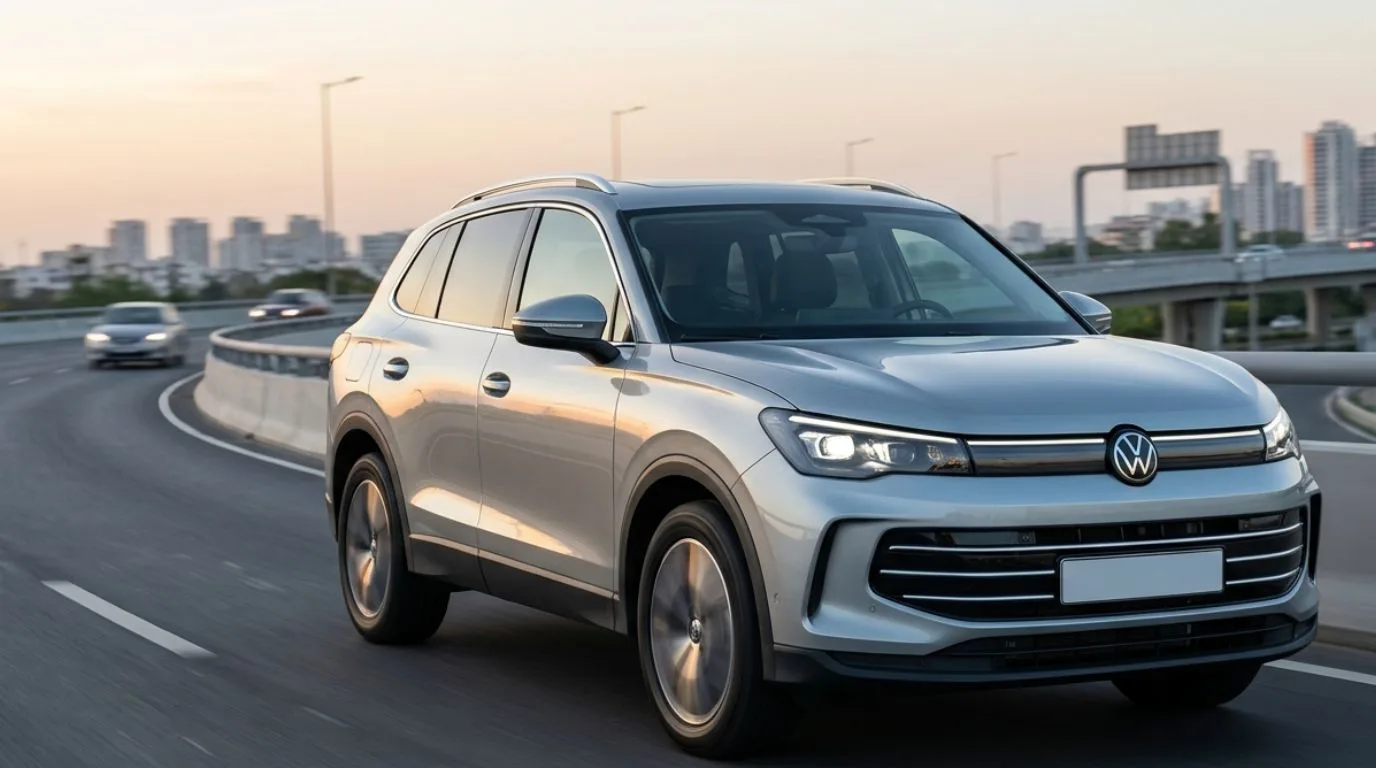
The 2026 Volkswagen Tiguan is a compact SUV that combines a practical five-seat cabin, turbocharged gasoline power, modern infotainment, and available all-wheel drive. In the United States, the lineup ranges from the entry-level S to the more powerful SEL R-Line Turbo, giving buyers a choice between affordability, comfort, styling, and performance.
The Tiguan’s key selling points include a standard 201-horsepower engine, an available 268-horsepower upgrade, a 12-inch infotainment display, and up to 69.8 cubic feet of cargo capacity with the rear seats folded. However, buyers should also consider fuel economy, trim-specific equipment, and the SUV’s mixed results in independent crash testing.
This guide covers the U.S.-market 2026 Volkswagen Tiguan. Prices, specifications, and available features can differ by country, so U.S. figures should not be treated as global pricing or equipment information.
2026 Volkswagen Tiguan at a Glance
| Specification | 2026 Volkswagen Tiguan |
|---|---|
| Vehicle type | Compact SUV |
| Seating capacity | Five |
| U.S. trim levels | S, SE, SE R-Line Black, SEL R-Line Turbo |
| Standard engine | 2.0-liter turbocharged four-cylinder |
| Standard engine output | 201 horsepower |
| Higher-output engine | 268 horsepower |
| Transmission | Eight-speed automatic |
| Drivetrain | Front-wheel drive or available 4MOTION all-wheel drive |
| Starting U.S. MSRP | $30,805 |
| Maximum cargo capacity | 69.8 cubic feet with rear seats folded |
| Standard central display | 12 inches |
| Larger available display | 15 inches on SEL R-Line Turbo |
The specifications above refer to the U.S. model. Equipment can vary by trim and drivetrain, and prices may change during the model year.

2026 Volkswagen Tiguan Price in the USA
Volkswagen lists the 2026 Tiguan with a starting U.S. MSRP of $30,805 for the S trim. Prices increase as buyers move to trims with additional comfort features, distinctive exterior styling, and the higher-output engine.
| 2026 Tiguan trim | Starting U.S. MSRP |
|---|---|
| S | $30,805 |
| SE | $33,605 |
| SE R-Line Black | $37,245 |
| SEL R-Line Turbo | $43,085 |
These are manufacturer-listed starting prices. The final purchase price can be higher after destination charges, taxes, title and registration costs, dealer fees, and optional equipment. Confirm the current price with Volkswagen or a participating dealer before buying.
Which Tiguan trim offers the best value?
The S is the entry-level option for shoppers who want a modern compact SUV without paying for premium equipment. The SE adds convenience and comfort features, making it worth comparing closely with the base trim.
The SE R-Line Black focuses on sportier styling, including dark exterior accents. It may appeal to buyers who prefer a more distinctive appearance but do not need the top model’s more powerful engine.

The SEL R-Line Turbo is aimed at buyers who want the Tiguan’s strongest available engine and a more premium cabin. Its higher price makes it less suitable for shoppers whose main priorities are affordability and low running costs.
When comparing trims, look beyond the monthly payment. Insurance, fuel, tires, maintenance, and optional equipment can all affect the total cost of ownership.
2026 Volkswagen Tiguan Fuel Economy
Fuel economy is a major consideration for a compact SUV used for commuting, errands, and family trips. The 2026 Tiguan uses a turbocharged gasoline engine, but its official EPA ratings depend on the selected powertrain and drivetrain.
Volkswagen’s published information lists up to 26 mpg city and 34 mpg highway for eligible configurations. The higher-output SEL R-Line Turbo has a different rating; Volkswagen advertises up to 29 mpg on the highway for that model.
| Fuel-economy factor | What to know |
|---|---|
| Fuel type | Gasoline |
| Standard engine | 2.0-liter turbocharged four-cylinder |
| Published economy figures | Up to 26 mpg city and 34 mpg highway, depending on configuration |
| SEL R-Line Turbo | Up to 29 mpg highway, according to Volkswagen |
| Real-world consumption | Varies with traffic, speed, weather, load, and driving style |
These figures should not be combined into a single rating for every Tiguan. Check the EPA listing for the exact trim and drivetrain before comparing it with another SUV.
What affects real-world fuel economy?
Official EPA figures are useful for comparing vehicles under standardized conditions, but daily results can differ. Stop-and-go traffic, short trips, cold weather, steep roads, and rapid acceleration can increase fuel consumption.
A turbocharged engine can deliver useful power from a relatively small displacement. However, fuel economy still depends on how much power the driver demands. Sustained acceleration or high engine loads can increase fuel use.
Front-wheel-drive and all-wheel-drive configurations may also have different ratings. If minimizing fuel costs is a priority, compare the city, highway, and combined EPA figures for the specific version you plan to buy.
Is the Tiguan economical for daily driving?
The Tiguan is worth considering if you want a gasoline-powered compact SUV with a choice of engine outputs. The standard engine should be sufficient for many everyday driving needs, while the SEL R-Line Turbo prioritizes stronger performance.
Buyers who spend most of their time in congested city traffic should pay particular attention to the city fuel-economy rating. Those who frequently drive long highway distances may place more weight on the highway figure.
Engine and Performance
The U.S. 2026 Tiguan lineup offers two output levels of a 2.0-liter turbocharged four-cylinder engine. Both use an eight-speed automatic transmission, but the higher-output version is reserved for the SEL R-Line Turbo.
Standard 2.0-liter turbocharged engine
The standard engine produces 201 horsepower. Volkswagen lists torque at 207 lb-ft for front-wheel-drive models and 221 lb-ft for versions equipped with 4MOTION all-wheel drive.
Turbocharging uses exhaust energy to drive a compressor that forces additional air into the engine. This allows a smaller engine to produce useful power without requiring a larger displacement.
For ordinary commuting, errands, and family travel, the standard engine is the more affordable starting point. Buyers should take a test drive to judge acceleration, transmission response, and cabin refinement under the conditions in which they expect to use the vehicle.
SEL R-Line Turbo: 268 horsepower
The SEL R-Line Turbo raises output to 268 horsepower and 258 lb-ft of torque and includes 4MOTION all-wheel drive.
The additional power is relevant to drivers who want stronger acceleration or regularly travel on roads where extra performance is useful. However, higher output alone does not determine how a vehicle feels in daily use. Transmission calibration, tires, vehicle weight, and road conditions also matter.

The SEL R-Line Turbo costs substantially more than the entry-level model. Buyers should consider whether they will benefit from its additional power and premium features enough to justify the difference.
Front-wheel drive or 4MOTION all-wheel drive?
Front-wheel drive is a practical choice for many drivers who primarily travel on paved roads in moderate weather. It may also offer a fuel-economy advantage over a comparable all-wheel-drive configuration.
Volkswagen’s 4MOTION system is available on selected trims and standard on the SEL R-Line Turbo. It can help distribute power between the front and rear wheels when traction conditions change.
All-wheel drive does not guarantee traction on ice or eliminate the need for suitable tires. Buyers should choose it based on their climate, terrain, and driving needs rather than assuming that every compact SUV requires it.
Interior, Comfort, and Cargo Space
The Tiguan’s cabin combines a digital instrument display, central infotainment screen, and a five-seat layout. Equipment and materials vary across the range, with higher trims offering additional comfort features.
Infotainment and digital displays
The 2026 U.S. Tiguan includes a 12-inch central infotainment display. The SEL R-Line Turbo offers a larger 15-inch touchscreen.
The display provides access to compatible infotainment functions and vehicle settings. Before buying, check the layout in person and make sure frequently used functions are easy to access while parked. Screen size alone does not determine how intuitive a system is to use.
Smartphone integration and connected services can depend on the trim, compatible device, account setup, and service terms. Confirm the equipment included with the particular vehicle rather than assuming every digital feature is standard.
Seating and comfort features
Higher trims offer more comfort-oriented equipment. Depending on configuration, features can include heated front seats, ventilated and massaging front seats, leather seating surfaces, ambient lighting, and a panoramic sunroof.
The SEL R-Line Turbo is the strongest choice for shoppers who want a more premium Tiguan cabin. The lower trims may be better value for buyers who care more about the essentials than additional luxury features.
Seat comfort is personal, so a test drive is useful. Check seat adjustment, steering-wheel reach, visibility, rear-seat space, and how easily passengers can enter and exit the vehicle.
Cargo space and everyday practicality
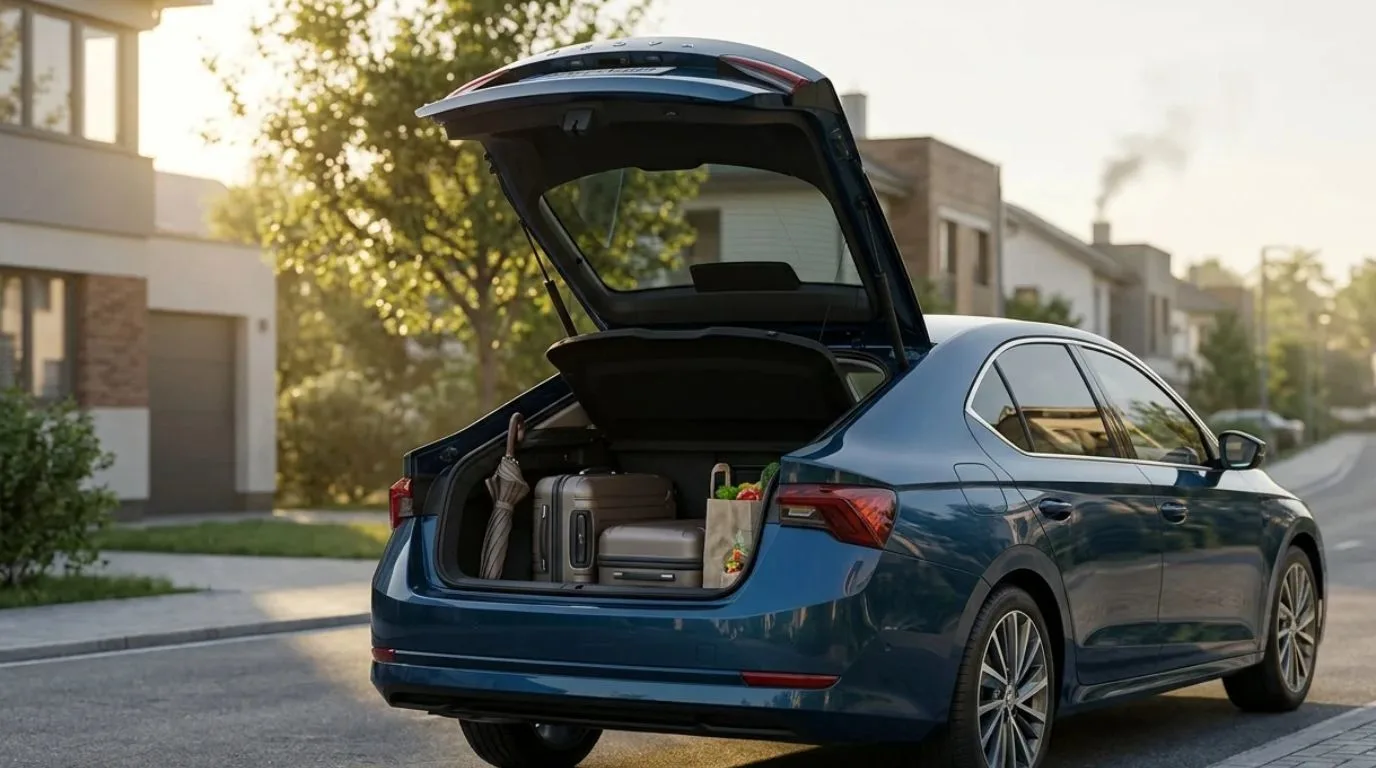
Volkswagen lists 33.8 cubic feet of cargo space with the rear seats in use and up to 69.8 cubic feet with the rear seats folded.
The larger figure represents maximum cargo capacity, not the space available when carrying five people. Families should consider how much room remains behind the rear seats for luggage, groceries, strollers, or sports equipment.
The rear seats can be folded to accommodate larger items, making the Tiguan adaptable for different daily needs. However, the U.S. model is a five-seat SUV, not a seven-seat family vehicle.
Technology Features
Technology is a major part of the Tiguan’s equipment package. Depending on trim, buyers can get digital displays, connected-car functions, parking assistance, and driver-assistance systems.
Volkswagen IQ.DRIVE
Volkswagen’s IQ.DRIVE suite includes driver-assistance functions designed to support the driver. Features available in the Tiguan lineup include systems such as Adaptive Cruise Control, Front Assist, Lane Assist, and Travel Assist, with exact equipment and functionality depending on configuration.
- Adaptive Cruise Control: Helps maintain a selected speed and following distance from traffic ahead.
- Front Assist: Can warn of a potential frontal collision and support braking in certain situations.
- Lane Assist: Helps monitor lane position and may provide steering assistance under supported conditions.
- Travel Assist: Combines supported steering, acceleration, and braking assistance to help with driving on suitable roads.
- Blind-spot monitoring and rear traffic alerts: Help the driver detect certain vehicles approaching from less visible areas, where equipped.
These technologies are assistance systems, not autonomous driving. Drivers must remain attentive, keep control of the vehicle, and be ready to intervene when necessary.
Parking and convenience technology
Parking assistance can help drivers maneuver in tight spaces, depending on the system and equipment fitted to the vehicle. Sensors and cameras can provide useful information, but they cannot detect every obstacle in every situation.
Check which parking aids are included on the trim you are considering. Drivers should still use mirrors, look around the vehicle, and remain prepared to brake.
Connected-car services
Volkswagen’s myVW app and connected services provide selected vehicle information and remote functions on compatible vehicles. Access may depend on the vehicle’s equipment, mobile connectivity, account setup, subscription, and service terms.
Before relying on a particular feature, confirm whether it is included, whether a trial period applies, and whether a paid subscription is required afterward.
2026 Volkswagen Tiguan Safety Ratings
Safety deserves careful consideration when choosing a family SUV. Driver-assistance equipment can help in certain situations, but crash-test results provide a separate way to evaluate occupant protection.
The Insurance Institute for Highway Safety (IIHS) publishes results for the 2026 Tiguan. Its ratings include both strong results and an area of concern.
| IIHS evaluation | Rating |
|---|---|
| Small overlap front crash test | Good |
| Updated moderate overlap front crash test | Poor |
| Updated side crash test | Good |
| Front crash prevention: vehicle-to-vehicle | Good |
| Front crash prevention: pedestrian | Good |
| Headlights | Acceptable or Good, depending on trim and equipment |
| LATCH ease of use | Good |
The IIHS notes that its tests of the redesigned 2025 Tiguan apply to the 2025–2026 models where specified.
What does the Poor moderate-overlap rating mean?
The updated moderate-overlap front crash test evaluates how well a vehicle protects occupants in a frontal collision involving a portion of the front end. The IIHS gave the Tiguan a Poor overall rating in this test, with particular concerns involving rear-passenger restraints and injury measures.
This result should not be interpreted as a claim that the Tiguan performs poorly in every crash scenario. Its small-overlap and updated side-test ratings are Good. However, the moderate-overlap result is important for families who regularly carry rear-seat passengers.
Headlight ratings also vary by trim or option. Buyers should check the exact vehicle’s equipment and the latest independent ratings rather than assuming all configurations receive identical results.
What safety equipment should buyers check?
Before purchasing, verify which driver-assistance systems are standard and which require a higher trim or option package. Families should also check child-seat anchor access, rear-seat space, visibility, and the ease of installing their particular child seats.
No collection of assistance features replaces attentive driving. Their effectiveness depends on road conditions, system limitations, and the driver’s response.
Exterior Design
The Tiguan has a contemporary compact-SUV profile with an upright body, practical rear hatch, and styling details that vary by trim.
The SE R-Line Black adds dark exterior accents for a sportier appearance. The SEL R-Line Turbo combines its more powerful engine with distinctive styling and additional premium equipment.
Available features can include larger alloy wheels, a panoramic sunroof, and upgraded lighting details. Wheel and tire choices can affect ride comfort and replacement costs, so buyers should consider practicality as well as appearance.

Main Advantages and Limitations
Advantages
- Choice of standard and higher-output turbocharged engines.
- Available 4MOTION all-wheel drive.
- Up to 69.8 cubic feet of cargo capacity with rear seats folded.
- Standard 12-inch infotainment display.
- Available 15-inch touchscreen and premium comfort features.
- Driver-assistance technology through IQ.DRIVE.
Limitations
- The 268-hp engine is limited to the top trim.
- Higher trims cost significantly more than the entry-level version.
- Fuel economy varies by engine output and drivetrain.
- The U.S. model has five seats rather than a third row.
- The IIHS’s Poor updated moderate-overlap front crash-test rating deserves consideration.
How Does the 2026 Tiguan Compare With Other Compact SUVs?
The Tiguan competes with vehicles such as the Honda CR-V, Toyota RAV4, and Mazda CX-5. Each has a different mix of powertrain choices, cabin features, cargo capacity, pricing, and safety results.
The Tiguan’s key attractions include its available 268-hp engine, digital cabin technology, and flexible cargo area. Buyers focused on fuel costs should compare official EPA ratings for equivalent trims. Those who regularly carry rear-seat passengers should examine the complete crash-test results rather than relying on driver-assistance features alone.
There is no universal winner for every buyer. A fair comparison should use equivalent model years, similar equipment levels, and the same market, since prices and specifications differ by region.
Is the 2026 Volkswagen Tiguan Worth Buying?
The 2026 Tiguan is worth considering if you want a compact SUV with a modern cabin, flexible cargo space, available all-wheel drive, and the option of a more powerful engine.

The S and SE are sensible starting points for buyers who prioritize value. The SE R-Line Black adds distinctive styling, while the SEL R-Line Turbo is designed for shoppers who want stronger performance and more premium equipment.
Before deciding, compare the actual price of the vehicle, check its EPA fuel-economy rating, and review the IIHS safety results. A test drive can help determine whether the seating position, visibility, controls, and ride suit your daily needs.
Frequently Asked Questions
How much does the 2026 Volkswagen Tiguan cost?
The 2026 Volkswagen Tiguan starts at a U.S. MSRP of $30,805 for the S trim. Higher trims cost more, and destination charges, taxes, dealer fees, and optional equipment can increase the final price.
What is the fuel economy of the 2026 Volkswagen Tiguan?
Volkswagen lists up to 26 mpg city and 34 mpg highway for eligible configurations. The SEL R-Line Turbo has a different rating, with up to 29 mpg highway advertised by Volkswagen. Check the official EPA rating for the exact trim and drivetrain.

What engine does the 2026 Tiguan use?
The U.S. Tiguan uses a 2.0-liter turbocharged four-cylinder gasoline engine. Standard-output versions produce 201 horsepower, while the SEL R-Line Turbo produces 268 horsepower.
Does the 2026 Tiguan have all-wheel drive?
Yes. 4MOTION all-wheel drive is available on selected trims and standard on the SEL R-Line Turbo.
How much cargo space does the 2026 Tiguan offer?
Volkswagen lists 33.8 cubic feet with the rear seats in use and up to 69.8 cubic feet with the rear seats folded.
Is the 2026 Volkswagen Tiguan a seven-seater?
No. The U.S.-market 2026 Tiguan has a five-seat layout. Buyers who need a third row should consider a larger SUV.
Is the 2026 Volkswagen Tiguan safe?
The IIHS rates the Tiguan Good in its small-overlap front and updated side crash tests, and Good for the tested vehicle-to-vehicle and pedestrian front crash-prevention systems. However, it receives a Poor rating in the updated moderate-overlap front test. Review the full test results when evaluating the vehicle for family use.
What is new for the 2026 Volkswagen Tiguan?
The 2026 Tiguan continues the generation introduced for the 2025 model year. The U.S. lineup includes four trims, with the SEL R-Line Turbo offering the higher-output 268-hp engine. Check Volkswagen’s current specifications for trim-specific changes and availability.
Is the 2026 Volkswagen Tiguan available in India?
The prices and specifications in this article apply to the United States. Buyers in India should confirm the locally available Volkswagen model range, specifications, and pricing through Volkswagen India’s official channels.