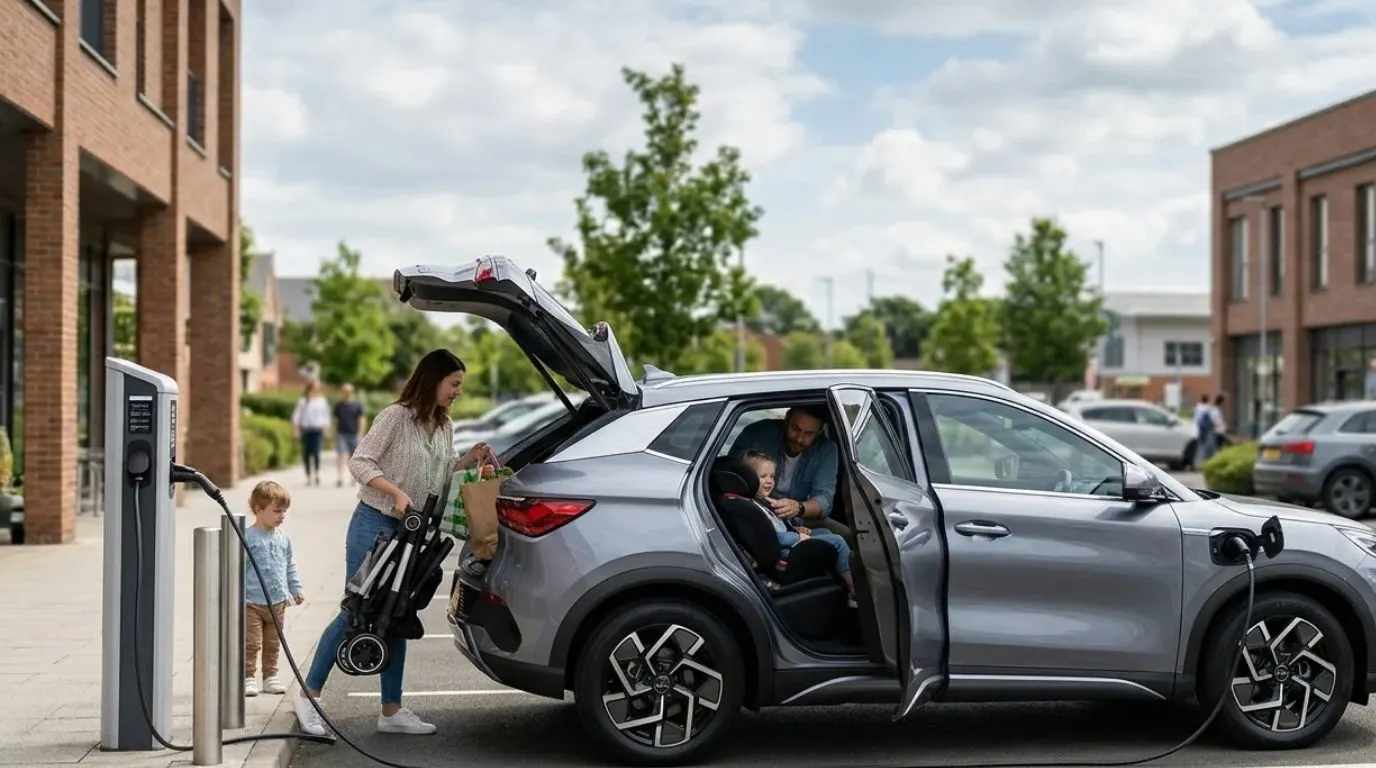
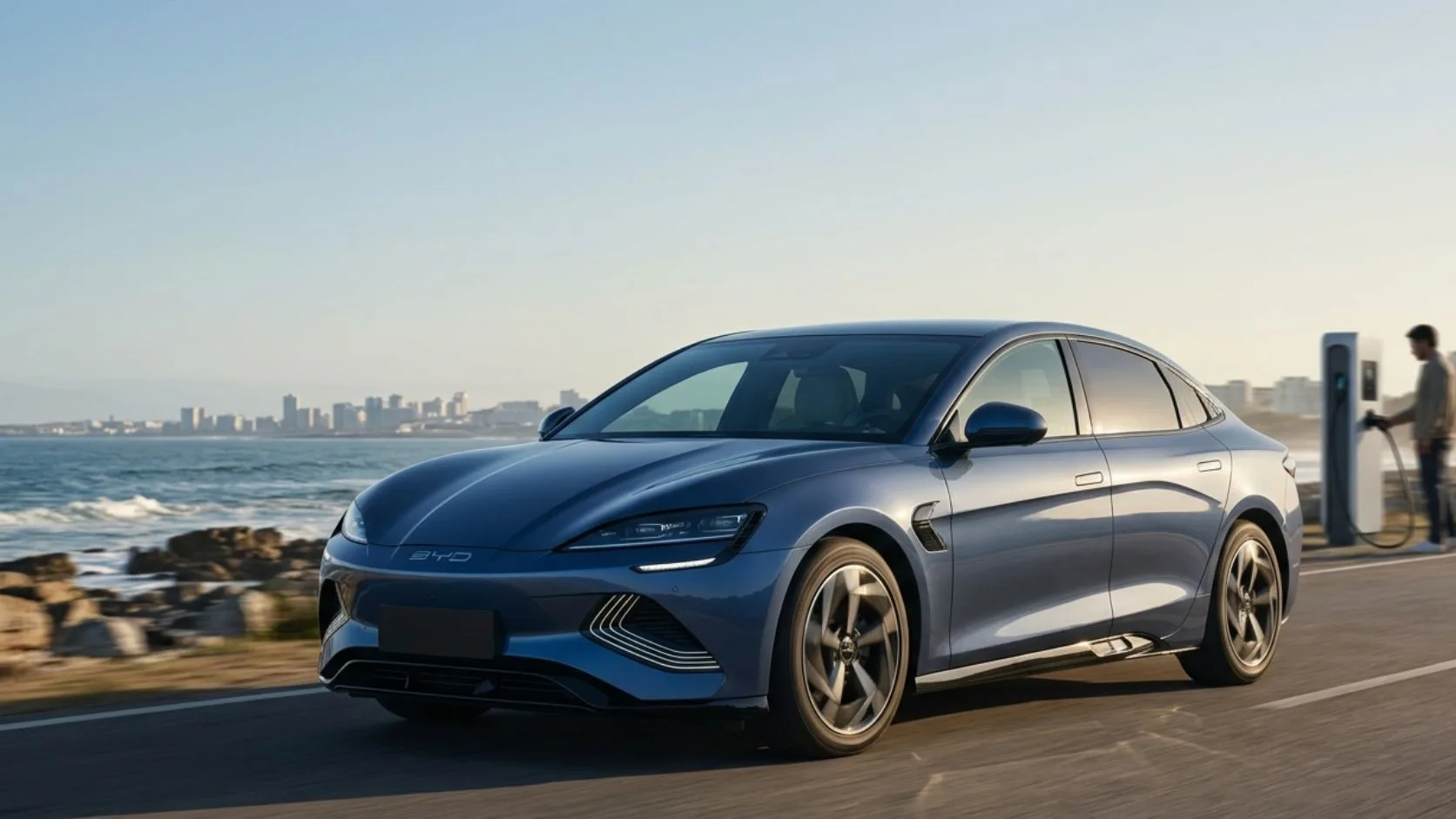
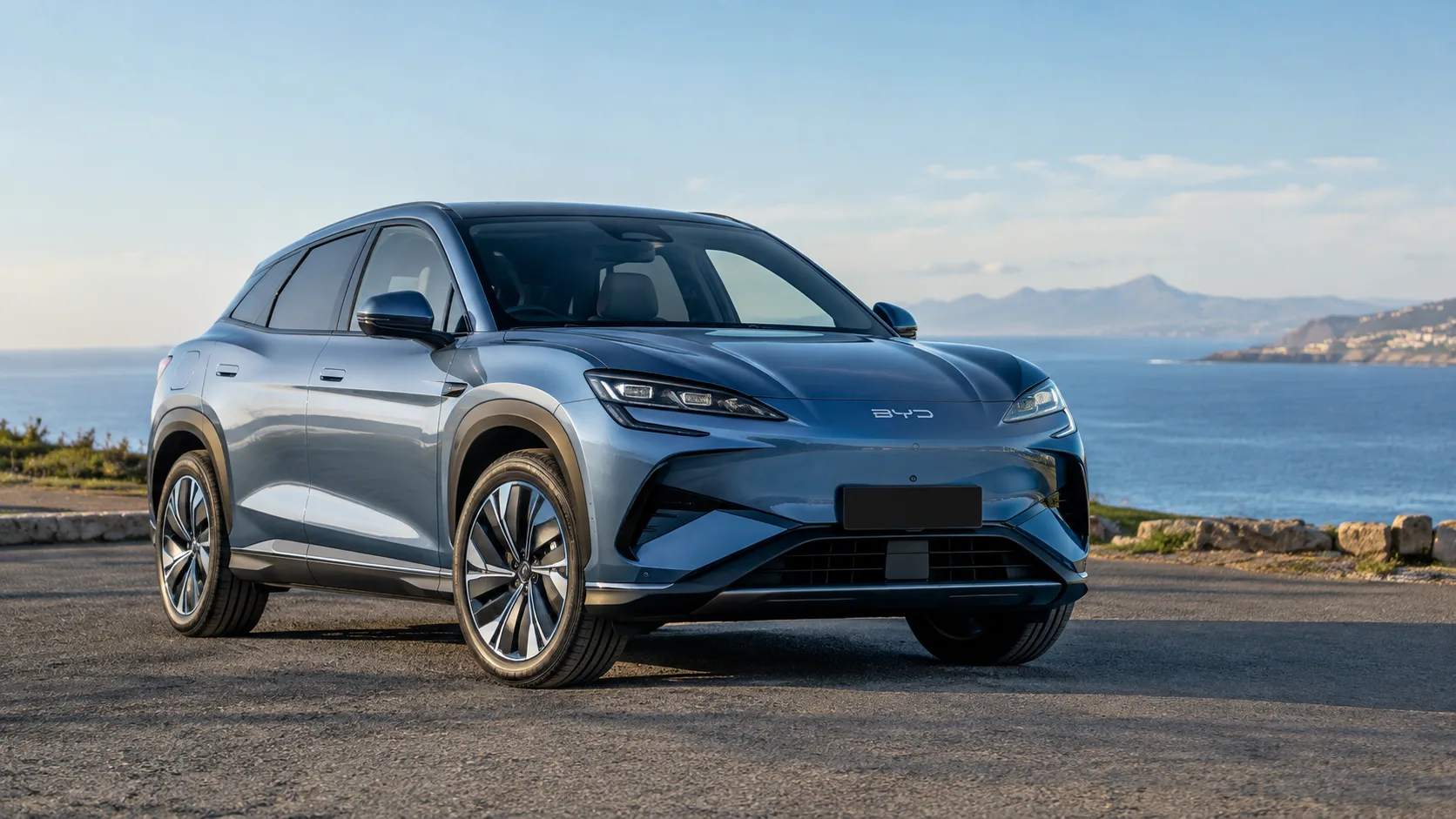
The BYD Atto 3 is an electric compact SUV designed for buyers who want the practicality of a family vehicle without moving into a larger, more expensive electric SUV. Its Blade Battery technology, five-seat cabin, front-wheel-drive powertrain and relatively generous equipment list make it an interesting option in markets such as India, Australia and Europe.
However, the official driving range is only one part of the ownership equation. Buyers also need to understand how far the Atto 3 travels in everyday conditions, how long its battery warranty lasts, what home and public charging might cost, and whether its interior and luggage capacity are suitable for family use.
The answers depend partly on the market and model year. The Indian Atto 3, for example, has different certified range figures from the Australian version, while warranty coverage and charging specifications can also vary.
This guide focuses primarily on the established BYD Atto 3 sold in India, with Australian and European information included where it provides useful additional context. It distinguishes manufacturer figures from independent real-world testing rather than treating the advertised range as a guaranteed everyday result.

BYD Atto 3: Quick Overview
The BYD Atto 3 is a five-seat, battery-electric SUV powered by a single front-mounted electric motor. In India, buyers can choose between two Blade Battery capacities, depending on the variant.
| Specification | BYD Atto 3 (India) |
|---|---|
| Vehicle type | All-electric compact SUV |
| Seating capacity | 5 passengers |
| Battery options | 49.92 kWh and 60.48 kWh |
| Battery technology | BYD Blade Battery |
| Motor configuration | Single electric motor |
| Maximum power | 150 kW (204 hp) |
| Maximum torque | 310 Nm |
| Drivetrain | Front-wheel drive |
| Certified range | 468 km / 521 km (ARAI) |
| Transmission | Single-speed automatic |
| Charging connector | CCS2 / Type 2 |
| AC charging | Approximately 7 kW |
| DC fast charging | Up to 70–80 kW, depending on battery |
| Boot capacity | 440 litres |
| Maximum luggage capacity | 1,340 litres with rear seats folded |
| Battery warranty (India) | 8 years / 160,000 km |
Specifications can differ by variant, production year and market. The figures above describe the Indian specification rather than a universal global configuration.
BYD Atto 3 Real-World Range: How Far Can It Actually Travel?
Driving range is one of the most important considerations when purchasing an electric SUV. The Atto 3 offers two battery options in India, providing different certified driving ranges.
BYD’s ARAI-certified figures are:

- 49.92 kWh battery: 468 km.
- 60.48 kWh battery: 521 km.
These figures make the larger battery particularly attractive to people who regularly travel longer distances.
However, ARAI figures are obtained under controlled testing conditions. Actual driving range depends on several factors, including road speed, traffic, outside temperature, air-conditioning use, passenger load, tyre pressure and driving style.
What Does Independent Real-World Testing Show?
An especially useful reference comes from the Australian Automobile Association’s Real-World Testing Program.
The organization tested a 2023 BYD Atto 3 Extended Range in Australia in April 2025.

The results were:
| Measurement | Official laboratory figure | Real-world test |
|---|---|---|
| Energy consumption | 149 Wh/km | 180 Wh/km |
| Driving range | 480 km | 369 km |
The independently measured vehicle achieved 369 km, approximately 23% below its laboratory-tested range.
This is an important distinction for prospective owners. The result demonstrates how real-world conditions can affect an EV’s range, but it should not be treated as a guaranteed range for every Atto 3. The test involved an Australian-market 2023 Extended Range vehicle, not the current Indian-market lineup.
City Driving Versus Highway Driving
The Atto 3 can be particularly convenient for regular urban journeys because electric motors deliver immediate torque and do not require conventional gear changes.
However, highway driving can reduce range, particularly when travelling at sustained high speeds.
The main reasons include:
- Higher aerodynamic resistance at highway speeds.
- Greater energy consumption during rapid acceleration.
- Additional weight from passengers and luggage.
- Increased electricity consumption from climate control.
- Changes in temperature and road conditions.
For Indian buyers, driving conditions can vary significantly between congested city roads, expressways and long-distance highway routes.
A driver who regularly travels at moderate speeds may achieve better efficiency than someone who frequently drives at higher speeds with heavy acceleration.
Practical takeaway: The 521 km ARAI figure should not be interpreted as a guaranteed highway range. Buyers should evaluate the Atto 3 using realistic daily distances and charging opportunities rather than relying exclusively on its certified number.
BYD Atto 3 Battery Options and Blade Battery Technology
The BYD Atto 3 uses the company’s Blade Battery technology, which is based on lithium iron phosphate (LFP) chemistry.
LFP batteries are different from the nickel-manganese-cobalt (NMC) batteries used in many other electric vehicles.
They are generally associated with good thermal stability, long cycle life and reduced reliance on certain expensive battery materials.


BYD has developed its Blade Battery around a long, narrow cell design intended to improve packaging and structural integration.
49.92 kWh Battery
The smaller battery is available in the Indian Dynamic variant.
Its key specifications include:
- Battery capacity: 49.92 kWh.
- Certified ARAI range: 468 km.
- Electric motor power: 150 kW.
- Maximum torque: 310 Nm.
- Drive configuration: Front-wheel drive.
This option may suit buyers whose regular driving involves commuting, local journeys and occasional longer trips.
Its lower battery capacity also means that a full battery recharge generally requires less electricity than the larger version.
60.48 kWh Battery
The larger battery is available in the Premium and Superior variants.
Its specifications include:
- Battery capacity: 60.48 kWh.
- Certified ARAI range: 521 km.
- Electric motor power: 150 kW.
- Maximum torque: 310 Nm.
- Drive configuration: Front-wheel drive.
The larger battery provides additional certified driving range without changing the motor’s maximum output.
For families that regularly travel outside their home city, the extra battery capacity can provide more flexibility between charging stops.
Is the Blade Battery a Good Long-Term Choice?
Battery durability is a major concern for people considering a used or new electric vehicle.
The LFP chemistry used in the Blade Battery is designed for long-term operation and has characteristics that make it attractive for vehicles subjected to frequent charging.
Nevertheless, battery longevity depends on more than chemistry alone.
Charging habits, operating temperatures, vehicle usage, battery management and maintenance can all influence long-term performance.
The presence of an LFP battery does not mean that capacity degradation is impossible. Buyers should also examine the manufacturer’s warranty conditions rather than assuming that every battery-related problem is automatically covered.
BYD Atto 3 Battery Warranty: What Does BYD Cover?
The battery warranty is an important part of the Atto 3 ownership proposition.
For the Indian-market model, BYD provides the following headline coverage:


| Component | Warranty |
|---|---|
| High-voltage traction battery | 8 years / 160,000 km |
| Electric motor and motor controller | 8 years / 150,000 km |
| Complete vehicle | 6 years / 150,000 km |
The applicable warranty ends when the relevant time or distance limit is reached, whichever comes first.
These figures should be checked against the warranty booklet supplied with the particular vehicle because coverage can depend on model year, component and warranty terms.
Does the Battery Warranty Mean the Battery Will Never Lose Capacity?
No.
Battery warranties protect against specified defects or conditions covered by the manufacturer’s warranty. They do not mean that the battery will maintain its original capacity indefinitely.
Normal battery ageing can gradually reduce the amount of energy a battery stores.
This is why buyers should distinguish between:
- Battery manufacturing defects.
- Battery management system failures.
- Physical battery damage.
- Normal capacity degradation.
- Problems caused by misuse or external damage.
The warranty booklet explains which situations qualify for coverage and which exclusions apply.
What Should Used Atto 3 Buyers Check?
Anyone considering a second-hand BYD Atto 3 should verify:
- The original purchase invoice and warranty commencement date.
- The vehicle’s current odometer reading.
- Whether scheduled servicing has been completed.
- Whether the battery has previously undergone repairs.
- Available battery health or diagnostic information.
- Whether the remaining warranty transfers to the next owner under the applicable terms.
A battery health assessment is particularly useful when purchasing an older electric SUV.
How Does the Warranty Compare Internationally?
BYD warranty policies are not identical worldwide.
For example, the Australian Atto 3 warranty provides eight years or 160,000 km of traction battery coverage and six years or 150,000 km of vehicle coverage.
BYD’s UK warranty information also describes eight-year battery coverage, but its published mileage limits differ from the Australian and Indian policies.
This is why buyers should always refer to the warranty documentation for their own country instead of assuming that an international warranty advertisement applies locally.
BYD Atto 3 Charging: Home Charging and DC Fast Charging
Charging convenience has a major influence on everyday EV ownership.
The Atto 3 supports both AC home charging and DC public fast charging.
The charging power depends on the battery version and the vehicle’s market specification.

AC Home Charging
Home AC charging is generally the most convenient option for owners who have access to a private parking space and an appropriate electrical installation.
The Indian-market Atto 3 supports approximately 7 kW AC charging.
BYD’s published Indian charging information gives approximate charging times of:
- Around 8 hours for the 49.92 kWh battery.
- Around 9.5–10 hours for the 60.48 kWh battery.
These are manufacturer-stated figures under specified charging conditions, not guaranteed times for every installation.
Actual charging time can vary with the available electrical supply, charger output, battery temperature and starting state of charge.
For someone who drives to work during the day and parks at home overnight, this charging arrangement can be particularly convenient.
DC Fast Charging
The Atto 3 also supports DC fast charging through a CCS2 connection.
The Indian-market battery options have different maximum charging capacities:
| Battery | Maximum DC charging power |
|---|---|
| 49.92 kWh | Up to 70 kW |
| 60.48 kWh | Up to 80 kW |
BYD quotes approximately 50 minutes for a 0–80% charge under specified conditions.
Fast charging is useful when travelling between cities or when home charging is temporarily unavailable.
However, maximum charging power is not maintained throughout the entire charging process. The vehicle manages charging speed according to battery temperature, state of charge and other operating conditions.
Consequently, an 80 kW charger does not guarantee that the vehicle will continuously receive 80 kW.
Is Home Charging Better Than Public Charging?
For most owners with reliable home charging access, AC charging is likely to be the more convenient everyday option.
Public DC charging is more useful for:
- Highway journeys.
- Unexpected additional travel.
- Drivers without private charging facilities.
- Trips where overnight home charging is unavailable.
The best arrangement depends on where the vehicle is parked and the availability of compatible charging stations.
BYD Atto 3 Charging Costs: How Much Does It Cost to Charge?
Charging expenses are one of the main reasons people consider switching from petrol or diesel vehicles to electric SUVs.

However, electricity prices vary considerably between countries, cities, residential connections and public charging networks.
There is no single worldwide charging cost for the Atto 3.
For Indian buyers, the most useful approach is to calculate electricity consumption using an assumed tariff and then replace that figure with the actual rate charged by their electricity provider.
Example: Home Charging Cost
Consider the larger 60.48 kWh battery.
If electricity costs ₹8 per kWh, the theoretical electricity cost for supplying 60.48 kWh would be:
60.48 × ₹8 = ₹483.84
Therefore, approximately ₹484 would be the theoretical energy cost for a full 60.48 kWh battery charge.
This calculation excludes charging losses and assumes that the entire stated battery capacity is supplied from empty.

In everyday ownership, charging from a partially depleted battery is more common.
Estimated Electricity Cost Per 100 km
A more useful way to compare EV running expenses is to calculate the electricity required for every 100 km.
The Australian Automobile Association measured energy consumption of 180 Wh/km during its Atto 3 real-world test.
That is equivalent to 18 kWh per 100 km.
Using this consumption figure as an illustrative example:
| Electricity tariff | Estimated cost per 100 km |
|---|---|
| ₹6/kWh | ₹108 |
| ₹8/kWh | ₹144 |
| ₹10/kWh | ₹180 |
| ₹12/kWh | ₹216 |
These figures are calculated examples, not official BYD running-cost claims. They use an Australian independent test result and hypothetical Indian electricity tariffs. Actual Indian consumption can differ, and charging losses can increase the amount billed by the electricity provider.
How Much Does Public Charging Cost?
Public charging is generally priced differently from residential electricity.
The final bill can depend on:
- Charging network.
- Charging station operator.
- Charger power.
- Location.
- Applicable service fees.
- Electricity tariff structure.
- Whether the operator charges by energy consumed or another pricing method.
A public DC fast charger may therefore cost considerably more per kilometre than charging at home.
For regular commuters, home charging can provide a meaningful running-cost advantage if the electricity tariff is favourable.
For people who depend entirely on public fast chargers, the financial difference between an EV and a conventional vehicle may be smaller.
BYD Atto 3 Family Usability: Is It Practical for Everyday Life?
Range and charging specifications are important, but a family SUV must also provide comfortable seating, useful storage, sufficient luggage capacity and convenient access.
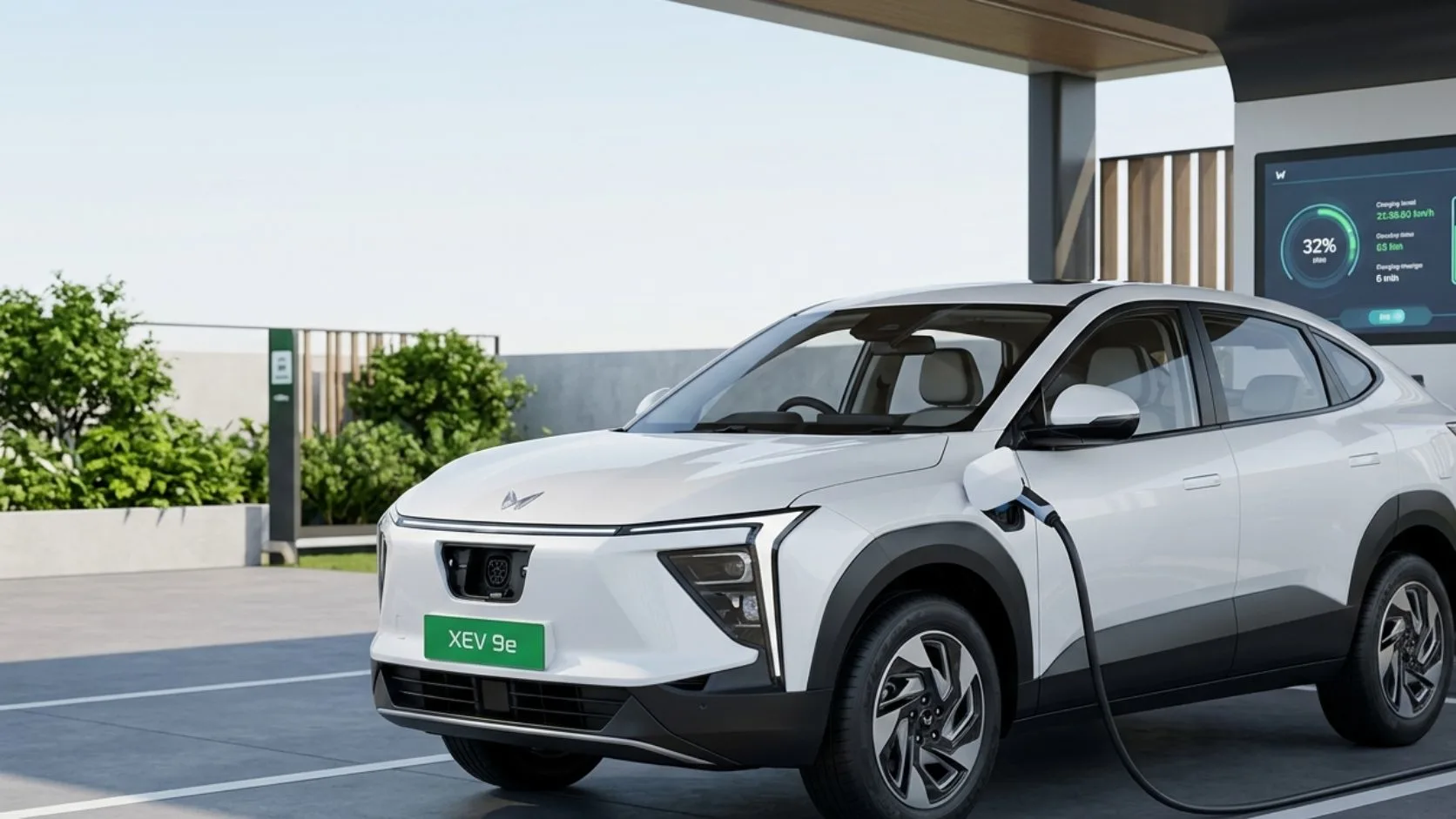
The Atto 3 is designed as a five-seat electric SUV.
Its dedicated EV platform helps accommodate the battery beneath the passenger compartment while providing a relatively flat cabin floor.
However, its family practicality is not perfect in every area.
Front Cabin Comfort
The front cabin has a distinctive design with several unusual styling elements.
Depending on the variant, equipment includes features such as:
- Electrically adjustable front seats.
- Large rotating touchscreen.
- Digital instrument display.
- Panoramic sunroof.
- Wireless phone charging.
- Ambient lighting.
- Automatic climate control.
The interior is more visually distinctive than that of many conventional compact SUVs.
The touchscreen is a major part of the cabin experience, although buyers who prefer physical controls may need time to become comfortable with its layout.
The front seats provide a comfortable driving environment, while the available equipment contributes to the vehicle’s premium positioning.
Rear Seat Space
The Atto 3 has a 2,720 mm wheelbase, which helps provide useful passenger space.
Its flat rear floor is another advantage of the electric platform.
Passengers do not have to accommodate the large central transmission tunnel found in many conventional petrol and diesel vehicles.
This can make the middle seating position more usable for occasional third passengers.
The rear cabin also benefits from practical family features, including:
- Rear air-conditioning vents.
- Rear USB charging connections.
- ISOFIX child-seat mounting points.
- Rear seat head restraints.
- A folding rear armrest.
However, the battery beneath the floor creates a relatively high seating position for rear passengers.
This can affect under-thigh support, particularly for taller adults.
Families should also check rear headroom and child-seat clearance in person, especially when choosing a vehicle with a panoramic glass roof.
Is the Atto 3 Suitable for Families With Children?
The Atto 3 has several features that make it suitable for everyday family transportation.
ISOFIX mounting points make installing compatible child seats easier, while the rear doors and five-seat configuration provide conventional SUV practicality.
Its flat rear floor can also be useful when carrying multiple passengers.
However, parents should physically check their child seats before purchasing.
Different child seats have different dimensions, and the amount of available space depends on the position of the front seats and the size of the child-seat installation.
A family with two children may find the rear cabin convenient for regular journeys.
Families frequently carrying three adults in the rear should pay closer attention to seat width and long-distance comfort.
BYD Atto 3 Boot Space and Luggage Capacity
Boot capacity is particularly important for families who regularly travel with shopping bags, luggage, strollers or sports equipment.
The Indian-market Atto 3 offers approximately 440 litres of luggage capacity with the rear seats in their normal position.
With the rear seats folded, the available luggage capacity increases to approximately 1,340 litres.
| Storage configuration | Capacity |
|---|---|
| Rear seats in use | 440 litres |
| Rear seats folded | 1,340 litres |
The luggage compartment has a relatively practical shape, making it suitable for everyday shopping and weekend luggage.
The rear seats can also be folded to accommodate longer or larger objects.
However, the Atto 3 does not offer the additional front storage compartment found in some electric vehicles.
Families should consider the amount of luggage they normally carry rather than relying exclusively on the headline boot capacity.
A large stroller, multiple suitcases and other bulky family equipment can occupy space quickly.
For a family of four, the Atto 3 offers a useful amount of luggage capacity, although buyers who frequently undertake extended holidays with substantial luggage may want to compare larger SUVs.
BYD Atto 3 Performance and Everyday Driving
The Atto 3 uses a single permanent-magnet synchronous electric motor mounted at the front.
The motor produces 150 kW of maximum power and 310 Nm of torque in the Indian specification.
Electric motors deliver torque without the conventional gear changes associated with petrol and diesel vehicles.
This gives the Atto 3 responsive acceleration, particularly when moving away from a standstill.
BYD quotes the following acceleration figures:
| Battery variant | 0–100 km/h |
|---|---|
| Dynamic (49.92 kWh) | 7.9 seconds |
| Premium and Superior (60.48 kWh) | 7.3 seconds |
These are manufacturer-claimed figures.
For regular city driving, the immediate torque delivery can make overtaking and joining moving traffic easier.
The single-speed transmission also removes the need for conventional gear changes.
The Atto 3 uses front-wheel drive, which is suitable for normal road use but does not provide the additional traction configuration available in some all-wheel-drive electric SUVs.
Its relatively substantial battery pack also contributes to the vehicle’s overall weight.
This is worth considering when evaluating handling, braking and tyre wear.
BYD Atto 3 Safety and Driver Assistance
Safety equipment is another important consideration for family buyers.
Depending on the Indian variant, the Atto 3 includes a range of passive safety and driver-assistance technologies.
These can include:
- Multiple airbags.
- Electronic stability control.
- Anti-lock braking system.
- Traction control.
- Hill descent control.
- Tyre pressure monitoring.
- 360-degree camera.
- Adaptive cruise control.
- Automatic emergency braking.
- Lane departure warning.
- Lane-keeping assistance.
- Blind-spot detection.
The exact equipment list can vary by trim.
The Superior variant offers a more extensive driver-assistance package than the entry-level version.
Buyers should also understand that ADAS features are driver-support technologies, not substitutes for attentive driving.
The driver remains responsible for controlling the vehicle and responding to road conditions.
BYD Atto 3 in India, Australia and Europe: Important Differences
The Atto 3 is sold in multiple international markets, but specifications should not be mixed together when evaluating the vehicle.
The battery capacity, official range, warranty and charging equipment can differ between regional versions.
India
The Indian lineup includes Dynamic, Premium and Superior variants.
The available battery capacities are 49.92 kWh and 60.48 kWh, with ARAI-certified ranges of 468 km and 521 km respectively.
The Indian-market battery warranty is eight years or 160,000 km.
Australia
The Australian Atto 3 has been offered with Essential and Premium specifications.
Published specifications include:
- 49.92 kWh battery for Essential.
- 60.48 kWh battery for Premium.
- 410 km and 480 km NEDC range respectively.
- 150 kW electric motor.
- Front-wheel drive.
The Australian warranty provides eight years or 160,000 km of traction battery coverage.
Australian range figures should not be directly compared with Indian ARAI figures without accounting for the different testing standards.
Europe and the United Kingdom
European-market versions have used WLTP-certified range figures.
For the earlier Atto 3, published specifications included a 60.48 kWh battery and a WLTP combined range of up to 420 km.
BYD has also introduced the newer Atto 3 EVO in certain international markets.
The EVO is a substantially updated product with different battery, powertrain and charging specifications.
It should not be confused with the established Atto 3 discussed in this article.
Buyers researching European availability should therefore confirm whether they are considering the original model or the newer EVO.
What Are the Main Advantages of the BYD Atto 3?
The Atto 3 has several characteristics that make it worth considering in the electric SUV segment.
1. Two battery options
The availability of 49.92 kWh and 60.48 kWh batteries gives buyers some flexibility when choosing between purchase cost and driving range.
2. Blade Battery technology
The LFP-based Blade Battery is an important part of BYD’s electric vehicle technology.
Its chemistry is designed with durability and thermal stability in mind.
3. Useful certified driving range
The Indian-market version offers up to 521 km of ARAI-certified range with the larger battery.
4. Comfortable electric driving
The responsive electric motor and single-speed transmission provide smooth acceleration for everyday use.
5. Family-friendly cabin layout
The five-seat configuration, flat rear floor and ISOFIX mounting points support regular family transportation.
6. Useful luggage capacity
The 440-litre boot provides practical storage for shopping and weekend journeys.
7. Long battery warranty
The eight-year or 160,000 km Indian-market traction battery warranty provides an important ownership protection benefit.
What Are the Limitations of the BYD Atto 3?
The vehicle also has some limitations that buyers should consider before making a purchase.
1. Real-world range can be lower than the certified figure
High-speed driving, weather, passenger load and climate control can all affect battery consumption.
2. Public charging expenses vary
Owners who regularly use public DC charging may pay more than those who can charge at home.
3. Charging takes planning on long journeys
Although DC fast charging is available, highway travel still requires attention to charging locations and station availability.
4. Rear seating position may not suit everyone
The high cabin floor can affect under-thigh support for taller rear passengers.
5. No front luggage compartment
The Atto 3 does not provide a dedicated frunk for additional storage.
6. Regional warranty differences
International warranty figures should not be assumed to apply to the Indian vehicle.
7. Variant equipment is different
Some convenience and driver-assistance features are restricted to higher variants.
These considerations do not necessarily make the Atto 3 unsuitable. They simply help buyers understand what the vehicle offers and where alternatives might be more appropriate.
Is the BYD Atto 3 Worth Considering for Family Buyers?
The BYD Atto 3 makes sense for families that want an electric SUV with a useful driving range, comfortable front seats, modern technology and a practical five-seat layout.
The larger 60.48 kWh battery is particularly relevant for buyers who regularly travel longer distances or prefer a greater range reserve.
The smaller 49.92 kWh battery may be sufficient for households whose driving is concentrated around the city and nearby areas.
Home charging access is an important part of the ownership decision.
A household with a dedicated parking space and an appropriate charging installation can benefit from overnight charging and potentially lower electricity expenses.
However, buyers who depend entirely on public charging should evaluate the charging infrastructure around their home, workplace and regular travel routes.
The Atto 3 is also worth inspecting in person. Rear passenger comfort, child-seat compatibility, boot capacity and touchscreen usability are all areas where individual preferences matter.
For families needing substantially more luggage space or regularly carrying five adults, a larger SUV may be a better fit.
Final Thoughts
The BYD Atto 3 offers a combination of Blade Battery technology, two battery capacities, practical five-seat accommodation and a competitive certified driving range.
Its 521 km ARAI-rated range with the larger battery is an attractive headline figure, but independent testing demonstrates why buyers should consider real-world efficiency rather than relying entirely on laboratory results.
The eight-year or 160,000 km battery warranty in India is another important ownership consideration. Nevertheless, understanding the warranty exclusions, service requirements and battery coverage conditions is essential.
Charging expenses can also be manageable, particularly for households with access to residential electricity and overnight AC charging. Public charging costs, on the other hand, depend heavily on the operator and location.
As a family electric SUV, the Atto 3 has plenty to offer, although its rear seating position and luggage capacity deserve attention before purchase.
For buyers who prioritise everyday comfort, useful electric range and convenient home charging, it remains a vehicle worth evaluating. The final decision should depend on actual driving requirements, local charging infrastructure and the precise variant available in the buyer’s market.
Frequently Asked Questions (FAQs)
1. What is the real-world range of the BYD Atto 3?
Real-world range depends on the battery version, driving speed, climate, passenger load and road conditions. An Australian Automobile Association test recorded 369 km for a 2023 Extended Range Atto 3, compared with its 480 km laboratory figure. This result should not be treated as a universal range for all markets.
2. What is the ARAI range of the BYD Atto 3 in India?
The Indian-market BYD Atto 3 offers 468 km of ARAI-certified range with its 49.92 kWh battery and 521 km with its 60.48 kWh battery.
3. What is the battery capacity of the BYD Atto 3?
The Indian-market Atto 3 is available with two battery options: 49.92 kWh and 60.48 kWh. Both use BYD’s Blade Battery technology.
4. How long is the BYD Atto 3 battery warranty?
In India, the traction battery warranty is eight years or 160,000 km, whichever comes first. Applicable terms and exclusions are specified in the manufacturer’s warranty documentation.
5. How long does it take to charge the BYD Atto 3?
BYD’s Indian-market charging information gives approximate AC charging times of eight hours for the 49.92 kWh battery and 9.5–10 hours for the 60.48 kWh battery. A DC fast charge from 0% to 80% is quoted at approximately 50 minutes under specified conditions.
6. How much does it cost to charge the BYD Atto 3 at home?
The cost depends on the local electricity tariff and the amount of energy required. For example, supplying 60.48 kWh at ₹8 per kWh would theoretically cost approximately ₹484, excluding charging losses.
7. Is the BYD Atto 3 suitable for long-distance travel?
Yes, it can be used for longer journeys, particularly with the larger battery. However, highway speeds, weather and charging station availability influence trip planning. Drivers should plan charging stops rather than relying on the full certified range.
8. Is the BYD Atto 3 a five-seater?
Yes. The Atto 3 is a five-seat electric SUV with two front seats and a three-person rear bench.
9. How much boot space does the BYD Atto 3 have?
The Atto 3 offers approximately 440 litres of boot capacity with the rear seats in use. Folding the rear seats increases the available luggage capacity to approximately 1,340 litres.
10. Is the BYD Atto 3 suitable for families with children?
It can be suitable for families with children because it offers five seats, ISOFIX child-seat mounting points, rear air-conditioning vents and practical luggage space. Buyers should check child-seat compatibility and rear passenger comfort before purchasing.
11. Does the BYD Atto 3 support fast charging?
Yes. The Indian-market Atto 3 supports CCS2 DC fast charging, with maximum charging power of up to 70 kW for the smaller battery and 80 kW for the larger battery.
12. Is the BYD Atto 3 battery an LFP battery?
Yes. The Atto 3 uses BYD’s Blade Battery, which is based on lithium iron phosphate chemistry.