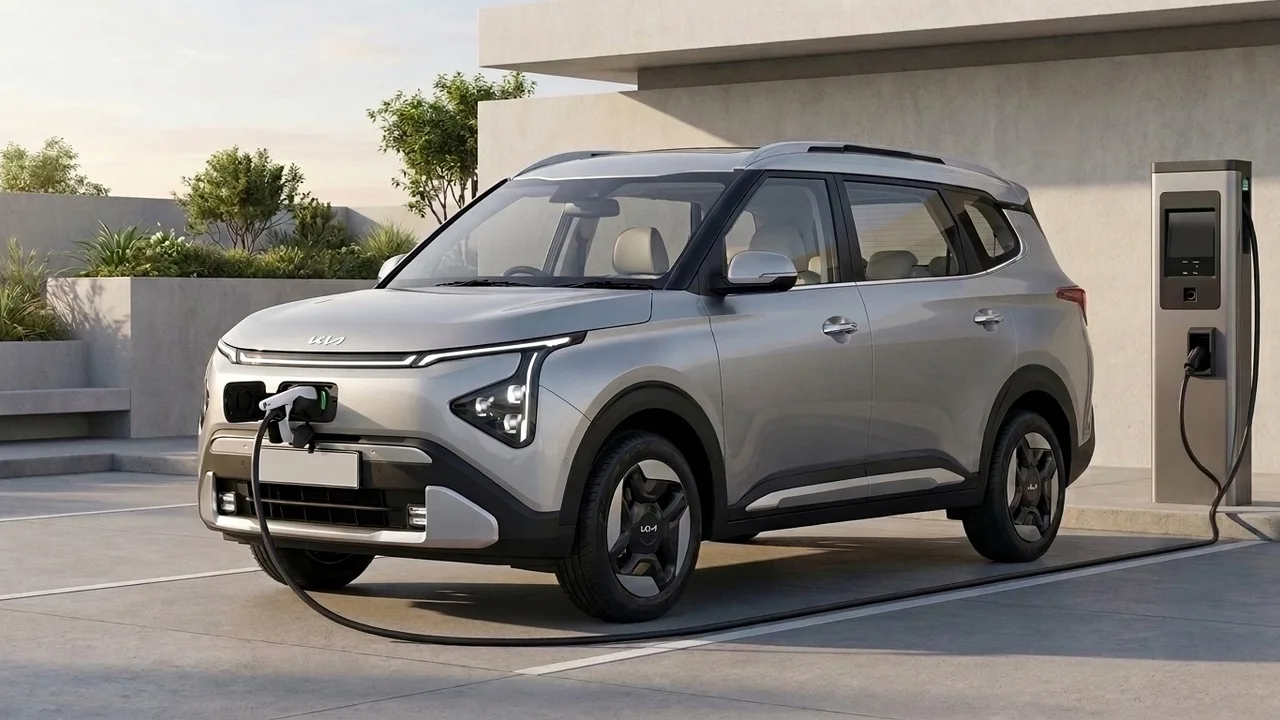
The 2026 Kia Carens Clavis EV is an India-focused electric MPV that combines three-row practicality with two battery choices, a claimed range of up to 490 km, and a technology-rich cabin. Kia offers the Clavis EV with a 42 kWh Standard Range battery and a 51.4 kWh Extended Range battery, with claimed MIDC ranges of 404 km and 490 km respectively.
The model is already on sale in India, and Kia has expanded the lineup for the 2026 model year with additional seating and trim choices. The current range includes 6- and 7-seat configurations depending on variant, while the Extended Range battery is offered across much of the higher-spec lineup.
For buyers considering an electric family vehicle, the key questions are straightforward: how much range does the Clavis EV deliver, how quickly does it charge, what does its cabin offer, and which battery version makes the most sense?
Quick Answer
| Specification | Kia Carens Clavis EV |
|---|---|
| Market covered | India |
| Powertrain | Battery electric |
| Battery options | 42 kWh / 51.4 kWh |
| Claimed range | 404 km / 490 km MIDC |
| Motor output | 99 kW / 126 kW |
| Torque | 255 Nm |
| Drive | Front-wheel drive |
| DC fast charging | 100 kW |
| DC charging time | 10–80% in about 39 minutes |
| AC charging | Up to 11 kW |
| Seating | 6 or 7 seats, depending on variant |
| Charging connector | CCS2 |
Kia’s official documentation confirms the battery, motor, range and charging specifications above.
2026 Kia Carens Clavis EV Battery and Range
The Carens Clavis EV is available with two liquid-cooled lithium-ion battery packs.
The 42 kWh battery is the Standard Range option. It produces 99 kW, equivalent to about 135 hp, and has a claimed MIDC range of 404 km.
The larger 51.4 kWh Extended Range battery produces 126 kW, or about 171 hp, while torque remains 255 Nm. Its claimed MIDC range is 490 km.
| Battery | Motor output | Torque | Claimed MIDC range |
|---|---|---|---|
| 42 kWh | 99 kW / ~135 hp | 255 Nm | 404 km |
| 51.4 kWh | 126 kW / ~171 hp | 255 Nm | 490 km |
These are official certification figures rather than guarantees of real-world driving range. Kia notes that factors including driving style, speed, temperature, terrain and use of electrical equipment can affect actual range.
Independent testing also illustrates the difference between laboratory and real-world figures. Autocar India’s testing of the 51.4 kWh version recorded 363.91 km, compared with its 490 km claimed figure.
That does not make the official number misleading; the two figures come from different testing conditions. Buyers should treat the MIDC number as a standardized certification figure and allow a margin for real-world driving.
Kia Carens Clavis EV Charging Time
Charging is one of the important differences between an EV and a conventional Carens.
The Clavis EV supports 100 kW DC fast charging. Kia says both battery versions can charge from 10% to 80% in approximately 39 minutes when connected to a compatible 100 kW DC charger.
For AC charging, the vehicle supports charging through an onboard charger with up to 11 kW capability. Using an 11 kW AC charger, Kia lists:
- 42 kWh: about 4 hours from 10% to 100%
- 51.4 kWh: about 4 hours 45 minutes from 10% to 100%
The actual charging time can vary with charger capability, battery condition and temperature.
The Clavis EV uses a CCS2 charging connector, making it compatible with the charging infrastructure designed around that standard in India.
Does the Carens Clavis EV Support Fast Charging?
Yes. The Clavis EV supports 100 kW DC fast charging, with Kia quoting approximately 39 minutes for a 10–80% charge.
It also supports AC charging, with the 11 kW option providing a full 10–100% charge in roughly four hours for the 42 kWh battery and 4 hours 45 minutes for the 51.4 kWh battery.
For regular home use, AC charging is the more practical option because the vehicle can be left plugged in for several hours. DC charging becomes more useful during highway trips when minimizing charging stops matters.
2026 Carens Clavis EV Motor and Performance
The Clavis EV uses a single front-mounted electric motor.
The Standard Range model produces 99 kW and 255 Nm, while the Extended Range version produces 126 kW and the same 255 Nm torque.
Kia quotes a 0–100 km/h time of 9.5 seconds for the 42 kWh version and 8.4 seconds for the 51.4 kWh version.
The instant torque delivery of an electric motor also makes the Clavis EV’s powertrain different from the petrol or diesel versions of the Carens Clavis. There is no conventional multi-speed automatic transmission; the electric drivetrain uses a single-speed setup.
Exterior Design and EV-Specific Changes
The Clavis EV retains the basic proportions of the regular Carens Clavis, but Kia has made several changes to identify it as an electric model.
The front end features a charging port, an illuminated element between the headlights, active aerodynamic elements and EV-specific bumper detailing. Aero-optimized wheels are also used to help manage aerodynamic efficiency.
One practical addition is a 25-litre front trunk, or frunk, which can be used for items such as charging cables.
The Clavis EV measures 4,550 mm long, 1,800 mm wide and has a 2,780 mm wheelbase. Depending on wheel and roof-rail configuration, Kia lists its height at around 1,725–1,730 mm.
2026 Kia Carens Clavis EV Interior
The cabin remains one of the major reasons to consider the Clavis EV over a conventional five-seat electric SUV.
The dashboard architecture is closely related to the regular Carens Clavis, but the EV receives a floating centre-console arrangement that creates additional storage space.
Depending on variant, available interior equipment includes:
- Dual 12.3-inch displays
- Wireless Apple CarPlay and Android Auto
- Ventilated front seats
- Powered driver’s seat
- Panoramic sunroof
- 8-speaker Bose audio system
- Wireless phone charging
- Cabin air purifier
- Connected-car functions
- One-touch electric tumble function for the second row
- Boss Mode
- V2L functionality
The exact equipment varies by trim, so buyers should not assume that every feature is standard across the range.
6-Seat and 7-Seat Configurations
The Clavis EV initially launched as a seven-seater, but Kia subsequently expanded the lineup with 6-seat configurations for selected variants.
The current 2026 range includes both seating arrangements depending on trim. Kia’s MY26 documentation lists 6/7-seat availability on several variants, while the HTK+ remains a seven-seat configuration.
That gives buyers more flexibility depending on whether their priority is maximum passenger capacity or a more individual second-row arrangement.
Technology and Safety Features
The Clavis EV has a substantial technology package, particularly on higher variants.
Kia offers Level 2 ADAS on applicable trims, along with features such as lane-keeping assistance, forward collision avoidance, blind-spot-related assistance, adaptive cruise functionality and other driver-assistance systems.
Safety equipment includes:
- Six airbags
- ABS
- Electronic Stability Control
- Hill-start assist
- Hill-descent control
- TPMS
- Front and rear parking sensors
- 360-degree camera on higher trims
- Level 2 ADAS on applicable variants
Feature availability varies by trim, so the higher-end technology should not be treated as standard equipment on the entire lineup.
V2L and Regenerative Braking
The Carens Clavis EV also supports V2L, or Vehicle-to-Load, allowing the vehicle’s battery to supply power to compatible external electrical equipment.
Kia also provides regenerative-braking functionality, including its i-Pedal 2.0 system. Regenerative braking allows some of the vehicle’s kinetic energy to be recovered during deceleration and sent back to the battery.
The vehicle also provides multiple regenerative-braking levels, which can allow drivers to adjust how strongly the car slows when they lift off the accelerator.
2026 Kia Carens Clavis EV Warranty
Kia’s current India warranty information lists a 3-year/unlimited-kilometre vehicle warranty for the Carens Clavis EV.
For the high-voltage battery, Kia’s policy has changed for vehicles retailed from August 1, 2026. For the first purchaser, Kia provides lifetime battery-capacity coverage, defined as 15 years from delivery, for capacity falling below 70% of the original high-voltage battery capacity. For a second purchaser, the coverage is 8 years or 160,000 km from delivery to the first purchaser, whichever comes first.
This is an important ownership consideration because battery warranty terms can materially affect long-term EV ownership.
2026 Kia Carens Clavis EV Price and Availability
The Carens Clavis EV is an India-market model and is already available rather than an upcoming launch.
The original launch pricing in July 2025 started at ₹17.99 lakh and extended to ₹24.49 lakh ex-showroom.
Current automotive listings show the range at approximately ₹18.04 lakh to ₹25.00 lakh ex-showroom, reflecting subsequent updates to the lineup.
Kia has also introduced a Battery-as-a-Service option for the Clavis EV. Under the BaaS structure, the battery and vehicle chassis are financed separately, so the advertised BaaS price should not be compared directly with a conventional ex-showroom vehicle price. Kia states that the BaaS arrangement is subject to finance approval and its applicable terms.
Prices and offers can change, so buyers should confirm the current ex-showroom price and applicable benefits with Kia before booking.
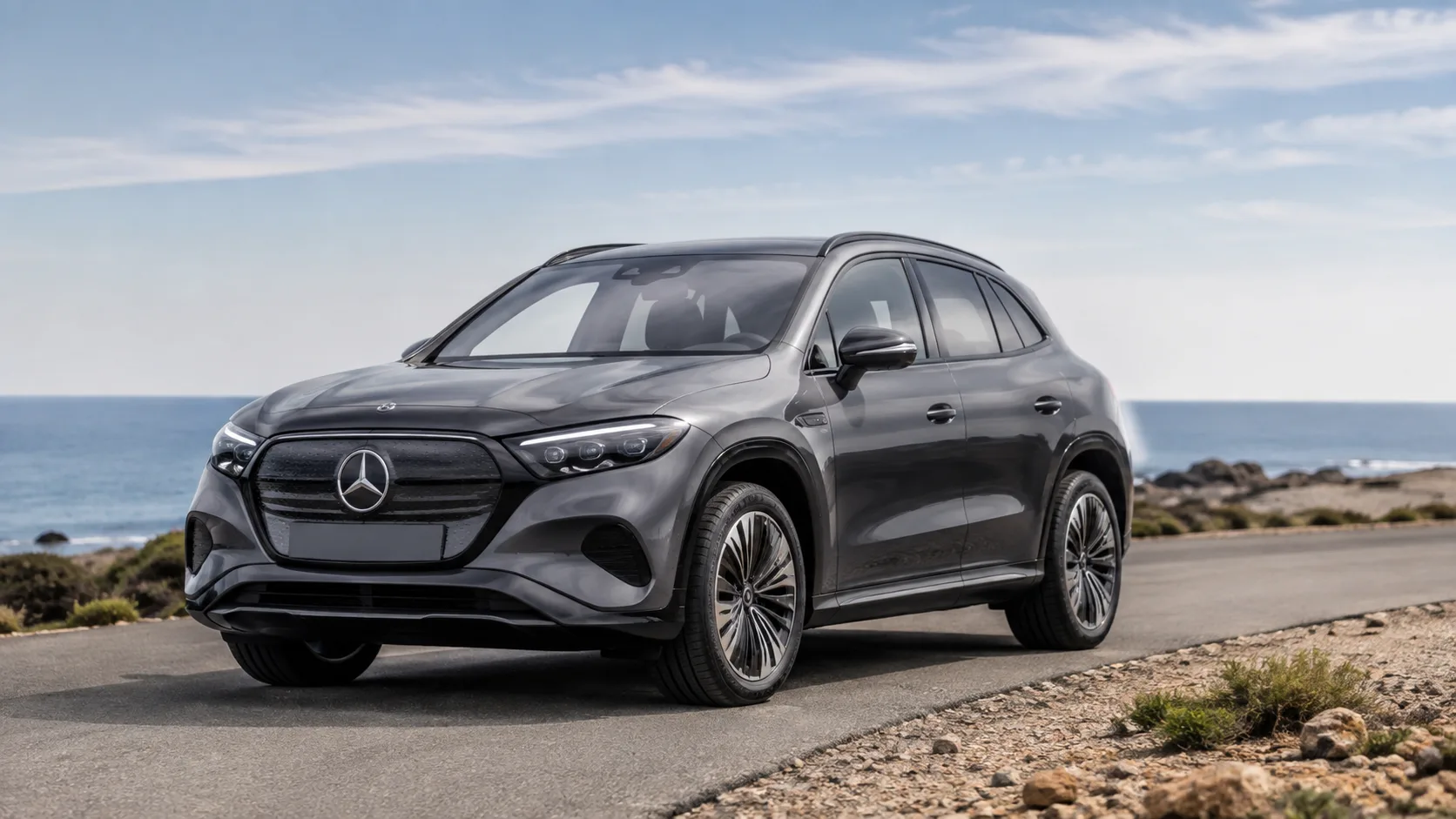
Is the 51.4 kWh Carens Clavis EV Worth Considering?
The larger battery is the more relevant choice for buyers who regularly travel longer distances.
Its advantages are straightforward: 490 km claimed MIDC range, 126 kW motor output and the same 39-minute 10–80% DC charging claim as the smaller battery.
The 42 kWh version, meanwhile, has a lower claimed range of 404 km and 99 kW motor output. For primarily urban use with convenient home charging, that may be sufficient for some buyers.
The important point is that the 490 km figure should not be interpreted as a guaranteed real-world range. Independent testing demonstrates why real-world driving conditions can produce substantially different results.
Kia Carens Clavis EV: Key Advantages and Limitations
Advantages
- Two battery choices
- Up to 490 km claimed MIDC range
- 100 kW DC fast charging
- 6- and 7-seat configurations
- Practical three-row body style
- Large 25-litre frunk
- Dual 12.3-inch displays
- V2L capability
- Available Level 2 ADAS
- Strong equipment on higher variants
Limitations
- Real-world range can be considerably lower than the certified figure
- Charging infrastructure remains important for long-distance EV travel
- Many premium features are dependent on higher trims
- The larger battery version costs more than the Standard Range model
These points are based on the vehicle’s specifications, current equipment and independent published testing rather than firsthand CarBuzo testing.
Kia Carens Clavis EV vs Regular Carens Clavis
The biggest difference is the powertrain.
The regular Carens Clavis uses an internal-combustion powertrain, while the Clavis EV uses a battery-electric system with a front-mounted motor. The EV also gets several design changes, including its front charging port, aerodynamic elements and 25-litre frunk.
Inside, the two models share much of the basic cabin architecture, but the EV’s floating centre console and EV-specific controls distinguish it from the ICE version.
For buyers who can charge at home or have reliable access to public charging, the EV introduces potentially lower day-to-day energy costs and a quieter powertrain. Buyers who frequently travel long distances through areas with limited charging infrastructure may place greater importance on refuelling convenience.
Final Thoughts
The 2026 Kia Carens Clavis EV stands out primarily because it combines electric propulsion with a family-focused 6- or 7-seat layout. Its two battery options give buyers a choice between a 404 km claimed MIDC range and a 490 km claimed range, while 100 kW DC charging provides a quoted 10–80% charging time of about 39 minutes.
The cabin is similarly focused on family usability, with dual 12.3-inch displays, available ventilated seats, Bose audio, panoramic sunroof, connected technology and V2L. Higher variants also bring Level 2 ADAS and additional parking and camera technology.
The main thing prospective buyers should remember is that 490 km is a certified MIDC figure, not a guaranteed real-world range. Independent testing of the Extended Range version has produced a lower result, reinforcing the importance of charging access and driving conditions when planning EV ownership.
For an Indian family looking specifically for a three-row EV, the Clavis EV’s combination of seating flexibility, battery choices, charging capability and cabin technology makes it a model worth examining alongside other electric MPVs and larger family EVs.
Frequently Asked Questions
What is the range of the 2026 Kia Carens Clavis EV?
The 42 kWh version has a claimed MIDC range of 404 km, while the 51.4 kWh Extended Range version is rated at 490 km.
How big is the Kia Carens Clavis EV battery?
The Carens Clavis EV is offered with 42 kWh and 51.4 kWh liquid-cooled lithium-ion battery packs.
How long does the Kia Carens Clavis EV take to charge?
With a 100 kW DC charger, Kia quotes about 39 minutes from 10% to 80% for both battery versions. Using an 11 kW AC charger, the 42 kWh battery takes about four hours from 10–100%, while the 51.4 kWh battery takes about 4 hours 45 minutes.
Is the Kia Carens Clavis EV a 6-seater or 7-seater?
It is available in 6- and 7-seat configurations, depending on the variant. Kia expanded the lineup with six-seat versions during 2026.
Does the Carens Clavis EV have fast charging?
Yes. It supports 100 kW DC fast charging and uses a CCS2 charging connector.
Does the Kia Carens Clavis EV have ADAS?
Yes. Level 2 ADAS is available on applicable higher variants, while basic safety equipment such as six airbags, ABS and ESC is also offered.
What is the Kia Carens Clavis EV price in India?
Current automotive listings place the range at approximately ₹18.04 lakh to ₹25.00 lakh ex-showroom, although pricing can change with variant updates and offers.
Does the Carens Clavis EV support V2L?
Yes. Kia lists Vehicle-to-Load (V2L) functionality among the Clavis EV’s technology features.
Sources & References
- Kia India — Carens Clavis EV official brochure
- Kia India — Carens Clavis EV 2026 brochure
- Kia India — EV Warranty Policy
- Autocar India — Kia Carens Clavis EV specifications and range
- Autocar India — Kia Carens Clavis EV launch and specifications
- Autocar India — Kia Carens Clavis EV range testing