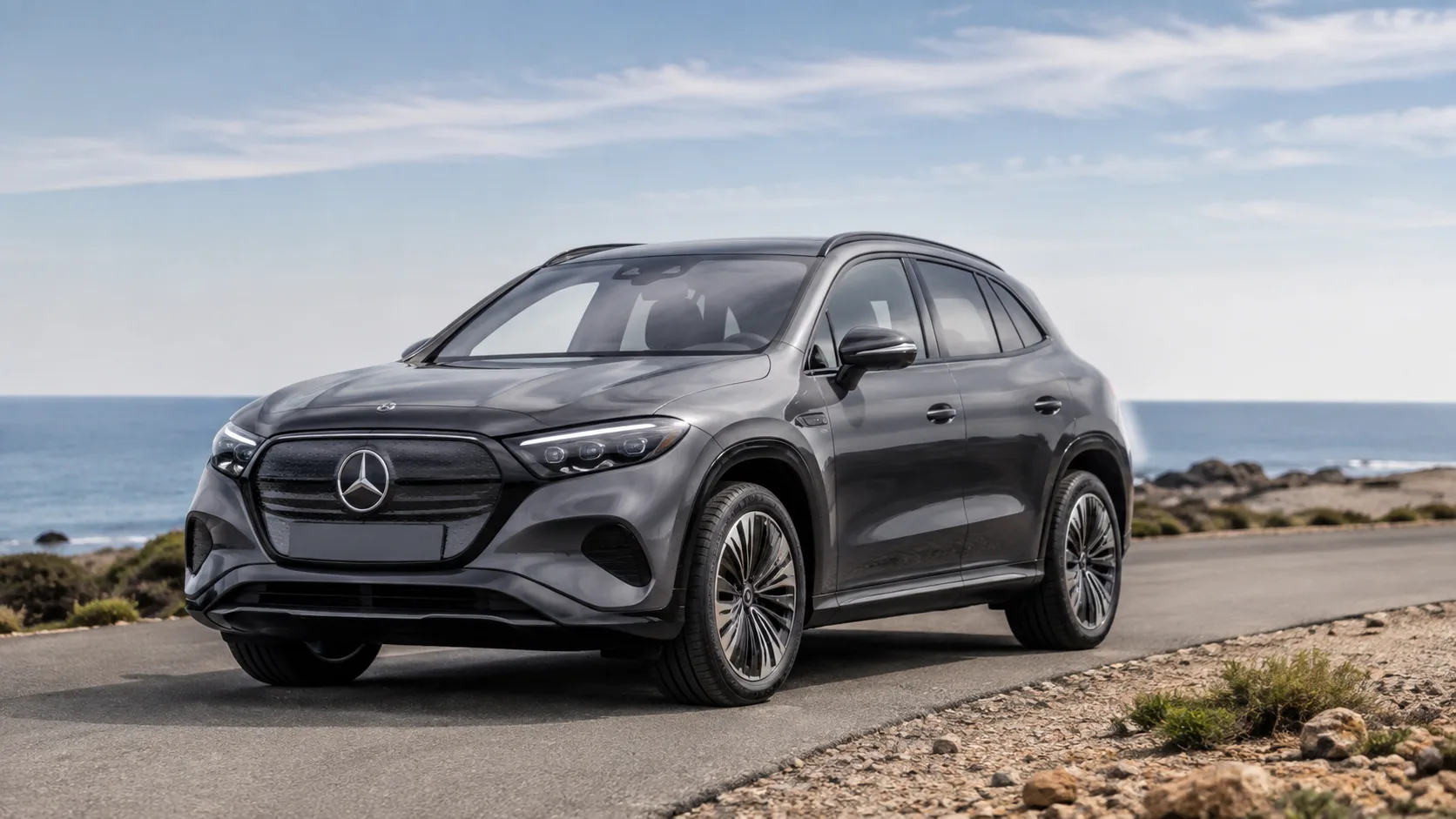
The 2026 Mercedes-Benz GLC EV is no longer just an upcoming electric SUV. Mercedes-Benz has already launched the new battery-electric GLC in Europe, and the model is expanding into additional variants during 2026. Sold under the name GLC with EQ Technology, the electric SUV combines a new 800-volt architecture, long WLTP range, fast charging, Mercedes-Benz’s new MB.OS software platform and a cabin built around a large digital display.
The first version, the GLC 400 4MATIC with EQ Technology, uses a 94-kWh usable battery and produces 360 kW (489 hp). Mercedes-Benz quotes a WLTP range of up to 715 km, although the exact certified range depends on specification and market. In June 2026, Mercedes-Benz added the GLC 250 electric and GLC 300 4MATIC electric to the German lineup, broadening the range with 85-kWh batteries and lower starting prices.
For global shoppers, however, one detail matters: the specifications, prices and availability discussed below are primarily based on Mercedes-Benz’s European-market information. The electric GLC is not currently listed as an electric GLC model on Mercedes-Benz India’s public model range, so an India launch, Indian price or India-specific specification should not be assumed from the European data.
Quick Answer: What Is the 2026 Mercedes-Benz GLC EV?
The 2026 Mercedes-Benz GLC EV is the battery-electric version of the GLC SUV, officially referred to by Mercedes-Benz as the GLC with EQ Technology.
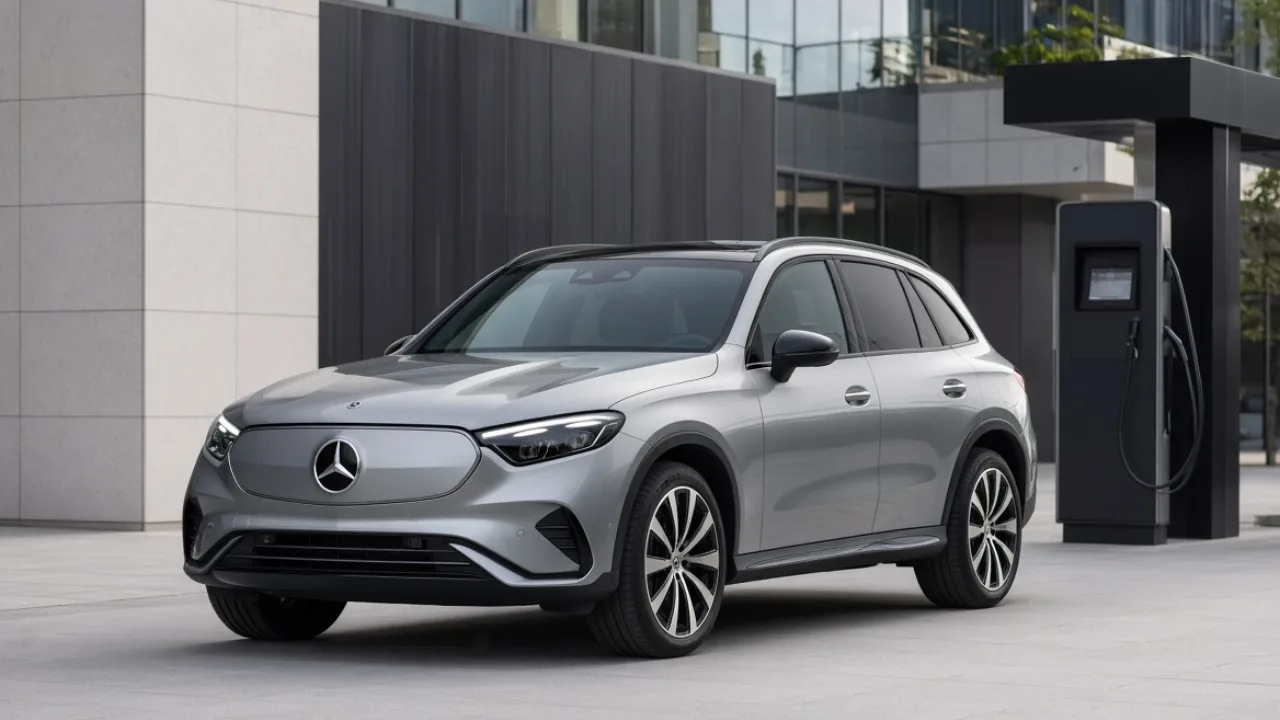
The lineup currently includes three European-market variants:
| Specification | GLC 250 electric | GLC 300 4MATIC electric | GLC 400 4MATIC electric |
|---|---|---|---|
| Drive | Rear-wheel drive | All-wheel drive | All-wheel drive |
| Peak power | 260 kW | 310 kW | 360 kW |
| Peak torque | 505 Nm | 800 Nm | 800 Nm |
| Usable battery | 85 kWh | 85 kWh | 94 kWh |
| Max. DC charging | 320 kW | 320 kW | 330 kW |
| WLTP range | 541–650 km | 523–616 km | 568–715 km |
| 0–100 km/h | 5.9 sec | 4.7 sec | 4.3 sec |
| Top speed | 210 km/h | 210 km/h | 210 km/h |
These figures are Mercedes-Benz’s European-market figures and are subject to equipment, testing and market differences.
What Is New About the Electric GLC?
The biggest change is that the electric GLC is not simply a combustion-powered GLC converted to use batteries.
Mercedes-Benz developed it as a battery-electric vehicle around a new electric architecture. The company says the model introduces a new generation of electric technology covering the powertrain, battery, charging system, software and vehicle electronics.
The exterior also introduces a new Mercedes-Benz design direction. Its most distinctive feature is the illuminated and animated chrome grille, which replaces the traditional visual treatment normally associated with a combustion-engine radiator grille.
The electric GLC is therefore important beyond the model itself. Mercedes-Benz describes it as the first vehicle in a new family of electric models built around its MB.OS operating system and new design language.
Mercedes-Benz is entering a broader wave of premium electric SUVs, and readers following that shift can also explore the 2026 BMW iX3: New Design, Range, Charging and Technology Explained for another look at a next-generation luxury electric SUV.
2026 Mercedes-Benz GLC EV Range
Range is one of the electric GLC’s strongest selling points.
The GLC 400 4MATIC electric has a WLTP range of 568 to 715 km, depending on configuration. The GLC 300 4MATIC electric is rated at 523 to 616 km, while the rear-wheel-drive GLC 250 electric achieves 541 to 650 km under the European WLTP test cycle.
The wide ranges shown for individual variants are important. WLTP range is not a guaranteed distance that every driver will achieve. Mercedes-Benz specifically notes that actual driving range can be affected by driving style, environmental conditions, battery aging, auxiliary equipment, tires, payload, optional equipment and route profile.
That means the headline 715-km range should be viewed as the maximum certified WLTP figure for the relevant GLC 400 configuration rather than a promise of 715 km in every real-world situation.
Range is also a major theme across the latest electric SUVs, including the 2026 Tesla Model Y: New Design, Range, Features and Price Explained, which gives readers another current EV reference when comparing range-focused models.
Which GLC EV Has the Longest Range?
The GLC 400 4MATIC electric currently has the highest official WLTP range in the lineup, at up to 715 km.
The rear-wheel-drive GLC 250 electric follows with up to 650 km, while the GLC 300 4MATIC electric is rated at up to 616 km.
For buyers focused primarily on maximum range, the GLC 250’s rear-wheel-drive layout and 85-kWh usable battery give it a notable range advantage over the more powerful all-wheel-drive GLC 300.
Battery and Electric Powertrain
Mercedes-Benz uses lithium-ion batteries across the electric GLC lineup.
The GLC 400 4MATIC electric has a 94-kWh usable battery, while both the GLC 300 4MATIC electric and GLC 250 electric use an 85-kWh usable battery.
The GLC 400 combines two permanent-magnet synchronous motors with all-wheel drive and produces up to 360 kW and 800 Nm. That gives it a claimed 0–100 km/h time of 4.3 seconds.
The GLC 300 4MATIC electric reduces output to 310 kW but retains 800 Nm of peak torque and reaches 100 km/h in 4.7 seconds.
The GLC 250 electric uses a single electric motor, rear-wheel drive and 260 kW with 505 Nm. Its 0–100 km/h time is 5.9 seconds.
All three versions have a 210-km/h top speed.
800-Volt Charging Technology
Charging technology is another major feature of the electric GLC.
The vehicle uses an 800-volt electrical architecture, allowing Mercedes-Benz to support high DC charging power. The GLC 400 can accept up to 330 kW of DC charging, while the GLC 250 and GLC 300 support up to 320 kW.
Mercedes-Benz states that the GLC 400 can add up to 305 km of WLTP range in 10 minutes under the specified charging conditions. The GLC 300 can add up to 255 km and the GLC 250 up to 265 km in 10 minutes.
The company also lists a DC charging time of approximately 22 minutes from 10% to 80% for all three variants when using the specified high-power charging conditions.
Those figures require a compatible high-power DC charger and the right battery and environmental conditions. They should not be interpreted as the charging performance available from every public charging station.
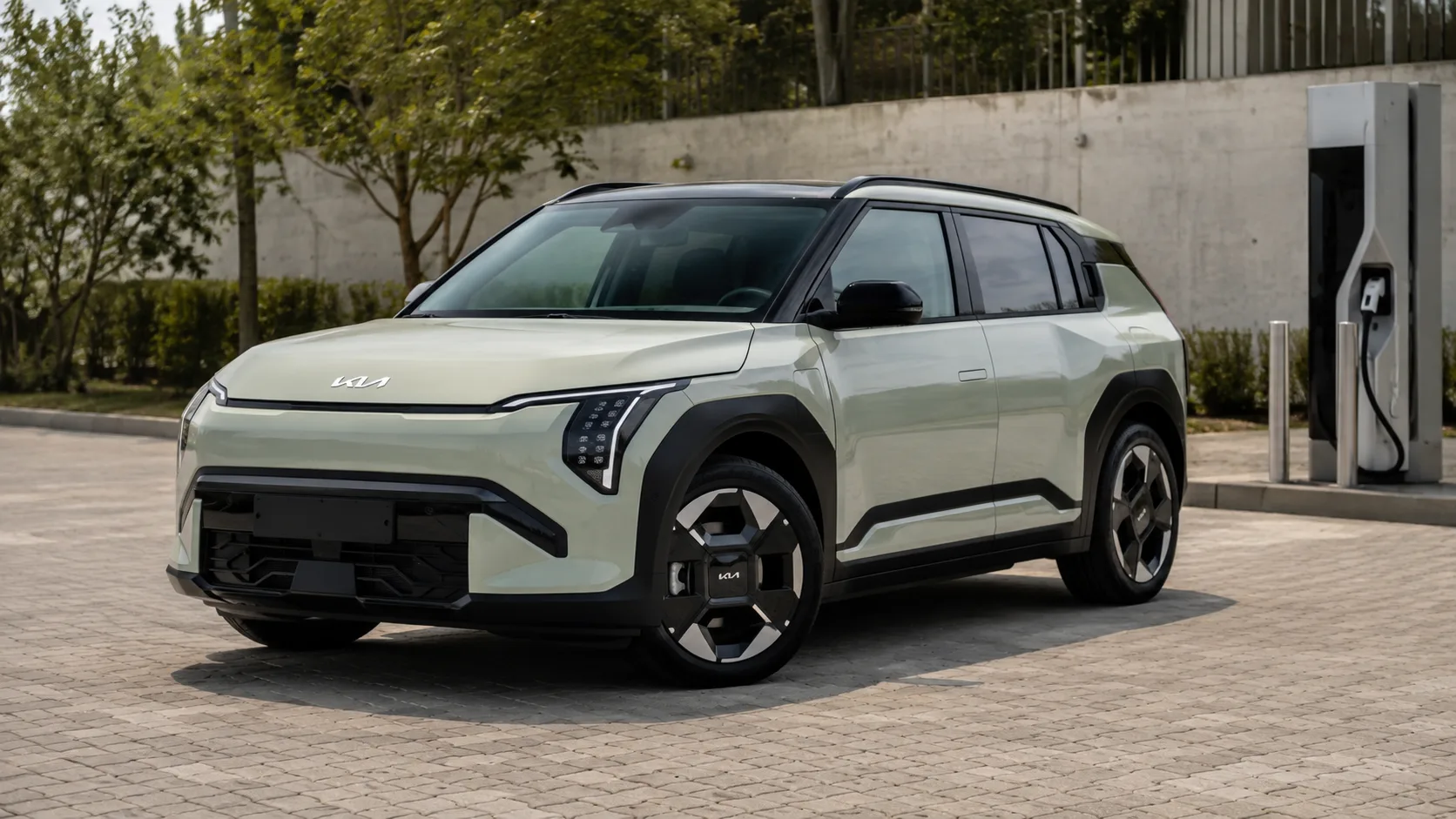
High-speed charging is becoming an important part of new EV development, and the 2026 Kia EV3: Range, Price, Features and Global Launch Details provides another example of how newer electric models are being developed around range and charging capability.
AC charging is rated at 11 kW as standard, with 22-kW AC charging available as an option in the European specification described by Mercedes-Benz.
What Makes the Electric GLC Efficient?
The electric GLC’s efficiency is not based on battery size alone.
Mercedes-Benz has focused on the entire electric drivetrain, including the motors, battery chemistry, thermal management and vehicle software.
The GLC 250 electric is rated at 18.1–15.0 kWh/100 km, while the GLC 300 4MATIC electric is rated at 18.8–15.9 kWh/100 km. The GLC 400 4MATIC electric is rated at 18.9–14.9 kWh/100 km under the European WLTP procedure.
The lower consumption figures help explain how the GLC can offer long range without requiring an exceptionally large battery.
Mercedes-Benz has also designed the vehicle to recover energy during deceleration. The company has described its new One-Box braking system as capable of using electric braking for the vast majority of everyday braking situations, while regenerative braking can feed energy back into the battery.
Exterior Design
The electric GLC represents a noticeable visual change for Mercedes-Benz.
The front end is dominated by a redesigned grille that can be illuminated and animated. Rather than hiding the absence of a conventional combustion-engine grille, Mercedes-Benz has turned the area into a major design element.
The rest of the SUV keeps the recognizable proportions of a GLC while using smoother surfaces and aerodynamic detailing to support electric efficiency.
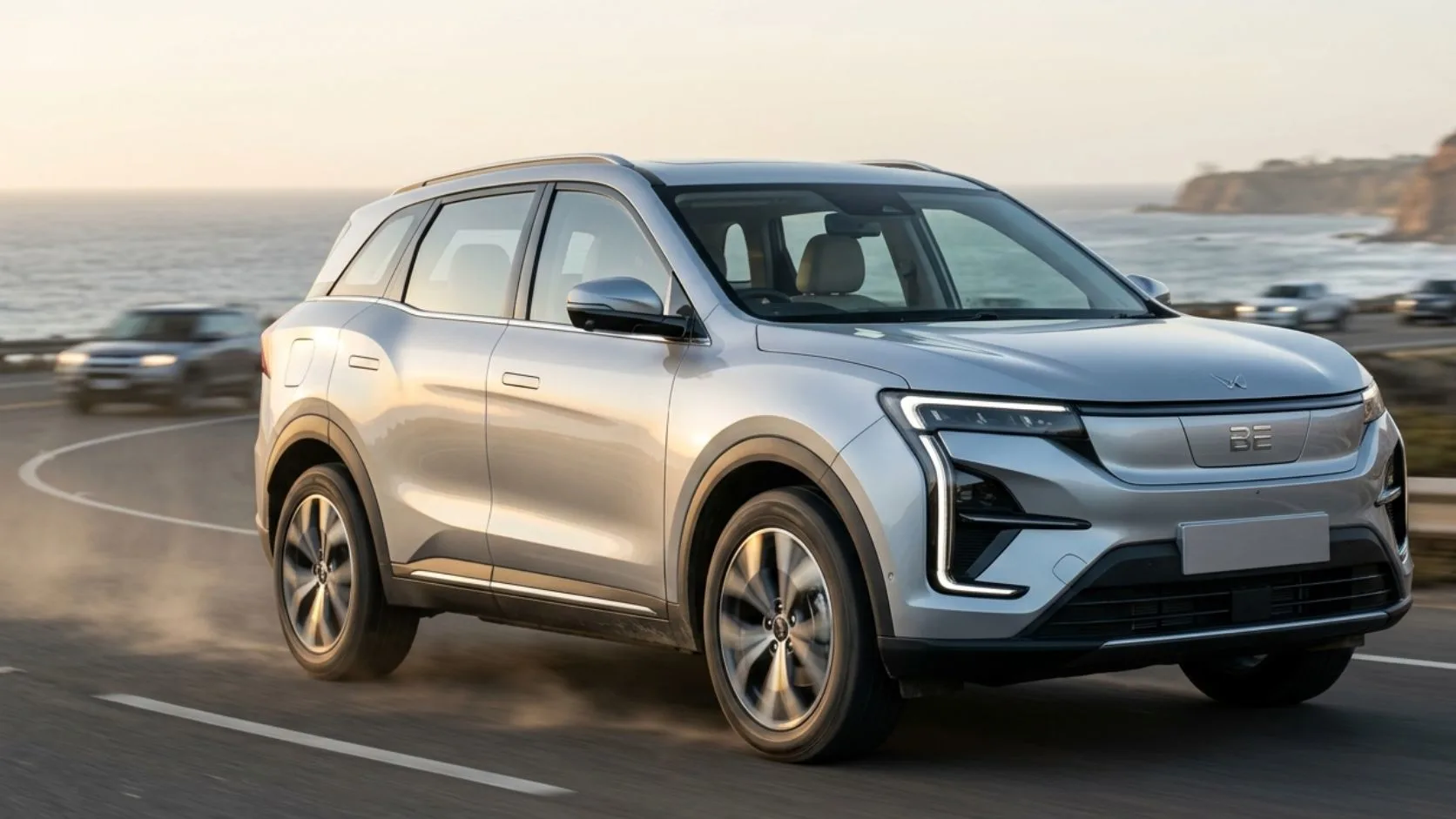
Mercedes-Benz says the new electric model retains the versatility associated with the GLC while introducing an elevated design language that will influence future models.
Interior and Space
Inside, Mercedes-Benz has focused heavily on digital technology and passenger space.
The electric GLC has a wheelbase that is 84 mm longer than the combustion-powered GLC referenced by Mercedes-Benz. The company says this creates additional passenger space, including more legroom and headroom for both front and rear occupants.
Cargo capacity is also substantial.
The luggage compartment provides 570 liters, expanding to 1,740 liters with the rear seats folded. There is also a 128-liter frunk, giving the electric GLC useful additional storage ahead of the passenger compartment.
Towing capacity reaches up to 2,400 kg for the GLC 400 and GLC 300, while the GLC 250 is rated for up to 2,200 kg braked towing capacity in the cited European specification.
MBUX Hyperscreen and MB.OS
Technology is one of the defining characteristics of the new GLC.
Mercedes-Benz offers the MBUX Hyperscreen, a seamless display measuring 99.3 cm (39.1 inches) across the dashboard. The company describes it as the largest screen offered in a Mercedes-Benz vehicle.
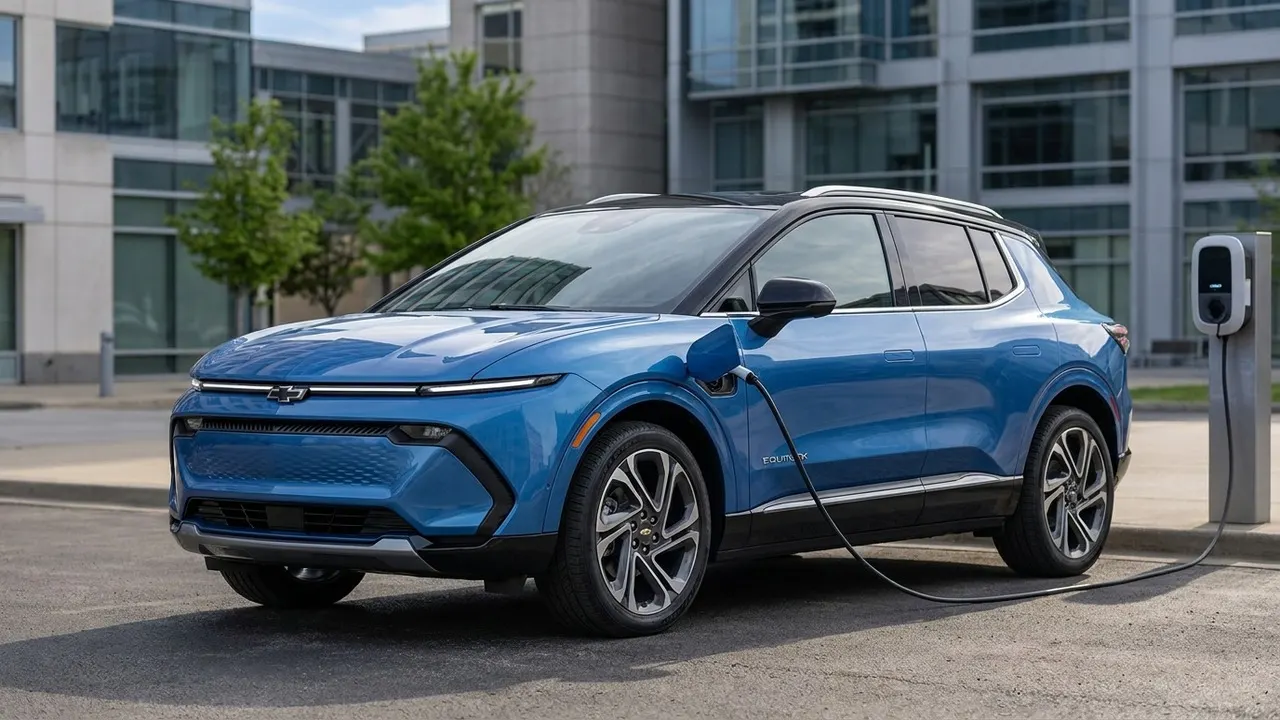
The system runs on MB.OS, Mercedes-Benz’s new vehicle operating system.
Instead of treating infotainment, charging, navigation and driver assistance as separate systems, MB.OS is designed to connect these functions through a common software architecture.
The system also supports over-the-air updates through the Mercedes-Benz Intelligent Cloud. This gives Mercedes-Benz the ability to update certain vehicle functions and software after the vehicle has been delivered.
The Hyperscreen is not standard across every version and equipment configuration. Mercedes-Benz’s June 2026 European specification lists it as an optional feature within higher equipment packages.
Driver Assistance and Safety Technology
The electric GLC also introduces a broad collection of driver-assistance technology.
Mercedes-Benz groups additional assistance functions under the MB.DRIVE name. Depending on equipment and market, the vehicle can use multiple cameras, radar sensors and ultrasonic sensors to support functions such as adaptive cruise control, lane assistance and parking assistance.
Mercedes-Benz lists DISTRONIC Distance Assist and Parking Assist among the standard equipment for the European electric GLC, while additional packages can extend the vehicle’s assisted-driving capabilities.
Importantly, these systems remain driver-assistance technologies. They do not turn the GLC into a fully autonomous vehicle, and Mercedes-Benz states that the driver remains responsible for operating the vehicle and observing system limitations.
AIRMATIC Air Suspension and Rear-Axle Steering
The electric GLC can be equipped with AIRMATIC air suspension, while rear-axle steering is available to improve maneuverability.
Mercedes-Benz quotes up to 4.5 degrees of rear-axle steering. By turning the rear wheels in relation to the front wheels, the system can reduce the vehicle’s effective turning circle at appropriate speeds and improve agility.
With rear-axle steering, Mercedes-Benz lists a turning circle of 11.2 meters compared with 12.1 meters without the system in its current European specification.
This is particularly useful for a midsize luxury SUV that needs to balance highway stability with easier maneuvering in urban environments.
Comfort and Luxury Features
The electric GLC is positioned as a premium SUV rather than simply a long-range EV.
Depending on specification and package, equipment can include heated and climate-controlled seats, massage functions, panoramic roof options, ambient lighting, Burmester surround sound, DIGITAL LIGHT and additional comfort functions.
Mercedes-Benz also offers a Vegan Package. The company says the interior package received the Vegan Trademark certification from The Vegan Society after independent assessment of the relevant materials. Mercedes-Benz describes the GLC as the first vehicle interior to receive this certification.
The availability of individual equipment varies by market and package, so buyers should check the local configurator rather than assuming that every feature is included with every GLC EV.
2026 Mercedes-Benz GLC EV Prices
Pricing varies considerably by market.
For Germany, Mercedes-Benz announced a starting price of €71,281 including VAT for the GLC 400 4MATIC with EQ Technology when sales opened in October 2025.
In June 2026, Mercedes-Benz expanded the German lineup with the GLC 250 electric and GLC 300 4MATIC electric.
Current German prices including VAT are:
| Model | German starting price including VAT |
|---|---|
| GLC 250 electric | €64,736 |
| GLC 300 4MATIC electric | €68,306 |
| GLC 400 4MATIC electric | €71,281 |
These are German prices and should not be converted directly into U.S., Indian or other-market pricing. Taxes, duties, equipment, local distribution costs and market positioning can all change the final price.
Is the Electric GLC Coming to India?
As of August 2026, Mercedes-Benz India’s public website lists the conventional GLC with petrol/diesel powertrains, while its electric model listings include vehicles such as the CLA, EQS and EQS SUV. The electric GLC is not shown as an available electric model on the Indian site at the time of writing.
Mercedes-Benz’s global announcements also do not provide a confirmed Indian launch date for the electric GLC in the sources reviewed for this article.
Therefore, an Indian launch date, Indian price or Indian battery/range specification should be treated as not officially confirmed unless Mercedes-Benz India announces it.
Is the 2026 GLC EV Available in the U.S.?
Mercedes-Benz has discussed the new electric GLC as part of its global product rollout, but specifications and availability are market-specific.
The company’s January 2026 announcement identified the new electric GLC as part of its 2026 product program, while its European releases provide the detailed pricing, range and variant information cited above.
The European specifications should therefore not automatically be presented as U.S.-market specifications. Buyers in the United States should rely on Mercedes-Benz USA for final U.S. model availability, pricing, equipment and certification.
2026 GLC EV: Which Version Makes the Most Sense?
The three variants serve different priorities.
GLC 250 electric: The most range-focused choice for buyers who do not need all-wheel drive. Its 650-km maximum WLTP figure is higher than the GLC 300’s maximum despite the lower price and smaller battery.
GLC 300 4MATIC electric: A middle option for buyers who want all-wheel drive and strong performance without stepping up to the GLC 400.
GLC 400 4MATIC electric: The performance-oriented version. With 360 kW, 800 Nm, a 94-kWh usable battery and a 4.3-second 0–100 km/h time, it offers the strongest performance and the highest maximum range in the current lineup.
The best version therefore depends less on a simple ranking and more on what matters to the buyer: maximum range, all-wheel drive, performance or purchase price.
What Are the Main Strengths of the Electric GLC?
The electric GLC has several clear strengths based on its confirmed specifications.
Long certified range: Up to 715 km WLTP for the GLC 400 provides a strong headline figure for a midsize luxury EV.
Fast charging: The 800-volt architecture and charging capability of up to 330 kW give the GLC strong fast-charging specifications.
Useful practicality: A 570-liter luggage compartment, up to 1,740 liters with the seats folded and a 128-liter frunk make the electric GLC more practical than its sleek technology focus might suggest.
Advanced software: MB.OS connects the vehicle’s digital systems and supports over-the-air updates.
Multiple variants: The 2026 expansion gives European buyers more choice than the original GLC 400 launch version.
What Should Buyers Watch Before Ordering?
The biggest consideration is that official WLTP figures are testing results, not guaranteed real-world range.
Charging performance also depends on the charger, battery temperature, state of charge and other conditions. The maximum 320- or 330-kW charging figure should therefore be viewed as the vehicle’s peak capability rather than a constant charging rate.
Market differences are equally important. A feature, variant, price or range figure confirmed in Germany may not be offered in exactly the same form elsewhere.
Finally, buyers should check which equipment is standard and which features are optional. Mercedes-Benz offers multiple packages, and major features such as the MBUX Hyperscreen, AIRMATIC suspension and certain advanced assistance technologies can depend on specification.
2026 Mercedes-Benz GLC EV vs. the Combustion GLC
The electric GLC is designed to complement rather than simply replace the combustion-powered GLC across every market.
Its longer wheelbase, large cargo area and familiar SUV proportions preserve much of the GLC’s practical character, while the electric model introduces a different powertrain and a much more software-focused cabin.
For drivers who regularly travel long distances without reliable fast-charging access, the combustion GLC may still offer practical advantages depending on market and use case.
For buyers with convenient home or public charging, the electric GLC’s long WLTP range, rapid DC charging and quiet electric drivetrain make it a substantially different interpretation of the GLC formula.
The decision ultimately comes down to driving patterns, charging access, local pricing and powertrain preference rather than simply choosing the newer technology.
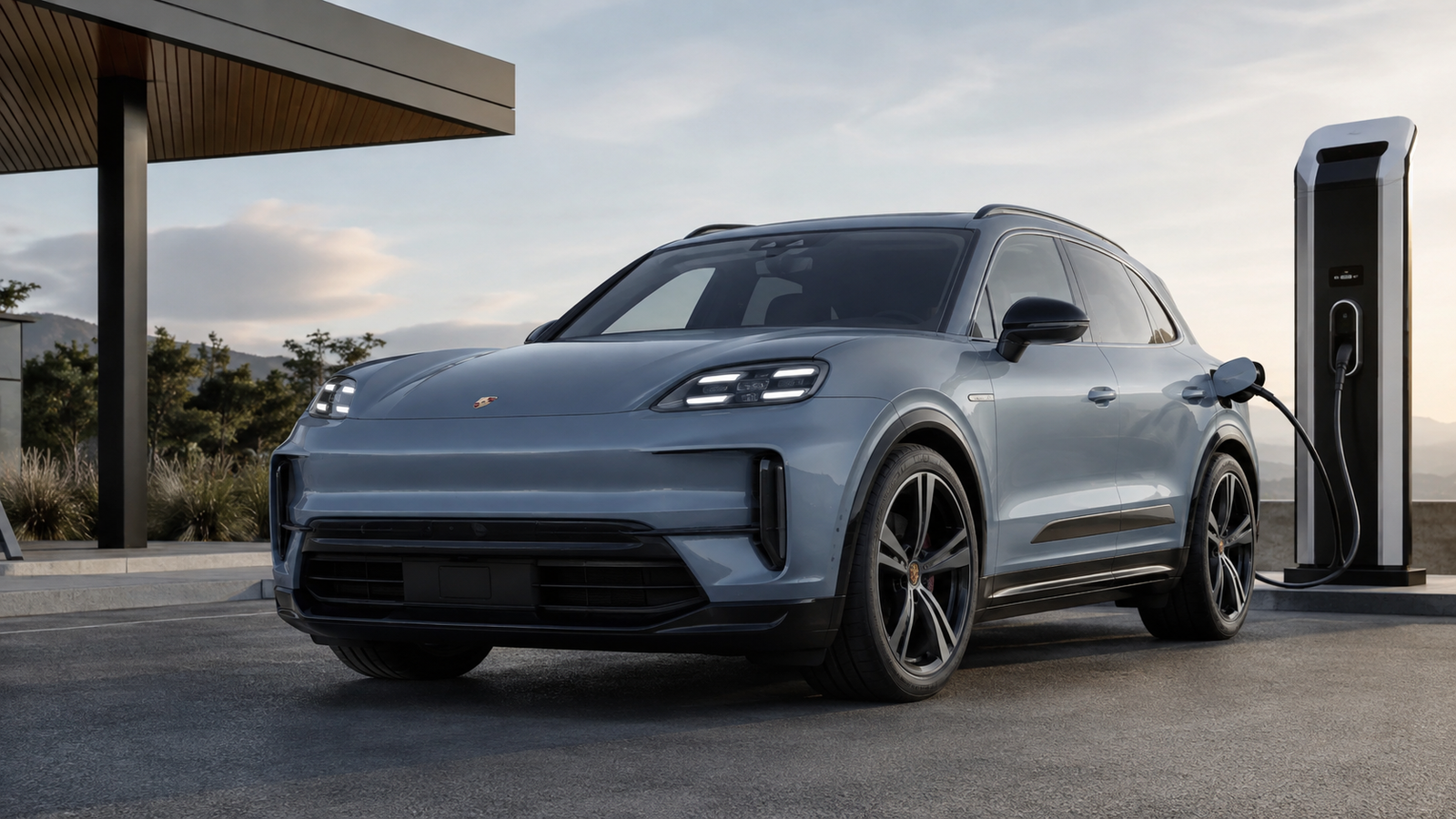
For readers comparing premium electric SUVs beyond Mercedes-Benz, the 2026 Porsche Cayenne Electric: Range, Performance and Features Explained covers another high-end electric SUV with a different balance of performance, range and luxury features.
Final Thoughts
The 2026 Mercedes-Benz GLC EV is one of Mercedes-Benz’s most important electric SUVs because it brings the company’s new electric architecture, MB.OS software platform and updated design language into a high-volume midsize SUV.
The numbers are compelling. The GLC 400 4MATIC electric can deliver up to 715 km of WLTP range, 360 kW of power, a 94-kWh usable battery and DC charging at up to 330 kW. The newer GLC 250 and GLC 300 4MATIC versions broaden the lineup and make the electric GLC accessible at lower German starting prices.
But the most important point for prospective buyers is to separate global headlines from local specifications. Mercedes-Benz’s European range is well documented, while availability, pricing and equipment in markets such as India and the United States must be confirmed locally.
For buyers looking for a premium electric SUV that combines long certified range, fast charging, generous storage and an increasingly software-defined cabin, the electric GLC is a significant new entry. Its real-world appeal, however, will ultimately depend on local charging infrastructure, pricing and the exact specification offered in each market.
FAQ
What is the range of the 2026 Mercedes-Benz GLC EV?
The GLC 400 4MATIC electric has a maximum WLTP range of 715 km in the European specification. The GLC 300 4MATIC electric reaches up to 616 km, while the GLC 250 electric reaches up to 650 km. Actual range can vary according to driving conditions, equipment, weather, payload and other factors.
How big is the Mercedes-Benz GLC EV battery?
The GLC 400 4MATIC electric uses a 94-kWh usable battery. The GLC 250 electric and GLC 300 4MATIC electric use 85-kWh usable batteries.
How fast can the GLC EV charge?
The GLC 400 supports up to 330 kW of DC charging, while the GLC 250 and GLC 300 support up to 320 kW. Mercedes-Benz quotes about 22 minutes for a 10–80% DC charge under the specified high-power charging conditions.
How much range can the GLC EV add in 10 minutes?
Mercedes-Benz quotes up to 305 km of WLTP range added in 10 minutes for the GLC 400, up to 265 km for the GLC 250 and up to 255 km for the GLC 300 under the specified charging conditions.
Is the Mercedes-Benz GLC EV all-wheel drive?
Not every version. The GLC 400 4MATIC electric and GLC 300 4MATIC electric use all-wheel drive, while the GLC 250 electric uses rear-wheel drive in the European lineup.
How fast is the GLC 400 4MATIC electric?
Mercedes-Benz lists a 0–100 km/h acceleration time of 4.3 seconds for the GLC 400 4MATIC electric. Its top speed is 210 km/h.
Does the GLC EV have a frunk?
Yes. Mercedes-Benz lists a 128-liter front trunk, or frunk, for the current electric GLC variants.
How much cargo space does the electric GLC have?
The electric GLC has 570 liters of luggage capacity, increasing to 1,740 liters with the rear seats folded.
Is the 2026 Mercedes-Benz GLC EV available in India?
Mercedes-Benz India’s public model lineup does not currently list the electric GLC as an available electric model. No confirmed Indian launch date or Indian price was identified in the official sources reviewed for this article.
What is the price of the 2026 Mercedes-Benz GLC EV?
Prices depend on the market. In Germany, Mercedes-Benz lists the GLC 250 electric from €64,736 including VAT, the GLC 300 4MATIC electric from €68,306 and the GLC 400 4MATIC electric from €71,281. These prices should not be treated as global pricing.
Sources & References
- Mercedes-Benz Media — Expanding the line-up: New electric Mercedes-Benz GLC variants available to order
- Mercedes-Benz Media — The all-new electric GLC available to order
- Mercedes-Benz Media — The new Mercedes-Benz GLC press kit
- Mercedes-Benz Media — New Mercedes-Benz GLC is world’s first car with interior certified by The Vegan Society
- Mercedes-Benz Group — Electric GLC environmental assessment
- Mercedes-Benz India — Official model and vehicle lineup
2 thoughts on “2026 Mercedes-Benz GLC EV: Range, Technology and Features Explained”