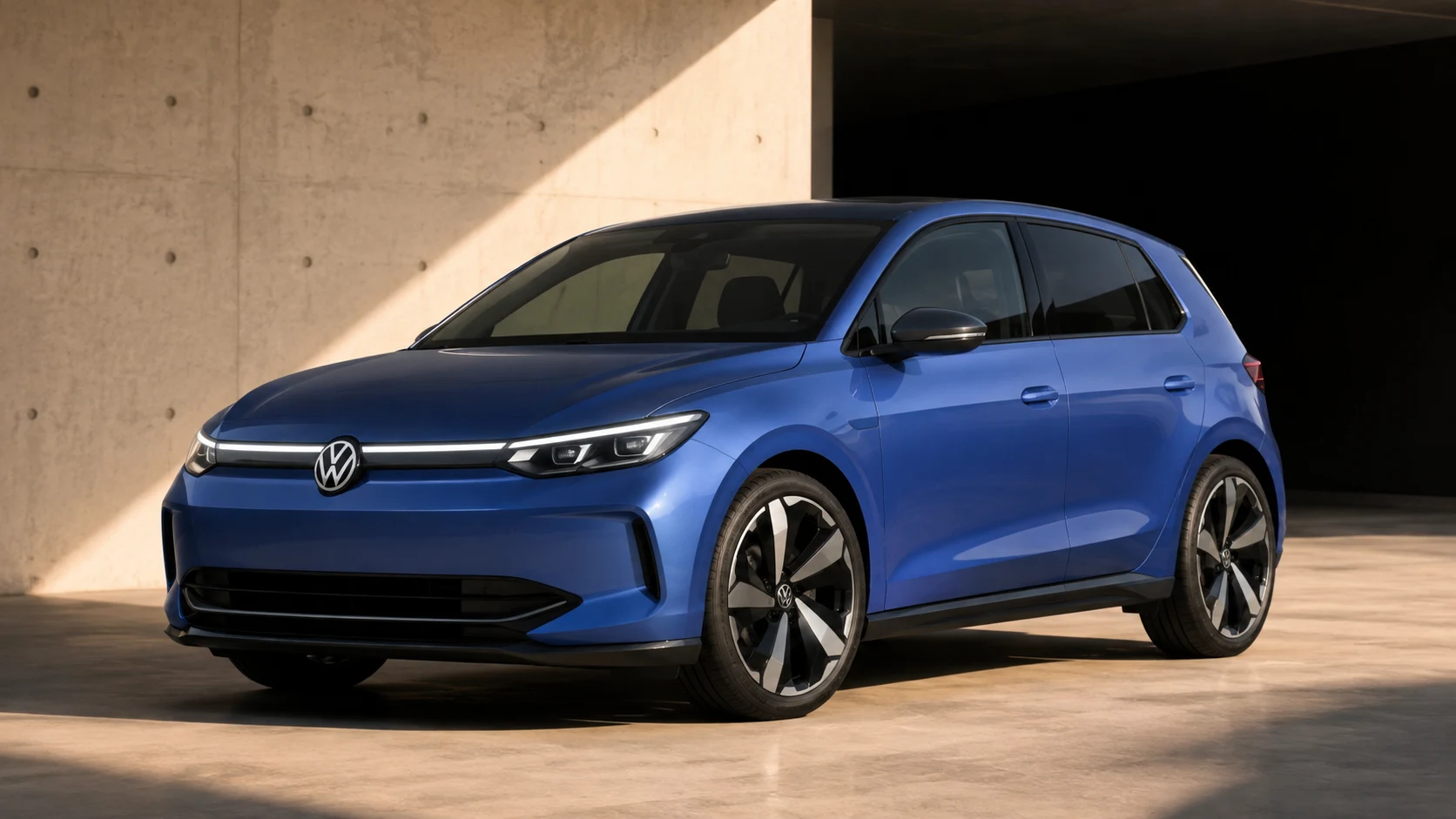
The 2026 Volkswagen ID. Polo marks a major change for one of Volkswagen’s best-known small cars: the Polo name has moved into the brand’s all-electric ID. family. Revealed in April 2026, the new electric hatchback combines a compact footprint with a choice of 37-kWh and 52-kWh net batteries, front-wheel drive, modern driver-assistance technology and a maximum WLTP range of up to 454 km.
For buyers in Europe, the ID. Polo is no longer simply an upcoming electric car. Volkswagen has already opened pre-sales in Germany, including the lower-priced 37-kWh version from €24,995. Availability, pricing and equipment outside Europe remain market-specific, so the German specifications should not be treated as global specifications.
Quick Answer: What Is the 2026 Volkswagen ID. Polo?
The ID. Polo is the first fully electric production version of Volkswagen’s Polo nameplate. It uses the MEB+ electric platform and a newly developed front-wheel-drive system designed specifically for compact Volkswagen models.
In its European specification, the 2026 ID. Polo is offered with 85 kW (116 PS), 99 kW (135 PS) and 155 kW (211 PS) power outputs. The smaller-battery versions use a 37-kWh net LFP battery, while the higher-output version uses a 52-kWh net NMC battery. Depending on the configuration, Volkswagen quotes up to 329 km or 454 km of WLTP range.
The German range currently starts at €24,995 for the ID. Polo Trend with the 37-kWh battery. The 52-kWh model launched first at €33,795 for the Life specification, while Volkswagen subsequently expanded the lineup with the cheaper 37-kWh battery versions.
2026 Volkswagen ID. Polo Specifications
| Specification | 2026 Volkswagen ID. Polo |
|---|---|
| Powertrain | Battery electric |
| Drive type | Front-wheel drive |
| Motor | Single electric motor |
| Power outputs | 85 kW, 99 kW, 155 kW |
| Battery | 37 kWh LFP / 52 kWh NMC, net |
| Maximum WLTP range | Up to 454 km |
| AC charging | Up to 11 kW |
| DC charging | Up to 90 kW / 105 kW |
| DC 10–80% charging | About 23 / 24 minutes |
| Length | 4,053 mm |
| Width | 1,816 mm |
| Height | 1,530 mm |
| Wheelbase | 2,600 mm |
| Cargo capacity | 441 litres |
| Maximum cargo capacity | Up to 1,243 litres |
| Platform | MEB+ |
| German starting price | €24,995 |
These specifications refer to Volkswagen’s European/German-market information and can vary by version and market.
Design: A New Electric Interpretation of the Polo
The ID. Polo does not abandon the recognizable proportions of Volkswagen’s small hatchback. Instead, Volkswagen has redesigned the car around its new Pure Positive design language.
The production model has a clean front end with horizontally arranged lighting elements, an illuminated central section and a wide stance. Volkswagen also uses a C-pillar design inspired by the first-generation Golf, linking the new electric hatchback to the company’s older design heritage.
At the rear, the ID. Polo uses a horizontal light arrangement and a relatively broad-looking tail. Depending on equipment, IQ.LIGHT rear lamps add illuminated elements and a three-dimensional appearance to the lighting signature.
Aerodynamics also played a role in the exterior design. Volkswagen quotes a drag coefficient of 0.264, while wheels of up to 19 inches are available depending on configuration.
The result is deliberately less futuristic-looking than some electric vehicles. That appears to be part of Volkswagen’s strategy: the ID. Polo is meant to look like a recognizable Volkswagen first and an electric car second.
Dimensions and Interior Space
Although the ID. Polo remains a compact hatchback, its electric architecture gives Volkswagen more freedom to use the available space.
The car measures 4,053 mm long, 1,816 mm wide and 1,530 mm high, with a 2,600-mm wheelbase. Volkswagen says the electric model provides more interior space than the conventional Polo, particularly for rear passengers.
Cargo capacity is another major advantage. The luggage compartment holds 441 litres, increasing to as much as 1,243 litres with the rear seats folded. Volkswagen says this represents a 25% increase in luggage capacity compared with the conventional Polo’s 351-litre figure.
That makes the ID. Polo more than an urban runabout. Its dimensions and cargo area give it the potential to work as a small family car for everyday driving.
Interior and Technology
Volkswagen has taken a different approach to the ID. Polo’s cabin compared with some earlier ID. models.
The dashboard uses a horizontal layout with two primary displays. The digital instrument display measures 10.25 inches, while the central infotainment screen is almost 13 inches. Physical buttons have also returned for selected functions, including controls associated with climate functions and the hazard warning lights.
For readers comparing how newer electric cars approach digital interfaces, charging and onboard technology, the 2026 BMW iX3: New Design, Range, Charging and Technology Explained provides another useful EV reference point.
Volkswagen has also added what it calls retro displays. At the press of a button, the digital instrument cluster can show graphics inspired by earlier Volkswagen models, including the first Golf.
The interior design is intended to combine digital functions with more familiar physical controls. That is a notable change in direction because it makes basic functions less dependent on touchscreen menus.
What Is the MEB+ Platform?
The ID. Polo is based on the latest evolution of Volkswagen Group’s Modular Electric Drive Matrix, known as MEB+.
One of the most important changes is the use of front-wheel drive. Volkswagen developed a new electric drive system for its smaller vehicles rather than simply shrinking the architecture used by larger ID. models.
Moving the electric motor and associated drive hardware to the front helps free up space at the rear and contributes to the ID. Polo’s relatively large luggage compartment. Volkswagen also says the architecture reduces complexity and supports improved efficiency and lower vehicle weight compared with earlier concepts.
The ID. Polo uses a single-speed transmission and a single electric motor mounted at the front axle.
Battery, Range and Charging
The 2026 ID. Polo has two battery configurations in Volkswagen’s European specification.
37-kWh LFP Battery
The entry-level battery contains 37 kWh of usable energy and uses lithium iron phosphate, or LFP, chemistry.
The 85-kW and 99-kW versions are associated with this battery. Volkswagen’s latest information gives the 37-kWh ID. Polo a maximum WLTP range of 334 km, improving on the earlier provisional forecast of 329 km.
DC charging is available at up to 90 kW, with a claimed 10–80% charging time of approximately 23 minutes.
For drivers who mainly use the car around town or on regular commuting routes, this version is positioned as the more affordable and practical entry point into the ID. Polo range.
52-kWh NMC Battery
The larger battery has a net capacity of 52 kWh and uses nickel-manganese-cobalt, or NMC, chemistry.
It is paired with the 155-kW (211-PS) electric motor in the current standard ID. Polo range and provides a maximum WLTP range of 454 km.
Volkswagen quotes DC charging of up to 105 kW and approximately 24 minutes for a 10–80% charge. AC charging is rated at up to 11 kW.
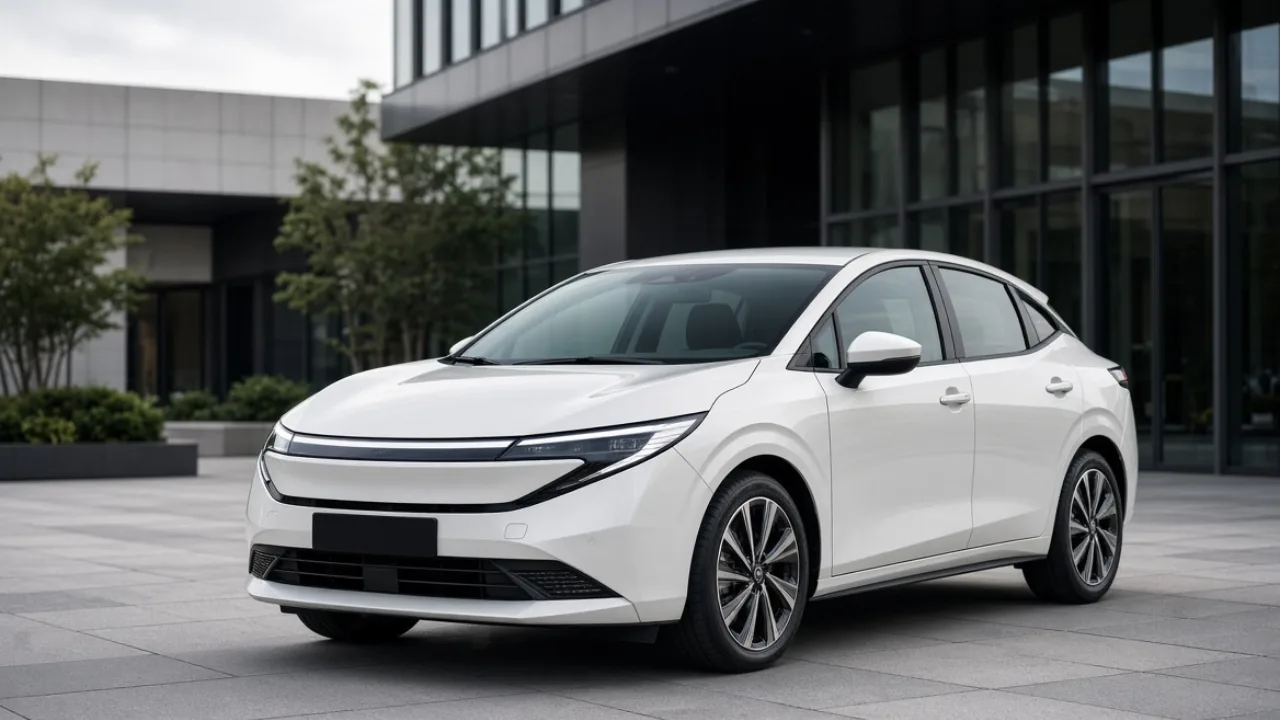
The 454-km figure is a laboratory WLTP result. Real-world range will vary with temperature, speed, weather, traffic, road conditions, wheel choice, passenger load and driving style.
Range-focused EV research naturally leads to other compact electric models, and the 2026 Kia EV3: Range, Price, Features and Global Launch Details provides another useful reference for buyers comparing battery options, official range figures and market-specific EV specifications.
Performance and Power Outputs
The ID. Polo is available with three standard power outputs for 2026:
- 85 kW (116 PS)
- 99 kW (135 PS)
- 155 kW (211 PS)
All use a single electric motor driving the front wheels.
Volkswagen has also confirmed an ID. Polo GTI, but that is a separate future performance model rather than part of the standard 2026 lineup. The company says the electric GTI will use a 166-kW (226-PS) powertrain and is scheduled for 2027.
That distinction matters because some early ID. Polo material referred to four output levels. The 166-kW version is associated with the upcoming GTI rather than the regular 2026 ID. Polo range.
Driver Assistance and Safety Technology
Volkswagen has brought several technologies from larger vehicles into the ID. Polo.
Available systems include Connected Travel Assist, which can combine functions such as adaptive cruise control and lane guidance. Volkswagen has also highlighted automatic recognition of traffic lights and stop signs as part of its next-generation assistance technology.
Other available technology includes advanced parking assistance and a 360-degree Area View camera system, depending on equipment and market.
The ID. Polo also supports one-pedal driving, allowing the driver to use accelerator input to control much of the vehicle’s acceleration and deceleration. Volkswagen describes its assistance technology as SAE Level 2 where applicable, meaning these systems remain driver assistance rather than autonomous driving.
Exact safety and driver-assistance equipment should therefore be checked against the local specification before purchase.
Vehicle-to-Load and Other EV Features
The ID. Polo also supports vehicle-to-load (V2L) functionality.
Volkswagen lists V2L output of up to 3.6 kW. This allows the car’s battery to provide electricity to compatible external equipment rather than being used only to propel the vehicle.
For owners, features such as this can make an EV more useful outside normal driving, although actual equipment compatibility and included adapters can depend on the vehicle configuration.
2026 Volkswagen ID. Polo Price and Availability
Pricing is market-specific, but Germany provides the clearest confirmed reference point at present.
Volkswagen started pre-sales for the ID. Polo with the 52-kWh battery in April 2026. The initial German price was €33,795 for the Life version with the 155-kW powertrain.
In July 2026, Volkswagen opened pre-sales for the smaller 37-kWh version. The German ID. Polo Trend starts at €24,995, while Life and Style versions with the smaller battery are available from €29,195.
These are German-market prices and should not be interpreted as U.S., U.K., Indian or other-market pricing.
Volkswagen has positioned the ID. Polo as part of a broader European electric-car strategy focused on making smaller EVs more affordable. The company has also said the ID. Polo is built in Spain as part of a Brand Group Core project involving Volkswagen, CUPRA and other group resources.
Is the Volkswagen ID. Polo Coming to the U.S.?
There is an important market distinction here.
The ID. Polo has been developed primarily as a European compact electric car, and Volkswagen’s confirmed pricing and specifications discussed above are European-market information. The company has not established the German-market ID. Polo as a globally identical vehicle with one universal specification.
That means U.S. shoppers should not assume that the European ID. Polo, its €24,995 starting price or its WLTP range will directly translate to the American market.
For buyers outside Europe, the safest approach is to wait for an official local Volkswagen announcement before treating availability, pricing, charging specifications or equipment as confirmed.
How Does the ID. Polo Compare With the Regular Polo?
The biggest difference is the powertrain and underlying architecture.
The conventional Polo continues to use Volkswagen’s MQB-based architecture and combustion powertrains, while the ID. Polo is a dedicated battery-electric model using MEB+ and front-wheel drive.
Interestingly, the electric car is not dramatically longer. The ID. Polo measures 4,053 mm, compared with 4,074 mm for the conventional Polo. But the electric model has a longer 2,600-mm wheelbase versus 2,552 mm, while also being wider and taller. Volkswagen says the result is improved interior space and substantially more luggage capacity.
For buyers choosing between them, the decision is therefore less about size and more about powertrain, charging access, driving requirements and market-specific pricing.
What Makes the 2026 ID. Polo Important?
The ID. Polo matters because Volkswagen is attempting to bring electric technology into a vehicle category traditionally defined by affordability and practicality.
The Polo has been sold for more than 20 million units over its history, according to Volkswagen. Moving that nameplate into the electric era gives the company an opportunity to reach buyers who may not need a large SUV or expensive electric hatchback.
The €24,995 German starting price is particularly significant because it puts the ID. Polo into a lower price bracket than many larger electric cars. The 37-kWh version also shows that Volkswagen is not relying exclusively on large batteries: the smaller pack is intended to keep the purchase price and everyday running requirements lower for urban and commuter use.
For buyers looking at how newer EVs are being positioned across different vehicle sizes and price points, the 2026 Tesla Model Y: New Design, Range, Features and Price Explained offers a useful comparison with another high-profile electric model.
At the same time, the 52-kWh model demonstrates that the same basic vehicle can provide a much longer official range and substantially more power.
What Buyers Should Know Before Ordering
The ID. Polo’s strongest configuration will depend heavily on how the vehicle is used.
The 37-kWh version makes the most sense for drivers who have predictable daily routes and access to convenient charging. Its lower price and smaller battery are designed around everyday urban use.
The 52-kWh version is more compelling for drivers who regularly travel longer distances. Its 454-km WLTP maximum gives it considerably more official range, while the 155-kW motor provides a substantial increase in output.
Buyers should also pay attention to equipment levels. Volkswagen offers different specification lines, and technologies such as advanced driver assistance, parking systems, lighting equipment and interior features can vary according to trim and optional packages.
Finally, charging access remains just as important as battery capacity. A smaller battery can be perfectly adequate when home or workplace charging is convenient, while a larger battery becomes more useful when the car frequently covers longer distances between charging opportunities.
Pros and Limitations
Potential strengths
- Lower entry price in Germany than many larger electric vehicles
- Up to 454 km WLTP range with the 52-kWh battery
- Compact exterior dimensions
- 441-litre luggage compartment
- Front-wheel-drive layout designed for compact-car packaging
- Physical controls alongside digital displays
- Modern driver-assistance technology
- 11-kW AC charging
- DC fast charging as standard
- Multiple power outputs
Things to consider
- European pricing does not establish pricing in other markets
- WLTP range is not the same as real-world driving range
- The 37-kWh battery has a considerably shorter official range than the 52-kWh version
- Equipment varies by trim and market
- The ID. Polo GTI is a future model rather than a standard 2026 version
- Buyers outside Europe should wait for official local-market confirmation
Final Thoughts
The 2026 Volkswagen ID. Polo is more significant than a conventional model update. It takes Volkswagen’s long-established small hatchback formula and rebuilds it around electric propulsion.
Its strongest selling points are clear: compact dimensions, useful interior space, a 441-litre trunk, front-wheel drive, modern software and driver-assistance technology, plus a choice between a lower-cost 37-kWh battery and a longer-range 52-kWh setup. The maximum 454-km WLTP range gives the larger-battery version enough official range to move beyond a purely city-focused role.
The most important caveat is market availability. The confirmed pricing and specifications currently provide a clear picture of the German and broader European offering, but those details should not automatically be applied to other countries.
For European buyers, the ID. Polo is already becoming a real purchasing option rather than simply a future concept. Volkswagen’s €24,995 German starting price for the 37-kWh Trend version also makes the model one of the company’s clearest attempts to push electric mobility into the mainstream small-car segment.
The growing number of new electric models also makes broader EV-market coverage useful for readers following where manufacturers are expanding their lineups, with New BYD Cars Coming in 2026: EV Models and Global Expansion Explained offering a wider look at upcoming electric-car developments.
Frequently Asked Questions
When did the Volkswagen ID. Polo launch?
Volkswagen officially unveiled the production ID. Polo on April 29, 2026. Pre-sales began with the 52-kWh version, followed by the lower-priced 37-kWh models in July 2026.
How much range does the 2026 Volkswagen ID. Polo have?
The 37-kWh version has a maximum WLTP range of 334 km, while the 52-kWh version can reach up to 454 km under the WLTP test cycle. Real-world range can be lower depending on conditions.
What battery does the ID. Polo use?
The ID. Polo uses a 37-kWh net LFP battery in the lower-output versions and a 52-kWh net NMC battery in the 155-kW version.
How fast does the Volkswagen ID. Polo charge?
The 37-kWh battery can charge from 10% to 80% in approximately 23 minutes using DC fast charging at up to 90 kW. The 52-kWh battery takes about 24 minutes under the stated conditions and supports DC charging at up to 105 kW. AC charging is rated at up to 11 kW.
How much does the 2026 ID. Polo cost?
In Germany, the ID. Polo Trend with the 37-kWh battery starts at €24,995. The 37-kWh Life and Style versions start at €29,195, while the 52-kWh Life model initially launched from €33,795. Pricing varies by market and specification.
Is the Volkswagen ID. Polo electric?
Yes. The ID. Polo is a fully battery-electric hatchback using a single front-mounted electric motor and front-wheel drive.
Is there a Volkswagen ID. Polo GTI?
Yes, but it is a future model rather than part of the regular 2026 ID. Polo lineup. Volkswagen has announced the ID. Polo GTI with 166 kW (226 PS), with its introduction planned for 2027.
Is the ID. Polo coming to the United States?
The confirmed information currently covers the European model and German-market pricing. Volkswagen’s European ID. Polo specifications should not be assumed to apply to the United States or other markets unless Volkswagen confirms local availability and specifications.
Sources & References
- Volkswagen Newsroom — The all-new electric ID. Polo: World Premiere
- Volkswagen Newsroom — World premiere of the all-new electric ID. Polo
- Volkswagen Newsroom — New exterior design
- Volkswagen Newsroom — New interior concept
- Volkswagen Newsroom — New drive concept
- Volkswagen Newsroom — ID. Polo technical specifications
- Volkswagen Newsroom — 37-kWh battery and German pricing
- Volkswagen Newsroom — New cockpit generation and interior technology