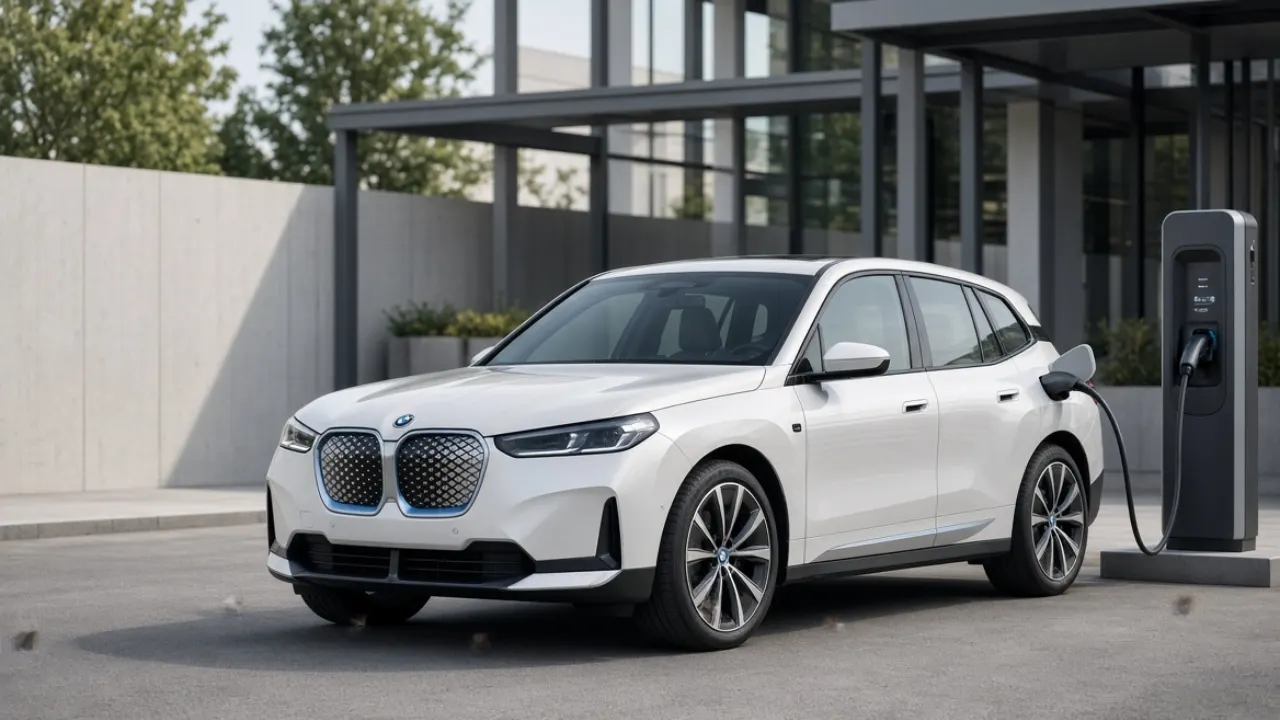
The new BMW iX3 is the first production model from BMW’s Neue Klasse generation, bringing a new electric platform, sixth-generation BMW eDrive technology, an 800-volt electrical system and a significantly faster charging setup. For buyers, however, the headline numbers are only part of the story.
BMW’s U.S. specification for the iX3 50 xDrive lists an EPA-estimated range of 383 to 434 miles, depending on the wheel and tire configuration. BMW also says the SUV can accept up to 400 kW of DC charging power, with a claimed 10-to-80% charging time of about 21 minutes under suitable conditions.
The more useful question is what owners might realistically see away from laboratory testing. Recent independent drives suggest that the iX3 can deliver several hundred miles of real-world driving, although speed, temperature, road conditions, tires, climate control and driving style can move the number substantially.
Quick Answer: What Range Can You Expect From the BMW iX3?
For the U.S.-market iX3 50 xDrive, BMW currently lists 383-434 miles of estimated EPA range, depending largely on the wheel and tire package. The 20-inch summer-tire configuration is rated at the top of the range, while the standard 20-inch all-season setup is rated at 383 miles.
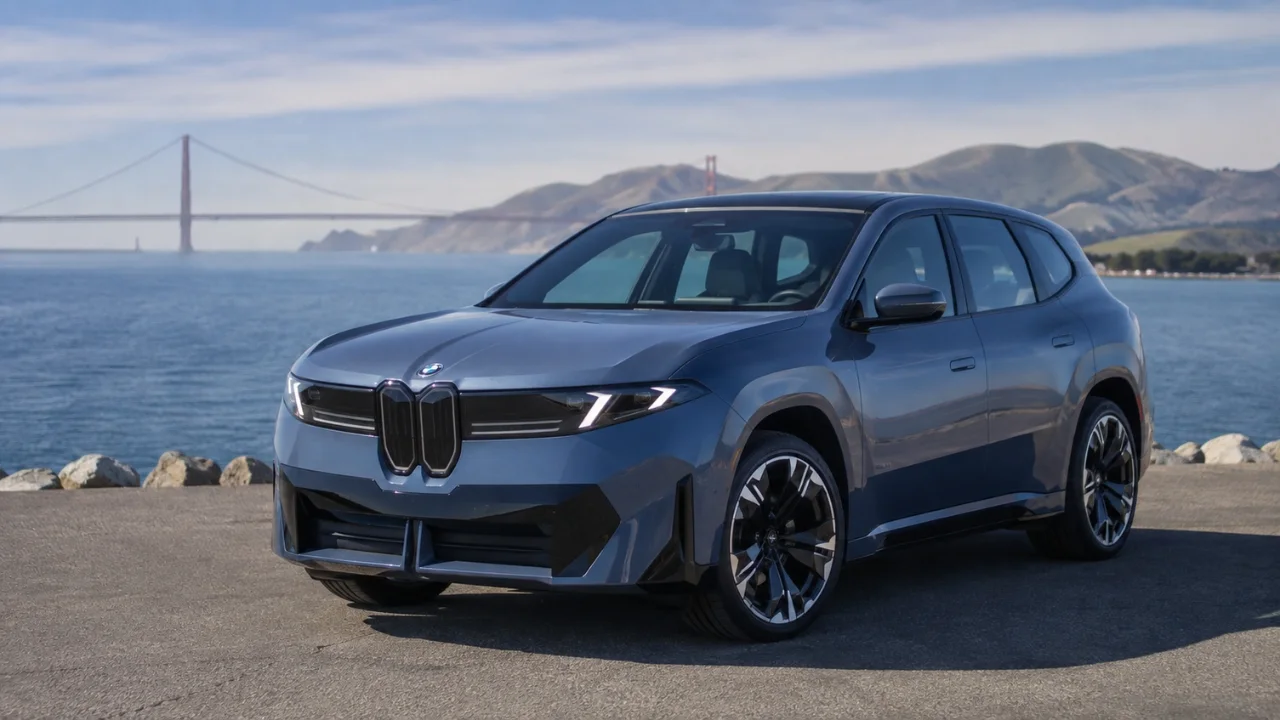
Real-world testing is more variable. In one recent drive, the iX3 covered about 250 miles involving mountain roads and approximately 90 miles of highway driving at up to 87 mph, while retaining 16% battery charge. Another independent review reported more than 350 miles of real-world range during normal driving.
That means prospective owners should not treat the 434-mile EPA figure as a guaranteed everyday distance. A practical expectation will depend heavily on how and where the vehicle is driven.
BMW iX3 Range: Official Figures
BMW’s current U.S. specifications for the iX3 50 xDrive show the following estimated range figures:
| Wheel and Tire Configuration | BMW-Listed Range |
|---|---|
| 20-inch summer tires | 434 miles |
| 20-inch all-season tires | 383 miles |
| 21-inch summer tires | 398 miles |
| 21-inch all-season tires | 399 miles |
| 22-inch summer tires | 392 miles |
These differences are important because the choice of wheels and tires can have a noticeable effect on EV efficiency. BMW’s official figures also warn that actual range varies with driving style, traffic, temperature, tire and wheel selection, accessories and other conditions.
The iX3 uses a new high-voltage battery with cylindrical cells. BMW says the cell-level energy density is 20% higher than its fifth-generation eDrive technology, while the new battery architecture contributes to improved efficiency and charging performance.
What Is the BMW iX3’s Real-World Range?
There is now enough independent driving information to put BMW’s official numbers into context, although there is not one single real-world range figure that applies to every driver.
A recent BMWBLOG road test covered approximately 250 miles in one day, including two climbs of Romania’s Transfăgărășan mountain road and roughly 90 miles of highway driving at about 87 mph. The vehicle still displayed 16% battery charge when it returned to Bucharest. The same test recorded consumption as low as 3.53 miles per kWh on gentler roads, while demanding mountain driving brought consumption down to about 2.1 miles per kWh.
Another recent test reported an approximately 380-mile usable range before reaching 10% battery charge, with an extrapolated practical range of about 423 miles under that test’s conditions. That test compared the iX3 with several other EVs using a method intended to reflect normal charging behavior rather than driving each vehicle completely to zero.
A separate WIRED review recorded 155 miles of driving after starting at 99% and finishing at 55%, with consumption of 3.3 miles per kWh. The publication calculated that this indicated more than 350 miles of real-world range with normal rather than especially conservative driving.
These tests are useful indicators, but they should not be treated as standardized laboratory results. Different temperatures, routes, speeds, tire packages and testing methods can produce very different numbers.
Highway Range vs. City Driving
EV range tends to change significantly with driving conditions.
At moderate speeds, aerodynamic efficiency and regenerative braking can help the iX3 cover substantial distances. High-speed highway driving, however, generally consumes more energy because aerodynamic drag rises rapidly with speed.
Mountain driving can produce the opposite effect from what some drivers might expect. Climbing consumes considerable energy, while regenerative braking during descents can recover some of that energy. In the BMWBLOG test, aggressive mountain driving produced much higher consumption than slower country-road driving.
For an owner, this means the same iX3 can show very different projected ranges from one trip to another.
Cold Weather Can Change the Calculation
Temperature is another important factor when estimating real-world EV range.
BMW itself states that outside temperature, driving style and other conditions affect the actual range. The company therefore presents its official figures as estimates rather than guarantees.
In cold weather, additional energy may be required for cabin heating and battery conditioning. Winter tires can also increase rolling resistance. Conversely, moderate temperatures and steady-speed driving can produce better efficiency.
For long-distance planning, it is therefore sensible to leave a buffer rather than planning a trip around the maximum advertised range.
BMW iX3 Charging: 400 kW and 800 Volts
Charging is one of the biggest technological changes in the new iX3.
The iX3 50 xDrive uses an 800-volt electrical architecture and supports DC charging at up to 400 kW when connected to a compatible high-power charger. BMW says this can add approximately 170 to 185 miles of range in 10 minutes, depending on the configuration and conditions, while a 10-to-80% DC charging session can take approximately 21 minutes.
The key point is that a 400-kW capability does not mean every charging station will supply 400 kW. Charging performance depends on the station, battery state of charge, battery temperature and other conditions.
BMW’s own technical information specifies that the 10-to-80% figure assumes the vehicle can charge at its maximum rate.
What Happens at a 400-Volt Charger?
The new iX3 is also designed to work with 400-volt DC charging infrastructure.
BMW says its battery-management system with an integrated switching matrix allows the iX3 to charge at 400-volt DC stations as well as newer 800-volt stations. That matters because owners will not always have access to a 350- or 400-kW 800-volt charger.
In practice, the fastest charging results will depend on finding a suitably powerful compatible charger.
Home Charging
DC fast charging is only part of the ownership experience.
BMW lists an AC charging capability of up to 15.4 kW through the U.S.-market vehicle’s standard charging system, while its technical specifications list an optional higher-power AC setup. BMW’s broader charging information also identifies bidirectional charging capabilities as part of the new iX3 technology package.
For overnight charging, home AC charging is generally more relevant than the vehicle’s 400-kW peak. Owners who have access to suitable home electrical infrastructure can replenish the battery while the vehicle is parked rather than depending on public fast chargers.
NACS Charging in the U.S.
The U.S.-market iX3 uses a North American Charging Standard (NACS) port.
BMW says the iX3 can use the Tesla Supercharger network, while a CCS adapter is included for compatibility with other common fast-charging infrastructure. Consumer Reports also reports that the iX3 supports plug-and-charge functionality at compatible public chargers.
This gives U.S. buyers access to a broader charging ecosystem without requiring the vehicle to use a separate built-in CCS port.
Bidirectional Charging Is One of the New iX3’s Biggest Technology Changes
The iX3 is not designed only to take electricity from the grid.
BMW says its new charging system supports bidirectional functions, including Vehicle-to-Load (V2L), Vehicle-to-Home (V2H) and Vehicle-to-Grid (V2G) applications where the appropriate hardware, software and market infrastructure are available.
V2L can allow the vehicle to supply electricity to external equipment. V2H can use the vehicle as an energy-storage source for a compatible home, while V2G can potentially allow energy to flow back toward the electrical grid.
Availability and functionality can vary by market and charging equipment, so these features should not be interpreted as universally available in every location.
New BMW iX3 Technology: Neue Klasse
The iX3 is significant because it introduces BMW’s Neue Klasse technology into series production.
At the heart of the vehicle is BMW’s sixth-generation eDrive system. The company says the new system uses more energy-dense cylindrical battery cells and a revised electrical architecture designed to reduce energy losses, weight and manufacturing costs compared with its previous-generation technology.
The iX3 also introduces BMW’s new electronics and software architecture, including four high-performance computers that BMW refers to as “superbrains.”
BMW Heart of Joy
Another major technology debut is BMW’s Heart of Joy control system.
Rather than treating propulsion, braking and regenerative braking as completely separate functions, BMW designed the system to coordinate these vehicle-control functions through a central control architecture.
BMW says Heart of Joy works with its Dynamic Performance Control system to coordinate the vehicle’s driving dynamics. The goal is to make acceleration, braking and regenerative energy recovery work together more smoothly.
For the everyday driver, the important point is less about the name and more about how the system integrates electric propulsion and braking control.
Panoramic iDrive and BMW Operating System X
The iX3 also introduces BMW’s new Panoramic iDrive interface.
The system projects important information across the lower portion of the windshield while combining it with the vehicle’s central display and other controls. BMW says the system runs on its new BMW Operating System X.
This is part of a wider redesign of the BMW cabin interface, rather than simply a larger version of the company’s previous infotainment system.
BMW iX3 Performance
The U.S.-market iX3 50 xDrive is an all-wheel-drive SUV with a BMW-listed 463 horsepower and 476 lb-ft of torque. BMW’s current technical data lists a 0-60 mph time of 4.7 seconds and a 130-mph top speed.
European specifications differ in the way performance and efficiency figures are presented. BMW’s global information lists the 50 xDrive at 345 kW, or 469 PS, and 645 Nm, with a 0-100 km/h time of 4.9 seconds.
The difference illustrates why market-specific specifications matter when discussing the iX3.
2026 BMW iX3 or 2027 BMW iX3?
There is an important naming detail for U.S. readers.
The vehicle is often referred to as the 2026 BMW iX3 because it enters production and global markets during 2026. In the United States, however, BMW sells the initial version as the 2027 BMW iX3 50 xDrive. BMW’s U.S. announcement states that the model enters the U.S. market in September 2026.
Therefore, U.S. shoppers searching for a “2026 BMW iX3” will generally encounter information about the same new-generation vehicle that BMW officially designates as a 2027 model year.
U.S. Price and Availability
BMW announced a starting MSRP of $61,500, before the $1,350 destination and handling charge, for the U.S.-market 2027 iX3 50 xDrive. BMW announced a September 25, 2026 U.S. market launch, with deliveries beginning in late September.
BMW’s current U.S. website lists a starting MSRP of $61,500. Dealer pricing can differ, and the company’s published MSRP does not include taxes, title, registration and other applicable charges.
BMW has also said that additional single- and dual-motor iX3 variants will follow, with additional versions expected in early 2027.
What the BMW iX3 Range Means for Buyers
The new iX3’s headline range is impressive, but the more useful takeaway is that independent driving has already shown the vehicle can cover substantial distances without requiring unusually careful driving.
The official U.S. range spans 383 to 434 miles, depending on wheel and tire configuration. Independent testing has produced results ranging from more than 350 miles in normal driving to more than 400 miles under favorable conditions, while demanding high-speed and mountain driving can increase energy consumption considerably.
The charging system is equally important. An 800-volt architecture, up to 400 kW DC charging and a claimed 10-to-80% time of 21 minutes mean that the iX3’s long-distance usability is not based on battery size alone. The vehicle is also compatible with both 800-volt and 400-volt DC charging infrastructure.
For buyers, the most realistic approach is to use the official range as a benchmark rather than a guarantee and consider the wheel package, climate, speed, terrain and charging availability when planning longer journeys.
Pros and Limitations
Potential strengths
- High official U.S. range of up to 434 miles
- 800-volt electrical architecture
- Up to 400 kW DC charging capability
- Claimed 10-to-80% DC charging time of about 21 minutes
- NACS charging port for U.S. compatibility
- Bidirectional charging technology
- New BMW Panoramic iDrive interface
- Sixth-generation BMW eDrive technology
- Strong all-wheel-drive performance from the 50 xDrive
Important limitations
- Actual range can vary substantially with conditions
- The maximum 400-kW charging rate requires a suitably capable charging station
- Larger wheels can reduce the official range
- Real-world range tests are not directly comparable because conditions and methods differ
- Additional iX3 variants are not all available at launch
- Some bidirectional charging functions depend on compatible hardware and market infrastructure
Final Thoughts
The BMW iX3 represents a major change in BMW’s electric-vehicle technology strategy. Its combination of a long official range, 800-volt architecture and up to 400-kW DC charging gives the 50 xDrive a specification designed around long-distance usability rather than simply maximizing battery size.
The real-world evidence available so far is encouraging, but there is no single range number that every owner should expect. Recent drives have demonstrated more than 350 miles in normal use and roughly 400 miles or more in some conditions, while faster driving and demanding terrain can reduce efficiency.
For U.S. buyers, the most important detail is that the vehicle is sold as the 2027 BMW iX3 50 xDrive, despite the model entering the U.S. market during 2026. Its $61,500 starting MSRP before destination, up to 434-mile EPA-estimated range and 400-kW charging capability make the new iX3 substantially different from the previous-generation model.
BMW iX3 FAQ
How much range does the 2026 BMW iX3 have?
For the U.S. iX3 50 xDrive, BMW lists an EPA-estimated range of 383 to 434 miles, depending on wheel and tire configuration.
What is the real-world range of the BMW iX3?
Independent tests have reported more than 350 miles under normal driving and around 400 miles or more under some conditions. Real-world range varies with speed, temperature, terrain, tires, climate control and driving style.
How fast can the BMW iX3 charge?
The iX3 50 xDrive can accept up to 400 kW of DC charging power. BMW estimates a 10-to-80% charge in about 21 minutes under suitable conditions.
Does the BMW iX3 use an 800-volt system?
Yes. The new iX3 uses an 800-volt electrical architecture designed to support its high-power DC charging capability.
Does the BMW iX3 have a NACS charging port?
Yes. The U.S.-market iX3 uses a NACS port and is compatible with the Tesla Supercharger network. BMW also provides a CCS adapter for other compatible charging infrastructure.
Is the BMW iX3 a 2026 or 2027 model?
In the United States, BMW designates the new iX3 50 xDrive as a 2027 model year, even though it enters the U.S. market in September 2026. In other markets, the vehicle is commonly referred to as the 2026 BMW iX3.
How much does the BMW iX3 cost in the U.S.?
The 2027 BMW iX3 50 xDrive starts at $61,500 MSRP, plus a $1,350 destination and handling charge, before taxes, registration and other applicable costs.
Can the BMW iX3 provide power to a home?
BMW says the new iX3 supports bidirectional charging, including Vehicle-to-Load and Vehicle-to-Home functions where compatible hardware and infrastructure are available.
Sources & References
- BMW USA — BMW iX3 model overview and specifications
- BMW Group PressClub USA — 2027 BMW iX3 pricing and range announcement
- BMW Group — The All-New BMW iX3
- BMW Group — BMW iX3 charging and bidirectional charging information
- Consumer Reports — 2027 BMW iX3 Road Test Report
- WIRED — BMW iX3 2026 Review and real-world range testing
- BMWBLOG — BMW iX3 real-world range test, September 2026