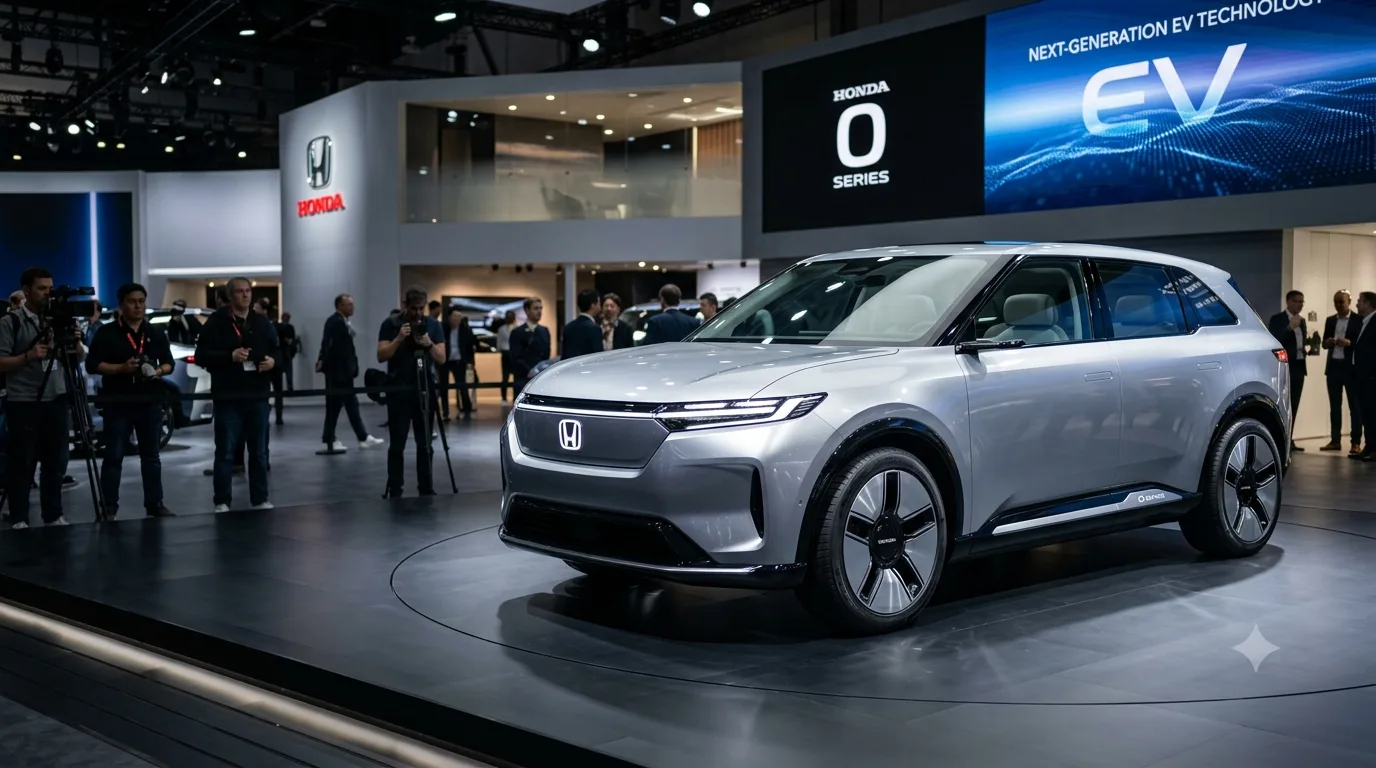
The Honda 0 SUV 2026 was originally positioned as one of Honda’s most important new electric vehicles, with a planned North American launch in the first half of 2026. However, that launch will not happen. Honda canceled the development and market launch of the 0 SUV in March 2026 as part of a major reassessment of its EV strategy.
That changes how the Honda 0 SUV should be viewed today. Rather than an upcoming EV that buyers can expect to purchase, it is a canceled production program whose design and technology provide an important look at where Honda had intended to take its electric vehicle lineup.
Honda 0 SUV 2026: Quick Answer
The Honda 0 SUV was a mid-size battery-electric SUV developed as part of Honda’s new 0 Series. Honda first showed the SUV prototype at CES 2025 and planned to introduce the production version in North America during the first half of 2026, followed by other markets including Japan and Europe.
However, Honda announced on March 12, 2026, that it had canceled the development and market launch of the Honda 0 SUV, along with the Honda 0 Saloon and Acura RSX EV. The decision was part of a broader reassessment of the company’s automobile electrification strategy.
As a result, there is no official production-model range, price, final power output, charging specification or consumer launch date for the Honda 0 SUV.
What Happened to the Honda 0 SUV?
The cancellation is the most important update for anyone researching the Honda 0 SUV in 2026.
Honda originally planned the 0 Series as a new generation of global EVs. The company unveiled the first 0 Series concepts at CES 2024 and said the series would begin launching globally in 2026, starting in North America.
At CES 2025, Honda moved the project closer to production by showing the Honda 0 SUV prototype. Honda described it as a mid-size electric SUV and said the production model was scheduled for North America in the first half of 2026, with global markets such as Japan and Europe expected afterward.
That plan was later abandoned.
On March 12, 2026, Honda officially announced that it had canceled the development and market launch of the Honda 0 SUV, Honda 0 Saloon and Acura RSX. Honda said the decision followed changes in the business environment and a reassessment of its automobile electrification strategy.
Honda specifically concluded that proceeding with production and sales of the three North American EVs under the prevailing conditions could create further long-term losses.
For readers searching for a 2026 Honda 0 SUV release date, therefore, there is no current launch date because the planned production vehicle was canceled.
Honda 0 SUV Design
Before its cancellation, the Honda 0 SUV stood out from conventional electric SUVs with a low, streamlined design.
The SUV was based on the Space-Hub concept Honda had presented at CES 2024. Honda described the production-oriented prototype as a mid-size SUV designed around its “Thin, Light, and Wise” development philosophy.
The exterior was characterized by a relatively low roofline, a clean front end, a broad glasshouse and a minimalist lighting signature. Rather than following the tall and heavily sculpted appearance of many modern SUVs, Honda emphasized aerodynamic efficiency and a more open visual design.
The approach was closely connected to Honda’s EV engineering strategy. The company wanted the vehicle to remain relatively thin and light while creating useful interior space.
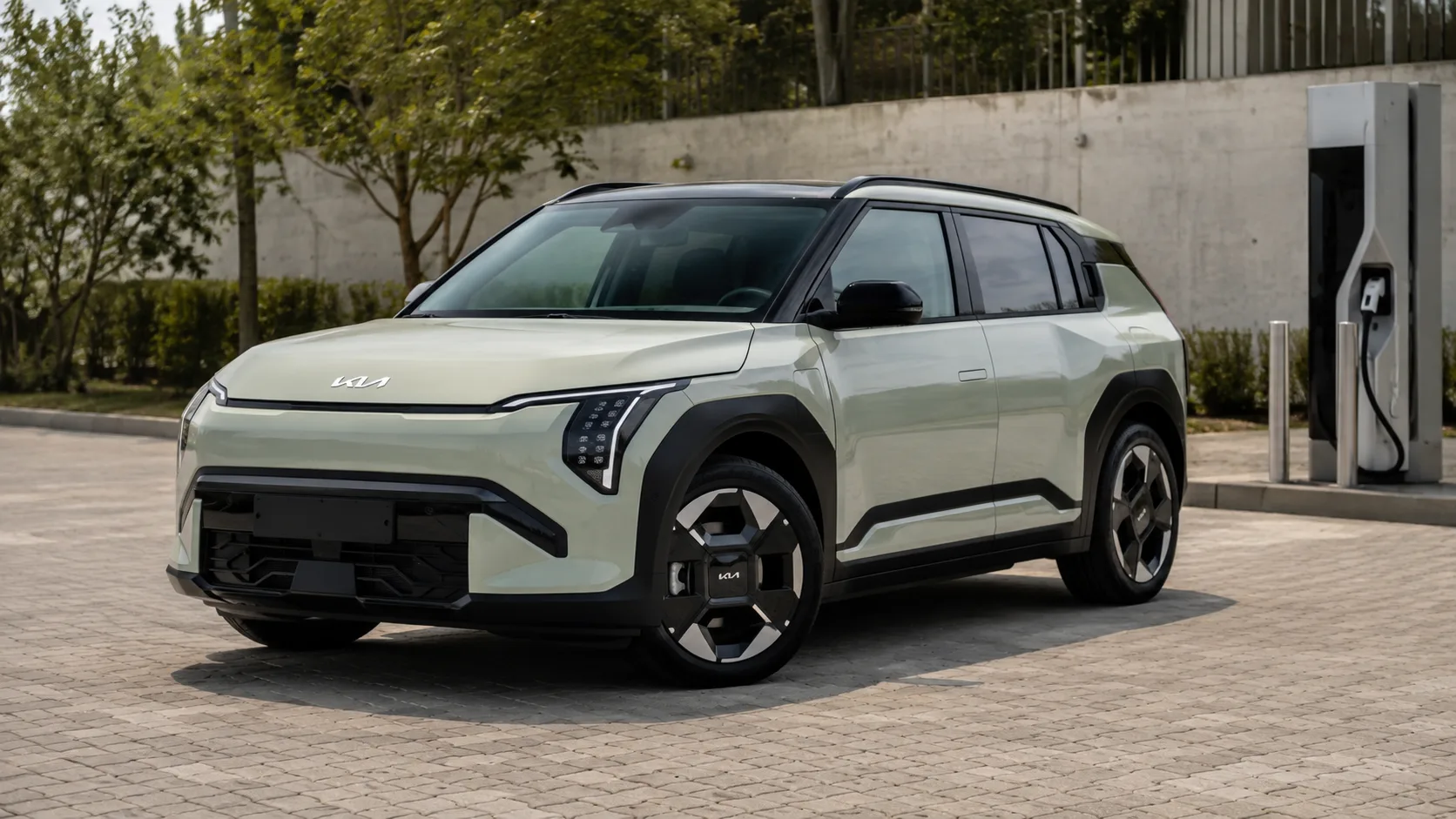
Honda’s original 0 Series strategy emphasized a dedicated EV architecture, compact e-Axles, a thin battery pack and aerodynamic development as ways of improving efficiency without simply adding more battery capacity.
Honda 0 SUV Interior and Space
The interior was one of the central ideas behind the Honda 0 SUV.
Honda described the vehicle as providing a spacious cabin with an unrestricted field of vision and flexible use of interior space. The company said the SUV applied its “Thin, Light, and Wise” philosophy to create more room inside while keeping the exterior relatively low.
The design was also intended to move beyond the traditional idea of a car being primarily a physical machine. Honda envisioned the 0 Series as a software-defined vehicle whose functions could evolve after purchase.
That meant the cabin was designed around digital interfaces, connected services and software updates rather than simply adding more physical controls.
Because the production vehicle was canceled before reaching customers, Honda never released a final consumer specification for seating capacity, cargo volume or production interior dimensions.
Honda 0 SUV Technology
Technology was supposed to be one of the biggest differences between the Honda 0 SUV and Honda’s existing EV offerings.
ASIMO OS
Honda planned to equip the 0 Series with its own vehicle operating system called ASIMO OS.
The system takes its name from Honda’s well-known ASIMO robotics program. Honda intended ASIMO OS to integrate vehicle functions including advanced driver assistance, automated driving technology and infotainment into a more unified software environment.
Honda also planned to use over-the-air updates to continuously improve functions and services after the vehicle was purchased.
The company described this approach as “ultra-personal optimization,” with the software intended to adapt the vehicle experience to individual users.
Driver Assistance and Automated Driving
Honda also presented the 0 Series as an important platform for advancing automated driving technology.
Honda said its 0 Series would use technology designed to expand the situations in which advanced driver assistance and Level 3 automated driving could be available. The company had previously introduced Level 3 technology with the Honda SENSING Elite system in Japan, but the capabilities and regulatory availability of any future system would depend on the specific vehicle and market.
That distinction matters. The Honda 0 SUV should not be described as a fully autonomous vehicle.
Honda’s plans involved automated-driving functions operating within defined conditions and supported by the applicable regulatory framework.
Robotics-Inspired Vehicle Control
The Honda 0 SUV was also supposed to use technology derived from Honda’s robotics research.
Honda said the SUV would use high-precision attitude estimation and stabilization control based on 3D gyro sensors. The objective was to provide stable vehicle behavior across different road surfaces while allowing the vehicle to respond naturally to driver inputs.
This was part of Honda’s broader attempt to combine its traditional focus on driving dynamics with software and artificial intelligence.
Honda 0 SUV Range and Charging
This is an area where many online articles can become misleading.
Honda had discussed broad efficiency and charging targets for the 0 Series, but it did not release a final official EPA range figure for a production Honda 0 SUV before canceling the program.
Honda’s original 0 Series development plan targeted strong electricity efficiency through aerodynamic design, lightweight construction, high-density batteries and efficient e-Axles.
Honda also said its next-generation EVs were being developed with a goal of reducing 15-to-80-percent fast-charging time to approximately 10 to 15 minutes. It was a development target for the 0 Series rather than a final production specification for the canceled SUV.
The same applies to battery capacity, official range and real-world efficiency.
Honda 0 SUV Range: What Was Officially Confirmed?
| Specification | Honda 0 SUV status |
|---|---|
| Powertrain | Battery-electric vehicle |
| Vehicle type | Mid-size SUV |
| Battery capacity | Not officially confirmed for production |
| Official EPA range | Not officially confirmed |
| Final charging speed | Not officially confirmed |
| 15–80% charging target | Honda targeted about 10–15 minutes for 0 Series EVs |
| Production status | Canceled |
| North American launch | Canceled |
The important point is that the 10-to-15-minute charging target should not be mistaken for a final tested specification of a production Honda 0 SUV.
Honda 0 SUV Powertrain and Performance
Honda did not publish a complete production specification sheet for the canceled 0 SUV.
The 0 Series architecture was being developed around dedicated EV technology, including compact e-Axles and a dedicated EV platform. Honda’s objective was to combine efficiency with what it described as the “joy of driving.”
However, final horsepower, torque, battery capacity, acceleration time, top speed and drive configuration for the production 0 SUV were not officially established in a consumer specification sheet before the program was canceled.
Those figures should therefore not be presented as confirmed Honda 0 SUV specifications.
Honda 0 SUV Price
There is also no official Honda 0 SUV MSRP to report.
Honda had not announced a final retail price for the production SUV before canceling the program. Any specific dollar figure published elsewhere should be treated cautiously unless it can be traced to an official Honda announcement.
The absence of a price is particularly important because the 0 SUV never reached the normal production and sales stage.
Was the Honda 0 SUV Coming to the U.S.?
Yes, originally.
Honda’s 2025 announcement said the production 0 SUV was scheduled to launch first in the North American market during the first half of 2026.
The plan was later canceled.
Honda’s March 2026 announcement specifically identified the Honda 0 SUV as one of three EVs planned for U.S. production whose development and market launch were being canceled.
So articles still describing the Honda 0 SUV as an upcoming U.S. launch are relying on information that predates Honda’s March 2026 strategy change.
Was the Honda 0 SUV Coming to Europe or Japan?
Honda originally intended the 0 SUV to expand beyond North America.
The company’s January 2025 announcement said that after its planned North American introduction in the first half of 2026, the SUV would be introduced into global markets including Japan and Europe.
Those plans are no longer valid for the canceled 0 SUV.
Honda’s March 2026 cancellation announcement superseded the earlier launch schedule for the vehicle’s planned North American production and market launch.
What Happened to Honda’s 0 Series Strategy?
The cancellation represents a significant change from Honda’s earlier EV roadmap.
Honda had previously planned a broad 0 Series rollout beginning in North America in 2026. Its earlier corporate plans showed multiple 0 Series models scheduled for introduction through the end of the decade, although Honda itself warned that the timeline was subject to change.
By March 2026, however, Honda had decided to cancel the 0 SUV and 0 Saloon programs planned for North American production.
Honda said it would reassess resource allocation and strengthen its hybrid models as part of the revised strategy.
That does not mean Honda has abandoned electrification altogether. Instead, the company is changing the balance of its product strategy in response to market and business conditions.
What the Honda 0 SUV Would Have Offered
Although the production SUV will not reach customers, its planned technology remains significant because it showed the direction Honda was pursuing for next-generation EVs.
The key ideas included:
- A dedicated EV architecture
- A low, aerodynamic SUV design
- A spacious interior
- The “Thin, Light, and Wise” engineering philosophy
- ASIMO OS
- Over-the-air software updates
- Ultra-personalized digital experiences
- Advanced driver assistance
- Planned expansion of Level 3 automated-driving functions
- Robotics-inspired vehicle control
- New charging and energy-management services
Honda’s strategy was not simply to build another electric SUV. The company was attempting to create a software-defined vehicle in which the driving experience, digital functions and vehicle systems could continue evolving after purchase.
Why Did Honda Cancel the 0 SUV?
Honda said its decision was driven by changes in the business environment and its reassessment of the automobile electrification strategy.
The company concluded that launching the three North American EVs under the prevailing conditions could lead to additional long-term losses.
Independent reporting also highlighted weaker EV demand, changes in U.S. policy and incentives, tariffs and increasing competition from newer EV manufacturers as factors surrounding Honda’s strategic shift.
For Honda, the decision represented a move away from the immediate North American expansion of its internally developed battery-electric lineup and toward a greater emphasis on hybrids.
What Buyers Should Know in 2026
For someone searching for the Honda 0 SUV because they are considering buying one, the most important fact is simple: there is no Honda 0 SUV production model available to order in 2026.
The vehicle was never launched as originally planned.
This also means buyers should be careful with specifications copied from older 2024 or 2025 articles. Those reports often describe the original launch plan, prototype technology and expected 2026 arrival. Honda’s March 2026 announcement changed that situation.
The prototype’s design, ASIMO OS concept, charging targets and advanced driving technology remain useful for understanding Honda’s previous EV direction, but they should not be treated as specifications of a vehicle currently on sale.
Honda 0 SUV 2026: Pros and Limitations of the Planned Model
What Looked Promising
- Distinctive aerodynamic design
- Dedicated EV architecture
- Focus on interior space
- ASIMO OS and software-based features
- Planned over-the-air updates
- Advanced driver-assistance development
- Robotics-inspired vehicle-control technology
- Strong emphasis on efficiency
The Biggest Limitation
The biggest limitation is no longer a technical specification. It is availability.
Honda canceled the production program before the 0 SUV reached the market. That means consumers cannot evaluate its final range, pricing, driving performance, production interior or long-term reliability because the production vehicle never went on sale.
Final Thoughts
The Honda 0 SUV 2026 was supposed to introduce a very different type of Honda electric SUV, combining minimalist design, dedicated EV hardware, software-defined features and advanced driver assistance.
Honda originally planned to launch it in North America in the first half of 2026 before expanding into other global markets.
But that plan is now canceled. On March 12, 2026, Honda officially ended development and the planned market launch of the 0 SUV as part of a broader reassessment of its electrification strategy.
For that reason, there is no final production range, MSRP, horsepower figure or confirmed consumer launch date for the Honda 0 SUV. The vehicle remains an interesting example of Honda’s previous EV ambitions, but it should not be treated as an upcoming production SUV.
FAQ
Is the Honda 0 SUV coming in 2026?
No. Honda canceled the development and planned market launch of the Honda 0 SUV in March 2026. It had originally been scheduled for North America in the first half of 2026.
What was the Honda 0 SUV?
The Honda 0 SUV was a planned mid-size battery-electric SUV and one of the first production models of Honda’s 0 Series EV family. It was developed around Honda’s “Thin, Light, and Wise” philosophy.
What range did the Honda 0 SUV have?
Honda did not publish a final official production-model range for the canceled SUV. Therefore, there is no confirmed EPA or other market-specific range figure to report.
How fast was the Honda 0 SUV supposed to charge?
Honda said its 0 Series EVs were being developed toward a 15-to-80-percent fast-charging target of approximately 10 to 15 minutes. This was a development target for the 0 Series, not a final tested specification for the canceled 0 SUV.
What was ASIMO OS?
ASIMO OS was Honda’s planned vehicle operating system for the 0 Series. It was intended to integrate functions such as driver assistance, infotainment and other vehicle systems while supporting over-the-air updates and personalized digital experiences.
Why was the Honda 0 SUV canceled?
Honda said it canceled the 0 SUV as part of a reassessment of its automobile electrification strategy and concluded that proceeding with the planned North American EVs under the current business environment could result in further long-term losses.
Will Honda still sell electric vehicles?
Honda has not abandoned electrification as a concept, but it has changed its strategy. Following the 0 SUV cancellation, Honda said it would reassess resource allocation and strengthen its hybrid models.
Sources & References
- Honda Global — Honda Announces Losses Associated with Reassessment of Automobile Electrification Strategy — Official March 12, 2026 announcement confirming the cancellation of the Honda 0 SUV, Honda 0 Saloon and Acura RSX.
- Honda Global — Honda Presents World Premiere of Honda 0 Saloon and Honda 0 SUV Prototypes at CES 2025 — Official information on the prototype, planned launch timing, design approach and ASIMO OS.
- Honda Global — Honda Presents World Premiere of the Honda 0 Series at CES 2024 — Official background on Honda’s 0 Series strategy, efficiency targets and charging development goals.
- Reuters — Honda’s EV strategy reassessment and cancellation of three U.S. EV models — Independent reporting on the strategic and market context surrounding the cancellation.
- Autocar India — Honda scraps 0 Series SUV and sedan — Regional reporting on the cancellation and its implications for the Indian market.
1 thought on “Honda 0 SUV 2026: Range, Design, Technology and Launch Details”