The Honda ZR-V is a hybrid-focused SUV that combines a 2.0-litre petrol engine with Honda’s two-motor e:HEV technology. Rather than relying on the engine alone, the system uses electric motors for much of the vehicle’s everyday driving, with the petrol engine generating electricity or driving the wheels directly when conditions make that more efficient.
The result is a different approach to hybrid performance: electric-motor response at lower speeds, automatic power management and no need to plug the vehicle into an external charger. The ZR-V also brings a five-seat cabin, a practical luggage area and a range of comfort and driver-assistance features.
Specifications and equipment vary by market. Honda introduced the ZR-V e:HEV in India in 2026, while the model is also available in markets such as Japan and Australia. The fuel-economy figures, trim names and equipment discussed below are identified by market wherever relevant.
Honda ZR-V: Quick Overview
The ZR-V is positioned between Honda’s smaller and larger SUV offerings in several markets. Its design combines a relatively compact exterior footprint with a more premium cabin and a hybrid powertrain.

For the Indian-market ZR-V e:HEV, Honda confirms the following headline specifications:
| Specification | Honda ZR-V e:HEV (India) |
|---|---|
| Powertrain | 2.0-litre e:HEV strong hybrid |
| Petrol engine | 1,993cc Atkinson-cycle four-cylinder |
| Hybrid system | Two-motor e:HEV |
| Combined system power | 184 PS |
| Maximum motor torque | 315 Nm |
| Transmission | e-CVT |
| Claimed fuel efficiency | 22.8 km/L |
| 0–100 km/h | 7.9 seconds |
| Seating capacity | 5 |
| Fuel type | Petrol, E20 compatible |
These figures refer to the Indian-market model and should not automatically be applied to ZR-V versions sold elsewhere.
How the Honda ZR-V Hybrid System Works
The most important feature of the ZR-V is Honda’s e:HEV hybrid powertrain. It combines a petrol engine, two electric motors and a lithium-ion battery to manage power according to driving conditions.
Unlike a conventional petrol SUV, the ZR-V does not depend on the engine to drive the wheels all the time. Its hybrid control system automatically selects the most suitable operating mode.

The Indian-market model uses a 2.0-litre direct-injection Atkinson-cycle petrol engine paired with Honda’s dual-motor hybrid system. The engine produces 143 PS and 189 Nm, while the traction motor is rated at 184 PS and 315 Nm. Honda quotes a combined maximum system output of 184 PS.
The individual engine and motor outputs should not be added together. They are different components of a system that manages power electronically.
The Three Driving Modes
Honda’s e:HEV system switches between three main operating modes.
EV Drive Mode
During certain low-speed situations, such as moving away from a stop or travelling through slow city traffic, the ZR-V can use its electric motor to drive the wheels. The petrol engine remains switched off when the battery and driving conditions allow.
This gives the SUV an electric-like response at low speeds without requiring the driver to select an electric-only mode for every journey.
Hybrid Drive Mode
When more power is needed, the petrol engine operates a generator motor to produce electricity. That electricity can supply the traction motor and support battery charging.
In this mode, the electric motor continues to drive the wheels. The petrol engine mainly works as an electricity source rather than directly powering the vehicle.
Engine Drive Mode
During suitable steady-speed cruising, particularly at higher speeds, the system can connect the petrol engine directly to the wheels through a clutch.
This is useful because an engine can operate efficiently during certain highway-driving conditions. Instead of converting all its output into electricity and then back into mechanical movement, the system can use a direct mechanical connection.
The transition between these modes is managed automatically. Drivers do not need to manually decide when the engine should generate electricity or drive the wheels.
Does the Honda ZR-V Need External Charging?
No. The ZR-V e:HEV is a conventional self-charging strong hybrid, not a plug-in hybrid.
Its high-voltage battery receives energy from the petrol-engine generator and regenerative braking. Regenerative braking converts some of the vehicle’s movement energy into electricity during deceleration and stores it in the battery.
Owners therefore do not need a home charger or public charging station to use the hybrid system.
This is an important distinction for buyers comparing the ZR-V with plug-in hybrids and fully electric SUVs. The ZR-V still uses petrol as its main energy source, even though its electric motor plays a major role in driving the vehicle.
Honda ZR-V Fuel Economy: How Efficient Is the Hybrid?
Fuel economy is one of the main reasons to consider the ZR-V e:HEV. Honda’s two-motor system is designed to use electric propulsion in situations where it can be more efficient than relying on the petrol engine alone.
However, the official mileage figure depends on the market and its testing procedure.
India: 22.8 km/L
Honda Cars India quotes a certified fuel-efficiency figure of 22.8 km/L for the Indian-market ZR-V e:HEV. The figure is certified under Rule 115 of India’s Central Motor Vehicles Rules.
Honda also claims a 0–100 km/h acceleration time of 7.9 seconds for this version.
The 22.8 km/L figure is a certified test result, not a guarantee of the mileage every owner will achieve. Actual fuel consumption can change with traffic, road conditions, driving style, passenger load, air-conditioning use and other factors.
Japan: WLTC Fuel Economy
Honda’s Japanese ZR-V range publishes fuel-consumption figures under Japan’s WLTC testing procedure. The current listed figures include:
- e:HEV front-wheel-drive versions: 22.0 km/L.
- e:HEV four-wheel-drive versions: 20.5 km/L.
These figures are specific to the Japanese-market configurations. They should not be used as the official mileage rating for the Indian or Australian versions.

Australia: 5.0 L/100 km
Honda Australia lists a combined fuel-consumption figure of 5.0 litres per 100 kilometres for its ZR-V e:HEV variants.
This is an Australian ADR81/02 test-cycle figure. It is not directly interchangeable with the Indian or Japanese figures because the testing procedures and market specifications differ.
What Affects Real-World Mileage?
Even with a hybrid powertrain, fuel consumption is not fixed. Several factors can affect the result:
- Traffic conditions: Stop-start driving can allow the hybrid system to make greater use of electric propulsion and energy recovery.
- Driving speed: Sustained high speeds can increase fuel consumption because aerodynamic resistance rises with speed.
- Acceleration: Frequent hard acceleration increases the demand for power from the engine and electric motor.
- Air conditioning: Heavy climate-control use can affect overall energy consumption.
- Vehicle load: Additional passengers and luggage increase the energy required to move the SUV.
- Road conditions: Hilly routes, poor surfaces and frequent elevation changes can affect efficiency.
The hybrid system can improve efficiency in many everyday situations, but it cannot eliminate the effect of driving conditions.
Honda ZR-V Performance and Driving Technology
The ZR-V’s hybrid setup is designed to provide a balance between efficiency and responsive acceleration.
In the Indian version, the electric traction motor produces 315 Nm of torque. Electric motors can deliver strong torque from low speeds, which helps explain why the vehicle can feel responsive when moving away from a stop.
The petrol engine provides additional energy for the hybrid system and can drive the wheels directly when the vehicle is cruising under suitable conditions.
Honda quotes 184 PS of combined system power and a 7.9-second 0–100 km/h time for the Indian model. These are manufacturer figures rather than independent test results.
Drive Modes
The Indian-market ZR-V provides ECON, NORMAL and SPORT drive settings.
- ECON: Adjusts vehicle responses to prioritise efficiency.
- NORMAL: Provides the standard balance between performance and everyday driving.
- SPORT: Gives a more responsive driving character.
These selectable settings are separate from the hybrid system’s automatic EV, Hybrid and Engine Drive operating modes. The driver selects the general driving character, while the vehicle manages the powertrain’s internal operation.
Regenerative Braking Controls
The ZR-V also uses regenerative braking to recover energy when slowing down.
In the Indian model, metal deceleration-selector paddles allow the driver to adjust the level of deceleration energy recovery. This provides another way to manage the vehicle’s response when lifting off the accelerator.

Regenerative braking does not replace the conventional braking system. The vehicle continues to use its regular brakes when stronger stopping force is required.
Honda ZR-V Interior: Cabin Design and Comfort
The ZR-V’s interior is designed around a driver-focused dashboard, a raised centre console and a five-seat layout.
In the Indian version, Honda specifies an all-black cabin with leather upholstery and premium interior finishes. The overall layout aims to provide a more upmarket environment than a basic family SUV.
The dashboard combines a digital instrument display with a central touchscreen. Frequently used controls are positioned around the centre console, while the electronic transmission selector helps keep the console layout uncluttered.


Infotainment and Digital Displays
The Indian ZR-V includes:
- 9-inch touchscreen infotainment system.
- Wireless Apple CarPlay.
- Wireless Android Auto.
- 10.2-inch fully digital driver display.
- 12-speaker Bose premium audio system.
- Wireless smartphone charging.
The infotainment screen handles compatible smartphone connectivity and vehicle entertainment functions. The digital instrument display presents driving information to the driver.
Equipment can differ between markets and trims, so buyers should check the specification of the exact vehicle being offered.
Front-Seat Comfort
The Indian-market model includes an 8-way power-adjustable driver’s seat with a memory function. Honda also specifies a 4-way power-adjustable front passenger seat.
These adjustments help occupants find a comfortable seating position, particularly on longer journeys.
Dual-zone automatic climate control allows the driver and front passenger to choose different temperature settings. This is useful when occupants have different comfort preferences.
Rear-Seat Space
The ZR-V has seating for five people, with a conventional rear bench rather than a third row.
Honda describes the Indian-market rear cabin as offering comfortable passenger space. The rear seats include a fold-down armrest, while the overall cabin layout is intended to accommodate everyday family use.

Japanese-market specifications list interior dimensions of 1,930 mm in length, 1,530 mm in width and 1,195 mm in height. These figures describe the Japanese version and should not be treated as a separate measurement confirmation for every market.
For buyers who regularly carry three adults in the rear, a physical seating check is still worthwhile. Shoulder room, seat shape and the centre-seat position can matter as much as the published cabin dimensions.
Honda ZR-V Boot Space and Practicality
The ZR-V is designed to handle everyday luggage as well as larger items when the rear seats are folded.
For India, Honda quotes a maximum cargo capacity of 1,313 litres with the second-row seats folded flat. The rear bench uses a 60:40 split-folding arrangement, allowing part of the seat to be lowered while retaining space for a passenger.
The luggage area also includes practical touches such as:
- Fold-flat rear seats.
- Retractable parcel cover.
- Under-floor storage.
- Load partition.
- Low and wide boot opening.
- Flat cargo floor when configured for maximum space.
The split-folding seats are useful when carrying a combination of passengers and longer luggage. Folding the complete rear bench creates a larger loading area for bulkier items.
The 1,313-litre figure refers to maximum cargo space with the rear seats folded. It should not be confused with the luggage capacity available when all five seats are in use.
Exterior Design and SUV Proportions
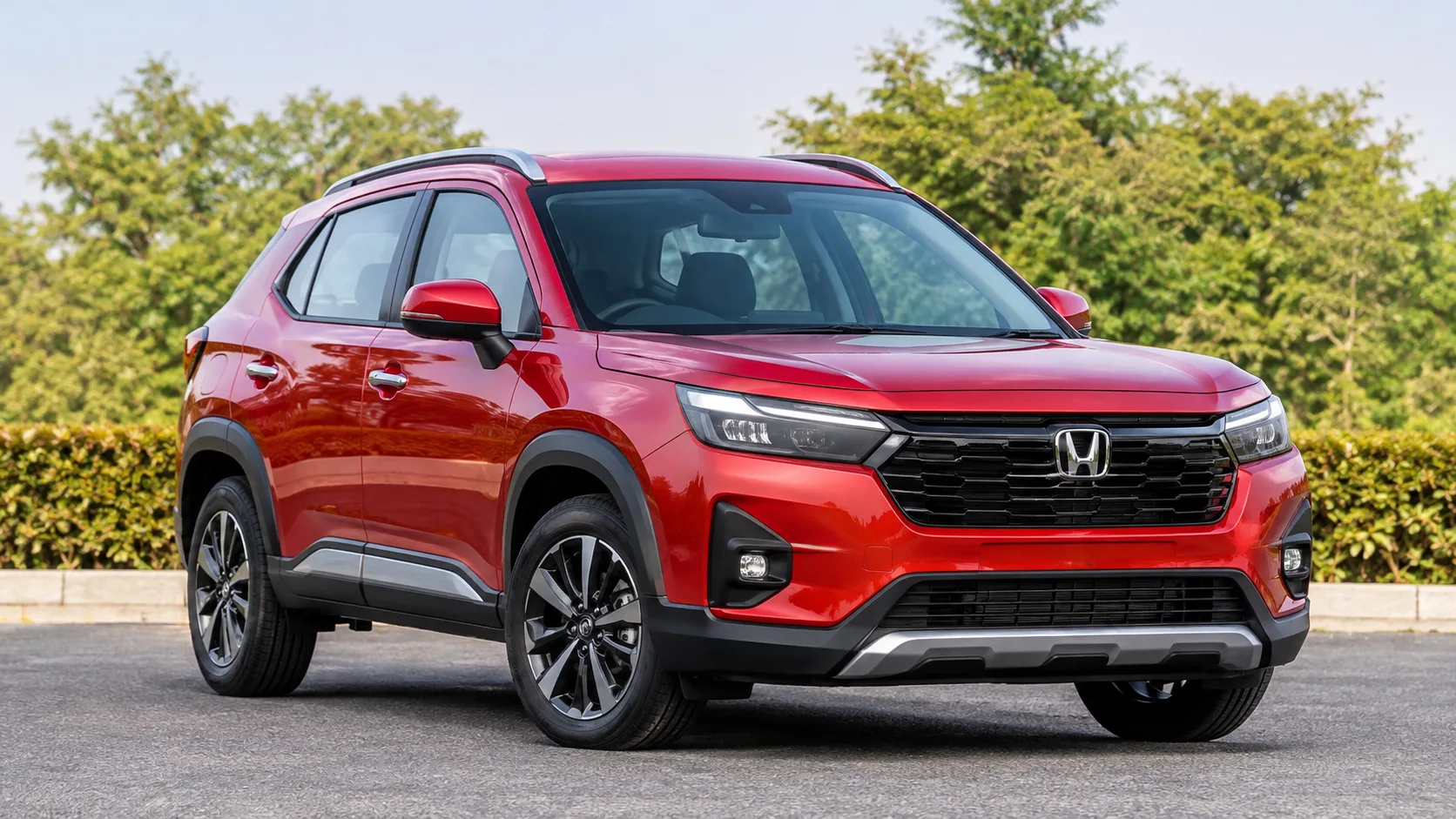
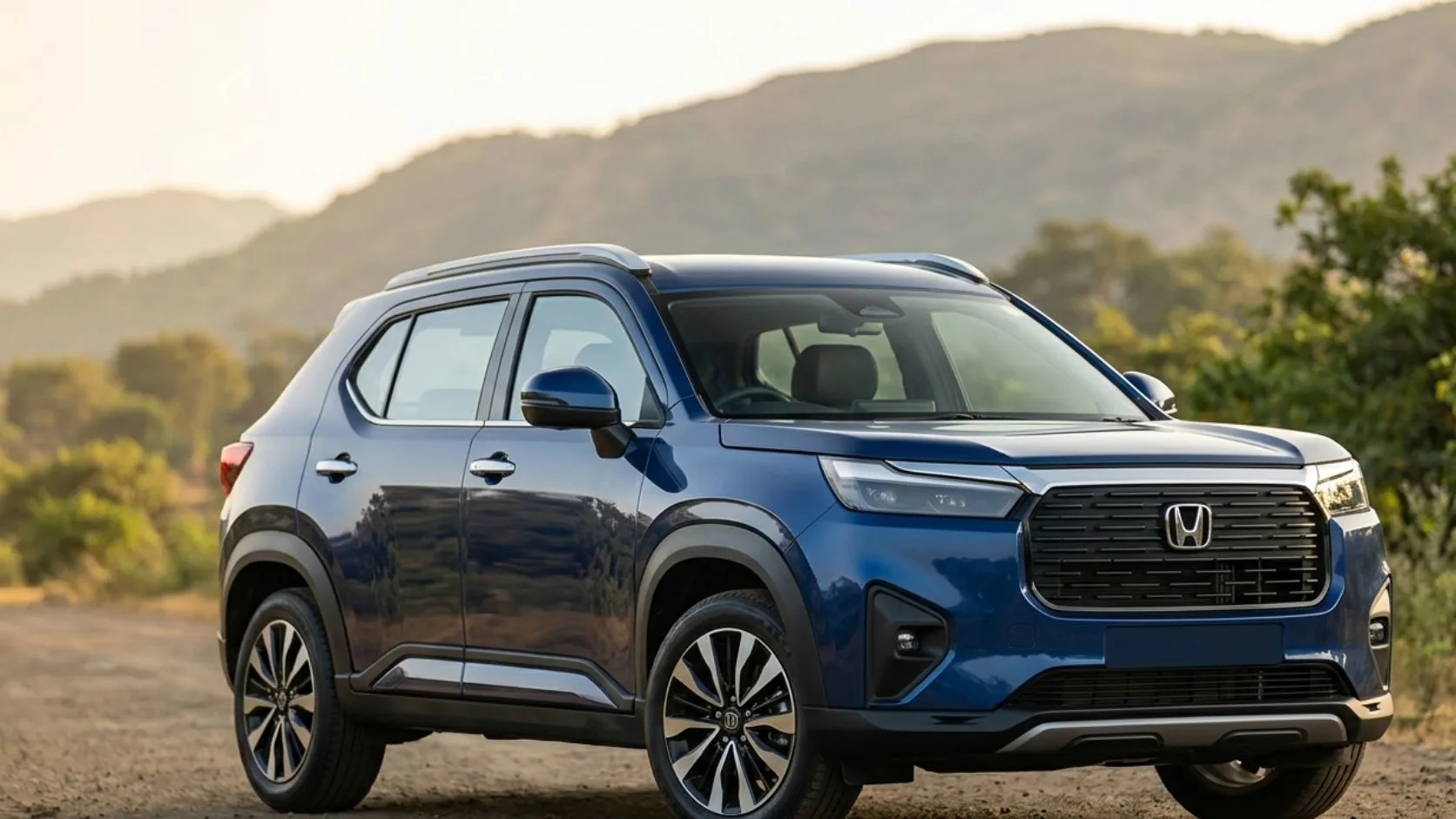
The Honda ZR-V has a sporty exterior design with a relatively clean body profile. Its styling combines a prominent front grille, sharply shaped lighting and a sloping roofline with the proportions expected from a five-seat SUV.
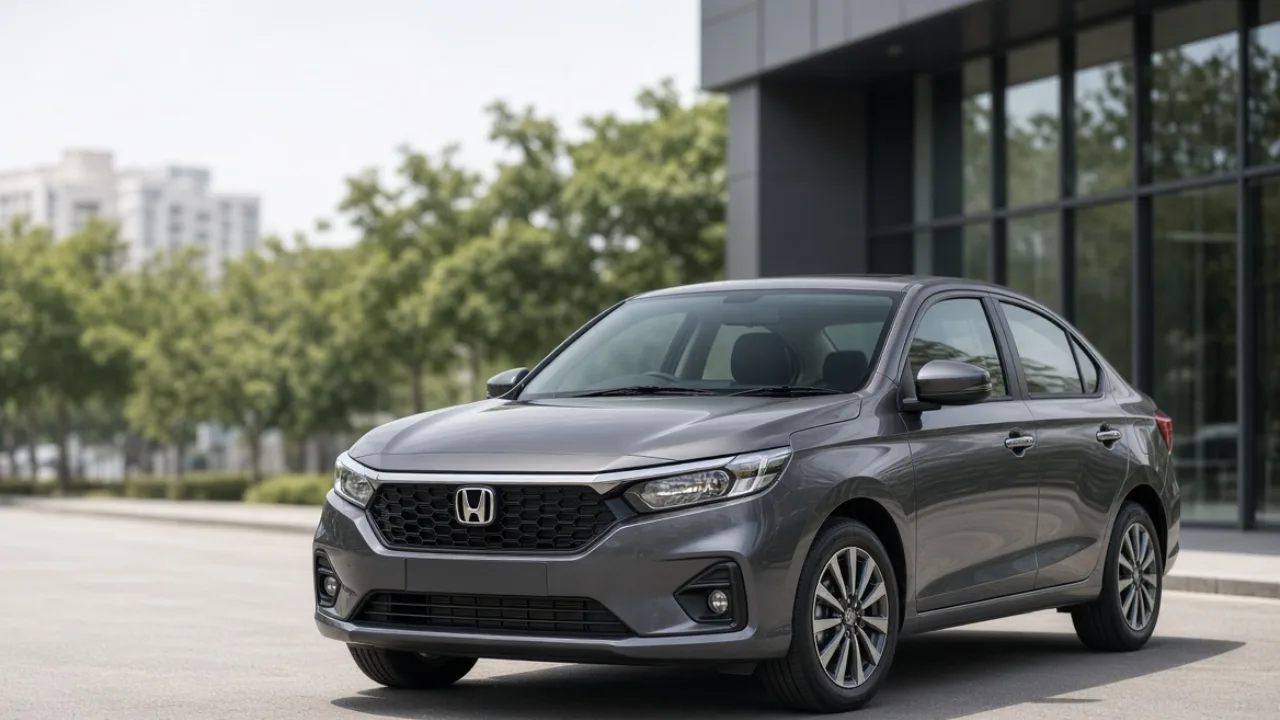
The Indian version includes full-LED headlamps with integrated daytime running lights, sequential front turn indicators, LED rear lamps and 18-inch alloy wheels.
Its design is more road-focused than that of a traditional off-road SUV. Honda’s emphasis is on a combination of urban usability, premium appearance and everyday practicality rather than a rugged body-on-frame construction.
The exact grille treatment, wheel design, lighting details and available colours can vary by market and grade.
Honda ZR-V Features and Technology
The ZR-V combines convenience equipment, infotainment technology and driver-assistance systems. The availability of individual features depends on the market and trim.
Comfort and Convenience
The Indian-market model includes several features intended to make daily use easier:
- Dual-zone automatic climate control.
- Power-adjustable front seats.
- Driver-seat memory function.
- Wireless smartphone charging.
- Hands-free power tailgate with kick-gesture operation.
- Walk-away close-and-lock function.
- Electronic parking brake.
- Rear-seat armrest.
- Deceleration-selector paddles.
The hands-free tailgate is particularly useful when loading luggage while carrying shopping bags or other items. The memory function can also make it easier for different drivers to return to their preferred seating position.
Connected Technology
The ZR-V’s infotainment and connected features vary by market. The Indian version focuses on smartphone connectivity through wireless Apple CarPlay and Android Auto.
The Australian range also lists Google Built-In and Honda Connect Gen2 on its current model page. These features should not be assumed to be included in vehicles sold in other countries.
Connected services can also depend on a compatible smartphone, account activation, network coverage and subscription conditions.
Honda ZR-V Safety and Honda SENSING
Honda offers the ZR-V with its Honda SENSING driver-assistance technology, although the exact equipment list varies by market and grade.
For India, Honda lists the following driver-assistance functions:
- Collision Mitigation Braking System.
- Adaptive Cruise Control with Low-Speed Follow.
- Lane Keeping Assist System.
- Road Departure Mitigation System.
- Auto High-Beam.
- Lead Car Departure Notification System.
These systems are designed to assist the driver. For example, Collision Mitigation Braking System can warn the driver and apply braking when the system detects a potential collision risk. Adaptive Cruise Control can help maintain a selected following distance from the vehicle ahead.
The Indian version also includes an eight-airbag system, a 360-degree surround-view camera, front and rear parking sensors, Hill Descent Control and Vehicle Stability Assist.
Honda SENSING is not autonomous driving technology. Drivers remain responsible for steering, braking, monitoring the road and responding to changing traffic conditions.
Safety equipment and driver-assistance functions should be checked against the specification of the vehicle being purchased. The presence of a feature in one country’s brochure does not confirm that it is standard in every ZR-V.
Honda ZR-V Availability and Market Differences
The ZR-V is sold in multiple markets, but its powertrain, fuel-consumption rating, trim structure and equipment are not identical everywhere.

India
Honda introduced the ZR-V e:HEV to India in May 2026, with bookings opening at the time of its market debut. Honda announced the start of deliveries and the introductory price in July 2026.
The Indian model is imported from Japan as a Completely Built Unit. It is positioned as Honda Cars India’s flagship SUV and uses the 2.0-litre e:HEV strong-hybrid powertrain.
Its published specifications include 184 PS of combined system power, 315 Nm of motor torque and certified fuel efficiency of 22.8 km/L.
Japan
Japan is one of the ZR-V’s established markets. Honda’s Japanese range includes petrol and e:HEV versions, with front-wheel-drive and four-wheel-drive configurations depending on the grade.
Japanese WLTC fuel-consumption ratings differ according to the powertrain and drivetrain configuration. The hybrid’s published figures include 22.0 km/L for certain front-wheel-drive versions and 20.5 km/L for certain four-wheel-drive versions.
Australia
Honda Australia offers both petrol and e:HEV versions of the ZR-V. Its hybrid range includes e:HEV X, e:HEV L and e:HEV LX grades.
Honda lists 5.0 L/100 km combined fuel consumption for these hybrid variants under the Australian test procedure. Equipment such as heated seats, a heated steering wheel, a Bose sound system and a 360-degree camera varies by grade.
United States and Other Markets
The ZR-V name is not used consistently across all Honda markets. Honda sells vehicles with different model names and specifications in different regions, and buyers should not assume that a vehicle marketed as an HR-V in another country is identical in every respect to the ZR-V sold in Japan, India or Australia.
Availability should be checked through the local Honda distributor. A specification or trim offered in one country does not confirm a launch or equivalent version in another.
Is the Honda ZR-V a Plug-In Hybrid or a Self-Charging Hybrid?
The ZR-V e:HEV is a self-charging strong hybrid. It uses a petrol engine, electric motors and a battery, but it does not require an external charging connection.
The battery is replenished through the engine-driven generator and regenerative braking. This makes the vehicle different from a plug-in hybrid, which has a larger rechargeable battery designed to be charged from an external power source.
What Buyers Should Know Before Choosing the ZR-V
The ZR-V’s main appeal is its combination of hybrid efficiency, responsive electric-motor performance and a premium five-seat cabin.

There are several points worth considering before making a purchase.
It is not a fully electric SUV. The vehicle still needs petrol and cannot be treated as an EV with a long electric-only driving range.
Fuel economy depends on the market and test cycle. The Indian figure of 22.8 km/L, the Japanese WLTC ratings and the Australian 5.0 L/100 km figure are not directly comparable.
It has five seats. Buyers who need a third row should look at a larger SUV.

Equipment varies by trim. Features such as premium audio, heated seats, a 360-degree camera and connected services may not be standard on every version.
It is not designed as a dedicated off-road SUV. The ZR-V’s hybrid system and SUV body style make it suitable for everyday road use, but buyers seeking serious off-road capability should check ground clearance, drivetrain and off-road equipment before choosing a vehicle.
Honda ZR-V: Key Advantages and Limitations
Advantages
- Two-motor hybrid system designed to balance efficiency and responsive performance.
- No need for external battery charging.
- Strong electric-motor torque in the Indian specification.
- Five-seat cabin with a practical split-folding rear bench.
- Premium infotainment and audio equipment in the Indian version.
- Driver-assistance features through Honda SENSING.
- Multiple hybrid grades available in markets such as Australia and Japan.
Limitations
- Not a plug-in hybrid or fully electric vehicle.
- Fuel economy varies with driving conditions and market-specific testing.
- Five-seat layout may not suit larger families needing a third row.
- Features and specifications differ between countries.
- The maximum cargo figure applies with the rear seats folded, not with all five seats occupied.
Final Thoughts
The Honda ZR-V is a practical example of Honda’s approach to hybrid SUVs. Its e:HEV system uses electric-motor drive for many everyday situations while retaining a petrol engine for electricity generation and efficient cruising.
The Indian version’s 184 PS combined system output, 315 Nm motor torque and certified 22.8 km/L fuel-efficiency figure give buyers a clear idea of its performance and efficiency targets. Its five-seat interior, 60:40 split-folding rear seats, 1,313-litre maximum cargo capacity and technology features add to its everyday usefulness.
The most important consideration is that the ZR-V is not identical in every market. Buyers should compare the local model’s fuel-economy rating, equipment, drivetrain and warranty rather than relying on specifications published for another country.
For someone looking for a premium five-seat SUV with a strong hybrid system and no requirement for external charging, the ZR-V is worth considering. Its suitability will ultimately depend on local pricing, the equipment offered and the buyer’s space and driving requirements.
Frequently Asked Questions
1. What hybrid system does the Honda ZR-V use?
The Honda ZR-V e:HEV uses a two-motor hybrid system paired with a petrol engine and a lithium-ion battery. The system automatically switches between EV Drive, Hybrid Drive and Engine Drive modes.
2. What is the Honda ZR-V mileage in India?
Honda quotes a certified fuel-efficiency figure of 22.8 km/L for the Indian-market ZR-V e:HEV. Actual mileage can vary depending on traffic, driving style, road conditions and climate-control use.
3. What is the combined power of the Honda ZR-V hybrid?
The Indian-market ZR-V e:HEV produces a manufacturer-quoted combined maximum system output of 184 PS. Its electric traction motor produces 315 Nm of torque.
4. Does the Honda ZR-V need to be charged?
No. The ZR-V e:HEV is a self-charging strong hybrid. Its battery receives energy from the petrol-engine generator and regenerative braking, so external charging is not required.
5. What are the three Honda ZR-V hybrid driving modes?
The three main operating modes are EV Drive, Hybrid Drive and Engine Drive. The vehicle automatically selects between them according to speed, power demand and other driving conditions.
6. How many people can the Honda ZR-V seat?
The Honda ZR-V has a five-seat configuration with two front seats and a three-person rear bench.

7. What is the Honda ZR-V boot capacity?
For the Indian-market model, Honda quotes maximum cargo capacity of up to 1,313 litres with the second-row seats folded flat. The available luggage space is smaller when the rear seats are in use.
8. Does the Honda ZR-V have a 360-degree camera?
Yes, Honda lists a 360-degree surround-view camera for the Indian-market ZR-V. Equipment availability can vary by country and grade.
9. Is the Honda ZR-V available in India?
Yes. Honda introduced the ZR-V e:HEV in India in May 2026 and announced the start of deliveries in July 2026. It is imported from Japan as a Completely Built Unit.
10. Is the Honda ZR-V available with all-wheel drive?
Availability depends on the market. Honda’s Japanese ZR-V range includes four-wheel-drive versions, while buyers in other countries should check the local model range for the available drivetrain.