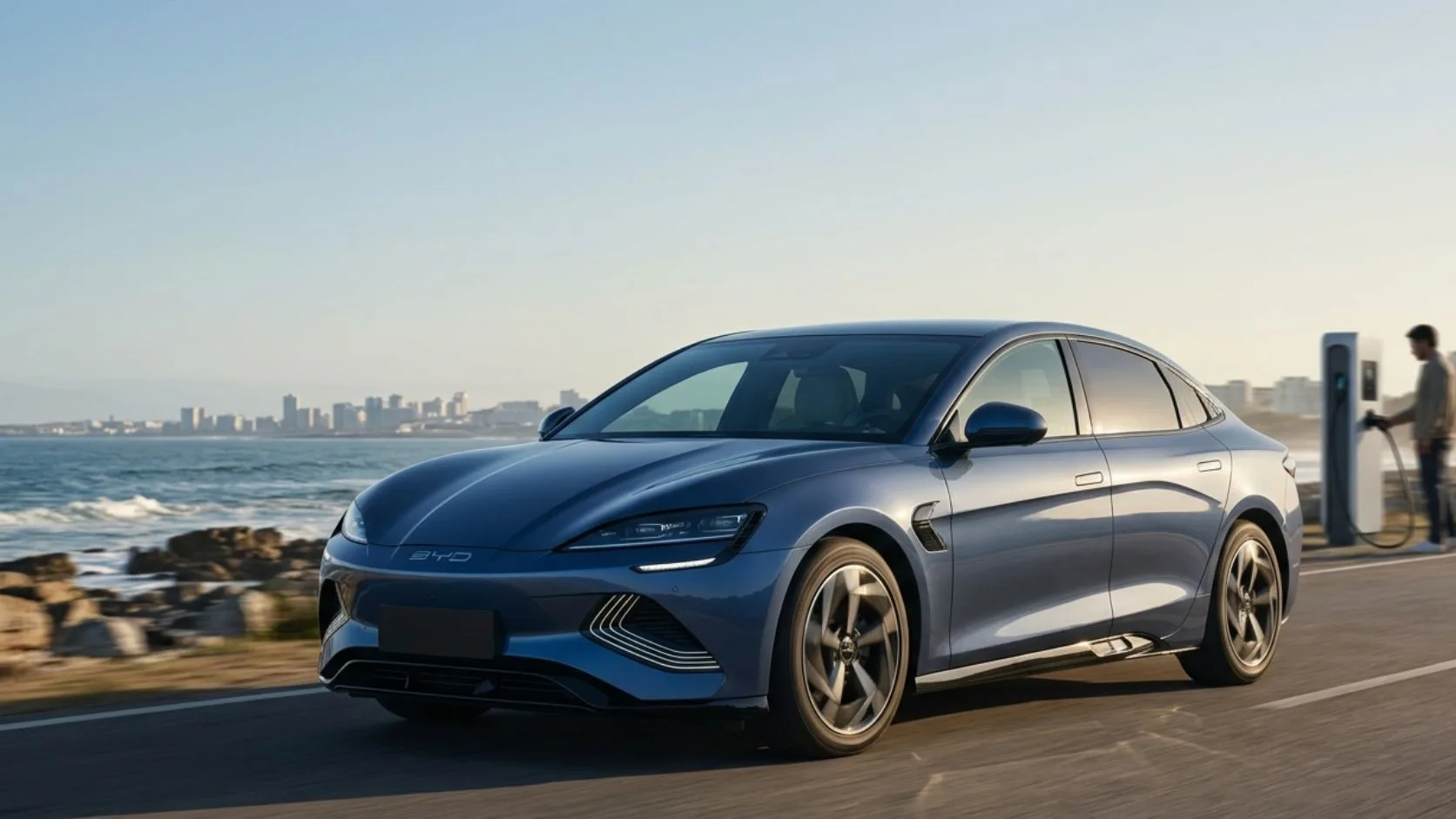
The 2026 BYD Seal is an all-electric sedan that combines long-distance driving capability, strong acceleration and modern cabin technology. It competes in the premium electric sedan segment, where buyers increasingly compare battery range, charging speed, interior comfort and performance before making a purchase.
However, the BYD Seal’s specifications vary by market and trim. The UK, European and Australian versions do not necessarily share the same range figures, equipment or charging specifications. Buyers should therefore check the official specifications for their country rather than relying on a single global figure.
For the 2026 model year, BYD’s published UK specifications list an 82.5 kWh Blade Battery, a maximum WLTP combined range of 354 miles for the rear-wheel-drive Design version, and 323 miles for the all-wheel-drive Excellence AWD. The Australian lineup also includes versions with different battery and range specifications. These figures provide a useful starting point for understanding the sedan, although availability and equipment depend on the market.
2026 BYD Seal: Key Specifications
The following specifications refer to the UK-market BYD Seal Design and Excellence AWD versions. They should not be treated as universal specifications for every country.
| Specification | BYD Seal Design | BYD Seal Excellence AWD |
|---|---|---|
| Vehicle type | All-electric sedan | All-electric sedan |
| Battery capacity | 82.5 kWh | 82.5 kWh |
| Battery technology | Blade Battery (LFP) | Blade Battery (LFP) |
| Drivetrain | Rear-wheel drive | All-wheel drive |
| WLTP combined range | Up to 354 miles | Up to 323 miles |
| WLTP city range | Up to 428 miles | Up to 372 miles |
| Maximum AC charging power | 11 kW | 11 kW |
| Maximum DC charging power | 150 kW | 150 kW |
| DC charging, 30% to 80% | Approximately 26 minutes | Approximately 26 minutes |
| DC charging, 10% to 80% | Approximately 37 minutes | Approximately 37 minutes |
These are manufacturer-published figures for the specified UK versions. Actual driving range and charging times depend on conditions, battery temperature, charger capability and other factors.
What Is New for the 2026 BYD Seal?
The BYD Seal continues to focus on electric performance, battery technology and everyday usability. Its core strengths include BYD’s Blade Battery, an integrated battery-and-body structure, a choice of rear-wheel-drive and all-wheel-drive powertrains in selected markets, and support for DC fast charging.
The exact changes introduced for the 2026 model year depend on the country. Buyers should not assume that a specification listed for an earlier model or another market represents a new feature for every 2026 version.
In the UK, BYD publishes a dedicated 2026 Seal specification sheet covering the Design and Excellence AWD trims. Before buying, it is worth comparing this document with the equipment list for the specific vehicle being offered by a local dealer.

BYD Seal Range: How Far Can It Travel on a Charge?
Driving range is one of the most important considerations when choosing an electric sedan. The BYD Seal offers different official range figures depending on its battery configuration, drivetrain and market.
For the UK versions, the published WLTP figures are:
- BYD Seal Design: Up to 354 miles of combined range.
- BYD Seal Excellence AWD: Up to 323 miles of combined range.
- Design city range: Up to 428 miles under the WLTP city test.
- Excellence AWD city range: Up to 372 miles under the WLTP city test.
The city figures are not predictions of how far the car will travel on every urban journey. They come from a standardized testing procedure and should not be directly compared with the combined figures as if both represented the same driving conditions.
What affects the real-world range?
Actual driving range can be lower than the official figure. Several factors influence how much energy an electric car uses.

Driving speed: Sustained high-speed motorway driving generally consumes more energy than slower driving because aerodynamic resistance increases with speed.
Weather conditions: Cold weather can reduce battery efficiency and increase the energy required to heat the cabin. Hot weather can also increase energy consumption when air conditioning is used.
Driving style: Rapid acceleration, heavy braking and frequent changes in speed can affect efficiency.
Wheels and tires: Wheel size, tire design and rolling resistance can influence energy consumption, depending on the specification.
Vehicle load: Passengers, luggage and other additional weight can affect efficiency.
For regular commuting, the BYD Seal’s range may provide a useful buffer between charging sessions. For long-distance journeys, drivers should plan around realistic consumption, charging locations and a reserve of battery power rather than relying exclusively on the maximum advertised range.
Battery Technology: Understanding the BYD Blade Battery
The BYD Seal uses BYD’s Blade Battery technology. The UK specifications identify the battery chemistry as lithium iron phosphate, commonly abbreviated as LFP.
LFP batteries use lithium, iron and phosphate in their cathode chemistry. Compared with some other lithium-ion battery chemistries, they offer advantages in thermal stability and avoid the use of cobalt in the cathode. Their energy density can be lower than that of certain nickel-rich battery chemistries, so vehicle design and battery packaging remain important.
The battery is also central to BYD’s wider electric-vehicle engineering approach.
Cell-to-Body construction
BYD’s Cell-to-Body technology integrates the battery into the vehicle’s body structure rather than treating it simply as a separate component beneath the floor.
This approach can help with structural rigidity and packaging efficiency. It also makes the battery an important part of the vehicle’s overall architecture.
For buyers, the practical benefit is the way the battery, chassis and passenger compartment are designed to work together. However, the technology alone should not be interpreted as proof of a particular crash-safety rating or a guarantee that battery damage cannot occur.
What buyers should know about battery life
Battery longevity depends on usage, charging habits, temperature, battery management and other conditions. BYD’s published technical information describes its battery technology, but actual long-term degradation depends on the individual vehicle and operating environment.
Before purchasing, check the battery warranty applicable to the country and model year. Warranty duration, mileage limits, coverage conditions and exclusions can differ by market.
BYD Seal Performance: Power and Acceleration
The BYD Seal is available with different motor configurations, allowing buyers in supported markets to choose between efficiency-oriented rear-wheel drive and higher-performance all-wheel drive.
The UK Design version uses a rear-mounted permanent-magnet synchronous motor. The Excellence AWD adds a front asynchronous motor to provide all-wheel drive.
The Australian range also illustrates how powertrain choices can vary by grade. Its published specifications list the Premium with 230 kW and the Performance version with 390 kW.
Rear-wheel drive versus all-wheel drive
Rear-wheel drive sends motor power to the rear wheels. It can provide strong acceleration while avoiding the additional hardware required for a second driven axle.
All-wheel drive distributes propulsion across the front and rear axles. In the Seal Excellence AWD, the additional front motor helps deliver stronger acceleration and provides power to both axles.
The trade-off is that the AWD version has a higher-performance focus, and its official range is lower than that of the UK Design version.
For drivers who prioritize everyday commuting and longer distances between charging stops, the rear-wheel-drive version may be the more suitable option. Buyers who value quicker acceleration and the added traction capability of an all-wheel-drive system may prefer the AWD model.
Exterior Design and Aerodynamics
The BYD Seal uses an ocean-inspired design theme, with flowing bodywork, a low-slung sedan profile and a distinctive front-end treatment.
Its shape is intended to balance visual appeal with aerodynamic efficiency. Aerodynamics matter in an EV because air resistance becomes an increasingly important source of energy consumption at higher speeds.
The overall design also gives the car a sporty appearance without relying on the proportions of an SUV. This may appeal to buyers who prefer a conventional four-door sedan with a more performance-oriented character.
Exterior equipment, wheel designs, paint options and lighting details depend on the trim and market. Prospective buyers should review the local specification sheet to confirm which items are standard and which are optional.
Interior, Comfort and Practicality
The BYD Seal combines a modern cockpit layout with a focus on passenger comfort and digital technology.
Depending on the version, equipment can include electrically adjustable seats, heated seating, a panoramic glass roof, multi-zone climate control and premium audio. These features should be checked against the specific trim rather than assumed to be standard across the entire range.
Infotainment and connectivity
The Seal’s infotainment system provides access to vehicle settings, media and connected functions. Market-specific equipment can include smartphone integration through Apple CarPlay and Android Auto, voice control and online navigation services.
The central display is a major part of the cabin’s digital interface. Buyers should try the system in person to see how easily they can access frequently used controls, manage climate settings and navigate between menus.
Software features and connected services can depend on local availability, subscription terms and software versions.
Passenger and luggage space
The sedan body offers a separate luggage compartment, while the flat-floor electric platform helps accommodate the electric powertrain without a conventional engine and transmission tunnel.
BYD’s published Indian specifications describe a rear luggage capacity of 400 liters and an additional 53-liter front storage compartment. These figures are useful for understanding the packaging, but buyers should confirm the measurements for the exact version they intend to purchase.

As with any sedan, the practical suitability of the cabin depends on passenger height, rear-seat requirements, child-seat installation and the shape of the luggage area. A showroom inspection is the best way to determine whether the car meets a family’s needs.
Charging the 2026 BYD Seal
Charging speed affects how conveniently an electric vehicle fits into daily life. The BYD Seal supports both AC charging and DC fast charging, but the maximum supported power differs between market-specific versions.
For the UK Design and Excellence AWD versions, BYD lists an 11 kW maximum AC charging rate and a 150 kW maximum DC charging rate.
DC fast-charging times
The UK specifications give the following manufacturer-quoted charging times:

| Charging measurement | Published time |
|---|---|
| 30% to 80% using DC charging | Approximately 26 minutes |
| 10% to 80% using DC charging | Approximately 37 minutes |
| AC charging from 0% to 100% using an 11 kW, three-phase supply | Approximately 8.6 hours |
These times are reference figures rather than guarantees. Actual charging performance depends on the charging station, battery temperature, initial state of charge and other conditions.
A charger rated above 150 kW will not necessarily make the Seal charge faster than its supported maximum. The car’s battery and charging system determine how much power it can accept.
Home charging
Home charging can be convenient for drivers who have access to a suitable dedicated charging point.
An 11 kW AC charging setup generally requires a compatible three-phase supply. Not every home has that electrical arrangement, so the installation requirements and available charging rate should be checked before purchasing the vehicle.
A lower-powered AC charger can still be useful, although a full charge will take longer. Charging overnight may be sufficient for drivers who cover relatively short distances each day.
Public charging and road trips
DC fast charging is more relevant for long journeys when drivers need to replenish the battery during a stop.
Before planning a trip, check the locations of compatible charging stations, their actual operating status and the charging connectors supported by the vehicle. A station’s advertised power rating does not guarantee that every car will receive that power.
Drivers should also allow time for charging stops and account for the possibility of busy or unavailable chargers. These practical considerations matter as much as the car’s maximum charging rate.
Regenerative Braking and Energy Efficiency
Regenerative braking recovers some of the vehicle’s kinetic energy when the car slows down and converts it into electrical energy that can be returned to the battery.
The amount recovered depends on driving conditions, battery charge level, system settings and other factors. Regeneration can help reduce energy consumption, particularly in stop-and-go traffic, but it does not eliminate energy losses or replace conventional braking in every situation.
Drivers should become familiar with the Seal’s available regenerative-braking settings and driving modes. Smooth acceleration, sensible speeds and anticipating traffic can also help improve efficiency.
Safety and Driver-Assistance Technology
The BYD Seal’s published equipment includes a range of active safety and driver-assistance systems. Depending on the market and trim, these can include:
- Automatic emergency braking.
- Forward collision warning.
- Adaptive cruise control.
- Lane departure warning and lane-keeping assistance.
- Blind-spot detection.
- Rear cross-traffic alert.
- A surround-view camera system.
- Traffic-sign recognition.
These systems are designed to assist the driver, not replace attentive driving. Their availability, operating limits and exact functions can vary by version and market.
Buyers should also distinguish between equipment fitted to the vehicle and an independently awarded safety rating. A list of driver-assistance features does not, on its own, establish how a vehicle performed in a crash test.
For the latest safety assessment, consult the relevant official testing organization for the exact vehicle version and market. Check that the rating applies to the same model and specification being considered.
2026 BYD Seal Price and Availability
There is no single worldwide price for the 2026 BYD Seal. The final cost depends on the country, local taxes, trim, optional equipment and the manufacturer’s current pricing policy.
In India, BYD publishes a separate Seal model page with market-specific information. The available variants, listed prices and charging equipment should be checked directly against the latest Indian price list because specifications and prices can change.
For buyers in the UK, Australia or Europe, the appropriate national BYD website or authorized dealer is the best source for current pricing and availability. A price advertised in one country should not be converted into another currency and treated as the local retail price.
The 2026 model-year designation also does not necessarily mean that every market received a newly redesigned car or a confirmed launch on the same date. Model-year updates and retail availability can follow different schedules in different countries.
What Buyers Should Consider Before Purchasing
The BYD Seal’s appeal depends on how its strengths align with an individual’s driving habits and charging access.
For daily commuters: Consider the battery size, typical daily distance and whether home or workplace charging is available.
For frequent highway drivers: Pay particular attention to combined range, motorway energy consumption, charging locations and the time needed for charging stops.
For performance-focused buyers: Compare the acceleration, motor configuration and drivetrain of the available versions. The quickest model may not deliver the longest range.
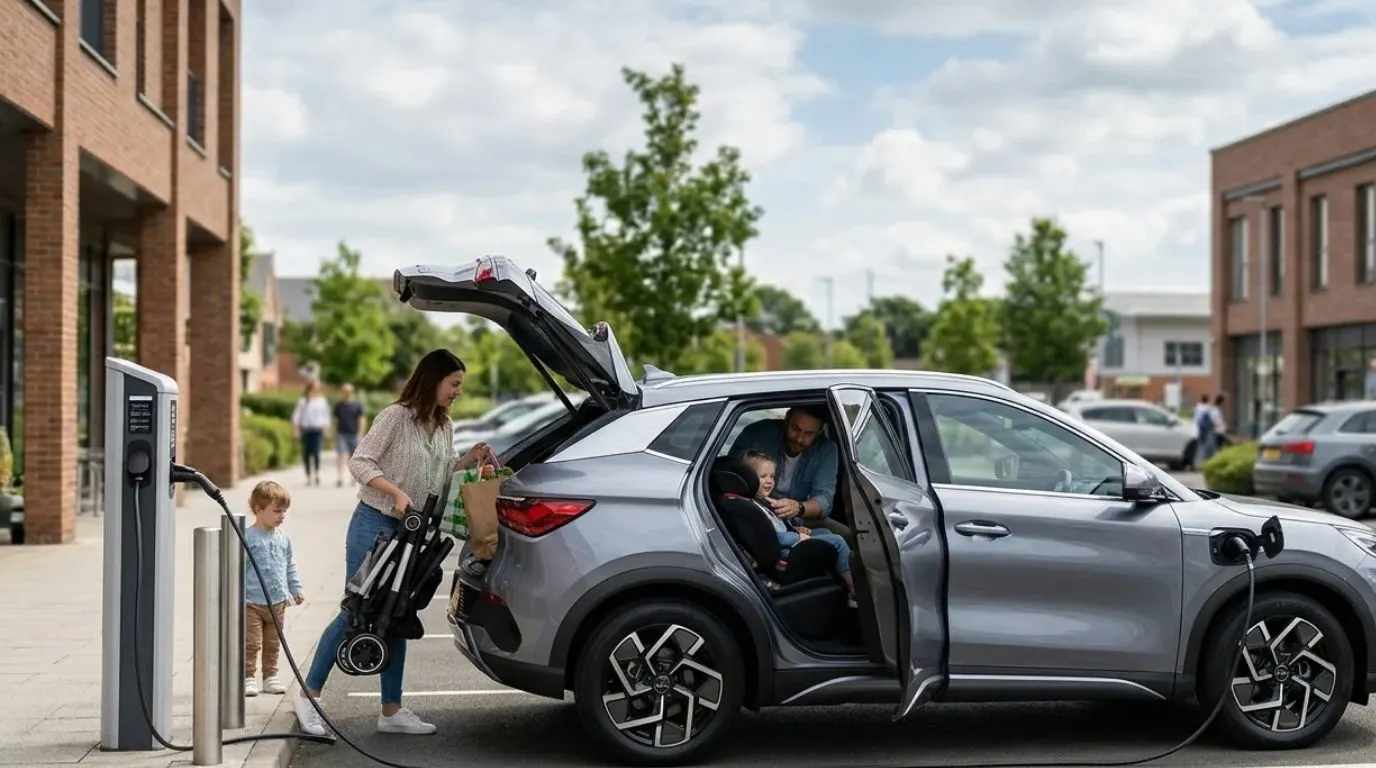
For families: Check rear-seat comfort, luggage capacity, child-seat compatibility and the practicality of the sedan’s boot opening.
For technology-focused buyers: Test the infotainment system and confirm which connectivity features, driver-assistance functions and software services are included locally.
For long-term ownership: Read the vehicle and battery warranties carefully. Also consider local service coverage, parts availability, insurance costs and the charging facilities you expect to use.
A careful comparison of these factors is more useful than choosing a version solely because it has the highest power output or the largest advertised range.
Pros and Limitations of the BYD Seal
Potential advantages
- Multiple powertrain options in markets where different versions are offered.
- A manufacturer-claimed WLTP combined range of up to 354 miles for the UK Design version.
- DC fast charging with a published maximum rate of 150 kW in the UK.
- Blade Battery and Cell-to-Body engineering.
- A modern infotainment system and a broad selection of driver-assistance features.
- A sedan layout for buyers who do not want an SUV.
Points to consider
- Specifications and equipment vary by market and trim.
- The AWD version has a lower published UK combined range than the Design version.
- Real-world range can be lower than the official testing figure.
- Fast-charging performance depends on charger conditions and battery temperature.
- Home charging at the maximum AC rate requires a compatible electrical supply.
- Local pricing, warranty terms and service availability need to be confirmed before purchase.
Final Thoughts
The 2026 BYD Seal is worth considering for buyers looking for an electric sedan with a choice of performance levels, a modern cabin and competitive charging capabilities. The UK Design version’s published range of up to 354 miles WLTP is particularly relevant to drivers who prioritize distance between charging stops, while the Excellence AWD offers a different balance focused on performance and all-wheel drive.

The right version ultimately depends on the local lineup, driving requirements and charging access. Before making a decision, confirm the current model-year specifications, local price, warranty and charging compatibility with BYD or an authorized dealer.
Frequently Asked Questions
What is the range of the 2026 BYD Seal?
The UK-market BYD Seal Design has a manufacturer-claimed WLTP combined range of up to 354 miles. The Excellence AWD is rated for up to 323 miles. Other markets and versions can have different official range figures.
How long does the BYD Seal take to charge?
For the UK Design and Excellence AWD versions, BYD quotes approximately 26 minutes for DC charging from 30% to 80% and around 37 minutes from 10% to 80%. Actual times depend on battery temperature and charging conditions.
What battery does the BYD Seal use?
The UK versions use an 82.5 kWh BYD Blade Battery with lithium iron phosphate (LFP) chemistry. Battery specifications should be confirmed for the particular market and trim.

Is the BYD Seal rear-wheel drive or all-wheel drive?
Both configurations are available in the published UK range. The Design is rear-wheel drive, while the Excellence AWD uses front and rear motors to provide all-wheel drive.
Is the 2026 BYD Seal available in India?
BYD has an official Indian product page for the Seal. Buyers should consult the current Indian lineup or an authorized dealer to confirm which variants are being offered and their latest prices.
Does the BYD Seal support fast charging?
Yes. The UK versions support DC fast charging at up to 150 kW, with manufacturer-quoted charging times of approximately 26 minutes from 30% to 80%. Charging power can vary during a session.
Is the BYD Seal suitable for long-distance travel?
It can be suitable for long journeys when the vehicle’s range, route and available charging infrastructure meet the driver’s needs. Planning around realistic range and compatible charging stations is advisable, particularly in areas with limited charging coverage.
Does the BYD Seal have advanced driver-assistance features?
Published equipment lists include features such as adaptive cruise control, automatic emergency braking and lane-assistance systems. Exact equipment depends on the market and trim, and these systems do not replace the driver’s responsibility to remain attentive.