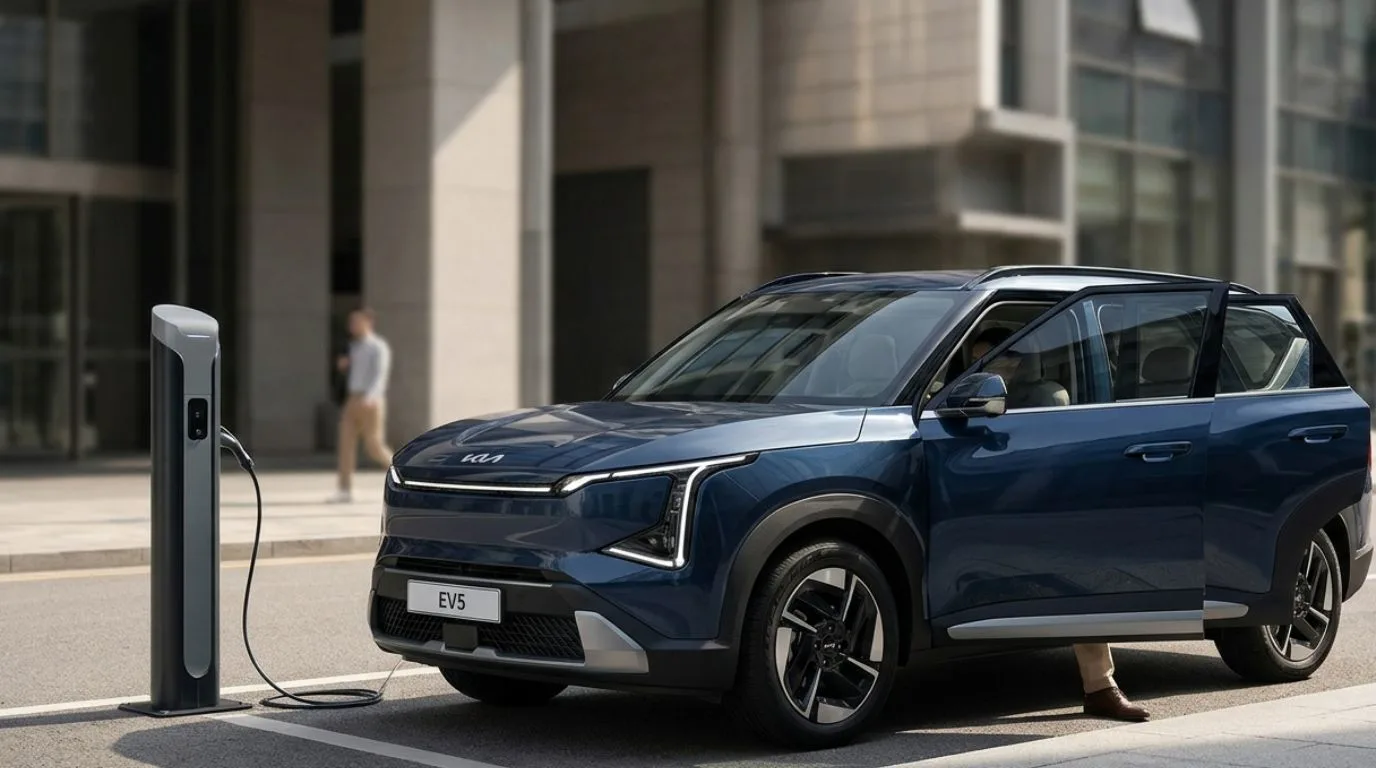
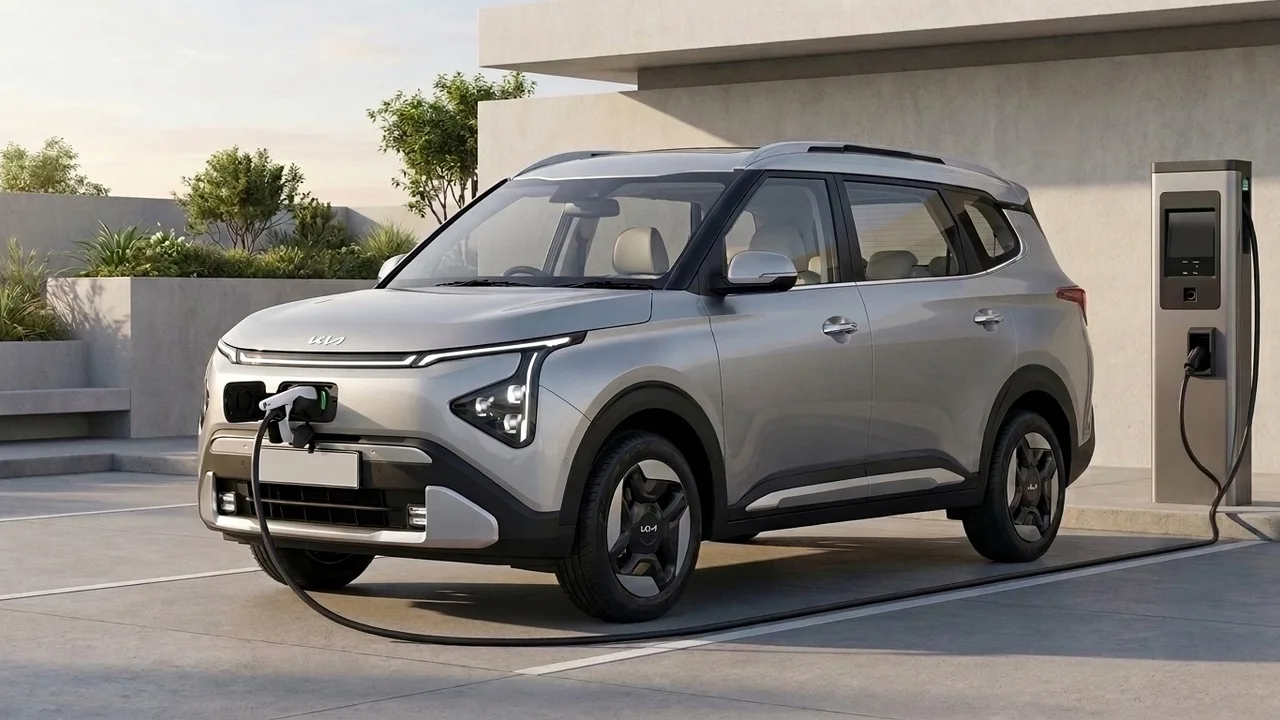
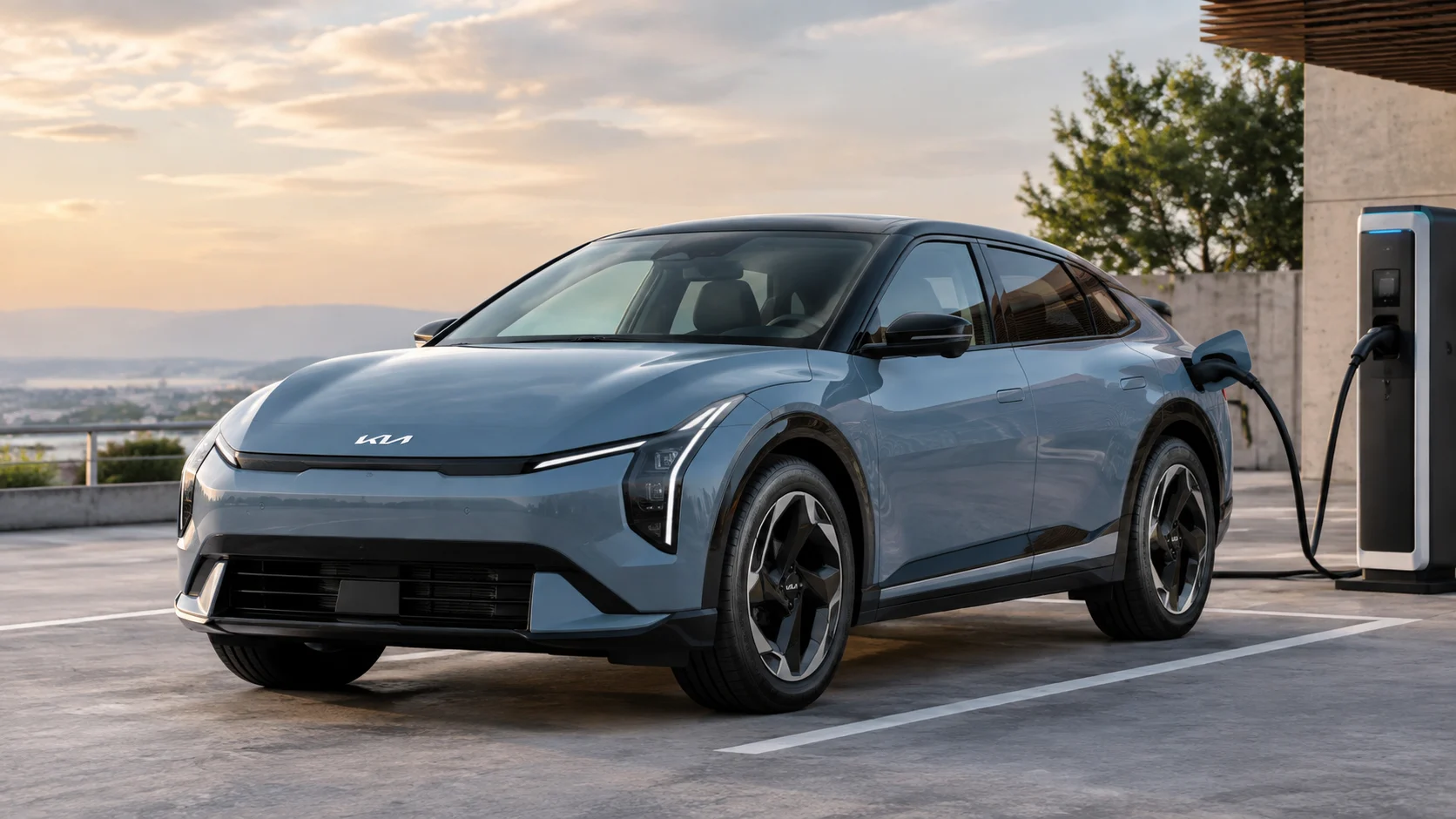
The Kia EV5 is an all-electric family SUV designed around practical cabin space, a flat-floor layout and the convenience of electric driving. Its battery capacity, driving range and charging performance vary by market and version, so there is no single specification sheet that applies to every EV5 sold worldwide.
For buyers, the most important distinction is between the smaller-battery and larger-battery versions offered in some markets, and the different range figures published under regional test cycles. The UK, South Korea, Australia and New Zealand specifications, for example, are not identical.
This guide focuses on confirmed manufacturer information and identifies the market behind each specification. It does not treat one country’s range or charging figures as universal.
Kia EV5: Key Specifications at a Glance
| Specification | Confirmed information |
|---|---|
| Vehicle type | All-electric SUV |
| Seating capacity | Five |
| Battery options | Market-dependent; includes 60.3 kWh, 64.2 kWh, 81.4 kWh and 88.1 kWh versions in different markets |
| Drive layout | Front-wheel drive or all-wheel drive, depending on market and variant |
| Maximum AC charging | Depends on version and market; 6.6 kW or 11 kW configurations are listed in some markets |
| DC fast charging | Market- and version-dependent |
| Platform | Hyundai Motor Group’s E-GMP-based electric vehicle architecture |
| Interior layout | Five-seat cabin with a flat-floor design |
The battery figures above come from different regional specifications. They should not be interpreted as four battery choices available in every country.
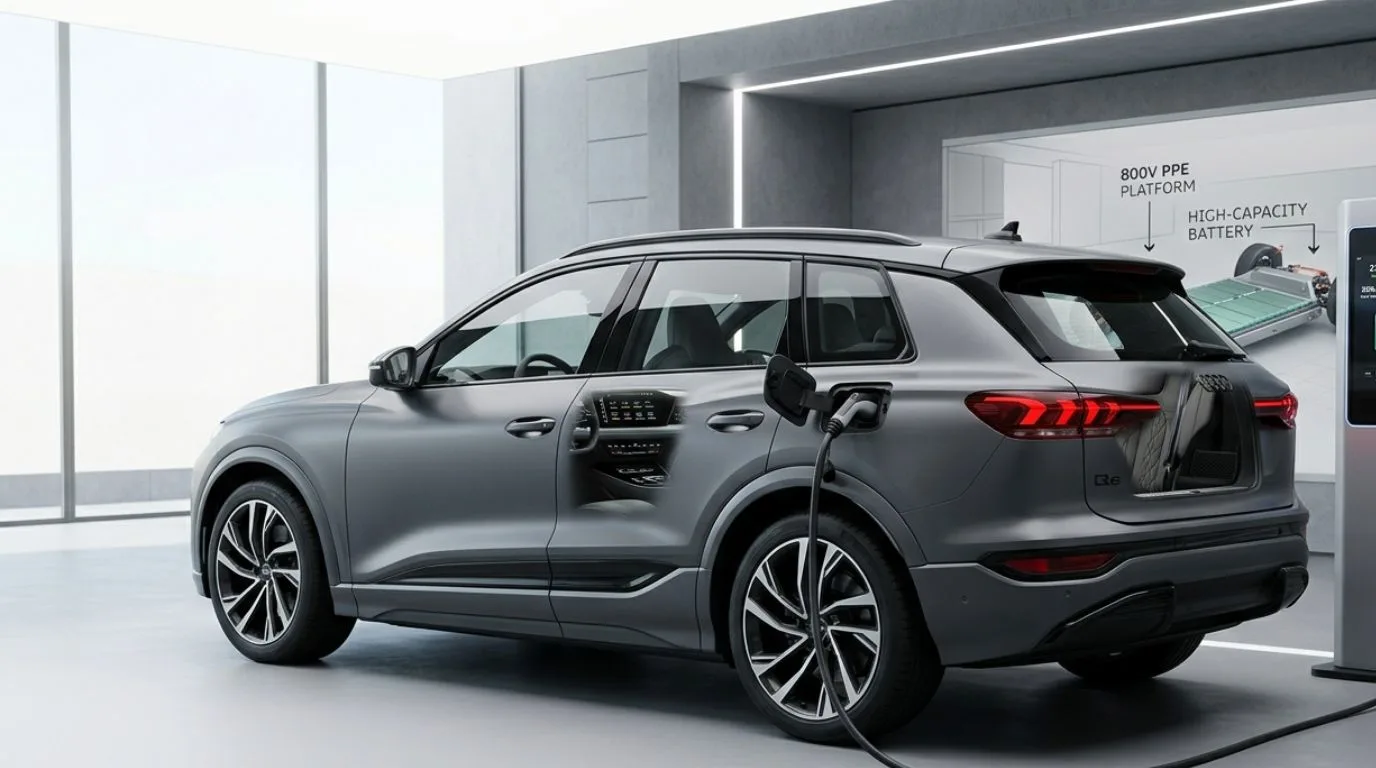

Kia EV5 Battery Capacity: What Options Are Available?
Kia has introduced the EV5 with different battery configurations depending on the country. This is important because battery capacity affects driving range, charging requirements and, in some cases, the available motor and drivetrain.
South Korea: Kia’s Korean specification page lists a 60.3 kWh Standard battery and an 81.4 kWh Long Range battery. The listed motor output is 115 kW for the Standard version and 160 kW for the Long Range version. The Korean specification page also provides government-reported range figures for individual wheel and equipment configurations.
United Kingdom: Kia UK lists an 81.4 kWh battery for the front-wheel-drive and all-wheel-drive versions shown on its specification page. This is the larger battery configuration for the UK range.
Australia: Kia Australia’s MY26 brochure lists 64.2 kWh and 88.1 kWh battery configurations. It identifies the battery chemistry as lithium iron phosphate (LFP).
New Zealand: Kia New Zealand also lists an 88.1 kWh battery for the versions covered by its range and specification page.
These differences explain why an EV5 specification quoted in one country may not match a model sold elsewhere. Before comparing prices or range claims, check the local Kia website and the exact trim.
Kia EV5 Range: How Far Can It Travel on a Charge?
The EV5’s official range depends on battery size, drivetrain, wheel specification and the test procedure used in each country. WLTP figures are commonly published in Europe and Australia, while South Korea uses its own government-certified testing figures.
Australia: Official WLTP range
Kia Australia’s MY26 brochure lists the following figures:

| Australian version | Battery | Official combined WLTP range |
|---|---|---|
| Air 2WD Standard Range | 64.2 kWh | 400 km |
| Air 2WD Long Range | 88.1 kWh | 555 km |
| Earth AWD Long Range | 88.1 kWh | 500 km |
| GT-Line AWD Long Range | 88.1 kWh | 470 km |
The difference between the two long-range AWD versions is a useful reminder that a larger battery does not guarantee the same range across every trim. Wheel and equipment specifications, as well as the extra demand of all-wheel drive, can affect efficiency.
United Kingdom: Official WLTP range
Kia UK’s specification page lists an 81.4 kWh battery. Its published combined range varies by trim and wheel configuration:
- Air with 18-inch wheels, front-wheel drive: up to 329 miles.
- GT-Line with 19-inch wheels, front-wheel drive: up to 313 miles.
- GT-Line with 19-inch wheels, all-wheel drive: up to 305 miles.
- GT-Line S with 19-inch wheels, front-wheel drive: up to 313 miles.
- GT-Line S with 19-inch wheels, all-wheel drive: up to 305 miles.
These are UK-market figures, not direct equivalents of the Australian figures above.
South Korea: Government-certified range
Kia’s South Korean specification page lists a 60.3 kWh Standard battery and an 81.4 kWh Long Range battery. For the Standard 2WD version, the published combined range is 351 km with 18-inch wheels and 342 km with 19-inch wheels. The Long Range version’s published combined figure is 460 km for the listed 18- and 19-inch configurations.

These figures use South Korea’s certification system and should not be compared directly with WLTP results.
What should buyers expect in everyday driving?
Official test-cycle range is useful for comparing vehicles under a standard procedure, but it is not a promise of the distance every owner will cover. Actual range can change with:
- Highway speed and driving style.
- Outside temperature and use of cabin heating or air conditioning.
- Wheel and tire size.
- Passenger and luggage weight.
- Road gradients and traffic.
- Battery temperature and condition.
For regular long-distance travel, it is sensible to plan charging stops with a reserve rather than treating the advertised maximum range as a guaranteed journey distance.
Kia EV5 Charging Speed and Charging Time
The EV5 supports both AC charging for home or destination use and DC fast charging for longer journeys. The exact charging hardware and claimed times depend on the regional version.


Home AC charging
Kia Australia’s MY26 brochure lists a 6.6 kW single-phase onboard charger for the 64.2 kWh Standard Range version and an 11 kW three-phase onboard charger for the larger-battery versions.
Its stated charging times are:
| Australian version | AC charging setup | Approximate charging time |
|---|---|---|
| 2WD Standard Range | 7 kW charger, 10–100% | 9 hours 43 minutes |
| 2WD Long Range / AWD Long Range | 11 kW charger, 10–100% | 8 hours 10 minutes |
These are manufacturer estimates under the specified charging conditions. Actual home charging time can vary with the power supply, charger, temperature and charging losses.
Kia New Zealand publishes a different set of figures for its 88.1 kWh versions: approximately 9 hours 10 minutes for a 0–100% charge using an 11 kW charger. This illustrates why charging times should be checked against the local vehicle specification.


DC fast charging
For Australian versions, Kia quotes the following 10–80% charging times:
| Version | 50 kW DC charger | 350 kW DC charger |
|---|---|---|
| 2WD Standard Range | Approx. 57 minutes | Approx. 36 minutes |
| 2WD Long Range / AWD Long Range | Approx. 72 minutes | Approx. 38 minutes |
A 350 kW charging station does not mean the EV5 itself charges at 350 kW. The vehicle’s charging system controls the power it accepts, and the charging station’s advertised maximum is not the same as the car’s actual charging rate.
In the UK, Kia lists a 10–80% DC charging time of approximately 30 minutes using a 150 kW charger for the 81.4 kWh versions shown on its specification page.
What affects EV5 charging time?
Charging time is not determined by the charger rating alone. It can also be affected by:
- The battery’s starting state of charge.
- Battery temperature.
- The maximum charging power supported by the vehicle.
- The power available from the charging station.
- Other vehicles sharing the charging site.
- The charging curve, which usually reduces power as the battery approaches a high state of charge.
For everyday ownership, an overnight home charger can be more convenient than relying on public fast chargers. DC charging is particularly useful during longer trips when a shorter stop matters.
Kia EV5 Interior Space and Cabin Practicality
The EV5 is designed as a five-seat electric SUV, with a cabin layout intended to make everyday family use easier. Its long wheelbase and flat-floor packaging help create usable passenger space, while the wide dashboard display gives the interior a modern appearance.
Passenger space and seating
The EV5 measures approximately 4.6 metres long, with a 2,750 mm wheelbase in the specifications published for several markets. The wheelbase is the distance between the front and rear axles. A longer wheelbase can help create more room for passengers, although the actual space also depends on seat design and cabin packaging.
Hyundai Motor Group’s global EV5 announcement gives the following interior measurements:
| Interior measurement | Published figure |
|---|---|
| Front headroom | 1,075 mm |
| Rear headroom | 1,024 mm |
| Front legroom | 1,117 mm |
| Rear legroom | 1,041 mm |
| Front shoulder room | 1,465 mm |
| Rear shoulder room | 1,425 mm |
These figures provide a useful indication of the cabin’s dimensions, but equipment and measurements can differ between regional versions.
The rear bench is designed for three passengers. The flat-floor layout can make the middle seating position more usable than in some vehicles with a prominent central floor tunnel. Buyers should still check rear-seat width and comfort in person if they regularly carry three adults.
Boot space and front storage
Kia Australia’s MY26 brochure lists the following luggage capacities:
| Storage area | Capacity |
|---|---|
| Rear cargo area, rear seats up | 513 litres |
| Rear cargo area, rear seats folded | 1,714 litres |
| Front storage compartment (frunk) | 67 litres |
The rear seats fold to increase the available luggage area. This makes the EV5 more flexible for larger shopping loads, suitcases and bulky items.
The front storage compartment, commonly called a frunk, provides additional space for smaller items. Its availability and capacity should be checked for the exact market and version.
Cargo measurements can use different standards, including VDA and SAE methods. Figures from different sources should not be compared without checking the measurement method.
Dashboard, displays and infotainment
The EV5’s dashboard uses a wide panoramic display arrangement. Hyundai Motor Group’s global announcement describes three integrated sections:
- A 12.3-inch instrument cluster for driving information.
- A 12.3-inch infotainment display.
- A separate 5-inch climate-control display.
This arrangement places key information across the dashboard rather than relying on one small central screen. The dedicated climate display also gives the driver a separate area for temperature and ventilation controls.
Equipment can vary by trim and country, so features such as navigation, connected services, smartphone integration and premium audio should be checked against the local specification list.
Flexible cabin features
Kia’s global description highlights several practical interior elements, including a wide center console, storage space accessible to front and rear passengers, rear seat-back tables and a sliding rear armrest with cupholders.
The rear seats can fold nearly flat, creating a more continuous surface between the passenger area and luggage compartment. This is useful when carrying longer items or making use of the cabin for outdoor activities.
Not every comfort feature is necessarily available on every version. Items such as relaxation seats, massage functions and three-zone climate control are equipment-dependent and should not be assumed to be standard across the range.
Kia EV5 Dimensions
The EV5’s overall dimensions place it in the mid-size electric SUV category. Kia’s published figures vary slightly between markets, so the table below uses the Australian MY26 brochure for its exterior measurements.
| Dimension | Australian MY26 specification |
|---|---|
| Length | 4,615 mm |
| Width | 1,875 mm |
| Height | 1,715 mm |
| Wheelbase | 2,750 mm |
| Seating capacity | 5 |
The Korean-market specification lists a length of 4,610 mm, rather than the Australian figure of 4,615 mm. This small difference reinforces the importance of checking the market-specific technical sheet.
Kia EV5 Powertrain and Drivetrain
The EV5 uses an electric motor rather than a petrol or diesel engine. Its power output and drivetrain depend on the battery and trim selected.
The Australian MY26 brochure lists:
- 2WD versions: A front-mounted electric motor producing 160 kW and 310 Nm.
- AWD versions: Front and rear electric motors with a combined output of 230 kW and 480 Nm.
The all-wheel-drive version can send power to both axles, which can be useful when traction is limited. The front-wheel-drive version has a simpler single-motor arrangement.
Kia specifies a single-speed reduction gear rather than a conventional multi-speed automatic transmission. Electric motors deliver power differently from combustion engines, so they do not need the same series of gear changes for normal driving.
EV5 Technology: Regenerative Braking and Vehicle-to-Load
The EV5 includes several electric-vehicle functions intended to make ownership more convenient.
Regenerative braking: This system recovers some energy when the vehicle slows down and sends it back to the battery. The driver can adjust regenerative braking through the available controls, depending on the version.

One-pedal driving: Kia lists an i-Pedal function in the Australian brochure. It allows the driver to use accelerator-pedal input for acceleration and much of the slowing process. The exact operation and availability depend on the vehicle configuration.
Vehicle-to-Load (V2L): V2L allows the vehicle’s battery to supply electricity to compatible external devices. Kia’s Australian brochure lists an interior V2L socket across the versions shown, while an exterior adaptor is listed for selected higher versions. This can be useful for powering small appliances or equipment when appropriate accessories are available.
These features add flexibility, but V2L should not be confused with a confirmed ability to power an entire home. Vehicle-to-home and vehicle-to-grid functions have different hardware and compatibility requirements.
Is the Kia EV5 Available in Every Market?
No. Kia’s EV5 launch announcement identified Korea, Europe and North America among its key markets, but that does not mean the vehicle has identical specifications or availability in every country.
The regional differences are significant:
- Australia: Kia’s MY26 brochure lists 64.2 kWh and 88.1 kWh LFP battery versions, with both front-wheel drive and all-wheel drive.
- United Kingdom: Kia lists an 81.4 kWh battery for the versions on its specification page, with front-wheel-drive and all-wheel-drive configurations.
- South Korea: Kia lists 60.3 kWh Standard and 81.4 kWh Long Range batteries.
- New Zealand: Kia lists an 88.1 kWh LFP battery and publishes its own WLTP range and charging figures.
Availability, specifications and equipment in other countries should be confirmed through the local Kia website. Buyers in markets where the EV5 is not listed should not assume that an overseas specification means a local launch or order book is confirmed.
What Buyers Should Check Before Choosing a Kia EV5
The larger battery is not automatically the right choice for every driver. Consider how the SUV will be used before selecting a version.
- Daily commuting: A smaller-battery version may be sufficient if most journeys are short and home charging is available.
- Frequent highway travel: Compare the local certified range and charging network along regular routes. A larger battery may provide more flexibility between stops.
- Family use: Check rear-seat comfort, child-seat access and luggage capacity with the equipment you actually plan to carry.
- All-weather or low-traction driving: An AWD version may be worth considering where available, although tires and driving conditions remain important.
- Home charging: Confirm whether your property can support the vehicle’s onboard AC charging capacity. An 11 kW charger requires a suitable electrical supply.
- Long-distance charging: Check the local connector standard and public charging infrastructure before relying on advertised fast-charging times.
It is also worth comparing the exact trim’s warranty, standard equipment and battery coverage. These details can differ by country.

Kia EV5: Main Advantages and Limitations
Potential advantages
- Multiple battery and drivetrain configurations are available across different markets.
- The long-range versions offer substantial official test-cycle range in markets where they are sold.
- A five-seat cabin and flat-folding rear seats support family use.
- The Australian specification lists up to 1,714 litres of rear cargo capacity with the seats folded.
- V2L and regenerative braking add useful EV functions.
- The AWD version offers higher combined motor output than the front-wheel-drive version in the Australian range.
Points to consider
- Battery choices and specifications are not consistent worldwide.
- Range figures from different testing cycles are not directly comparable.
- Charging time depends on the charger, battery temperature and state of charge.
- Higher-output charging stations cannot make the vehicle exceed its own charging limit.
- Some comfort and convenience features are restricted to particular trims.
- Local availability and pricing need to be confirmed before making a purchase decision.
Final Thoughts
The Kia EV5 is a practical five-seat electric SUV with a choice of battery and drivetrain configurations across selected markets. Its appeal comes from the combination of a family-oriented cabin, flexible luggage space, modern dashboard technology and the option of a larger battery for buyers who want more driving range.
The headline numbers depend on where the vehicle is sold. Australia’s MY26 range includes a 64.2 kWh Standard Range version and 88.1 kWh Long Range versions, while the UK specification uses an 81.4 kWh battery. Official range and charging figures also vary by trim and regional test procedure.
For buyers, the most useful comparison is the specification of the exact vehicle available locally—not a range figure or battery size taken from another country’s brochure.
Frequently Asked Questions
What is the battery capacity of the Kia EV5?
It depends on the market. Kia lists 60.3 kWh and 81.4 kWh versions in South Korea, 81.4 kWh in the UK, and 64.2 kWh and 88.1 kWh versions in Australia.
What is the maximum range of the Kia EV5?
Kia Australia’s MY26 brochure lists a maximum combined WLTP range of 555 km for the Air 2WD Long Range. Other versions have different figures, including 500 km for the Earth AWD Long Range and 470 km for the GT-Line AWD Long Range.
How long does the Kia EV5 take to charge?
Charging time depends on the battery, charger and market. Kia Australia quotes approximately 36–38 minutes for a 10–80% DC charge using a 350 kW charger, depending on the version. Kia UK lists approximately 30 minutes for a 10–80% charge using a 150 kW charger on its 81.4 kWh versions.
Does the Kia EV5 support home charging?
Yes. The EV5 supports AC charging. The onboard charger capacity depends on the version and market. Kia Australia’s brochure lists 6.6 kW for the Standard Range version and 11 kW for the larger-battery versions.
How much boot space does the Kia EV5 have?
Kia Australia’s MY26 brochure lists 513 litres behind the rear seats and 1,714 litres with the rear seats folded. It also lists a 67-litre front storage compartment.

Is the Kia EV5 a five-seater?
Yes. The EV5 is designed as a five-seat SUV with two front seats and a three-person rear bench.
Does the Kia EV5 have all-wheel drive?
Selected versions do. Kia Australia’s MY26 range includes front-wheel-drive versions and AWD Long Range versions with motors at both the front and rear.
Does the Kia EV5 support fast charging?
Yes. It supports DC fast charging, but the charging rate and time depend on the regional specification, battery version and charging station. A station’s maximum advertised output is not necessarily the power the vehicle will receive.
Is the Kia EV5 available in India?
Availability should be checked through Kia India’s official website or an authorized Kia dealer. Specifications published for Australia, the UK, South Korea or New Zealand do not confirm an Indian launch or Indian-market equipment.