The Volkswagen ID.4 is an all-electric SUV designed for everyday commuting, family use and longer journeys. Its actual driving range depends on the battery, drivetrain, weather, road speed and driving conditions. Charging costs vary just as much: home charging is generally cheaper than using public rapid chargers, but the difference depends on local electricity tariffs.
For the 2026 model year, the ID.4’s published specifications differ between markets. Volkswagen’s European range includes battery and powertrain combinations with different WLTP figures, while the US version uses EPA-rated range figures. These testing systems are not directly interchangeable.
The most useful way to assess the ID.4 is to look beyond its advertised range. Real-world efficiency, charging time, electricity prices, passenger space and luggage capacity all affect how practical it is to own.
This guide explains what owners can expect, how to estimate charging costs and which details to check before buying. It uses official manufacturer information and independent testing, with regional differences identified where relevant.

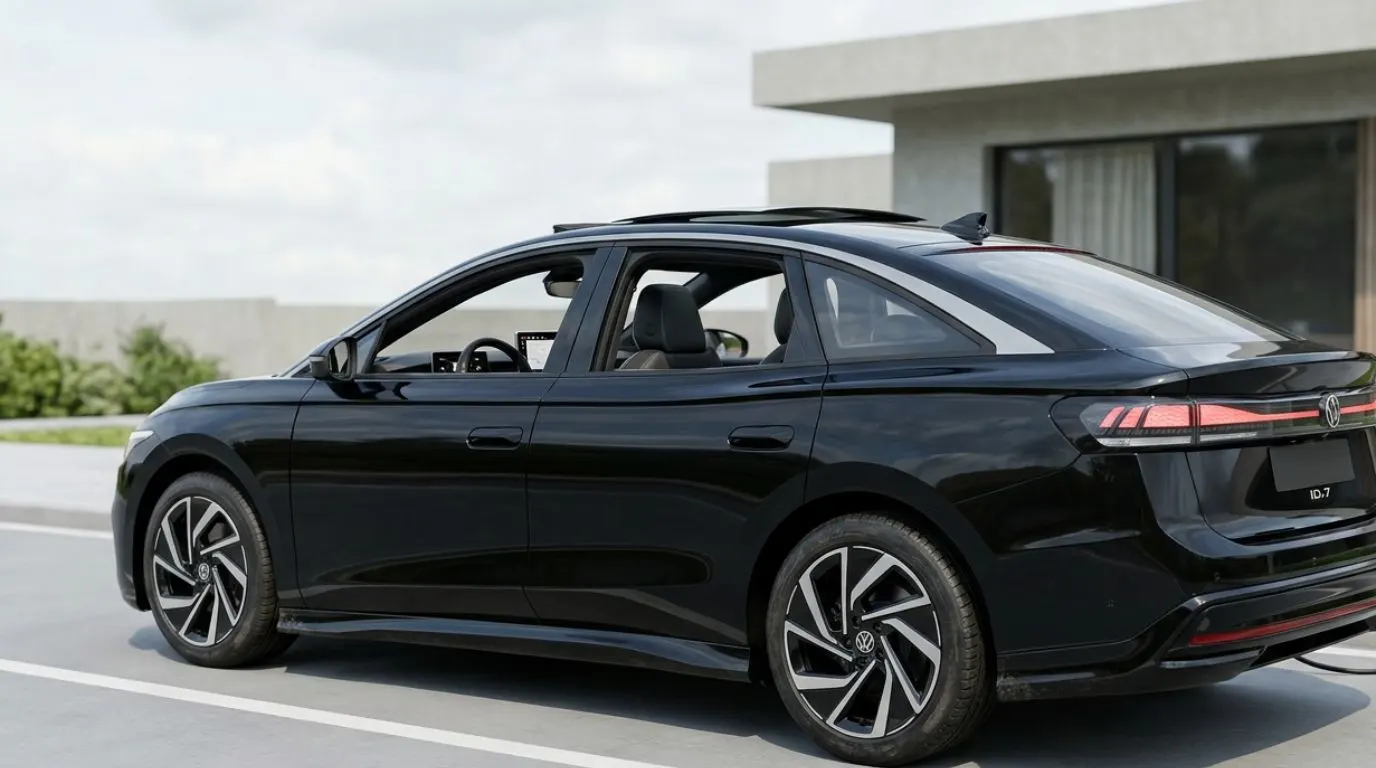
Volkswagen ID.4 Range: Official Figures vs. Real-World Driving
The ID.4’s advertised range is a laboratory-tested figure, not a guaranteed distance for every journey. Volkswagen publishes WLTP figures in Europe, while US models use EPA estimates.
For example, Volkswagen Ireland’s 2026 model-year technical data lists the following European WLTP ranges:
| European version | Battery capacity (rated) | Official WLTP range |
|---|---|---|
| ID.4 Pure | 52 kWh | 360–363 km |
| ID.4 Pro | 77 kWh | 540–553 km |
| ID.4 GTX | 77 kWh | 520–527 km |
These figures apply to the listed Irish-market MY26 specifications. Equipment, wheels and vehicle configuration can affect the final homologated range. volkswagen.ie
In the United States, the 2026 ID.4 rear-wheel-drive model is listed with an EPA-estimated range of 291 miles. That figure belongs to the US specification and should not be compared directly with a European WLTP result. EPA ENERGY STAR

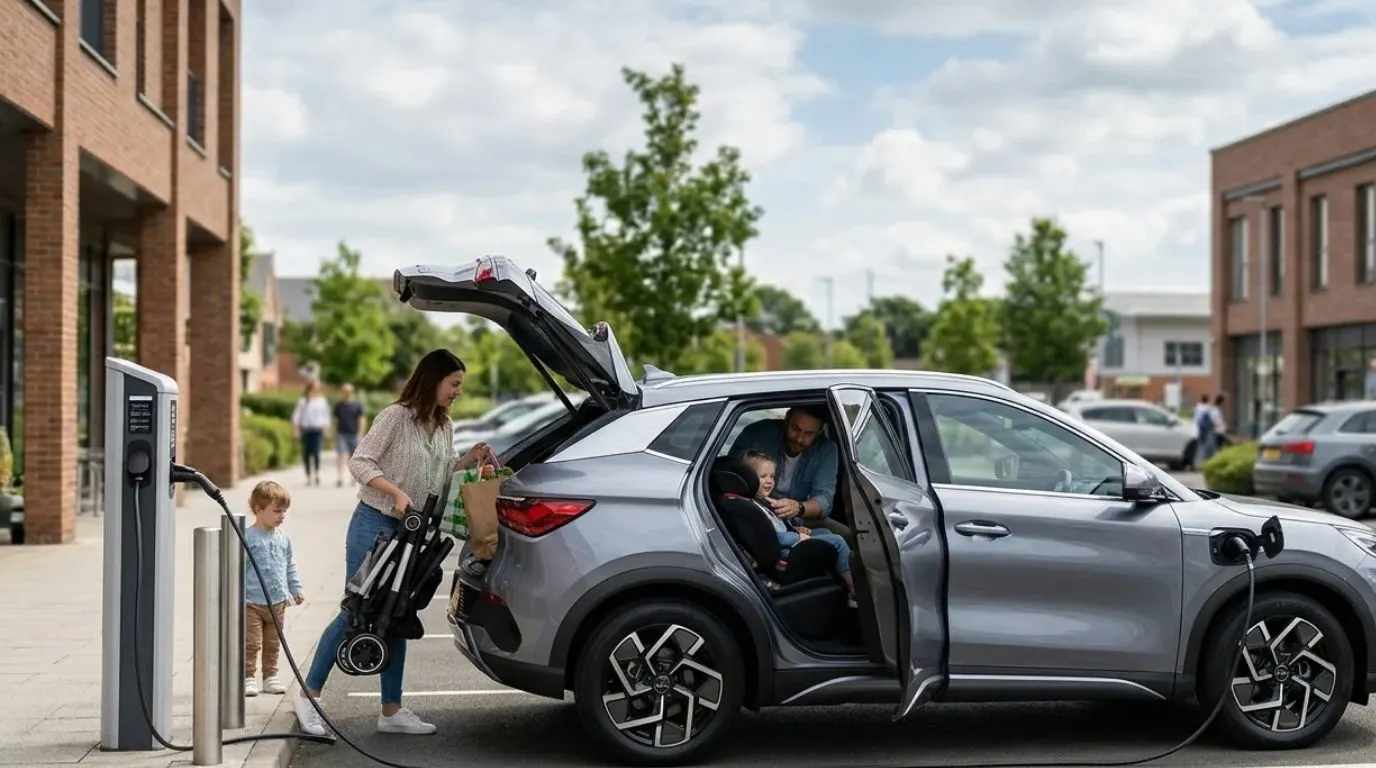
How Much Range Does the Volkswagen ID.4 Deliver in Real-World Conditions?
Real-world range depends on how and where the vehicle is driven. An ID.4 used mainly in city traffic may achieve a different result from one driven at sustained highway speeds.
Independent testing illustrates the difference. Green NCAP assessed a 2025 ID.4 Pure with a 52 kWh usable battery and estimated the following results:
| Driving conditions | Warm-weather range | Cold-weather range |
|---|---|---|
| Urban | 320 km | 179 km |
| Rural | 310 km | 222 km |
| Highway | 269 km | 193 km |
| Mixed | 304 km | 196 km |
These are Green NCAP estimates for the specific tested Pure version, not guaranteed figures for every ID.4. The results show how strongly cold temperatures and driving conditions can affect a smaller-battery model. 4½ stars
A separate UK road test by Auto Express reported approximately 3.4 miles per kWh from a 77 kWh ID.4 in average UK temperatures, equivalent to an estimated driving range of around 262 miles under those test conditions. The publication also recorded lower efficiency in colder weather. Auto Express
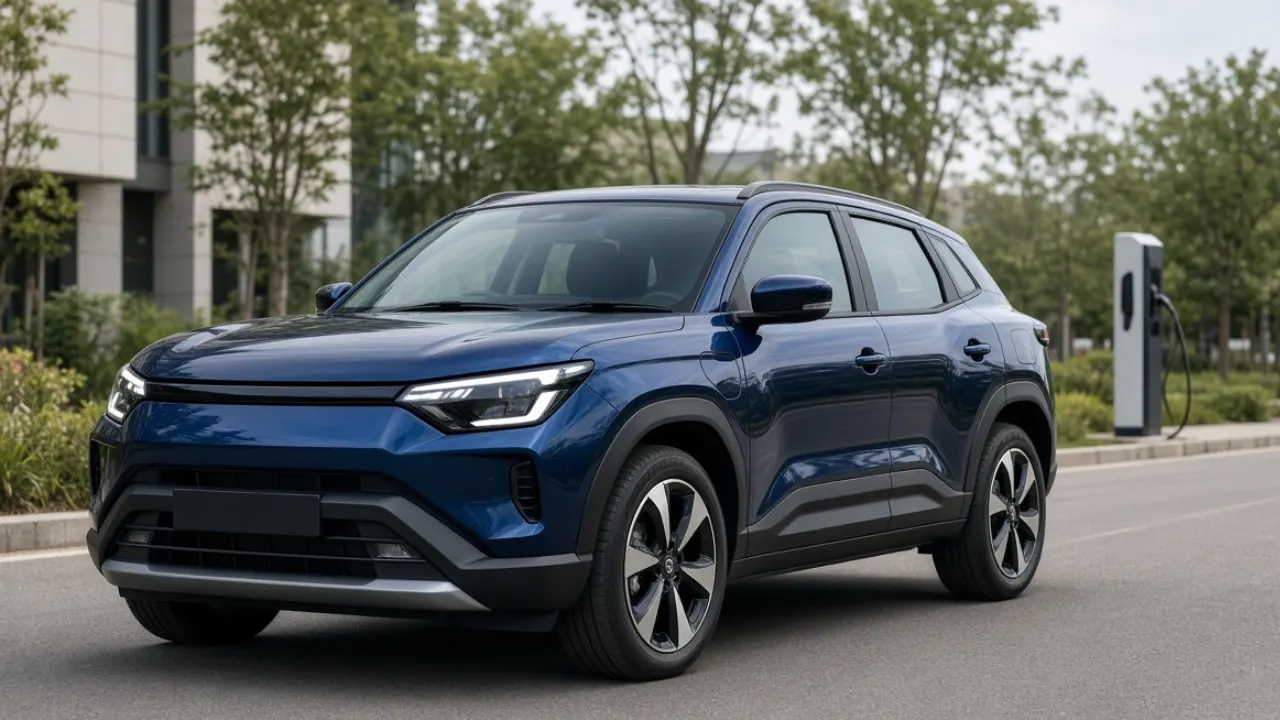
What Reduces the ID.4’s Driving Range?
Several factors influence how much distance the battery can deliver:
- Highway speed: Air resistance rises as speed increases, so sustained fast driving generally uses more energy.
- Cold weather: The battery and cabin heating system need energy, reducing the distance available for driving.
- Air conditioning: Heating and cooling add to electricity consumption.
- Driving style: Hard acceleration and frequent high-speed driving can reduce efficiency.
- Wheels and tires: Wheel size and tire specification can affect rolling resistance and aerodynamic efficiency.
- Passenger and luggage load: Carrying more weight can increase energy consumption.
Preconditioning the cabin while the vehicle is connected to a charger can help preserve battery energy for driving. In cold conditions, preparing the battery before a planned rapid-charging stop can also help it accept a higher charging rate when supported by the vehicle’s navigation and battery-management systems.
Volkswagen ID.4 Charging Speed and Time
Charging speed depends on the battery version, the vehicle’s maximum charging capability and the power available from the charging point.
The ID.4 supports two main charging methods:
- AC charging: Used with a home wallbox or destination charger. It is suitable for overnight charging and longer parking periods.
- DC fast charging: Used at public rapid-charging stations, particularly during longer journeys.
Volkswagen UK’s published technical data lists these charging figures for its current ID.4 range:
| UK version | Battery capacity | Maximum DC charging power | 10–80% DC charging time |
|---|---|---|---|
| Pure | 58 kWh | 105 kW | 26 minutes |
| Pro | 79 kWh | 165 kW | 29 minutes |
| Pro 4MOTION | 77 kWh | 165 kW | 29 minutes |
| GTX | 77 kWh | 185 kW | 27 minutes |
The figures are specific to the listed UK configurations. Volkswagen also lists AC charging at up to 11 kW, with a full charge taking approximately 6.5 to 8.5 hours depending on the version. Volkswagen UK
What Affects Charging Time?
A charger rated at 350 kW will not automatically charge an ID.4 at 350 kW. The vehicle controls how much power it accepts, and the actual rate changes during a charging session.
Important factors include:

- Battery temperature.
- Current battery charge level.
- The vehicle’s maximum DC charging capability.
- Charging-station power and availability.
- Whether the charger is sharing power with another vehicle.
Charging is generally faster when the battery is warm and its state of charge is relatively low. The rate normally reduces as the battery approaches a high state of charge, which is why manufacturers often quote a 10–80% charging time rather than a 0–100% time.
Is Home Charging Practical?
For drivers with off-street parking, a home wallbox is usually the most convenient way to charge an ID.4.
An 11 kW three-phase connection can charge compatible versions considerably faster than a standard household socket. However, the installation must have a suitable electrical supply, and the car’s onboard charger determines the maximum AC charging rate.
Drivers without home charging can use workplace, destination and public charging points. In that situation, the availability and cost of nearby chargers become more important when deciding whether an electric SUV is practical.
Volkswagen ID.4 Charging Costs: Home vs. Public Chargers
The cost of charging an ID.4 depends on the electricity tariff, battery size, charging losses and the proportion of energy bought from public networks.
There is no single worldwide charging cost. Electricity prices vary by country, region, supplier and charging network.
Example: Charging Costs in the UK
Zapmap’s September 2026 public charging price index reported average pay-as-you-go prices of:
- 54p per kWh for standard and standard-plus public chargers.
- 79p per kWh for rapid and ultra-rapid public chargers.
These are UK network averages, not guaranteed prices at every charging station. Zapmap
For a simple illustration, consider an ID.4 with a 77 kWh usable battery. The following table estimates the cost of adding different amounts of electricity using those public charging rates and an example home tariff of 26.32p per kWh.
| Energy added | Home at 26.32p/kWh | Public at 54p/kWh | Rapid at 79p/kWh |
|---|---|---|---|
| 20 kWh | £5.26 | £10.80 | £15.80 |
| 40 kWh | £10.53 | £21.60 | £31.60 |
| 60 kWh | £15.79 | £32.40 | £47.40 |
| 77 kWh | £20.27 | £41.58 | £60.83 |
The home rate is an illustrative tariff, not a universal UK electricity price. These calculations show the cost of energy supplied at the stated rates before allowing for charging losses, standing charges, connection fees or membership discounts. A full 77 kWh charge is a mathematical comparison, not a recommendation to regularly charge the battery from empty to full.
The difference can be substantial. Drivers who rely heavily on public rapid charging may pay considerably more than owners who can charge at home on a suitable electricity tariff.
How to Calculate Your Own ID.4 Charging Cost
Use this straightforward calculation:

\[ \text{Charging cost} = \text{Energy added (kWh)} \times \text{Electricity price per kWh} \]
For example, adding 30 kWh at a tariff of 20p per kWh costs £6 before charging losses and any additional fees.
To estimate the cost of driving a particular distance, use the vehicle’s energy consumption:
\[ \text{Cost per 100 km} = \frac{\text{kWh per 100 km} \times \text{Price per kWh}}{100} \]

For a more realistic ownership estimate, use the energy drawn from the electricity supply rather than only the battery’s displayed energy consumption. Charging losses mean the amount billed by the electricity provider can be higher than the energy stored in the battery.
Example: Charging Costs in the United States
Electricity prices also vary considerably across the US. The Energy Information Administration’s 2026 outlook estimated an average residential electricity price of 18.2 cents per kWh for the year. Actual household rates can be higher or lower depending on the state and utility. U.S. Energy Information Administration (EIA)+1
Using that national average, adding 30 kWh to an ID.4 would cost approximately $5.46 before charging losses or additional fees.
Public fast-charging prices are set by individual networks and locations, so this household electricity rate should not be used to estimate the cost of a public charging session.

Volkswagen ID.4 Everyday Practicality
Range and charging costs are only part of the ownership equation. The ID.4 is also designed to carry passengers, shopping, luggage and family equipment.
Passenger Space and Seating
The ID.4 has a five-seat layout. Its dedicated electric-vehicle platform provides a flat cabin floor, helping make the rear passenger area more usable.
The SUV’s dimensions and interior packaging make it suitable for everyday family duties, although buyers should check rear-seat space and seating comfort in person, particularly if adults regularly travel in the back.
Boot Space and Luggage Capacity
Volkswagen Ireland’s MY26 technical guide lists the following luggage capacities:

| Storage configuration | Capacity |
|---|---|
| Rear seats in place | 543 litres |
| Rear seats folded | 1,575 litres |
The rear seats can be folded to accommodate larger luggage or bulky items. The exact capacity can differ between market specifications and measurement methods, so these figures should be treated as specific to the listed Irish-market vehicle. volkswagen.ie
Daily Commuting
For regular commuting, the ID.4 offers several practical advantages:
- Electric driving without local exhaust emissions.
- Quiet operation compared with a conventional combustion-engine SUV.
- Regenerative braking that can recover some energy during deceleration.
- Home charging that can reduce the need for regular visits to fuel stations.
- A useful luggage area for shopping, work equipment and everyday family items.
Its suitability for a particular commute depends on daily distance, access to charging and the battery version selected.
Longer Family Journeys
The larger-battery Pro versions are more appropriate for drivers who regularly cover long distances. Their higher official range can reduce the frequency of charging stops compared with the smaller-battery Pure.
However, a long journey still requires planning. Highway speed, weather, passenger load and charger availability all affect the distance covered between stops.
Before a trip, drivers should check the route’s charging locations and confirm that the available connectors and charging speeds suit their vehicle.
Volkswagen ID.4: Is It Expensive to Run?
The ID.4 can be economical to operate when most charging takes place at home, particularly where an EV-specific electricity tariff is available.
Running costs become less predictable when a driver depends on public rapid charging. Network tariffs, subscription fees and location-based pricing can make a noticeable difference.
Electricity is not the only ownership expense. Buyers should also consider:
- Home wallbox purchase and installation.
- Public charging subscriptions, if required.
- Tire replacement and maintenance.
- Insurance costs.
- Local vehicle taxes and incentives.
- Depreciation and resale value.
The ID.4’s total ownership cost therefore depends on more than its battery size or advertised range. A buyer who can charge cheaply at home may have a different cost experience from someone who regularly uses motorway charging stations.
Which Volkswagen ID.4 Version Makes the Most Sense?
The right version depends on how the vehicle will be used and which market’s lineup is available.
| Buyer requirement | Version to consider |
|---|---|
| Lower entry price and shorter daily journeys | ID.4 Pure |
| Longer driving range | ID.4 Pro |
| Additional traction from all-wheel drive | ID.4 Pro 4MOTION |
| Performance-focused driving | ID.4 GTX |
This is a general guide to the UK and European naming structure, not a universal recommendation. Available versions, battery specifications and equipment differ between countries.
Volkswagen ID.4: Main Advantages and Limitations
| Advantages | Limitations |
|---|---|
| Practical five-seat SUV layout | Real-world range varies with conditions |
| Multiple battery and powertrain choices | Public rapid charging can be expensive |
| Home AC and public DC charging support | Charging speed varies by version |
| Useful luggage capacity | Charging access can be inconvenient without home parking |
| Regenerative braking | Cold weather can reduce driving range |
| Larger-battery versions suit longer journeys | WLTP and EPA figures cannot be directly compared |
Final Thoughts
The Volkswagen ID.4 is a practical electric SUV, but its ownership experience depends heavily on the version and charging routine.
The smaller-battery Pure can suit drivers with shorter daily journeys and reliable charging access. The larger-battery Pro is a better starting point for people who regularly travel between cities, while all-wheel-drive versions offer a different balance of traction and performance.
Charging costs deserve just as much attention as range. Home charging can be considerably cheaper than public rapid charging, but the difference depends on local electricity prices and the driver’s charging habits.
Before buying, compare the exact market specification, usable battery capacity, official range, DC charging time and local electricity tariffs. Those details provide a more realistic picture of everyday ownership than a single advertised range figure.
Frequently Asked Questions
1. What is the real-world range of the Volkswagen ID.4?
There is no single real-world range for every ID.4. Independent Green NCAP testing of a 2025 ID.4 Pure estimated 304 km in mixed warm-weather driving and 196 km in mixed cold-weather conditions. Larger-battery versions can travel farther, depending on conditions.
2. How far can the Volkswagen ID.4 travel on a full charge?
The distance depends on the version and market. Volkswagen’s Irish MY26 data lists up to 553 km WLTP for the ID.4 Pro, while the US 2026 rear-wheel-drive model is listed at 291 miles EPA-estimated. These figures use different testing procedures.
3. How much does it cost to charge a Volkswagen ID.4 at home?
The cost depends on the household electricity tariff and the amount of energy added. For example, adding 30 kWh at 20p per kWh costs £6 before charging losses.
4. Is public charging more expensive than home charging?
It is generally more expensive, particularly at rapid and ultra-rapid charging stations. UK public charging prices also vary by network, charger type and subscription arrangement.
5. How long does the Volkswagen ID.4 take to charge?
Volkswagen UK’s published figures show approximately 26–29 minutes for a 10–80% DC charge, depending on the version. Home AC charging at up to 11 kW takes approximately 6.5–8.5 hours for a full charge on the listed UK models.
6. Does the Volkswagen ID.4 support fast charging?
Yes. The ID.4 supports DC fast charging. Maximum charging power depends on the battery and powertrain version.
7. Is the Volkswagen ID.4 practical for families?
The ID.4 has five seats and a useful luggage compartment. Volkswagen Ireland’s MY26 technical guide lists 543 litres of boot capacity, increasing to 1,575 litres with the rear seats folded.
8. Does cold weather affect the Volkswagen ID.4’s range?
Yes. Cold temperatures can increase energy consumption because the battery and cabin heating require energy. Independent testing has recorded noticeably lower range in cold conditions than in warm weather.
9. Is the Volkswagen ID.4 suitable for long-distance driving?
The larger-battery Pro versions are better suited to frequent long-distance journeys than the smaller-battery Pure. Drivers should still plan charging stops around realistic highway range and available charging stations.
10. Is the Volkswagen ID.4 available in India?
The specifications discussed in this article cover selected US and European versions. Indian-market availability, pricing and specifications should be confirmed through official Volkswagen India announcements.